Renault

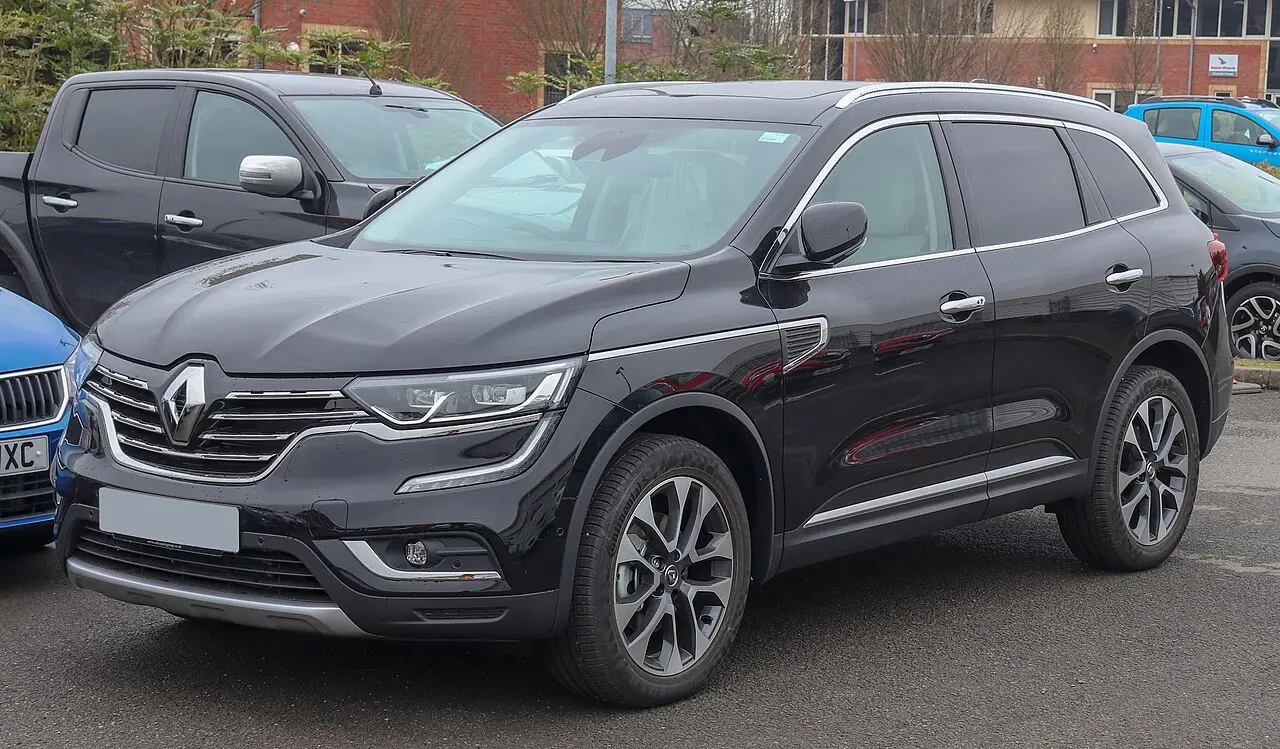
Renault Koleos

Renault Koleos
Photo: Vauxford / Wikimedia Commons · CC BY-SA 4.0

The official data lists 79 versions of the Renault Koleos (2009–2026), in the European Union, the United Kingdom, and France. Each market publishes its own figures, measured on its own test procedure.

At a glance

Years in the data
2009–2026
Markets
European Union, United Kingdom, France
Engines
1.3 L to 2.5 L
Power
96 kW (131 PS) to 144 kW (196 PS)
Fuels
Petrol, Diesel
Lowest consumption (United Kingdom)
4.9 L/100 km (NEDC)
Lowest consumption (European Union)
5.5 L/100 km (WLTP)
Lowest consumption (France)
5.7 L/100 km (NEDC)
New registrations in the EU
237,532

What is the Renault Koleos?

The Koleos is a family-sized crossover SUV. The first generation, known as HY, ran from 2008 to 2016; the second, HC, ran from 2016 to 2023.

Renault presented the first Koleos as its first crossover. It was developed through the Renault-Nissan Alliance, with Renault responsible for the design and Nissan contributing engineering. The second generation brought a larger, more imposing SUV shape while continuing the model’s family-car role.

Engines and power

Across EU registrations from 2010 to 2024, Koleos engines range from 1.3 L to 2.5 L, with diesel, petrol and other fuel classifications. Recorded power spans 96 kW (131 PS) to 195 kW (265 PS). UK VCA figures cover 1.6 L to 2.0 L petrol and diesel engines producing 110 kW (150 PS) to 140 kW (190 PS). French ADEME listings show 1.3 L engines, with outputs from 110 kW (150 PS) to 127 kW (173 PS).

How economical is the Renault Koleos?

The lowest listed EU consumption is 5.5 L/100 km on WLTP. The UK’s lowest figure is 4.9 L/100 km on NEDC, while the French figure is 5.7 L/100 km on NEDC. These market figures use different test procedures: Europe uses WLTP or NEDC, the USA uses EPA testing, and Canada uses a 5-cycle procedure.

Official EU registration figures record 237,532 Koleos cars from 2010 to 2024. Leading listed entries include 2.0 L diesels rated at 110 kW (150 PS) and 130 kW (177 PS).

Where was the Koleos sold?

EU registration figures cover 2010 to 2024, UK VCA figures cover 2009 to 2022, and French ADEME figures cover 2012 to 2026. The model history includes two generations: the first ran from 2008 to 2016 and the second from 2016 to 2023.

Questions and answers

How many generations of Renault Koleos are listed?

Two: the first generation (HY), from 2008 to 2016, and the second (HC), from 2016 to 2023.

What is the Koleos’s lowest listed consumption?

The EU WLTP figure is 5.5 L/100 km. UK and French NEDC listings show 4.9 and 5.7 L/100 km respectively.

What power range does the Koleos cover?

EU versions span 96 kW (131 PS) to 195 kW (265 PS).

Which markets have Koleos figures?

EU registration, UK VCA and French ADEME figures cover different periods.
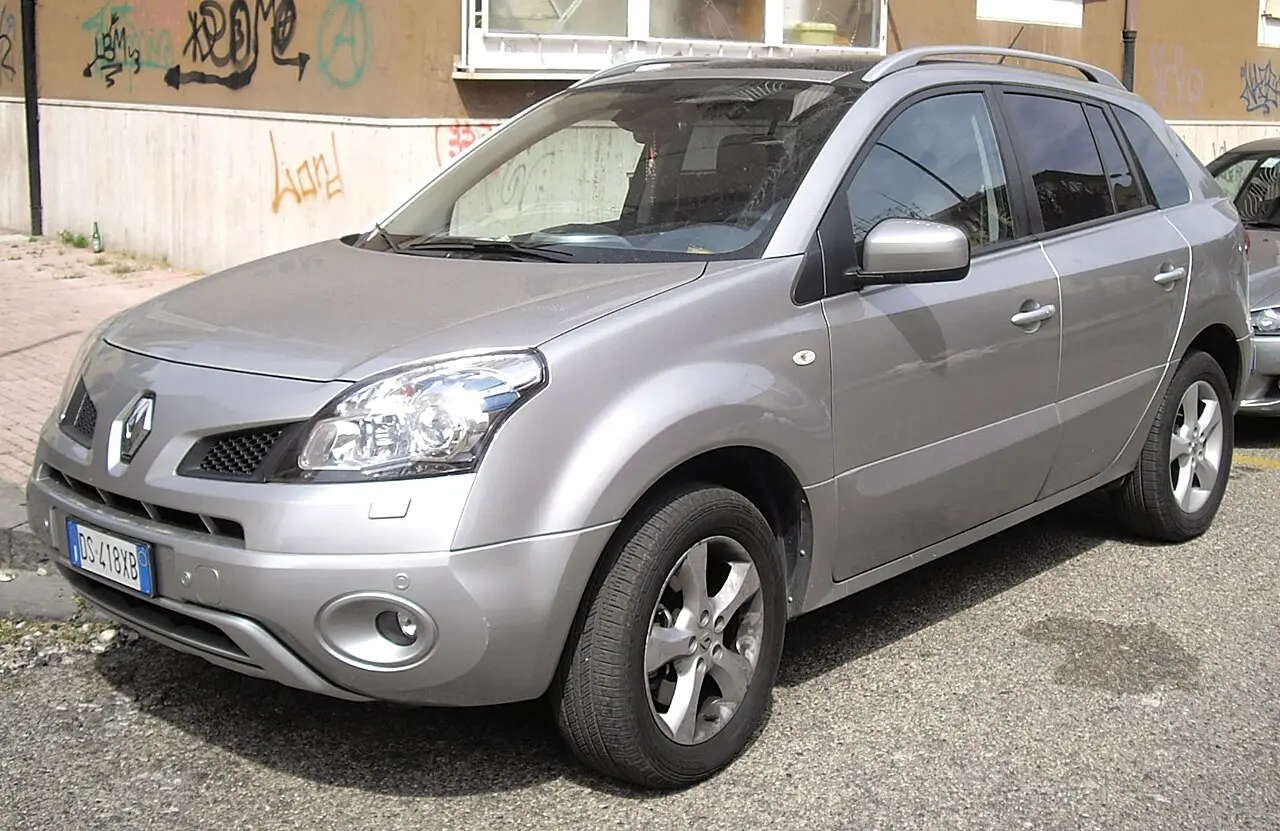
Koleos I (2008–2016)

Renault Koleos I
Photo: Corvettec6r / Wikimedia Commons · Public domain

Model codes: HY · References: auto-motor-und-sport.de, fr.wikipedia.org

Show all 37 versions

Koleos II (2016–2023)

Renault Koleos II
Photo: Vauxford / Wikimedia Commons · CC BY-SA 4.0

Model codes: HC · References: auto-motor-und-sport.de

European Union 28 versions

New cars registered in the EU (plus Norway and Iceland), from the European Environment Agency. Figures on the NEDC procedure until 2020 and on WLTP from 2021; versions are grouped by engine and power, with their number of registrations.

Years and versionEnginePowerFuelConsumption (combined)CO₂EU registrations
20232.0 L135 kW (184 PS)Diesel6.8 L/100 km WLTP177 g/km1,675
20231.3 L116 kW (158 PS)Petrol6.8 L/100 km WLTP153 g/km1,356
20222.0 L135 kW (184 PS)Diesel6.5 L/100 km WLTP176 g/km2,578
20221.3 L116 kW (158 PS)Petrol6.7 L/100 km WLTP153 g/km2,063
20212.0 L135 kW (184 PS)Diesel6.4 L/100 km WLTP177 g/km5,620
20211.3 L116 kW (158 PS)Petrol6.7 L/100 km WLTP153 g/km4,694
20212.0 L140 kW (190 PS)Diesel6.4 L/100 km WLTP183 g/km616
20211.7 L110 kW (150 PS)Diesel5.5 L/100 km WLTP162 g/km318
20212.5 L126 kW (171 PS)Petrol––72
2019–20202.0 L140 kW (190 PS)Diesel–150 g/km10,323
20201.7 L110 kW (150 PS)Diesel–143 g/km4,734
20201.3 L116 kW (158 PS)Petrol–134 g/km608
20202.0 L130 kW (177 PS)Diesel–166 g/km463
20202.0 L147 kW (200 PS)Diesel–156 g/km14
20202.0 L135 kW (184 PS)Diesel–150 g/km12
20192.0 L130 kW (177 PS)Diesel15.2 kWh/100 km NEDC164 g/km15,934
20191.7 L110 kW (150 PS)Diesel–143 g/km3,152
20191.6 L96 kW (131 PS)Diesel–128 g/km1,250
20192.0 L147 kW (200 PS)Diesel–156 g/km28
20182.0 L130 kW (177 PS)Diesel–153 g/km25,687
20181.6 L96 kW (131 PS)Diesel–127 g/km11,277
20172.0 L130 kW (177 PS)Diesel–150 g/km18,336
20171.6 L96 kW (131 PS)Diesel–126 g/km5,740
20172.0 L195 kW (265 PS)Diesel–155 g/km922
20171.6 L144 kW (196 PS)Diesel–127 g/km74
20172.0 L127 kW (173 PS)Diesel–181 g/km30
20162.0 L127 kW (173 PS)Diesel–171 g/km124
20162.0 L110 kW (150 PS)Diesel–161 g/km118

United Kingdom 13 versions

New cars on sale in the UK, from the Vehicle Certification Agency. NEDC figures until 2018 and WLTP figures after; years are the editions a version appeared in.

Years and versionEnginePowerFuelGearboxConsumption (combined)CO₂
2021–2022GT Line Blue dCi 150 2WD Auto-Xtronic MY191.7 L110 kW (150 PS)Diesel7-speed automatic6.2 L/100 km WLTP162 g/km
2021–2022Iconic Blue dCi 150 2WD Auto -Xtronic MY191.7 L110 kW (150 PS)Diesel7-speed automatic6.1 L/100 km WLTP161 g/km
2021–2022GT Line dCi 175 Auto X-Tronic 2WD MY18 · Iconic dCi 175 Auto X-Tronic 2WD MY182.0 L130 kW (177 PS)Petrol7-speed automatic7.4 L/100 km WLTP194 g/km
2021–2022GT Line dCi 175 Auto X-Tronic 4WD MY18 · Iconic dCi 175 Auto X-Tronic 4WD MY182.0 L130 kW (177 PS)Petrol7-speed automatic7.8 L/100 km WLTP203 g/km
2021–2022GT Line Blue dCi 190 4WD Auto-Xtronic MY192.0 L140 kW (190 PS)Diesel7-speed automatic6.9 L/100 km WLTP183 g/km
2021–2022GT Line Blue dCi 190 4WD Auto-Xtronic MY192.0 L140 kW (190 PS)Diesel7-speed automatic7.0 L/100 km WLTP183 g/km
2021–2022Iconic Blue dCi 190 4WD Auto -Xtronic MY192.0 L140 kW (190 PS)Diesel7-speed automatic6.9 L/100 km WLTP181 g/km
2021–2022Iconic Blue dCi 190 4WD Auto -Xtronic MY192.0 L140 kW (190 PS)Diesel7-speed automatic6.9 L/100 km WLTP182 g/km
2017–2018dCi 1301.6 L–Diesel6-speed manual4.9 L/100 km NEDC128 g/km
2017–2018dCi 175 4WD2.0 L–Diesel6-speed manual5.6 L/100 km NEDC148 g/km
2017–2018dCi 175 4WD X-Tronic2.0 L–DieselContinuously variable (CVT)5.9 L/100 km NEDC156 g/km
2018dCi 175 2WD Auto X-Tronic2.0 L–Diesel7-speed automatic6.2 L/100 km NEDC163 g/km
2018dCi 175 4WD Auto X-Tronic2.0 L–Diesel7-speed automatic6.4 L/100 km NEDC168 g/km

Versions outside these generations

European Union 2 versions

New cars registered in the EU (plus Norway and Iceland), from the European Environment Agency. Figures on the NEDC procedure until 2020 and on WLTP from 2021; versions are grouped by engine and power, with their number of registrations.

Years and versionEnginePowerFuelConsumption (combined)CO₂EU registrations
20242.0 L135 kW (184 PS)Diesel6.8 L/100 km WLTP177 g/km369
20241.3 L116 kW (158 PS)Petrol6.7 L/100 km WLTP152 g/km98

France 1 version

New cars on sale in France, from ADEME Car Labelling. NEDC figures until 2015, WLTP figures in the current catalogue.

Years and versionEnginePowerFuelGearboxConsumption (combined)CO₂
2026KOLEOS (158ch)1.3 L116 kW (158 PS)Petrol7-speed automatic6.6 L/100 km WLTP150 g/km

Official figures are measured on standard test procedures and differ between markets. Your consumption depends on how, where and in what conditions you drive.