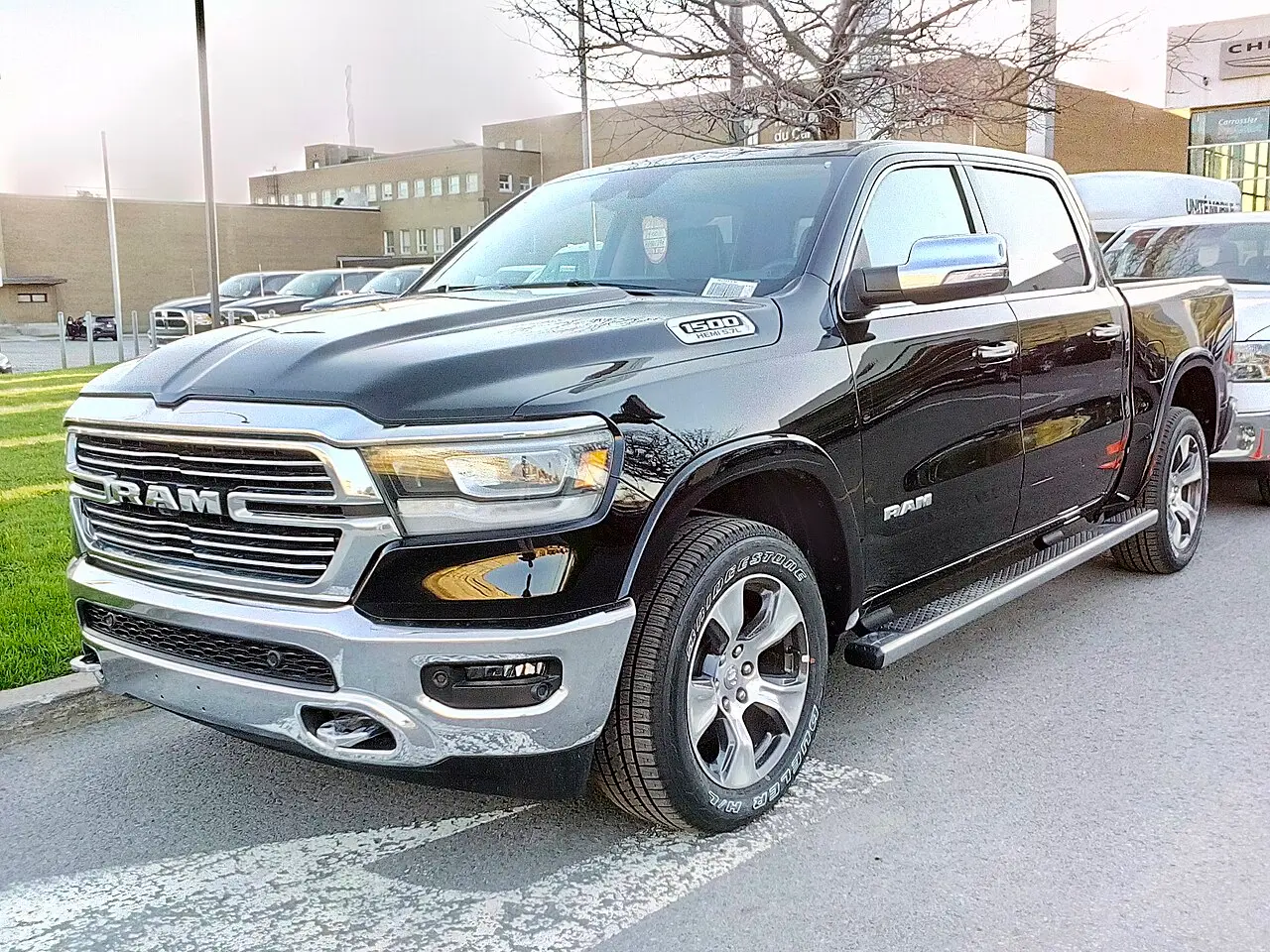
Ram

Ram 1500

Ram 1500
Photo: Whydoesitfeelsogood / Wikimedia Commons · CC BY-SA 4.0

The official data lists 147 versions of the Ram 1500 (2012–2027), in the United States and Canada. Each market publishes its own figures, measured on its own test procedure.

At a glance

Years in the data
2012–2027
Markets
United States, Canada
Engines
3.0 L to 6.2 L
Fuels
Petrol, Hybrid, Diesel, Flex fuel (E85)
Lowest consumption (Canada)
8.9 L/100 km (5-cycle)
Lowest consumption (United States)
9.0 L/100 km (EPA)

What is the Ram 1500?

The Ram 1500 is a full-size, light-duty pickup with an open bed. It serves as Ram’s everyday truck, for work, hauling and daily driving, while the 2500 and 3500 sit higher in the range for heavier-duty work. The Ram name grew out of Dodge’s long-running pickup line and became a standalone brand in 2009.

The 1500 has a broad range of cab and bed layouts, from straightforward work trucks to versions with more passenger comfort. Its fourth generation, the DS, ran from 2009 to 2018. The fifth-generation DT arrived in 2019 with a redesigned body and cabin.

Ram 1500 generations

The fourth-generation 1500, known by the DS code, ran from 2009 to 2018. It kept the familiar full-size pickup shape while bringing changes to the cabin and driving experience. The fifth-generation DT began in 2019 with a new design and technology including the eTorque mild-hybrid system on some versions. The older DS design continued as the Ram 1500 Classic after the DT arrived.

Engines and power

In the United States, engine sizes range from 3.0 L to 6.2 L; in Canada, they range from 3.0 L to 5.7 L. US versions include petrol, diesel, hybrid and flex-fuel E85 options. Canadian versions include petrol, diesel and E85. The range gives the 1500 different powertrain choices for everyday driving and carrying or towing loads.

How economical is the Ram 1500?

The lowest listed US consumption is 9 L/100 km, and the best combined EPA rating is 26 MPG. These figures apply across petrol, diesel and hybrid versions, rather than every 1500. Canada’s lowest listed figure is 8.9 L/100 km under the NRCan 5-cycle test. The EPA and Canadian 5-cycle procedures differ, so figures from the two markets are not directly equivalent.

Questions and answers

What kind of vehicle is the Ram 1500?

It is a full-size, light-duty pickup with an open cargo bed, positioned below Ram’s heavier-duty 2500 and 3500 trucks.

What are the Ram 1500 generations?

The fourth generation (DS) ran from 2009 to 2018, followed by the fifth generation (DT), which began in 2019.

What fuels are available for the Ram 1500?

US versions include petrol, diesel, hybrid and flex-fuel E85. Canadian versions include petrol, diesel and E85.

What is its best combined EPA fuel economy?

The best combined EPA rating is 26 MPG.
1500 fourth generation (2009–2018)

Ram 1500 fourth generation
Photo: Mr.choppers / Wikimedia Commons · CC BY-SA 3.0

Model codes: DS · References: en.wikipedia.org, caranddriver.com

Show all 68 versions

1500 fifth generation (since 2019)

Ram 1500 fifth generation
Photo: Whydoesitfeelsogood / Wikimedia Commons · CC BY-SA 4.0

Model codes: DT · References: en.wikipedia.org, aecsolutions.com

United States 40 versions

Model years sold in the USA, from the EPA and the Department of Energy (fueleconomy.gov). MPG on the EPA test; litres per 100 km = 235.215 ÷ MPG.

Years and versionEngineFuelGearboxDriveConsumption (combined)CO₂
2025–2027SIDI3.0 LPetrol8-speed automaticFour-wheel drive17 MPG (13.8 L/100 km) EPA324 g/km
2025–2027SIDI3.0 LPetrol8-speed automaticFour-wheel drive15 MPG (15.7 L/100 km) EPA374 g/km
2027SIDI3.0 LPetrol8-speed automaticRear-wheel drive20 MPG (11.8 L/100 km) EPA281 g/km
2027SIDI3.0 LPetrol8-speed automaticFour-wheel drive19 MPG (12.4 L/100 km) EPA288 g/km
2019–2027Mild Hybrid; eTorque · Mild Hybrid3.6 LHybrid8-speed automaticRear-wheel drive22 MPG (10.7 L/100 km) EPA253 g/km
2027Mild Hybrid3.6 LHybrid8-speed automaticFour-wheel drive21 MPG (11.2 L/100 km) EPA260 g/km
2026–2027Mild Hybrid3.6 LHybrid8-speed automaticFour-wheel drive17 MPG (13.8 L/100 km) EPA318 g/km
2026–2027Mild Hybrid5.7 LHybrid8-speed automaticFour-wheel drive18 MPG (13.1 L/100 km) EPA312 g/km
2026–2027Mild Hybrid · SIDI; Hybrid5.7 LHybrid8-speed automaticRear-wheel drive19 MPG (12.4 L/100 km) EPA292 g/km
20275.7 LPetrol8-speed automaticRear-wheel drive17 MPG (13.8 L/100 km) EPA317 g/km
20275.7 LPetrol8-speed automaticFour-wheel drive17 MPG (13.8 L/100 km) EPA322 g/km
2026–20276.2 LPetrol8-speed automaticAll-wheel drive12 MPG (19.6 L/100 km) EPA465 g/km
2025–2026SIDI3.0 LPetrol8-speed automaticRear-wheel drive21 MPG (11.2 L/100 km) EPA269 g/km
2026SIDI3.0 LPetrol8-speed automaticFour-wheel drive20 MPG (11.8 L/100 km) EPA276 g/km
2021–2026Mild Hybrid; eTorque · Mild Hybrid3.6 LHybrid8-speed automaticFour-wheel drive21 MPG (11.2 L/100 km) EPA259 g/km
2025SIDI3.0 LPetrol8-speed automaticFour-wheel drive19 MPG (12.4 L/100 km) EPA285 g/km
2019–2025Mild Hybrid; eTorque · Mild Hybrid3.6 LHybrid8-speed automaticRear-wheel drive23 MPG (10.2 L/100 km) EPA245 g/km
20243.6 LPetrol8-speed automaticRear-wheel drive20 MPG (11.8 L/100 km) EPA280 g/km
20243.6 LPetrol8-speed automaticFour-wheel drive19 MPG (12.4 L/100 km) EPA294 g/km
2022–2024Mild Hybrid5.7 LHybrid8-speed automaticRear-wheel drive20 MPG (11.8 L/100 km) EPA275 g/km
2024Mild Hybrid5.7 LHybrid8-speed automaticFour-wheel drive19 MPG (12.4 L/100 km) EPA283 g/km
2023–20245.7 LPetrol8-speed automaticRear-wheel drive17 MPG (13.8 L/100 km) EPA325 g/km
2023–20245.7 LPetrol8-speed automaticFour-wheel drive17 MPG (13.8 L/100 km) EPA328 g/km
2021–2024Hellcat engine6.2 LPetrol8-speed automaticFour-wheel drive12 MPG (19.6 L/100 km) EPA465 g/km
2020–20233.0 LDiesel8-speed automaticFour-wheel drive24 MPG (9.8 L/100 km) EPA260 g/km
2020–20233.6 LPetrol8-speed automaticFour-wheel drive19 MPG (12.4 L/100 km) EPA295 g/km
20233.6 LPetrol8-speed automaticRear-wheel drive20 MPG (11.8 L/100 km) EPA276 g/km
2019–20235.7 LPetrol8-speed automaticFour-wheel drive17 MPG (13.8 L/100 km) EPA325 g/km
2023Mild Hybrid5.7 LHybrid8-speed automaticFour-wheel drive19 MPG (12.4 L/100 km) EPA284 g/km
2020–20223.0 LDiesel8-speed automaticRear-wheel drive26 MPG (9.0 L/100 km) EPA242 g/km
2021–20223.0 LDiesel8-speed automaticRear-wheel drive26 MPG (9.0 L/100 km) EPA239 g/km
2020–20223.6 LPetrol8-speed automaticRear-wheel drive20 MPG (11.8 L/100 km) EPA280 g/km
2022Mild Hybrid5.7 LHybrid8-speed automaticFour-wheel drive19 MPG (12.4 L/100 km) EPA283 g/km
20225.7 LPetrol8-speed automaticRear-wheel drive17 MPG (13.8 L/100 km) EPA322 g/km
2019–2021Mild Hybrid; eTorque5.7 LHybrid8-speed automaticRear-wheel drive19 MPG (12.4 L/100 km) EPA290 g/km
2021Mild Hybrid; eTorque5.7 LHybrid8-speed automaticFour-wheel drive19 MPG (12.4 L/100 km) EPA293 g/km
2019–2020Mild Hybrid; eTorque3.6 LHybrid8-speed automaticFour-wheel drive21 MPG (11.2 L/100 km) EPA260 g/km
2020Mild Hybrid; eTorque5.7 LHybrid8-speed automaticFour-wheel drive19 MPG (12.4 L/100 km) EPA295 g/km
20195.7 LPetrol8-speed automaticRear-wheel drive17 MPG (13.8 L/100 km) EPA318 g/km
2019Mild Hybrid; eTorque5.7 LHybrid8-speed automaticFour-wheel drive19 MPG (12.4 L/100 km) EPA294 g/km

Canada 39 versions

Model years sold in Canada, from Natural Resources Canada fuel consumption ratings (5-cycle test).

Years and versionEngineFuelGearboxConsumption (combined)CO₂
2025–2026Pickup truck: Standard3.0 LPetrol8-speed automatic11.5 L/100 km 5-cycle269 g/km
2025–2026Pickup truck: Standard3.0 LPetrol8-speed automatic13.8 L/100 km 5-cycle324 g/km
2025–2026Pickup truck: Standard3.0 LPetrol8-speed automatic15.9 L/100 km 5-cycle374 g/km
2026Pickup truck: Standard3.0 LPetrol8-speed automatic11.7 L/100 km 5-cycle276 g/km
2026Pickup truck: Standard3.6 LPetrol8-speed automatic11.0 L/100 km 5-cycle259 g/km
2026Pickup truck: Standard3.6 LPetrol8-speed automatic10.8 L/100 km 5-cycle253 g/km
2026Pickup truck: Standard5.7 LPetrol8-speed automatic12.5 L/100 km 5-cycle292 g/km
2026Pickup truck: Standard5.7 LPetrol8-speed automatic13.3 L/100 km 5-cycle312 g/km
2025Pickup truck: Standard3.0 LPetrol8-speed automatic12.1 L/100 km 5-cycle284 g/km
2019–2025Pickup truck: Standard3.6 LPetrol8-speed automatic10.8 L/100 km 5-cycle253 g/km
2025Pickup truck: Standard3.6 LPetrol8-speed automatic11.0 L/100 km 5-cycle259 g/km
2024Pickup truck: Standard3.6 LPetrol8-speed automatic11.9 L/100 km 5-cycle280 g/km
2023–2024Pickup truck: Standard3.6 LPetrol8-speed automatic11.0 L/100 km 5-cycle259 g/km
2023–2024Pickup truck: Standard3.6 LPetrol8-speed automatic12.5 L/100 km 5-cycle294 g/km
2020–2024Pickup truck: Standard5.7 LPetrol8-speed automatic14.1 L/100 km 5-cycle330 g/km
2022–2024Pickup truck: Standard5.7 LPetrol8-speed automatic11.7 L/100 km 5-cycle275 g/km
2024Pickup truck: Standard5.7 LPetrol8-speed automatic12.1 L/100 km 5-cycle284 g/km
2024Pickup truck: Standard5.7 LPetrol8-speed automatic13.8 L/100 km 5-cycle325 g/km
2021–2024Pickup truck: Standard6.2 LPetrol8-speed automatic19.8 L/100 km 5-cycle465 g/km
2020–2023Pickup truck: Standard3.0 LDiesel8-speed automatic9.7 L/100 km 5-cycle260 g/km
2023Pickup truck: Standard3.6 LPetrol8-speed automatic11.7 L/100 km 5-cycle276 g/km
2019–2023Pickup truck: Standard5.7 LPetrol8-speed automatic13.8 L/100 km 5-cycle325 g/km
2023Pickup truck: Standard5.7 LPetrol8-speed automatic12.1 L/100 km 5-cycle284 g/km
2023Pickup truck: Standard5.7 LPetrol8-speed automatic13.8 L/100 km 5-cycle322 g/km
2020–2022Pickup truck: Standard3.0 LDiesel8-speed automatic9.0 L/100 km 5-cycle243 g/km
2021–2022Pickup truck: Standard3.0 LDiesel8-speed automatic8.9 L/100 km 5-cycle238 g/km
2022Pickup truck: Standard3.6 LPetrol8-speed automatic11.1 L/100 km 5-cycle260 g/km
2020–2022Pickup truck: Standard3.6 LPetrol8-speed automatic10.4 L/100 km 5-cycle245 g/km
2022Pickup truck: Standard3.6 LPetrol8-speed automatic12.6 L/100 km 5-cycle295 g/km
2019–2022Pickup truck: Standard5.7 LPetrol8-speed automatic13.6 L/100 km 5-cycle320 g/km
2022Pickup truck: Standard5.7 LPetrol8-speed automatic12.1 L/100 km 5-cycle284 g/km
2022Pickup truck: Standard5.7 LPetrol8-speed automatic13.7 L/100 km 5-cycle323 g/km
2021Pickup truck: Standard3.6 LPetrol8-speed automatic11.0 L/100 km 5-cycle259 g/km
2019–2021Pickup truck: Standard5.7 LPetrol8-speed automatic12.4 L/100 km 5-cycle290 g/km
2021Pickup truck: Standard5.7 LPetrol8-speed automatic12.5 L/100 km 5-cycle294 g/km
2019–2020Pickup truck: Standard3.6 LPetrol8-speed automatic11.1 L/100 km 5-cycle260 g/km
2020Pickup truck: Standard5.7 LPetrol8-speed automatic12.8 L/100 km 5-cycle299 g/km
2019Pickup truck: Standard3.6 LPetrol8-speed automatic10.4 L/100 km 5-cycle246 g/km
2019Pickup truck: Standard5.7 LPetrol8-speed automatic12.9 L/100 km 5-cycle302 g/km

Official figures are measured on standard test procedures and differ between markets. Your consumption depends on how, where and in what conditions you drive.