Porsche

Porsche 928

Porsche 928
Photo: MrWalkr / Wikimedia Commons · CC BY-SA 4.0

The official data lists 14 versions of the Porsche 928 (1984–1995), in the United States and Canada. Each market publishes its own figures, measured on its own test procedure.

At a glance

Years in the data
1984–1995
Markets
United States, Canada
Engines
4.7 L to 5.4 L
Fuels
Petrol
Lowest consumption (United States)
13.8 L/100 km (EPA)
Lowest consumption (Canada)
15.8 L/100 km (5-cycle)

What is the Porsche 928?

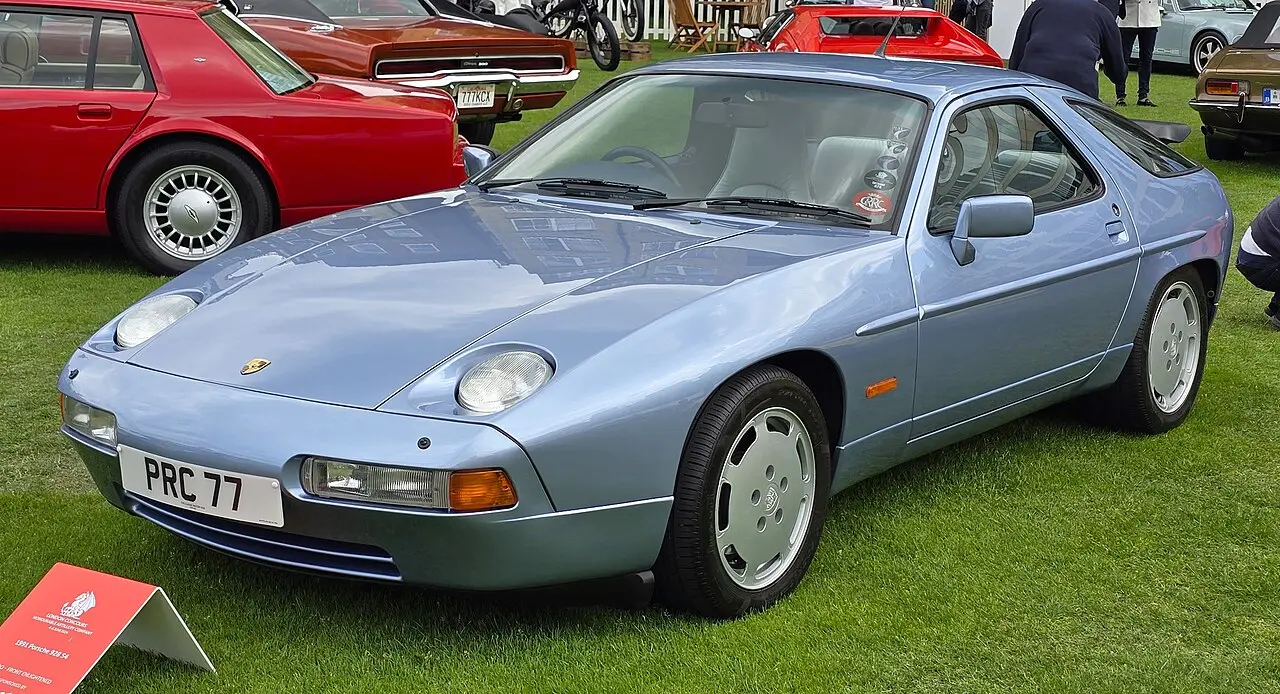
The 928 is a two-door grand touring coupe, built for comfortable long-distance travel as well as lively driving. Its front-mounted V8 and flowing shape gave Porsche a different kind of sports car from the rear-engined 911. Introduced in 1978, it stayed in production through 1995.

A rear-mounted transmission connected to the engine by a driveshaft gave the 928 its transaxle layout. Porsche also fitted its distinctive Weissach rear axle, designed to help the car remain composed through bends.

Generations and engines

The 928 had one generation, named 928, sold from 1978 to 1995. Over that time, Porsche developed the original V8 coupe into versions with larger engines, while retaining the front-engine, rear-transaxle layout.

In the United States, EPA figures cover petrol versions with engines from 4.7 L to 5.4 L for model years 1984–1995. Canada’s NRCan figures cover 5.4 L petrol versions for 1995.

How economical is the Porsche 928?

The lowest listed US consumption is 13.8 L/100 km, and the best combined EPA rating is 17 MPG. Canada’s 1995 5.4 L versions are listed at 15.8 L/100 km on the NRCan 5-cycle test. EPA and 5-cycle procedures differ, so each figure is best read in the context of its market.

Questions and answers

When was the Porsche 928 sold?

Its single generation ran from 1978 to 1995.

What engines did the 928 have in the US figures?

The listed US petrol versions have engines from 4.7 L to 5.4 L.

What is the best combined EPA rating listed for the 928?

17 MPG combined.

What is the Canadian consumption figure?

The 1995 5.4 L petrol versions are listed at 15.8 L/100 km on NRCan’s 5-cycle test.

928 928 (1978–1995)

Porsche 928 928
Photo: MrWalkr / Wikimedia Commons · CC BY-SA 4.0

Model codes: 928 · References: porsche.com, en.wikipedia.org

United States 12 versions

Model years sold in the USA, from the EPA and the Department of Energy (fueleconomy.gov). MPG on the EPA test; litres per 100 km = 235.215 ÷ MPG.

Years and versionEngineFuelGearboxDriveConsumption (combined)CO₂
1993–1995(GUZZLER) (FFS)5.4 LPetrol4-speed automaticRear-wheel drive15 MPG (15.7 L/100 km) EPA368 g/km
1993–1995(GUZZLER) (FFS)5.4 LPetrol5-speed manualRear-wheel drive13 MPG (18.1 L/100 km) EPA425 g/km
1991(GUZZLER) (FFS), EMS4.9 LPetrol4-speed automaticRear-wheel drive15 MPG (15.7 L/100 km) EPA368 g/km
1989–1991(GUZZLER) (FFS)5.0 LPetrol4-speed automaticRear-wheel drive15 MPG (15.7 L/100 km) EPA368 g/km
1989–1991(GUZZLER) (FFS)5.0 LPetrol5-speed manualRear-wheel drive14 MPG (16.8 L/100 km) EPA394 g/km
1989(GUZZLER) (FFS)5.0 LPetrol5-speed manualRear-wheel drive15 MPG (15.7 L/100 km) EPA368 g/km
1987–1988(GUZZLER) (FFS)5.0 LPetrol4-speed automaticRear-wheel drive16 MPG (14.7 L/100 km) EPA345 g/km
1987–1988(GUZZLER) (FFS)5.0 LPetrol5-speed manualRear-wheel drive16 MPG (14.7 L/100 km) EPA345 g/km
1986(FFS)5.0 LPetrol4-speed automaticRear-wheel drive17 MPG (13.8 L/100 km) EPA325 g/km
1986(FFS), SIL5.0 LPetrol5-speed manualRear-wheel drive17 MPG (13.8 L/100 km) EPA325 g/km
1984(FFS) · (FFS) CA model4.7 LPetrol4-speed automatic–15 MPG (15.7 L/100 km) EPA368 g/km
1984(FFS) · (FFS) CA model4.7 LPetrol5-speed manual–15 MPG (15.7 L/100 km) EPA368 g/km

Canada 2 versions

Model years sold in Canada, from Natural Resources Canada fuel consumption ratings (5-cycle test).

Years and versionEngineFuelGearboxConsumption (combined)CO₂
1995Minicompact5.4 LPetrol4-speed automatic15.8 L/100 km 5-cycle363 g/km
1995Minicompact5.4 LPetrol5-speed manual17.6 L/100 km 5-cycle405 g/km

Official figures are measured on standard test procedures and differ between markets. Your consumption depends on how, where and in what conditions you drive.