Pontiac

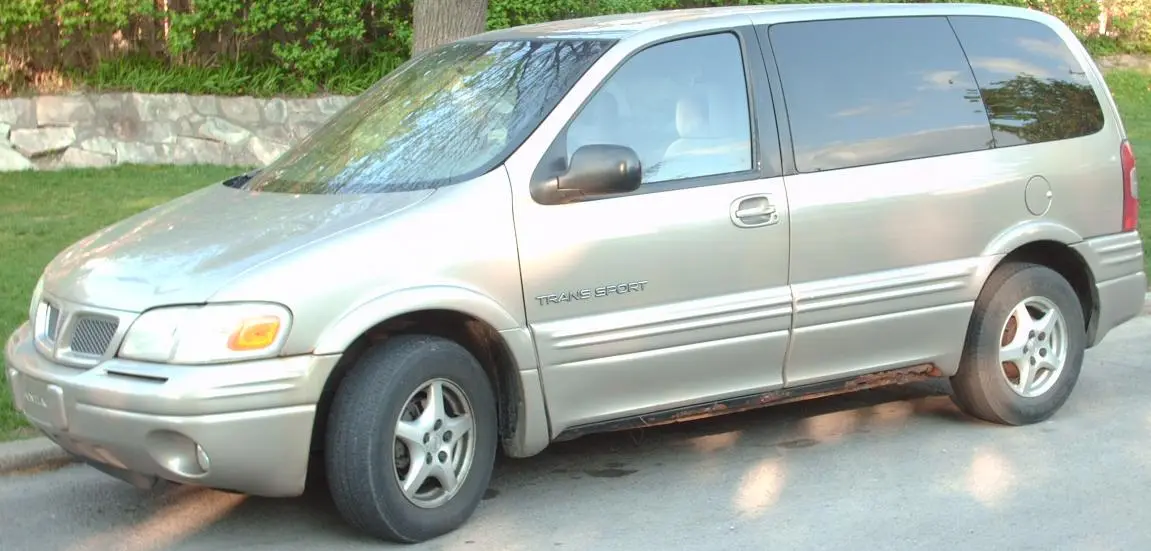
Pontiac Trans Sport

Pontiac Trans Sport
Photo: Bull-Doser / Wikimedia Commons · Public domain

The official data lists 13 versions of the Pontiac Trans Sport (1990–1999), in the United States and Canada. Each market publishes its own figures, measured on its own test procedure.

At a glance

Years in the data
1990–1999
Markets
United States, Canada
Engines
3.1 L to 3.8 L
Fuels
Petrol
Lowest consumption (Canada)
12.2 L/100 km (5-cycle)
Lowest consumption (United States)
12.4 L/100 km (EPA)

What is the Pontiac Trans Sport?

The Trans Sport was Pontiac’s first minivan, designed to carry passengers and their things in a family-friendly cabin. Its tall, single-box body had a long sloping front end that earned it the nickname “Dustbuster.”

The first generation shared its basic architecture with related General Motors minivans, while wearing distinctive Pontiac styling. The second generation, introduced with a more conventional minivan shape, reflected a broader shift toward familiar two-box proportions.

Generations and engines

The first generation, GMT199, ran from 1990 to 1996. The second generation, GMT200, followed from 1997 to 1999, with a redesigned body and a more conventional profile.

The listed United States and Canadian versions used petrol engines from 3.1 L to 3.8 L.

Fuel consumption and markets

In the United States, EPA figures cover 1990 to 1999. The best combined rating was 19 MPG, and the lowest listed consumption is 12.4 L/100 km. In Canada, NRCan figures cover 1995 to 1999, with a lowest listed figure of 12.2 L/100 km on the 5-cycle test. The procedures differ, so the results are not directly interchangeable.

The Trans Sport was sold in both the United States and Canada. European WLTP or NEDC ratings use different procedures from the EPA and Canadian 5-cycle tests.

Questions and answers

How many generations of Trans Sport are covered?

Two: the GMT199 first generation from 1990 to 1996 and the GMT200 second generation from 1997 to 1999.

Which engines did it use?

Its petrol engines ranged from 3.1 L to 3.8 L.

What was its best combined EPA rating?

Its best United States EPA rating was 19 MPG combined.

Why do the Canadian and US consumption figures differ?

Canada uses the NRCan 5-cycle test, while the United States uses the EPA procedure. The results are not directly comparable.
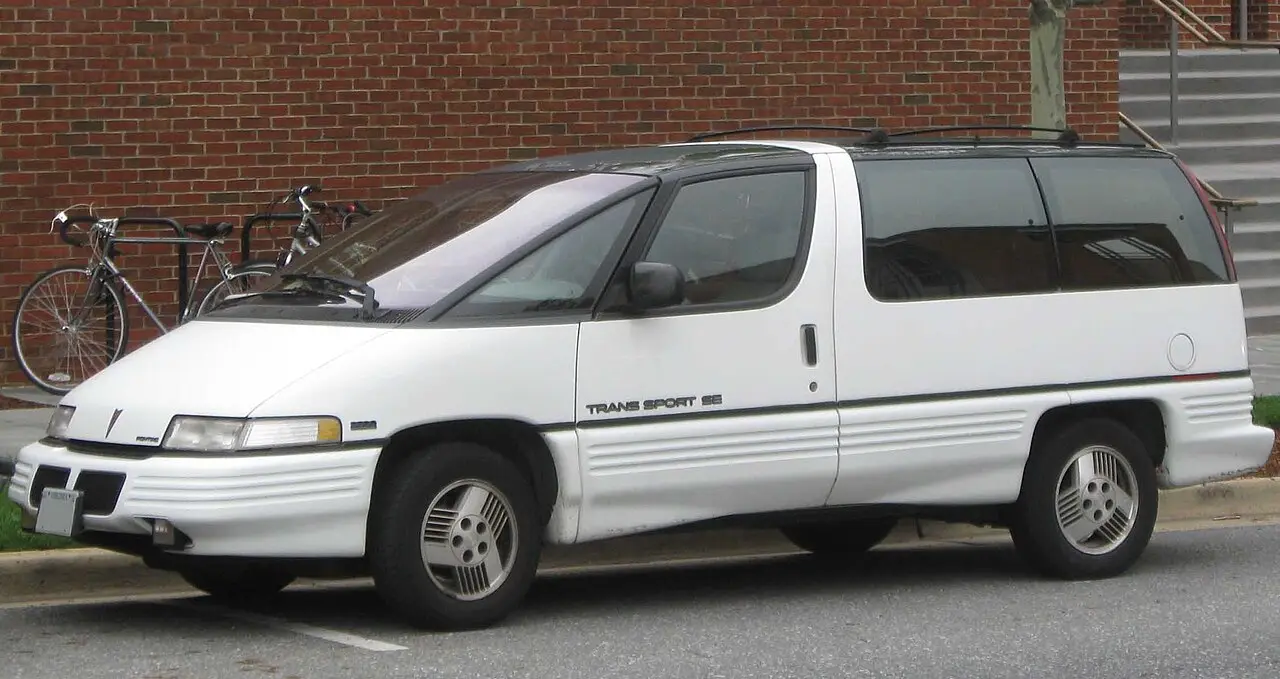
Trans Sport first generation (1990–1996)

Pontiac Trans Sport first generation
Photo: IFCAR / Wikimedia Commons · Public domain

Model codes: GMT199 · Sold in: United States and Canada · References: en.wikipedia.org

Show all 8 versions

Trans Sport second generation (1997–1999)

Pontiac Trans Sport second generation
Photo: Bull-Doser / Wikimedia Commons · Public domain

Model codes: GMT200 · Sold in: Canada · References: en.wikipedia.org

Canada 3 versions

Model years sold in Canada, from Natural Resources Canada fuel consumption ratings (5-cycle test).

Years and versionEngineFuelGearboxConsumption (combined)CO₂
1999Minivan3.4 LPetrol4-speed automatic13.2 L/100 km 5-cycle304 g/km
1998Minivan3.4 LPetrol4-speed automatic13.7 L/100 km 5-cycle315 g/km
1997Minivan3.4 LPetrol4-speed automatic13.6 L/100 km 5-cycle313 g/km

Versions outside these generations

United States 2 versions

Model years sold in the USA, from the EPA and the Department of Energy (fueleconomy.gov). MPG on the EPA test; litres per 100 km = 235.215 ÷ MPG.

Years and versionEngineFuelGearboxDriveConsumption (combined)CO₂
1999CLKUP3.4 LPetrol4-speed automaticFront-wheel drive18 MPG (13.1 L/100 km) EPA307 g/km
1997–1998(FFS) (MPFI), CLKUP · CLKUP3.4 LPetrol4-speed automaticFront-wheel drive19 MPG (12.4 L/100 km) EPA291 g/km

Official figures are measured on standard test procedures and differ between markets. Your consumption depends on how, where and in what conditions you drive.