Pontiac

Pontiac LeMans

Pontiac LeMans
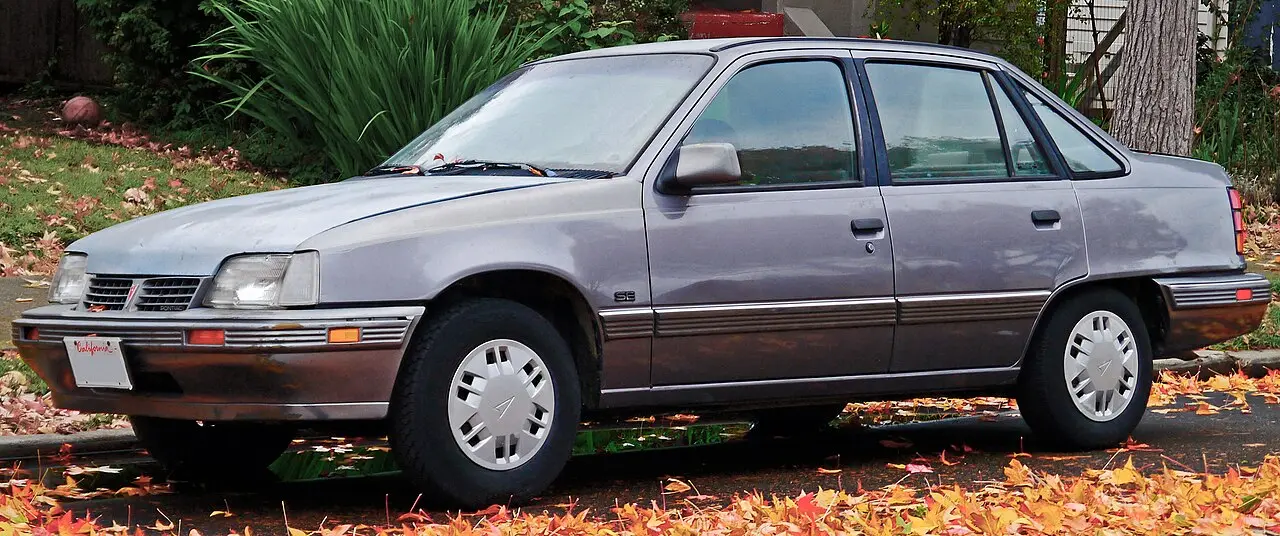
Photo: Mic from Reading / Wikimedia Commons · CC BY 2.0

The official data lists 13 versions of the Pontiac LeMans (1988–1993), in the United States. Each market publishes its own figures, measured on its own test procedure.

At a glance

Years in the data
1988–1993
Markets
United States
Engines
1.6 L to 2.0 L
Fuels
Petrol
Lowest consumption (United States)
7.8 L/100 km (EPA)

What is the Pontiac LeMans?

The LeMans name has a long history at Pontiac. The model sold in the United States from 1988 to 1993 was a small front-wheel-drive car, positioned as the brand’s smallest model. It came as a three-door hatchback, called the Aerocoupe, or a four-door sedan, giving drivers a choice between a liftgate and a separate trunk.

This final LeMans was a Pontiac version of the Daewoo LeMans, built in South Korea. It showed how General Motors used partnerships to bring small cars to Pontiac’s North American range.

Generation and engines

The sixth generation ran from 1988 to 1993 and brought the LeMans name to a front-wheel-drive subcompact. Its petrol engines ranged from 1.6 L to 2.0 L.

Fuel consumption and markets

In the United States, the EPA’s best combined rating was 30 MPG. The lowest listed consumption is 7.8 L/100 km. EPA figures use a different test procedure from European WLTP or NEDC ratings and Canada’s 5-cycle ratings, so results across markets are not directly comparable.

The LeMans was sold in the United States during these years as a Pontiac version of a Korean-built Daewoo model.

Questions and answers

What body styles did the Pontiac LeMans come in?

The United States model was offered as a three-door hatchback and a four-door sedan.

What engines were available?

Its petrol engines ranged from 1.6 L to 2.0 L.

What was its best EPA combined fuel economy?

Its best EPA rating was 30 MPG combined. The lowest listed consumption is 7.8 L/100 km.

LeMans sixth generation (1988–1993)

Pontiac LeMans sixth generation
Photo: Mic from Reading / Wikimedia Commons · CC BY 2.0

Model codes: T-body · Sold in: United States · References: en.wikipedia.org, en.wikipedia.org

United States 13 versions

Model years sold in the USA, from the EPA and the Department of Energy (fueleconomy.gov). MPG on the EPA test; litres per 100 km = 235.215 ÷ MPG.

Years and versionEngineFuelGearboxDriveConsumption (combined)CO₂
1992–1993(FFS), CLKUP1.6 LPetrol3-speed automaticFront-wheel drive25 MPG (9.4 L/100 km) EPA221 g/km
1992–1993(FFS)1.6 LPetrol4-speed manualFront-wheel drive28 MPG (8.4 L/100 km) EPA197 g/km
1992–1993(FFS), SIL1.6 LPetrol5-speed manualFront-wheel drive30 MPG (7.8 L/100 km) EPA184 g/km
1988–1991(FFS), SIL1.6 LPetrol5-speed manualFront-wheel drive30 MPG (7.8 L/100 km) EPA184 g/km
1990–1991(FFS), CLKUP1.6 LPetrol3-speed automaticFront-wheel drive26 MPG (9.0 L/100 km) EPA212 g/km
1990–1991(FFS)1.6 LPetrol4-speed manualFront-wheel drive28 MPG (8.4 L/100 km) EPA197 g/km
1990–1991(FFS), CLKUP2.0 LPetrol3-speed automaticFront-wheel drive23 MPG (10.2 L/100 km) EPA240 g/km
1990–1991(FFS), SIL2.0 LPetrol5-speed manualFront-wheel drive25 MPG (9.4 L/100 km) EPA221 g/km
1988–1989(FFS) · (FFS), CLKUP1.6 LPetrol3-speed automaticFront-wheel drive26 MPG (9.0 L/100 km) EPA212 g/km
1988–1989(FFS)1.6 LPetrol4-speed manualFront-wheel drive29 MPG (8.1 L/100 km) EPA190 g/km
1989(FFS), CLKUP2.0 LPetrol3-speed automaticFront-wheel drive22 MPG (10.7 L/100 km) EPA251 g/km
1989(FFS), SIL2.0 LPetrol5-speed manualFront-wheel drive24 MPG (9.8 L/100 km) EPA230 g/km
1988(FFS), SIL2.0 LPetrol5-speed manualFront-wheel drive24 MPG (9.8 L/100 km) EPA230 g/km

Official figures are measured on standard test procedures and differ between markets. Your consumption depends on how, where and in what conditions you drive.