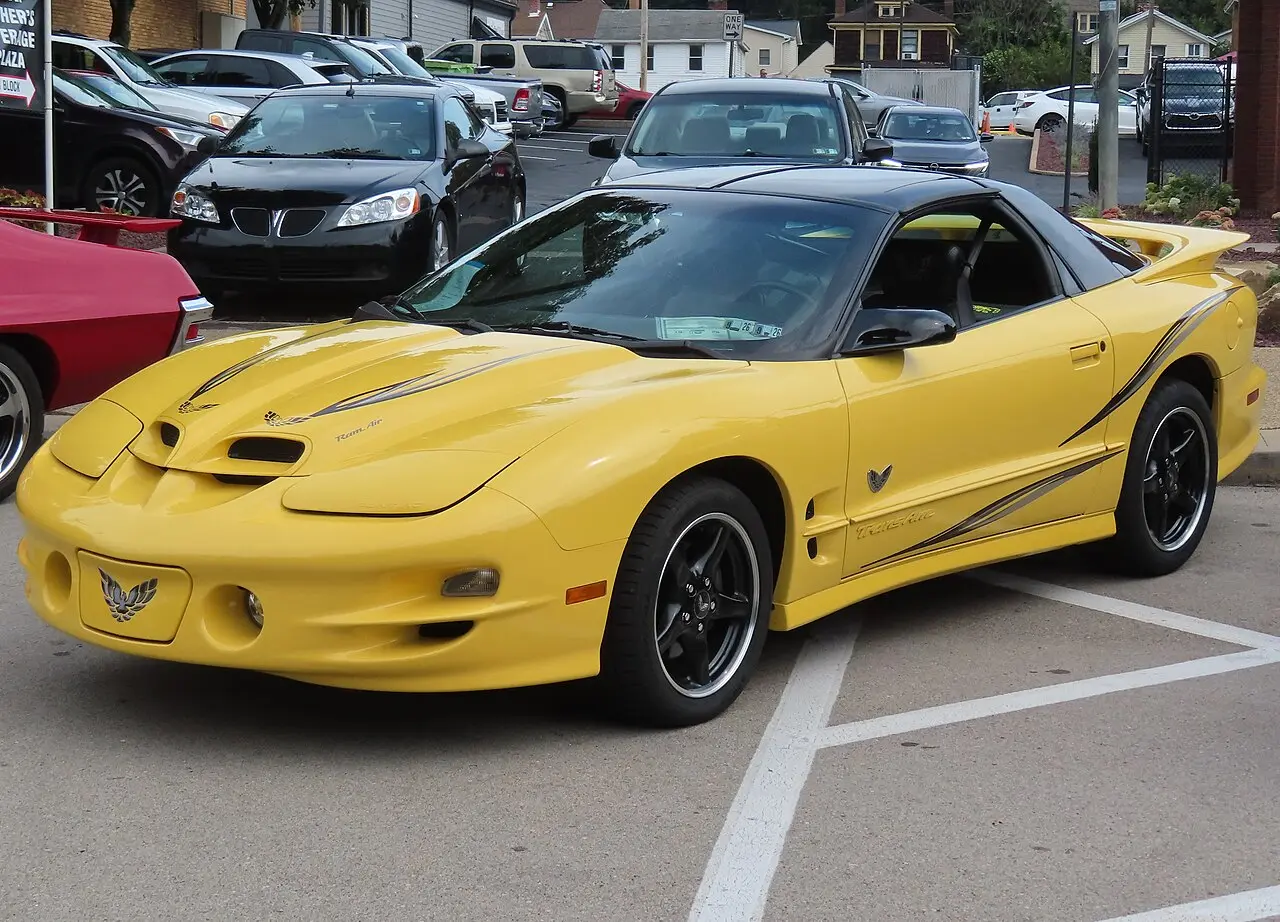
Pontiac

Pontiac Firebird

Pontiac Firebird
Photo: MercurySable99 / Wikimedia Commons · CC BY-SA 4.0

The official data lists 80 versions of the Pontiac Firebird (1984–2002), in the United States and Canada. Each market publishes its own figures, measured on its own test procedure.

At a glance

Years in the data
1984–2002
Markets
United States, Canada
Engines
2.5 L to 5.7 L
Fuels
Petrol
Lowest consumption (United States)
9.8 L/100 km (EPA)
Lowest consumption (Canada)
11.3 L/100 km (5-cycle)

What is the Pontiac Firebird?

The Firebird was a sporty, two-door, rear-wheel-drive Pontiac with a long bonnet and a hatchback-style rear. The Trans Am was one of its best-known performance versions. Its focused coupe shape gave it a distinct place in Pontiac’s range.

The third and fourth generations covered here ran from 1984 to 2002 and used GM’s F-body platform. The third generation brought a more aerodynamic shape and concealed pop-up headlights. The fourth generation carried that sleek profile forward with a redesigned body.

Firebird generations

The third generation ran from 1984 to 1992, followed by the fourth from 1993 to 2002. Both used the F-body platform. The third-generation car introduced a more aerodynamic shape, including pop-up headlights; the fourth-generation design carried the sleek profile forward with a reshaped body.

The Firebird range included the standard model and performance-oriented Formula and Trans Am versions, giving the name a range of sporty characters.

Engines and fuel consumption

US EPA figures cover petrol engines from 2.5 L to 5.7 L. Canadian NRCan figures cover 3.4 L to 5.7 L petrol engines. The lowest listed US consumption is 9.8 L/100 km, and the best combined EPA rating is 24 MPG. Canada’s lowest listed figure is 11.3 L/100 km on the NRCan 5-cycle test.

The EPA and Canadian 5-cycle procedures differ, so the figures are best understood within their own markets.

Where was the Firebird sold?

US EPA figures cover 1984 to 2002, while Canadian NRCan figures cover 1995 to 2002. The Canadian figures use the NRCan 5-cycle test.

Questions and answers

When were the third- and fourth-generation Firebirds sold?

The third generation ran from 1984 to 1992, and the fourth from 1993 to 2002.

What engine sizes are covered in the Firebird figures?

US EPA figures cover petrol engines from 2.5 L to 5.7 L; Canadian NRCan figures cover 3.4 L to 5.7 L.

What is the Firebird’s best combined EPA rating?

The best combined EPA rating is 24 MPG. The lowest listed EPA consumption is 9.8 L/100 km.

Why are the US and Canadian figures different?

The lowest listed figure is 9.8 L/100 km under the EPA procedure and 11.3 L/100 km under Canada’s NRCan 5-cycle test. The methods differ, so the numbers are not direct comparisons.
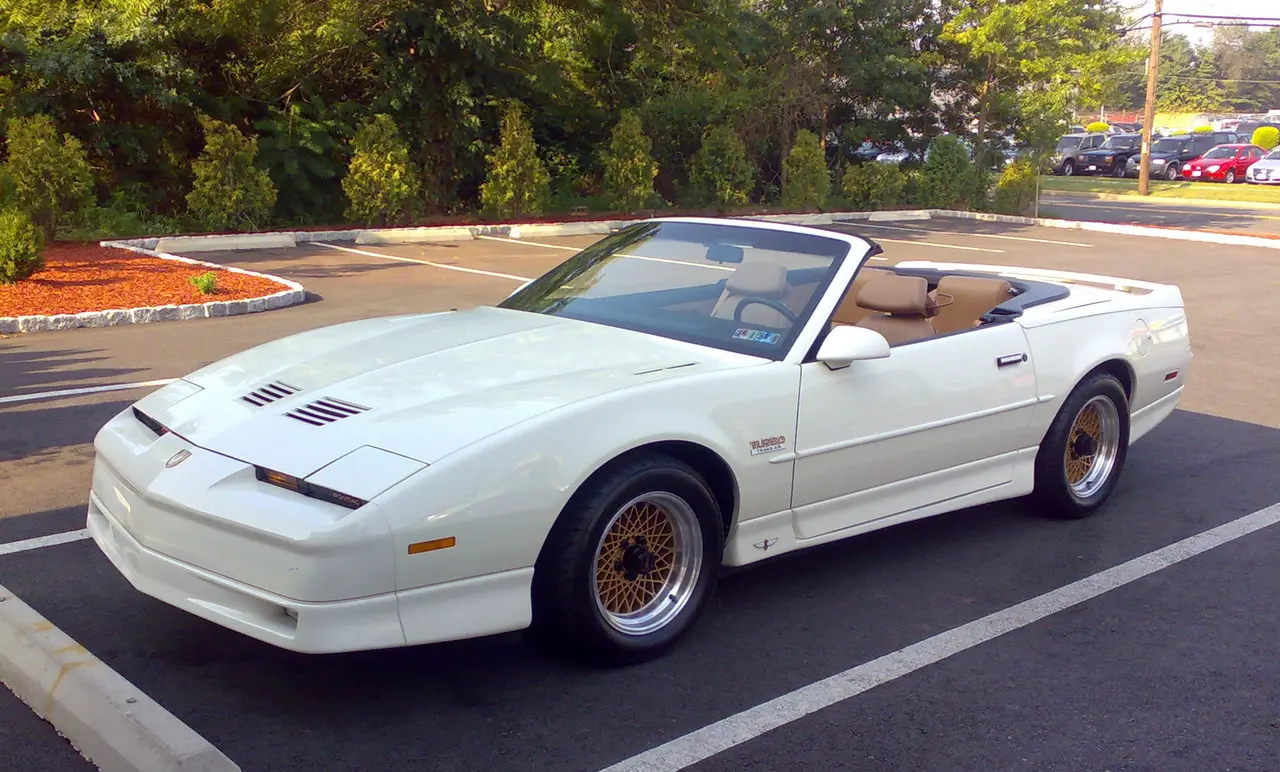
Firebird third generation (1984–1992)

Pontiac Firebird third generation
Photo: Spiritofecstasy / Wikimedia Commons · CC BY-SA 3.0

Model codes: F-body · Sold in: United States · References: en.wikipedia.org, sportscarmarket.com

Show all 36 versions

Firebird fourth generation (1993–2002)

Pontiac Firebird fourth generation
Photo: MercurySable99 / Wikimedia Commons · CC BY-SA 4.0

Model codes: F-body · References: en.wikipedia.org, sportscarmarket.com

United States 18 versions

Model years sold in the USA, from the EPA and the Department of Energy (fueleconomy.gov). MPG on the EPA test; litres per 100 km = 235.215 ÷ MPG.

Years and versionEngineFuelGearboxDriveConsumption (combined)CO₂
2001–2002CLKUP3.8 LPetrol4-speed automaticRear-wheel drive21 MPG (11.2 L/100 km) EPA263 g/km
20023.8 LPetrol5-speed manualRear-wheel drive21 MPG (11.2 L/100 km) EPA263 g/km
2001–2002CLKUP5.7 LPetrol4-speed automaticRear-wheel drive19 MPG (12.4 L/100 km) EPA291 g/km
2001–20025.7 LPetrol6-speed manualRear-wheel drive20 MPG (11.8 L/100 km) EPA276 g/km
1998–20013.8 LPetrol5-speed manualRear-wheel drive21 MPG (11.2 L/100 km) EPA263 g/km
1995–2000(FFS) (MPFI), CLKUP · CLKUP3.8 LPetrol4-speed automaticRear-wheel drive20 MPG (11.8 L/100 km) EPA276 g/km
2000CLKUP5.7 LPetrol4-speed automaticRear-wheel drive18 MPG (13.1 L/100 km) EPA307 g/km
20005.7 LPetrol6-speed manualRear-wheel drive19 MPG (12.4 L/100 km) EPA291 g/km
1998–1999(350 V8), CLKUP5.7 LPetrol4-speed automaticRear-wheel drive18 MPG (13.1 L/100 km) EPA307 g/km
1999(350 V8)5.7 LPetrol6-speed manualRear-wheel drive20 MPG (11.8 L/100 km) EPA276 g/km
1998(350 V8)5.7 LPetrol6-speed manualRear-wheel drive19 MPG (12.4 L/100 km) EPA291 g/km
1996–1997(FFS) (MPFI)3.8 LPetrol5-speed manualRear-wheel drive20 MPG (11.8 L/100 km) EPA276 g/km
1994–1997(350 V8) (FFS) (MPFI), CLKUP5.7 LPetrol4-speed automaticRear-wheel drive18 MPG (13.1 L/100 km) EPA307 g/km
1994–1997(350 V8) (FFS) (MPFI)5.7 LPetrol6-speed manualRear-wheel drive18 MPG (13.1 L/100 km) EPA307 g/km
1993–1995(FFS), CLKUP · (FFS) (MPFI) · (FFS) (MPFI), CLKUP3.4 LPetrol4-speed automaticRear-wheel drive20 MPG (11.8 L/100 km) EPA276 g/km
1993–1995(FFS) · (FFS) (MPFI)3.4 LPetrol5-speed manualRear-wheel drive20 MPG (11.8 L/100 km) EPA276 g/km
1993(350 V8) (FFS), CLKUP5.7 LPetrol4-speed automaticRear-wheel drive18 MPG (13.1 L/100 km) EPA307 g/km
1993(350 V8) (FFS)5.7 LPetrol6-speed manualRear-wheel drive18 MPG (13.1 L/100 km) EPA307 g/km

Canada 26 versions

Model years sold in Canada, from Natural Resources Canada fuel consumption ratings (5-cycle test).

Years and versionEngineFuelGearboxConsumption (combined)CO₂
2001–2002Subcompact3.8 LPetrol5-speed manual11.3 L/100 km 5-cycle260 g/km
2002Subcompact3.8 LPetrol4-speed automatic11.6 L/100 km 5-cycle267 g/km
2002Subcompact5.7 LPetrol4-speed automatic12.8 L/100 km 5-cycle294 g/km
2002Subcompact5.7 LPetrol6-speed manual12.1 L/100 km 5-cycle278 g/km
2001Subcompact3.8 LPetrol4-speed automatic11.3 L/100 km 5-cycle260 g/km
2001Subcompact5.7 LPetrol4-speed automatic12.9 L/100 km 5-cycle297 g/km
2001Subcompact5.7 LPetrol6-speed manual12.3 L/100 km 5-cycle283 g/km
1998–2000Subcompact3.8 LPetrol4-speed automatic11.7 L/100 km 5-cycle269 g/km
2000Subcompact3.8 LPetrol5-speed manual11.5 L/100 km 5-cycle265 g/km
2000Subcompact5.7 LPetrol4-speed automatic13.0 L/100 km 5-cycle299 g/km
2000Subcompact5.7 LPetrol6-speed manual12.6 L/100 km 5-cycle290 g/km
1997–1999Subcompact3.8 LPetrol5-speed manual11.5 L/100 km 5-cycle265 g/km
1999Subcompact5.7 LPetrol4-speed automatic12.9 L/100 km 5-cycle297 g/km
1999Subcompact5.7 LPetrol6-speed manual11.8 L/100 km 5-cycle271 g/km
1998Subcompact5.7 LPetrol4-speed automatic12.7 L/100 km 5-cycle292 g/km
1998Subcompact5.7 LPetrol6-speed manual13.0 L/100 km 5-cycle299 g/km
1997Subcompact3.8 LPetrol4-speed automatic12.0 L/100 km 5-cycle276 g/km
1996–1997Subcompact5.7 LPetrol6-speed manual13.3 L/100 km 5-cycle306 g/km
1997Subcompact5.7 LPetrol4-speed automatic13.5 L/100 km 5-cycle311 g/km
1996Subcompact3.8 LPetrol4-speed automatic11.7 L/100 km 5-cycle269 g/km
1996Subcompact3.8 LPetrol5-speed manual11.6 L/100 km 5-cycle267 g/km
1996Subcompact5.7 LPetrol4-speed automatic13.1 L/100 km 5-cycle301 g/km
1995Subcompact3.4 LPetrol4-speed automatic11.6 L/100 km 5-cycle267 g/km
1995Subcompact3.4 LPetrol5-speed manual11.6 L/100 km 5-cycle267 g/km
1995Subcompact5.7 LPetrol4-speed automatic13.1 L/100 km 5-cycle301 g/km
1995Subcompact5.7 LPetrol6-speed manual13.7 L/100 km 5-cycle315 g/km

Official figures are measured on standard test procedures and differ between markets. Your consumption depends on how, where and in what conditions you drive.