Pontiac

Pontiac Bonneville

Pontiac Bonneville
Photo: SsmIntrigue / Wikimedia Commons · CC BY-SA 4.0

The official data lists 56 versions of the Pontiac Bonneville (1984–2005), in the United States and Canada. Each market publishes its own figures, measured on its own test procedure.

At a glance

Years in the data
1984–2005
Markets
United States, Canada
Engines
3.8 L to 5.7 L
Fuels
Petrol, Diesel
Lowest consumption (United States)
11.2 L/100 km (EPA)
Lowest consumption (Canada)
11.3 L/100 km (5-cycle)

What is the Pontiac Bonneville?

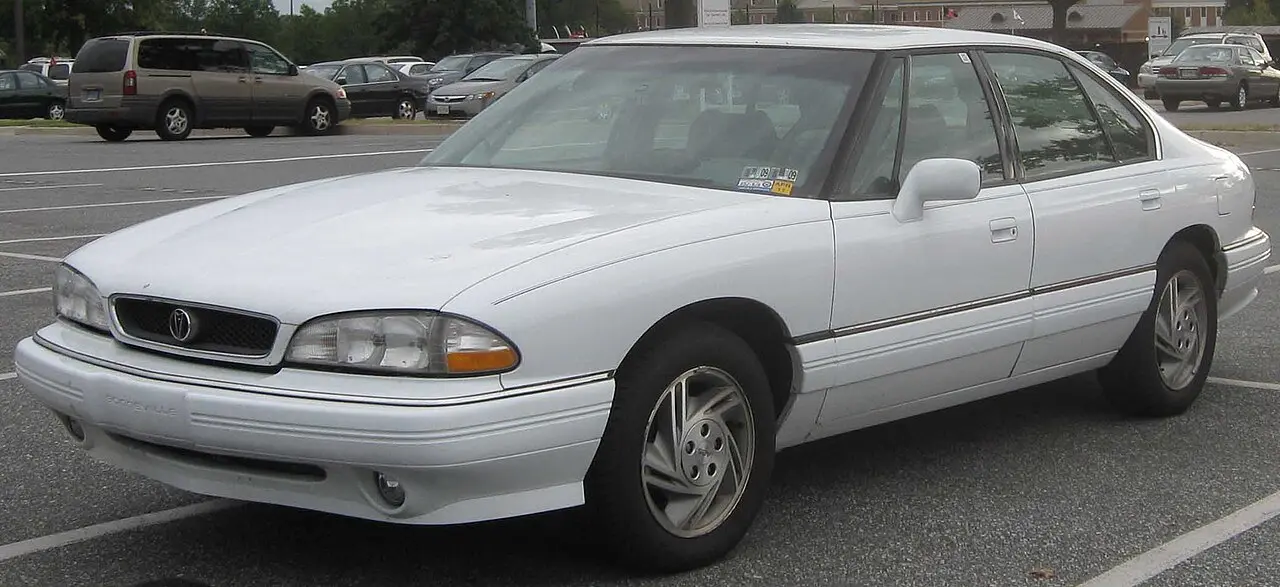
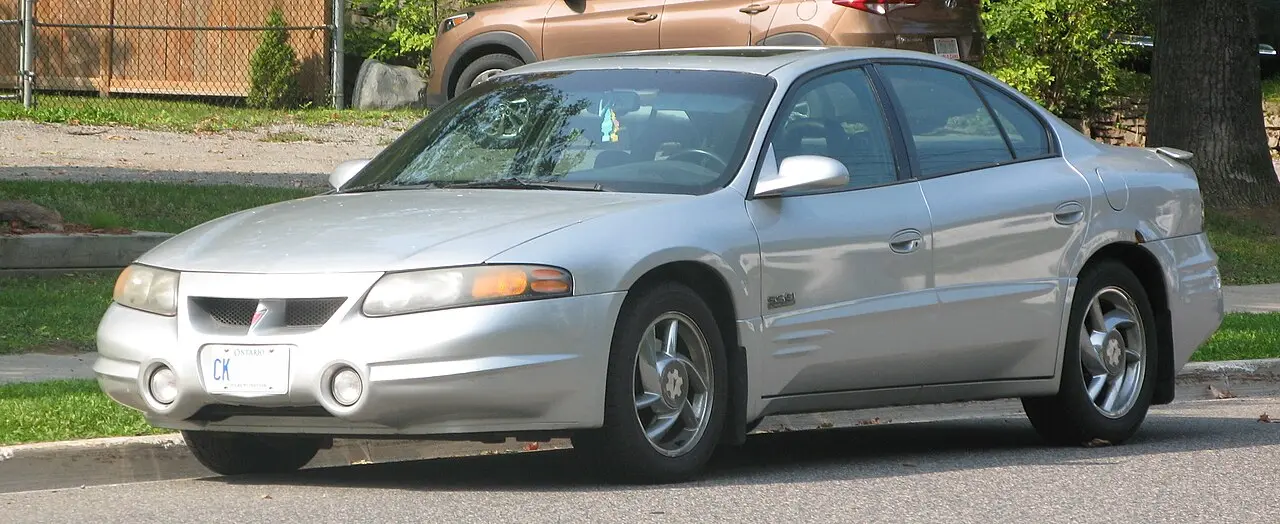
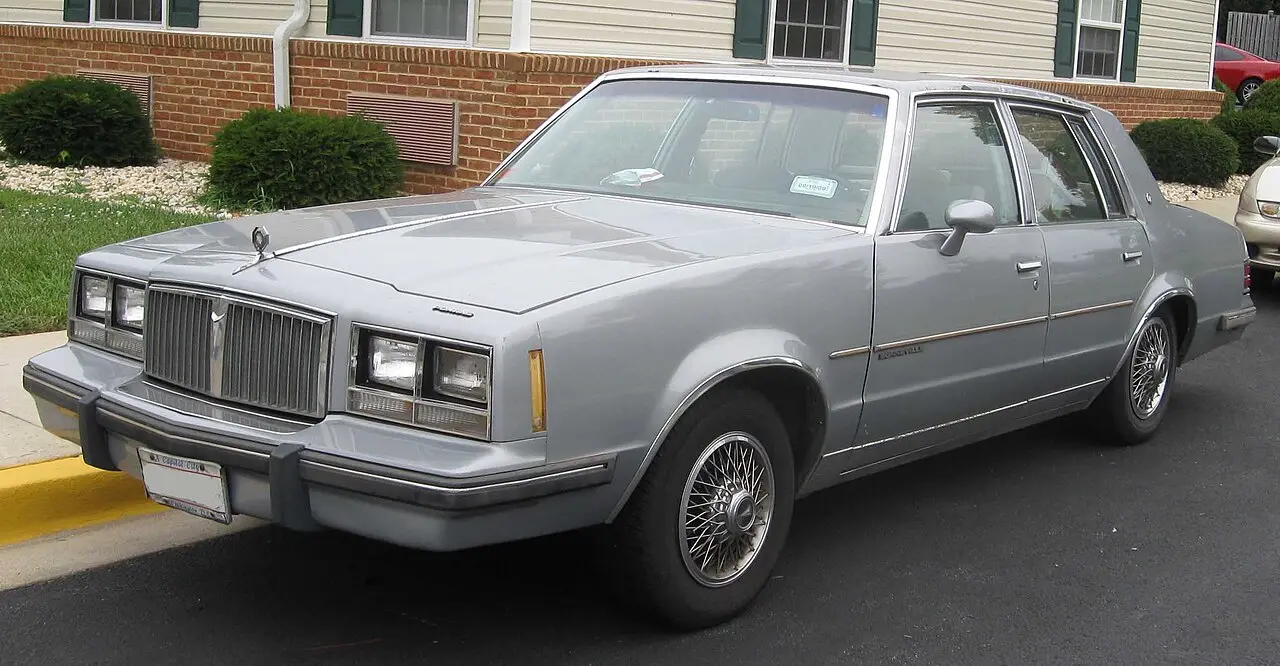
The Pontiac Bonneville was a large American sedan that served as one of the more spacious cars in Pontiac’s range. Its character changed over time: the seventh generation was a mid-size, rear-wheel-drive car, while later generations moved to front-wheel drive and returned to a full-size role. The final generation ran from 2000 to 2005.

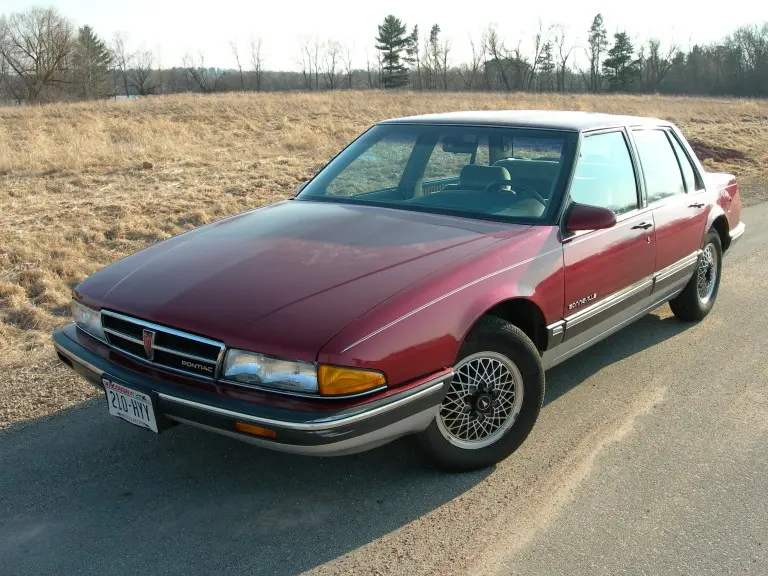
The Bonneville went through several redesigns. The eighth and ninth generations used the H-body platform, and the tenth returned to the G-body designation. Later models kept a four-door layout, with a roomy cabin and the practical shape of a traditional sedan.

Generations, engines and power

The generations listed are the seventh (1984–1986), eighth (1987–1991), ninth (1992–1999) and tenth (2000–2005). The US EPA figures span model years 1984–2005; Canadian NRCan figures span 1995–2005.

US engine sizes range from 3.8 L to 5.7 L, with petrol and diesel versions. The Canadian range runs from 3.8 L to 4.6 L and uses petrol. Engine choices varied by year and market.

How economical is the Pontiac Bonneville?

US EPA figures cover model years 1984–2005 and give a best combined rating of 21 MPG, or 11.2 L/100 km. Canada’s NRCan figures cover 1995–2005 and give a best consumption rating of 11.3 L/100 km under the 5-cycle test. The US range includes petrol and diesel, while the Canadian range uses petrol. EPA and NRCan use different test procedures, so the figures describe results within each market.

Where was the Bonneville sold?

The Bonneville appears in US and Canadian figures. The US EPA lists 37 versions, while Canada’s NRCan lists 19. The Canadian figures cover a later span of model years, and the engine and fuel ranges differ between markets.

Questions and answers

Which Bonneville generations are listed?

The seventh generation ran from 1984 to 1986, followed by the eighth from 1987 to 1991, the ninth from 1992 to 1999 and the tenth from 2000 to 2005.

Did the Bonneville have diesel engines?

US EPA versions include petrol and diesel; the Canadian versions listed use petrol.

What is the Bonneville’s best official fuel economy figure?

The best US EPA combined rating is 21 MPG, or 11.2 L/100 km. Canada’s best NRCan 5-cycle rating is 11.3 L/100 km.
Bonneville seventh generation (1984–1986)

Pontiac Bonneville seventh generation
Photo: IFCAR / Wikimedia Commons · Public domain

Model codes: G-body · References: classic.com, motogallery.com

Show all 15 versions

Bonneville eighth generation (1987–1991)

Pontiac Bonneville eighth generation
Photo: Wjcollier07 at English Wikipedia / Wikimedia Commons · Public domain

Model codes: H-body · References: pontiacproblems.com, en.wikipedia.org

Show all 5 versions

Bonneville ninth generation (1992–1999)

Pontiac Bonneville ninth generation
Photo: IFCAR / Wikimedia Commons · Public domain

Model codes: H-body · References: cars.com, en.wikipedia.org

Show all 20 versions

Bonneville tenth generation (2000–2005)

Pontiac Bonneville tenth generation
Photo: SsmIntrigue / Wikimedia Commons · CC BY-SA 4.0

Model codes: G-body · References: classic.com, en.wikipedia.org

United States 7 versions

Model years sold in the USA, from the EPA and the Department of Energy (fueleconomy.gov). MPG on the EPA test; litres per 100 km = 235.215 ÷ MPG.

Years and versionEngineFuelGearboxDriveConsumption (combined)CO₂
2004–2005CLKUP3.8 LPetrol4-speed automaticFront-wheel drive21 MPG (11.2 L/100 km) EPA263 g/km
2004–2005CLKUP · 275HP, CLKUP4.6 LPetrol4-speed automaticFront-wheel drive18 MPG (13.1 L/100 km) EPA307 g/km
2004SC, CLKUP3.8 LPetrol4-speed automaticFront-wheel drive20 MPG (11.8 L/100 km) EPA276 g/km
2002–2003SUPERCHR, CLKUP · CLKUP3.8 LPetrol4-speed automaticFront-wheel drive19 MPG (12.4 L/100 km) EPA291 g/km
2002–2003CLKUP3.8 LPetrol4-speed automaticFront-wheel drive21 MPG (11.2 L/100 km) EPA263 g/km
2000–2001CLKUP3.8 LPetrol4-speed automaticFront-wheel drive20 MPG (11.8 L/100 km) EPA276 g/km
2001CLKUP3.8 LPetrol4-speed automaticFront-wheel drive20 MPG (11.8 L/100 km) EPA276 g/km

Canada 9 versions

Model years sold in Canada, from Natural Resources Canada fuel consumption ratings (5-cycle test).

Years and versionEngineFuelGearboxConsumption (combined)CO₂
2004–2005Full-size3.8 LPetrol4-speed automatic11.3 L/100 km 5-cycle260 g/km
2005Full-size4.6 LPetrol4-speed automatic12.6 L/100 km 5-cycle290 g/km
2002–2003Full-size3.8 LPetrol4-speed automatic11.4 L/100 km 5-cycle262 g/km
2003Full-size3.8 LPetrol4-speed automatic12.4 L/100 km 5-cycle285 g/km
2002Full-size3.8 LPetrol4-speed automatic12.3 L/100 km 5-cycle283 g/km
2001Full-size3.8 LPetrol4-speed automatic11.5 L/100 km 5-cycle265 g/km
2001Full-size3.8 LPetrol4-speed automatic12.1 L/100 km 5-cycle278 g/km
2000Full-size3.8 LPetrol4-speed automatic12.0 L/100 km 5-cycle276 g/km
2000Full-size3.8 LPetrol4-speed automatic12.6 L/100 km 5-cycle290 g/km

Official figures are measured on standard test procedures and differ between markets. Your consumption depends on how, where and in what conditions you drive.