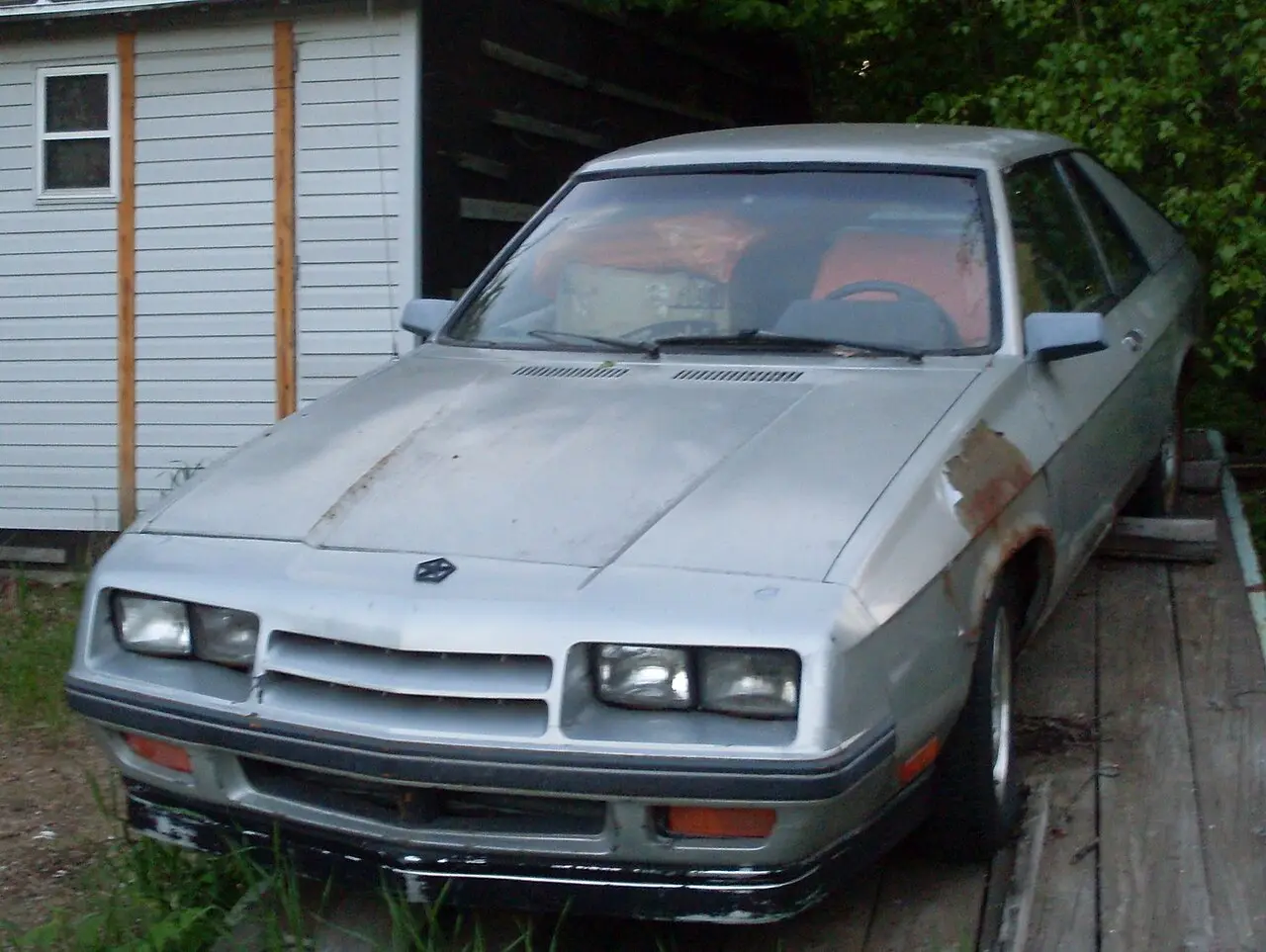
Plymouth

Plymouth Turismo

Plymouth Turismo
Photo: Bull-Doser / Wikimedia Commons · Public domain

The official data lists 20 versions of the Plymouth Turismo (1984–1987), in the United States. Each market publishes its own figures, measured on its own test procedure.

At a glance

Years in the data
1984–1987
Markets
United States
Engines
1.6 L to 2.2 L
Fuels
Petrol
Lowest consumption (United States)
7.8 L/100 km (EPA)

What is the Plymouth Turismo?

The Plymouth Turismo was a compact, two-door hatchback in the brand’s range. Its short body and lift-up rear hatch made it a practical choice for everyday driving, while its sporty shape gave it a distinct look among Plymouth’s smaller cars.

Generation and design

The Turismo had one generation, based on Chrysler’s L-body platform. It arrived as the Plymouth counterpart to the Dodge Charger, replacing the earlier TC3 name. Front-wheel drive and a transverse engine layout helped give the car its compact proportions.

Engines and power

The US lineup used petrol engines from 1.6 L to 2.2 L.

How economical is the Plymouth Turismo?

For US models, the EPA’s best combined rating is 30 MPG, and the lowest listed consumption is 7.8 L/100 km. EPA ratings use a different test procedure from Europe’s WLTP or NEDC tests and Canada’s 5-cycle ratings.

Questions and answers

How many doors does the Plymouth Turismo have?

It is a two-door hatchback.

When was the Turismo sold?

Its single generation ran from 1983 to 1987. The US EPA figures cover 1984–1987.

What was the Turismo’s best EPA fuel economy?

Its best listed US combined rating is 30 MPG.

Turismo first generation (1983–1987)

Plymouth Turismo first generation
Photo: Bull-Doser / Wikimedia Commons · Public domain

Model codes: L · References: en.wikipedia.org, automobile-catalog.com

United States 20 versions

Model years sold in the USA, from the EPA and the Department of Energy (fueleconomy.gov). MPG on the EPA test; litres per 100 km = 235.215 ÷ MPG.

Years and versionEngineFuelGearboxDriveConsumption (combined)CO₂
1987(FFS)2.2 LPetrol3-speed automaticFront-wheel drive22 MPG (10.7 L/100 km) EPA251 g/km
1987(FFS), SIL2.2 LPetrol5-speed manualFront-wheel drive26 MPG (9.0 L/100 km) EPA212 g/km
1986(FFS), SIL1.6 LPetrol4-speed manualFront-wheel drive30 MPG (7.8 L/100 km) EPA184 g/km
1985–1986(FFS)1.6 LPetrol4-speed manualFront-wheel drive27 MPG (8.7 L/100 km) EPA205 g/km
1986(FFS)2.2 LPetrol3-speed automaticFront-wheel drive24 MPG (9.8 L/100 km) EPA230 g/km
1986(FFS), SIL2.2 LPetrol5-speed manualFront-wheel drive26 MPG (9.0 L/100 km) EPA212 g/km
1986(FFS)2.2 LPetrol5-speed manualFront-wheel drive22 MPG (10.7 L/100 km) EPA251 g/km
1985(FFS) CA model, SIL1.6 LPetrol4-speed manualFront-wheel drive30 MPG (7.8 L/100 km) EPA184 g/km
1985(FFS), SIL1.6 LPetrol4-speed manualFront-wheel drive30 MPG (7.8 L/100 km) EPA184 g/km
1985(FFS) CA model2.2 LPetrol3-speed automaticFront-wheel drive20 MPG (11.8 L/100 km) EPA276 g/km
1985(FFS) CA model, SIL2.2 LPetrol5-speed manualFront-wheel drive25 MPG (9.4 L/100 km) EPA221 g/km
1985(FFS) CA model · (FFS)2.2 LPetrol5-speed manualFront-wheel drive21 MPG (11.2 L/100 km) EPA263 g/km
1985(FFS)2.2 LPetrol3-speed automaticFront-wheel drive23 MPG (10.2 L/100 km) EPA240 g/km
1985(FFS), SIL2.2 LPetrol5-speed manualFront-wheel drive26 MPG (9.0 L/100 km) EPA212 g/km
1985(FFS), SIL2.2 LPetrol5-speed manualFront-wheel drive27 MPG (8.7 L/100 km) EPA205 g/km
1984(FFS)1.6 LPetrol4-speed manual–30 MPG (7.8 L/100 km) EPA184 g/km
1984(FFS) CA model1.6 LPetrol4-speed manual–29 MPG (8.1 L/100 km) EPA190 g/km
1984(FFS)2.2 LPetrol3-speed automatic–23 MPG (10.2 L/100 km) EPA240 g/km
1984(FFS) · (FFS) CA model2.2 LPetrol5-speed manual–25 MPG (9.4 L/100 km) EPA221 g/km
1984(FFS) CA model2.2 LPetrol3-speed automatic–21 MPG (11.2 L/100 km) EPA263 g/km

Official figures are measured on standard test procedures and differ between markets. Your consumption depends on how, where and in what conditions you drive.