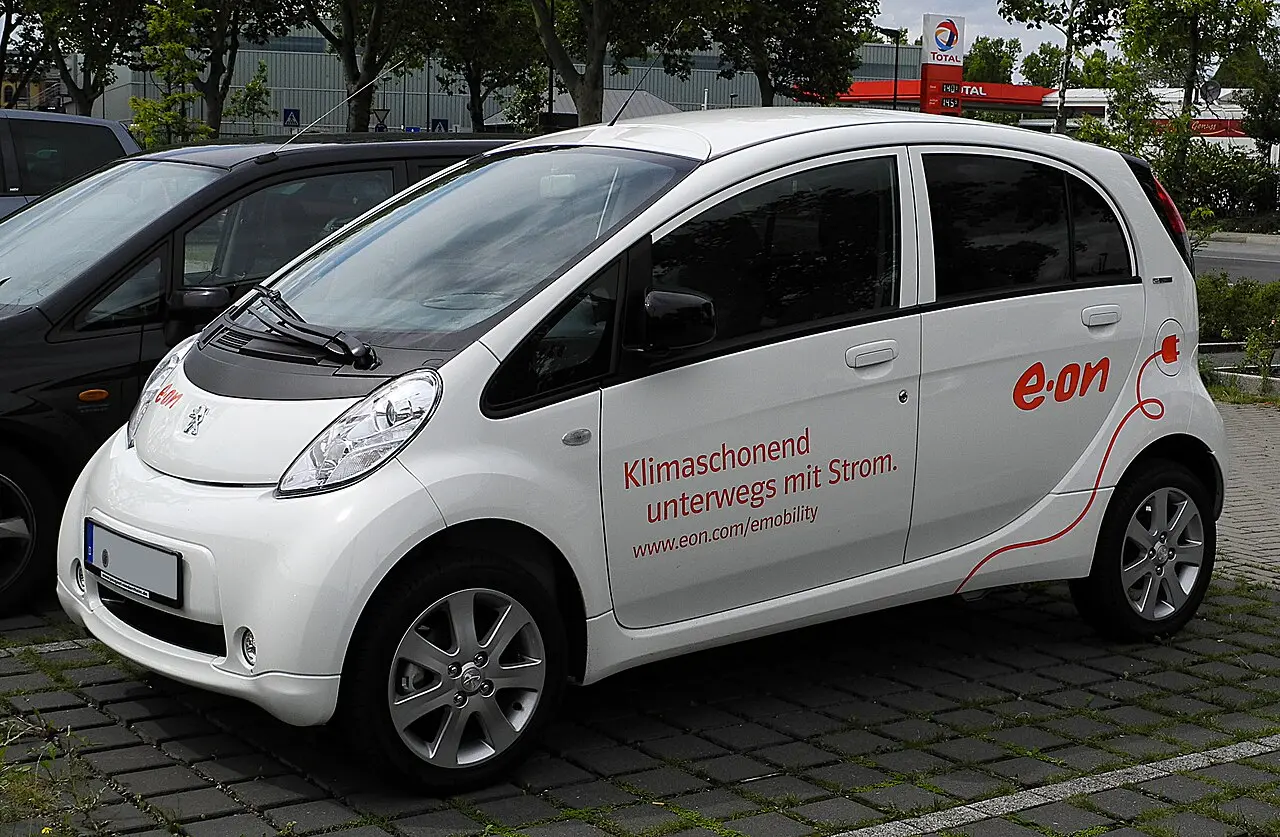
The official data lists 17 versions of the Peugeot iOn (2010–2020), in the European Union, the United Kingdom, and France. Each market publishes its own figures, measured on its own test procedure.
At a glance
Years in the data
2010–2020
Markets
European Union, United Kingdom, France
Power
35 kW (48 PS) to 49 kW (67 PS)
Fuels
Electric
New registrations in the EU
21,912
What is the Peugeot iOn?
The Peugeot iOn is a small electric city car developed with Mitsubishi. Its compact shape suits urban journeys and parking, and Peugeot sold it alongside the closely related Citroën C-Zero and Mitsubishi i-MiEV.
The iOn generation ran from 2010 to 2020. Official EU registration figures cover 2010–2020, UK VCA figures cover 2014–2018 and French ADEME figures cover 2013–2015.
Electric motor and power
The iOn is powered by an electric motor. EU and French listings show outputs from 35 kW (48 PS) to 49 kW (67 PS). The 35 kW (48 PS) version appears in the leading EU registration entries.
The EU total is 21,912 registrations over 2010–2020. The 35 kW (48 PS) electric version features among the most registered entries.
How efficient is the Peugeot iOn?
The iOn is electric, so petrol-style consumption in L/100 km does not apply. The official listings identify electric versions but give no electricity consumption or CO₂ figure. Test procedures differ by market: Europe uses WLTP or NEDC, the USA uses EPA testing, and Canada uses a 5-cycle procedure.
Where was the Peugeot iOn sold?
The iOn appears in official EU registration figures, UK VCA figures and French ADEME figures. The UK listing covers one electric version, while the French listing covers two.
Questions and answers
Is the Peugeot iOn electric?
Yes. Its listed versions use electric power, with outputs from 35 kW (48 PS) to 49 kW (67 PS).
How long did the iOn generation run?
The listed generation ran from 2010 to 2020.
Which markets have official iOn listings?
The iOn appears in EU registration, UK VCA and French ADEME figures.
New cars registered in the EU (plus Norway and Iceland), from the European Environment Agency. Figures on the NEDC procedure until 2020 and on WLTP from 2021; versions are grouped by engine and power, with their number of registrations.
Years and version
Engine
Power
Fuel
Consumption (combined)
CO₂
Electric range
EU registrations
2020
Electric motor
35 kW (48 PS)
Electric
16.9 kWh/100 km NEDC
0 g/km
101 km
438
2020
Electric motor
49 kW (67 PS)
Electric
15.9 kWh/100 km NEDC
0 g/km
106 km
212
2019
Electric motor
35 kW (48 PS)
Electric
14.1 kWh/100 km NEDC
0 g/km
–
1,424
2019
Electric motor
49 kW (67 PS)
Electric
13.0 kWh/100 km NEDC
0 g/km
–
364
2017–2018
Electric motor
35 kW (48 PS)
Electric
12.6 kWh/100 km NEDC
0 g/km
–
5,148
2015–2018
Electric motor
49 kW (67 PS)
Electric
12.6 kWh/100 km NEDC
0 g/km
–
426
2016
Electric motor
35 kW (48 PS)
Electric
12.6 kWh/100 km NEDC
0 g/km
–
2,976
2015
Electric motor
35 kW (48 PS)
Electric
12.6 kWh/100 km NEDC
0 g/km
–
1,640
2014
Electric motor
35 kW (48 PS)
Electric
12.7 kWh/100 km NEDC
0 g/km
–
506
2013
Electric motor
35 kW (48 PS)
Electric
13.2 kWh/100 km NEDC
0 g/km
–
700
2012
Electric motor
35 kW (48 PS)
Electric
13.5 kWh/100 km NEDC
7 g/km
–
4,780
2012
Electric motor
49 kW (67 PS)
Electric
–
0 g/km
–
22
2011
Electric motor
35 kW (48 PS)
Electric
13.5 kWh/100 km NEDC
0 g/km
–
3,264
2010
Electric motor
–
Electric
13.5 kWh/100 km NEDC
0 g/km
–
12
United Kingdom 1 version
New cars on sale in the UK, from the Vehicle Certification Agency. NEDC figures until 2018 and WLTP figures after; years are the editions a version appeared in.
Years and version
Engine
Fuel
Consumption (combined)
CO₂
Electric range
2014–2018iOn
Electric motor
Electric
12.6 kWh/100 km NEDC
0 g/km
150 km
France 2 versions
New cars on sale in France, from ADEME Car Labelling. NEDC figures until 2015, WLTP figures in the current catalogue.
Years and version
Engine
Power
Fuel
Gearbox
2015ION electrique (67ch)
Electric motor
49 kW (67 PS)
Electric
Continuously variable (CVT)
2013–2014ION electrique (67ch)
Electric motor
35 kW (48 PS)
Electric
Continuously variable (CVT)
Official figures are measured on standard test procedures and differ between markets. Your consumption depends on how, where and in what conditions you drive.