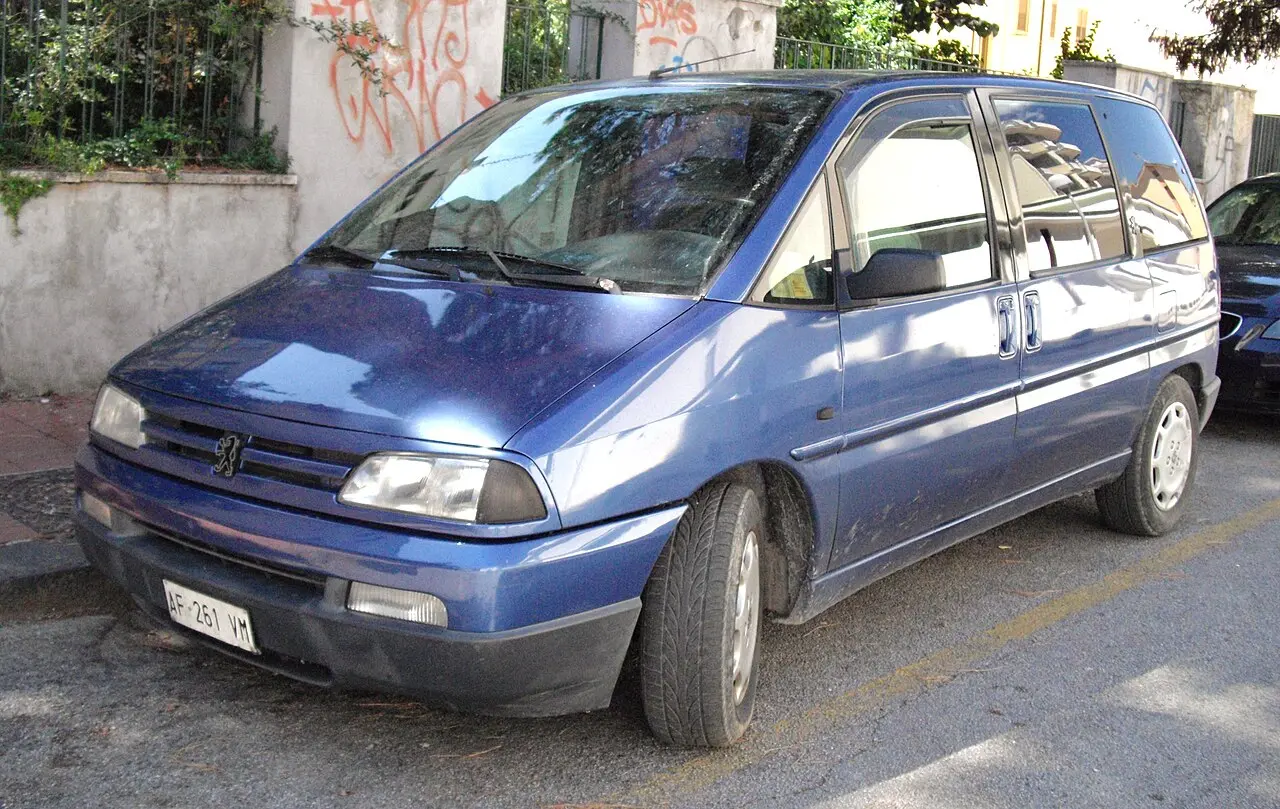
What is the Peugeot 806?
The Peugeot 806 is a large MPV designed to carry passengers and luggage. It was Peugeot’s first large MPV, with seating that could be rearranged to suit different journeys. The model was produced from 1994 to 2002, when the Peugeot 807 took its place in the range.
The cabin had a gear lever mounted in the dashboard and up to seven seats. Peugeot introduced a light facelift in 1998, followed by an HDi engine in 2000. These updates kept the 806’s practical layout while refreshing the model.
What generations did the Peugeot 806 have?
The 806’s single generation ran from 1994 to 2002 and carries the code U60. Its facelift and engine update arrived during that period, without a separate generation name.
Engines, power and fuel consumption
UK VCA figures list four versions for 2000–2003, with 2.0 L petrol and diesel engines. Power ranges from 82 kW (111 PS) to 104 kW (141 PS). The lowest listed consumption is 6.7 L/100 km on the NEDC test, an older European procedure.
Where was the Peugeot 806 sold?
The 806’s generation is documented for European and UK markets. UK VCA figures cover 2000–2003, while the model’s production ran from 1994 to 2002. Peugeot replaced it with the 807 in 2002.
Questions and answers
What kind of vehicle is the Peugeot 806?
It is a large MPV designed around passenger space and flexible seating.
When was the Peugeot 806 made?
Its generation ran from 1994 to 2002.
What power did the UK versions produce?
The listed 2.0 L versions ranged from 82 kW (111 PS) to 104 kW (141 PS).
What is the lowest listed consumption for the 806?
The lowest UK figure is 6.7 L/100 km on the NEDC test.