Peugeot

Peugeot 607

Peugeot 607
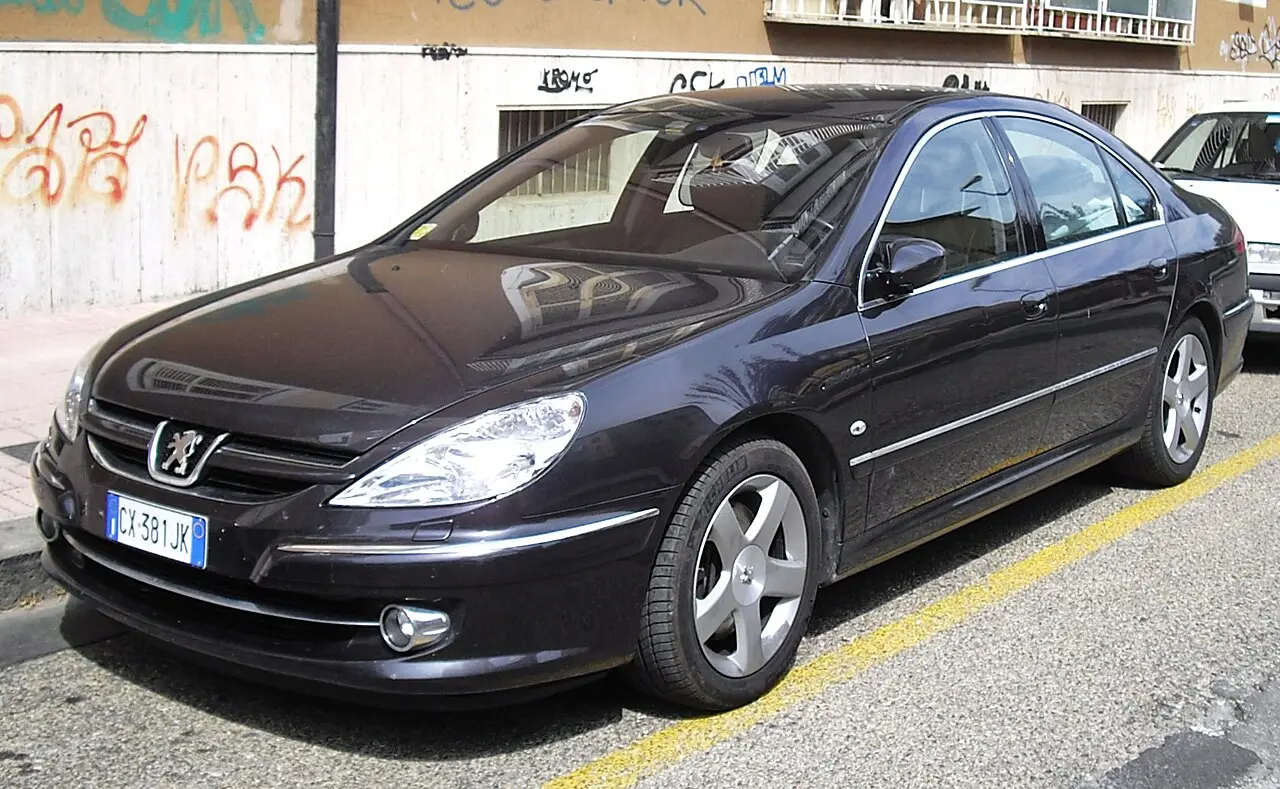
Photo: Corvettec6r / Wikimedia Commons · Public domain

The official data lists 30 versions of the Peugeot 607 (2000–2011), in the European Union and the United Kingdom. Each market publishes its own figures, measured on its own test procedure.

At a glance

Years in the data
2000–2011
Markets
European Union, United Kingdom
Engines
2.0 L to 2.9 L
Power
82 kW (111 PS) to 157 kW (214 PS)
Fuels
Diesel, Petrol
Lowest consumption (United Kingdom)
6.0 L/100 km (NEDC)
New registrations in the EU
2,522

What kind of car is the Peugeot 607?

The Peugeot 607 was a large executive saloon at the top of the maker’s passenger-car range. Its four-door body and roomy cabin suited longer journeys and formal use. The single-generation model, identified by the code Z8, ran from 1999 to 2010.

As Peugeot’s flagship saloon, the 607 sat above the family-focused 406 in the range.

Engines and power

In the UK, the 607 was offered with 2.0-litre to 2.9-litre petrol and diesel engines. Listed power ranged from 82 kW (111 PS) to 157 kW (214 PS). The UK figures span 2000–2008 and 24 versions.

EU registration figures for 2010–2011 show diesel versions with engines from 2.0 litres to 2.7 litres and power from 100 kW (136 PS) to 150 kW (204 PS). The 2.7-litre diesel was the most registered listed engine, followed by the 2.0-litre diesel.

Fuel consumption and CO₂

The lowest listed UK fuel consumption is 6 L/100 km on the NEDC test. This is the lowest result across the UK range; consumption varies by version.

European results may use NEDC or WLTP, depending on the vehicle and period. The USA’s EPA procedure and Canada’s 5-cycle test use different methods, so fuel-consumption figures from these markets are not directly comparable.

Where was the 607 sold?

The 607 generation ran from 1999 to 2010. UK figures cover 2000–2008, while EU registrations are recorded for 2010–2011, with 2,522 registrations across six listed versions.

The 607 also marked a step in Peugeot’s diesel technology: the maker introduced its particulate-filter system on the model.

Questions and answers

When was the Peugeot 607 sold?

The 607 generation ran from 1999 to 2010.

What kind of car was the 607?

It was a large four-door executive saloon positioned at the top of Peugeot’s passenger-car range.

What was the lowest listed fuel consumption?

The lowest listed UK figure is 6 L/100 km on the NEDC test.

What engines were offered?

The UK range covered 2.0-litre to 2.9-litre petrol and diesel engines, with listed power from 82 kW (111 PS) to 157 kW (214 PS). EU registration figures list 2.0-litre to 2.7-litre diesels.

607 607 (1999–2010)

Peugeot 607 607
Photo: Corvettec6r / Wikimedia Commons · Public domain

Model codes: Z8 · Sold in: European Union and United Kingdom · References: en.wikipedia.org, peugeot.nl

European Union 3 versions

New cars registered in the EU (plus Norway and Iceland), from the European Environment Agency. Figures on the NEDC procedure until 2020 and on WLTP from 2021; versions are grouped by engine and power, with their number of registrations.

Years and versionEngineFuelCO₂EU registrations
20102.7 LDiesel223 g/km1,250
20102.0 LDiesel161 g/km992
20102.2 LDiesel172 g/km100

United Kingdom 24 versions

New cars on sale in the UK, from the Vehicle Certification Agency. NEDC figures until 2018 and WLTP figures after; years are the editions a version appeared in.

Years and versionEnginePowerFuelGearboxConsumption (combined)CO₂
20082.0 HDi FAP (136 bhp)2.0 L101 kW (138 PS)Diesel6-speed manual6.1 L/100 km NEDC160 g/km
2006–20082.2 HDi FAP (170 bhp)2.2 L127 kW (172 PS)Diesel6-speed manual6.4 L/100 km NEDC170 g/km
20083.0 V6 (211 bhp)2.9 L157 kW (214 PS)Petrol6-speed automatic10.2 L/100 km NEDC242 g/km
2006–20072.0 HDi FAP (136 bhp)2.0 L101 kW (138 PS)Diesel6-speed manual6.1 L/100 km NEDC162 g/km
2006–20073.0 V6 (210 bhp)2.9 L157 kW (213 PS)Petrol6-speed automatic10.2 L/100 km NEDC242 g/km
20062.0 HDi FAP (110 bhp)2.0 L82 kW (111 PS)Diesel5-speed manual6.0 L/100 km NEDC160 g/km
20062.2 HDi FAP (136 bhp)2.2 L101 kW (138 PS)Diesel4-speed automatic7.2 L/100 km NEDC193 g/km
20062.2 HDi FAP (136 bhp)2.2 L101 kW (138 PS)Diesel6-speed manual6.6 L/100 km NEDC177 g/km
20062.2 (160 bhp)2.2 L119 kW (162 PS)Petrol5-speed manual9.2 L/100 km NEDC219 g/km
20062.2 (160 bhp)2.2 L119 kW (162 PS)Petrol4-speed automatic9.4 L/100 km NEDC225 g/km
2002–20042.0 HDi FAP (110 bhp)2.0 L82 kW (111 PS)Diesel5-speed manual6.0 L/100 km NEDC160 g/km
2001–20042.0 (138 bhp)2.0 L103 kW (140 PS)Petrol5-speed manual8.6 L/100 km NEDC205 g/km
2001–20042.2 Hdi turbo (136 bhp) · 2.2 HDi FAP (136 bhp)2.2 L101 kW (138 PS)Diesel5-speed manual6.7 L/100 km NEDC178 g/km
2001–20042.2 Hdi turbo (136 bhp) · 2.2 HDi FAP (136 bhp)2.2 L101 kW (138 PS)Diesel4-speed automatic7.2 L/100 km NEDC193 g/km
20042.2 HDi FAP (136 bhp)2.2 L101 kW (138 PS)Diesel6-speed manual6.6 L/100 km NEDC177 g/km
2001–20042.2 (160 bhp)2.2 L119 kW (162 PS)Petrol5-speed manual9.2 L/100 km NEDC219 g/km
2001–20042.2 (160 bhp)2.2 L119 kW (162 PS)Petrol4-speed automatic9.4 L/100 km NEDC225 g/km
2003–20043.0 V6 (210 bhp)2.9 L157 kW (213 PS)Petrol4-speed automatic10.2 L/100 km NEDC245 g/km
2000–20023.0 V6 210 bhp · 3.0 V6 (210 bhp)2.9 L157 kW (213 PS)Petrol4-speed automatic10.2 L/100 km NEDC245 g/km
2001–20023.0 V6 (210 bhp)2.9 L157 kW (213 PS)Petrol5-speed manual9.8 L/100 km NEDC234 g/km
2000–20013.0 V6 210 bhp · 3.0 V6 (210 bhp)2.9 L157 kW (213 PS)Petrol5-speed manual9.8 L/100 km NEDC234 g/km
20002.2 Hdi 136 bhp2.2 L101 kW (138 PS)Diesel5-speed manual6.8 L/100 km NEDC180 g/km
20002.2 160 bhp2.2 L119 kW (162 PS)Petrol5-speed manual9.1 L/100 km NEDC217 g/km
20002.2 160 bhp2.2 L119 kW (162 PS)Petrol4-speed automatic9.7 L/100 km NEDC231 g/km

Versions outside these generations

European Union 3 versions

New cars registered in the EU (plus Norway and Iceland), from the European Environment Agency. Figures on the NEDC procedure until 2020 and on WLTP from 2021; versions are grouped by engine and power, with their number of registrations.

Years and versionEnginePowerFuelCO₂EU registrations
20112.0 L100 kW (136 PS)Diesel159 g/km98
20112.7 L150 kW (204 PS)Diesel223 g/km70
20112.2 L–Diesel170 g/km12

Official figures are measured on standard test procedures and differ between markets. Your consumption depends on how, where and in what conditions you drive.