Peugeot

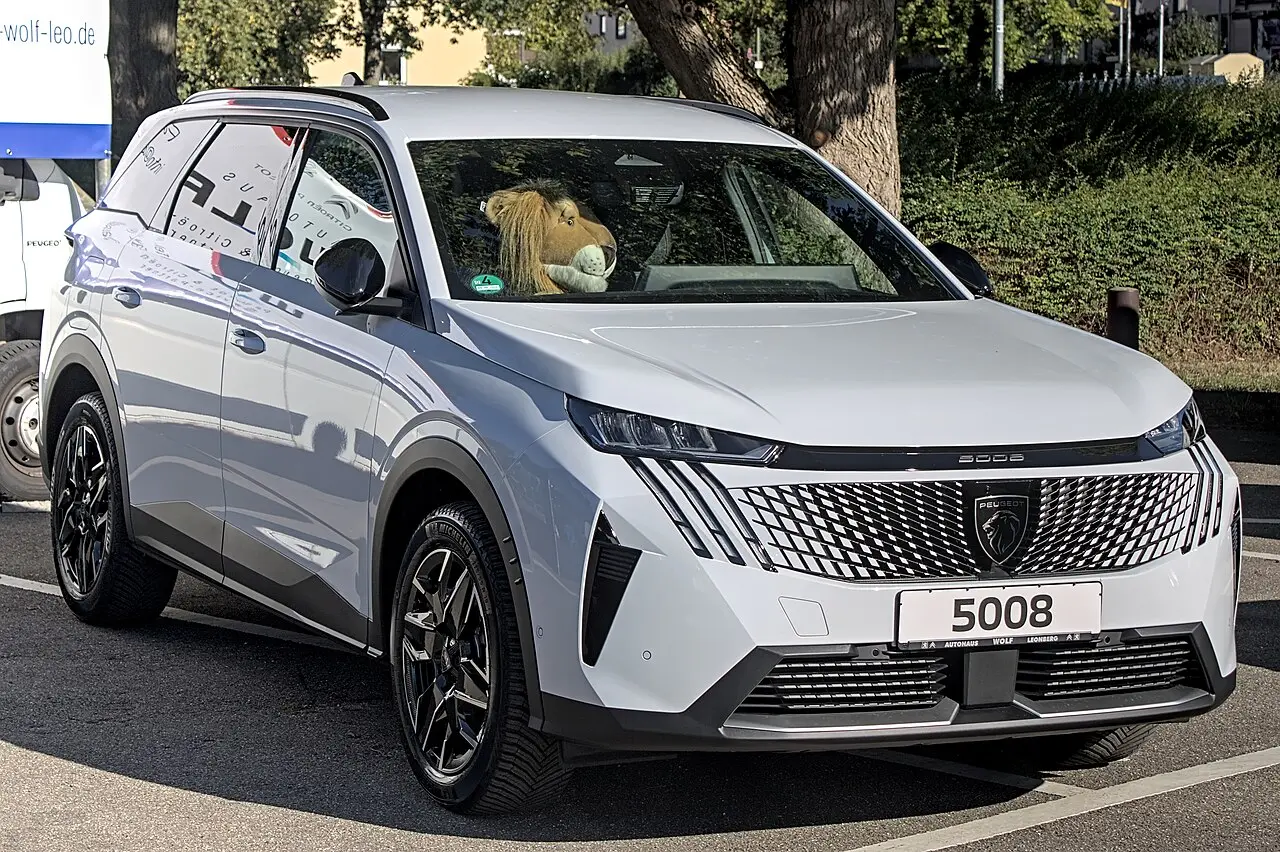
Peugeot 5008

Peugeot 5008
Photo: Alexander-93 / Wikimedia Commons · CC BY-SA 4.0

The official data lists 354 versions of the Peugeot 5008 (2010–2026), in the European Union, the United Kingdom, and France. Each market publishes its own figures, measured on its own test procedure.

At a glance

Years in the data
2010–2026
Markets
European Union, United Kingdom, France
Engines
1.2 L to 2.0 L
Power
82 kW (111 PS) to 200 kW (272 PS)
Fuels
Diesel, Petrol, Hybrid, Electric, Plug-in hybrid
Lowest consumption (United Kingdom)
4.0 L/100 km (NEDC)
Lowest consumption (France)
4.1 L/100 km (NEDC)
Lowest consumption (European Union)
5.2 L/100 km (WLTP)
Plug-in hybrid, weighted (European Union)
1.2 L/100 km (WLTP)
Plug-in hybrid, weighted (United Kingdom)
4.6 L/100 km (WLTP)
New registrations in the EU
1,356,124

What is the Peugeot 5008?

The Peugeot 5008 started as a family MPV, then took on an SUV shape from its second generation. Its roomy cabin and available third row give it a distinct role in Peugeot’s range, alongside smaller family crossovers. The latest generation adds electric power alongside hybrid and plug-in hybrid choices.

The change from MPV to SUV reshaped the 5008’s exterior while preserving its focus on passenger space. The model’s fuel choices have also expanded over time, with electric versions appearing in the EU and UK listings.

5008 generations, engines and power

The 5008 I ran from 2009 to 2017. It was followed by the 5008 II, from 2017 to 2024, and the 5008 III, which began in 2024 and continues today. EU figures cover engine sizes from 1.2 to 2.0 litres and power from 80 kW (109 PS) to 182 kW (247 PS). UK figures range from 82 kW (111 PS) to 240 kW (326 PS); French figures list outputs from 82 kW (111 PS) to 120 kW (163 PS).

The EU and UK listings include petrol, diesel, hybrid, plug-in hybrid and electric versions. French listings include petrol, diesel and hybrid versions.

Fuel consumption and where it was sold

The lowest listed EU consumption for petrol, diesel and hybrid versions is 5.2 L/100 km on WLTP. The lowest EU plug-in hybrid figure is 1.2 L/100 km on WLTP, a weighted result that assumes part of the driving is electric. In UK figures, the lowest conventional petrol, diesel or hybrid result is 4 L/100 km on NEDC; the plug-in hybrid figure is 4.6 L/100 km on WLTP. France lists a low of 4.1 L/100 km on NEDC.

The 5008 appears in EU registration figures from 2010 to 2025, UK VCA figures from 2010 to 2026, and French ADEME figures from 2012 to 2015. NEDC and WLTP are different European test procedures. The USA uses EPA testing and Canada uses the 5-cycle procedure, so consumption figures should be read in the context of their market and test method.

Questions and answers

What changed between the first and second 5008 generations?

The first generation was an MPV; the second, introduced in 2017, adopted an SUV body style.

What is the EU power range for the Peugeot 5008?

EU figures run from 80 kW (109 PS) to 182 kW (247 PS), with engines from 1.2 to 2.0 litres.

What is the lowest listed EU plug-in hybrid consumption?

It is 1.2 L/100 km on WLTP, a weighted figure that assumes some driving is electric.
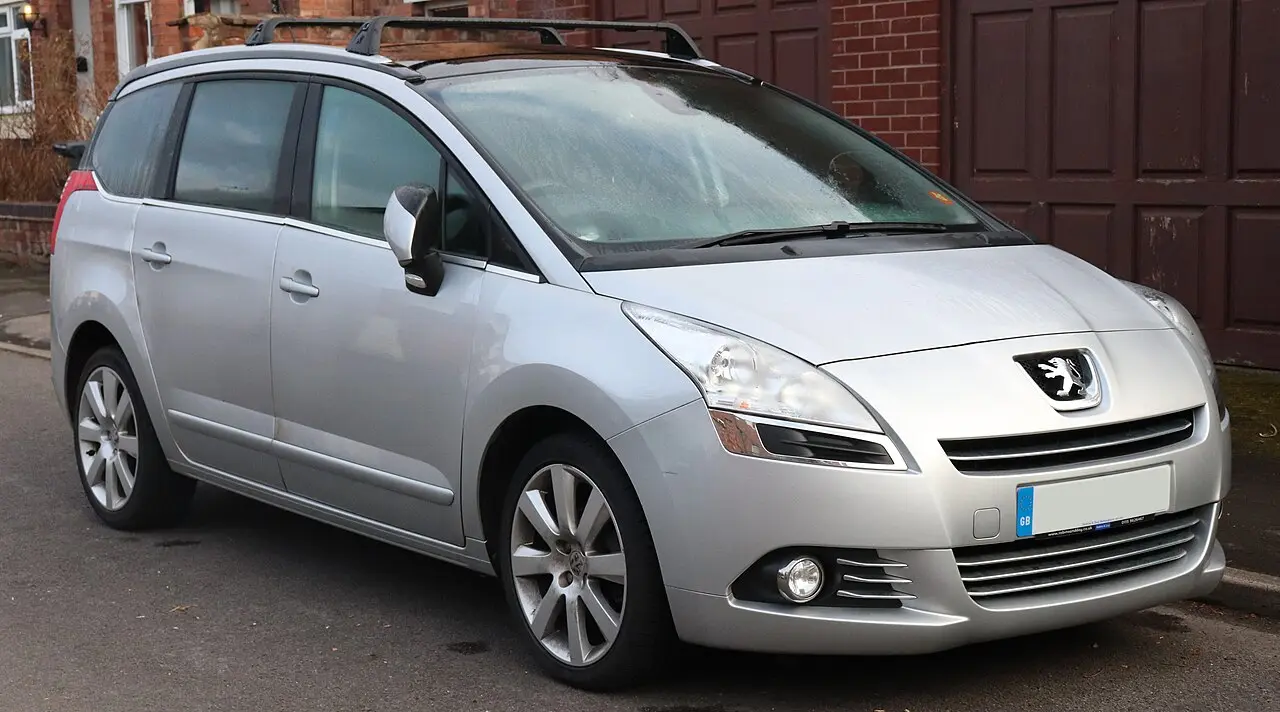
5008 I (2009–2017)

Peugeot 5008 I
Photo: Vauxford / Wikimedia Commons · CC BY-SA 4.0

Model codes: T87 · Sold in: European Union, United Kingdom, and France · References: en.wikipedia.org, largus.fr

Show all 221 versions

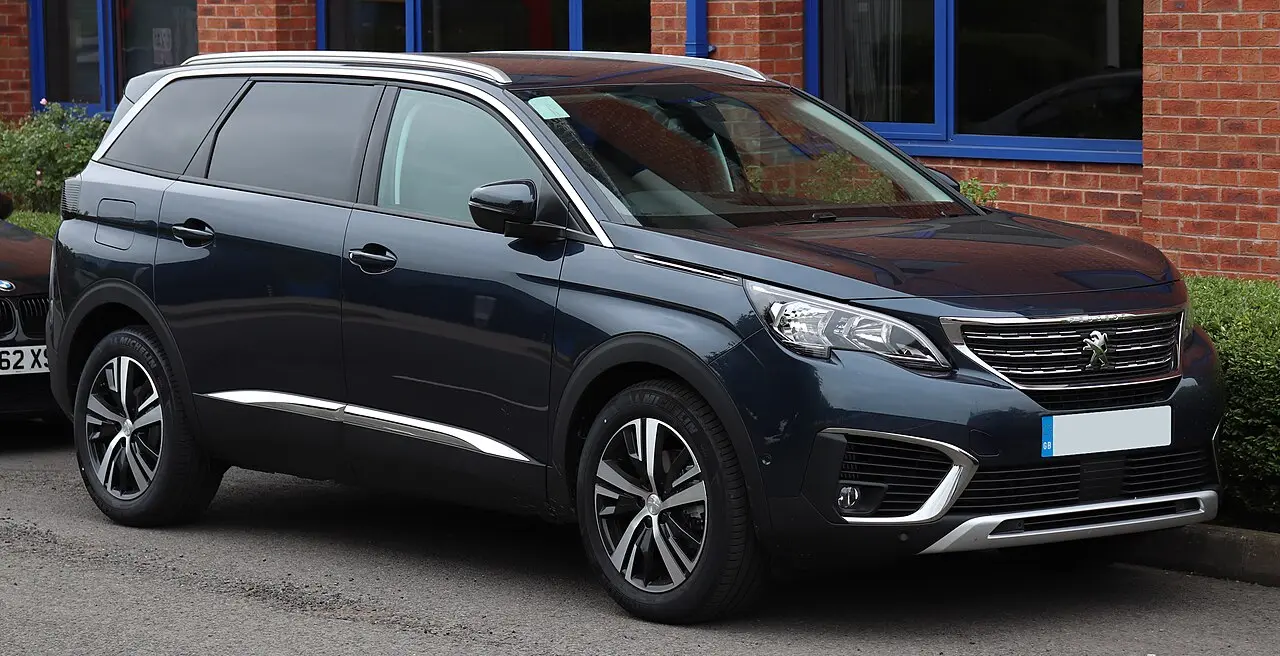
5008 II (2017–2024)

Peugeot 5008 II
Photo: Vauxford / Wikimedia Commons · CC BY-SA 4.0

Model codes: P87 · Sold in: European Union, United Kingdom, and France · References: en.wikipedia.org, topgear.com

Show all 119 versions

5008 III (since 2024)

Peugeot 5008 III
Photo: Alexander-93 / Wikimedia Commons · CC BY-SA 4.0

Model codes: P67 · Sold in: European Union and United Kingdom · References: largus.fr

European Union 22 versions

New cars registered in the EU (plus Norway and Iceland), from the European Environment Agency. Figures on the NEDC procedure until 2020 and on WLTP from 2021; versions are grouped by engine and power, with their number of registrations.

Years and versionEnginePowerFuelConsumption (combined)CO₂Electric rangeEU registrations
20251.2 L100 kW (136 PS)Hybrid5.7 L/100 km WLTP130 g/km–32,680
2025Electric motor157 kW (213 PS)Electric21.9 kWh/100 km WLTP0 g/km455 km7,382
20251.6 L110 kW (150 PS)Plug-in hybrid1.2 L/100 km WLTP20.8 kWh/100 km WLTP29 g/km77 km2,539
2025Electric motor240 kW (326 PS)Electric18.8 kWh/100 km WLTP0 g/km465 km662
2025Electric motor104 kW (141 PS)Electric18.1 kWh/100 km WLTP0 g/km492 km495
20251.5 L96 kW (131 PS)Diesel5.6 L/100 km WLTP146 g/km–489
20251.2 L100 kW (136 PS)Petrol5.7 L/100 km WLTP129 g/km–425
2025Electric motor170 kW (231 PS)Electric19.0 kWh/100 km WLTP0 g/km642 km263
20251.2 L96 kW (131 PS)Petrol6.5 L/100 km WLTP146 g/km–119
20251.2 L100 kW (136 PS)Plug-in hybrid5.8 L/100 km WLTP131 g/km–63
2025Electric motor105 kW (143 PS)Electric19.0 kWh/100 km WLTP0 g/km640 km62
20251.6 L–Hybrid5.8 L/100 km WLTP123 g/km–30
20251.6 L–Petrol5.8 L/100 km WLTP64 g/km–17
2025Electric motor137 kW (186 PS)Electric18.8 kWh/100 km WLTP0 g/km466 km15
20241.2 L100 kW (136 PS)Petrol5.7 L/100 km WLTP129 g/km–11,519
20241.5 L96 kW (131 PS)Diesel5.6 L/100 km WLTP147 g/km–11,350
20241.2 L96 kW (131 PS)Petrol6.5 L/100 km WLTP147 g/km–7,179
20241.2 L100 kW (136 PS)Hybrid5.8 L/100 km WLTP131 g/km–6,141
2024Electric motor157 kW (213 PS)Electric18.1 kWh/100 km WLTP0 g/km494 km2,063
2024Electric motor104 kW (141 PS)Electric18.1 kWh/100 km WLTP0 g/km494 km141
2024Electric motor170 kW (231 PS)Electric18.9 kWh/100 km WLTP0 g/km644 km24
2024Electric motor100 kW (136 PS)Electric18.1 kWh/100 km WLTP0 g/km493 km12

United Kingdom 24 versions

New cars on sale in the UK, from the Vehicle Certification Agency. NEDC figures until 2018 and WLTP figures after; years are the editions a version appeared in.

Years and versionEnginePowerFuelGearboxConsumption (combined)CO₂Electric range
2025–2026Electric 73 kWh KCZKZX-H0E040 · Electric 73 kWh KCZKZX-H0E000Electric motor157 kW (213 PS)ElectricAutomatic16.0 kWh/100 km WLTP0 g/km545 km
2025–2026Electric 73 kWh KCZKZX-H0E040 · Electric 73 kWh KCZKZX-H0E000Electric motor157 kW (213 PS)ElectricAutomatic21.3 kWh/100 km WLTP0 g/km415 km
2026Electric 73 kWh 210 (VH)Electric motor157 kW (213 PS)ElectricAutomatic19.6 kWh/100 km WLTP0 g/km451 km
2026Electric 73 kWh 210 (VL)Electric motor157 kW (213 PS)ElectricAutomatic16.2 kWh/100 km WLTP0 g/km548 km
2026Electric 97 kWh 230 (VH)Electric motor170 kW (231 PS)ElectricAutomatic22.1 kWh/100 km WLTP0 g/km538 km
2026Electric 97 kWh 230 (VL)Electric motor170 kW (231 PS)ElectricAutomatic16.9 kWh/100 km WLTP0 g/km708 km
2026Electric 73 kWh 325 Dual Motor (VH)Electric motor240 kW (326 PS)ElectricAutomatic21.5 kWh/100 km WLTP0 g/km399 km
2026Electric 73 kWh 325 Dual Motor (VL)Electric motor240 kW (326 PS)ElectricAutomatic16.8 kWh/100 km WLTP0 g/km513 km
2025–2026HYBRID 136 KAHPY1-H1AN40 · HYBRID 136 KAHPY1-H1AM00 · HYBRID 136 KAHPY1-H1AN00 and 2 more trims1.2 L100 kW (136 PS)Hybrid6-speed automatic5.4 L/100 km WLTP122 g/km–
2025–2026HYBRID 136 KAHPY1-H1AN40 · HYBRID 136 KAHPY1-H1AM00 · HYBRID 136 KAHPY1-H1AN00 and 2 more trims1.2 L100 kW (136 PS)Hybrid6-speed automatic6.3 L/100 km WLTP143 g/km–
2026HYBRID 145 (VH)1.2 L107 kW (145 PS)Hybrid6-speed automatic6.2 L/100 km WLTP141 g/km–
2026HYBRID 145 (VL)1.2 L107 kW (145 PS)Hybrid6-speed automatic5.3 L/100 km WLTP120 g/km–
2025–2026PLUG-IN HYBRID 195 KBDGK4-H1B000 · PLUG-IN HYBRID 195 KBDGK4-H1B0401.6 L100 kW (136 PS)Plug-in hybrid7-speed automatic4.6 L/100 km WLTP24.0 kWh/100 km WLTP173 g/km63 km
2025–2026PLUG-IN HYBRID 195 KBDGK4-H1B000 · PLUG-IN HYBRID 195 KBDGK4-H1B0401.6 L110 kW (150 PS)Plug-in hybrid7-speed automatic6.8 L/100 km WLTP20.1 kWh/100 km WLTP153 g/km89 km
2025–2026PLUG-IN HYBRID 1951.6 L110 kW (150 PS)Plug-in hybrid7-speed automatic5.9 L/100 km WLTP14.1 kWh/100 km WLTP134 g/km83 km
2025–2026PLUG-IN HYBRID 1951.6 L110 kW (150 PS)Plug-in hybrid7-speed automatic7.2 L/100 km WLTP15.6 kWh/100 km WLTP164 g/km70 km
2026PLUG-IN HYBRID 225 (VH)1.6 L166 kW (226 PS)Plug-in hybrid7-speed automatic7.2 L/100 km WLTP15.6 kWh/100 km WLTP164 g/km70 km
2026PLUG-IN HYBRID 225 (VL)1.6 L166 kW (226 PS)Plug-in hybrid7-speed automatic5.9 L/100 km WLTP14.1 kWh/100 km WLTP134 g/km83 km
2024Electric 73 kWh (VH) KCZKZX-H0E040 · Electric 73 kWh (VH) KCZKZX-H0E000Electric motor210 kW (286 PS)ElectricAutomatic21.3 kWh/100 km WLTP0 g/km415 km
2024Electric 73 kWh (VL) KCZKZX-H0E040 · Electric 73 kWh (VL) KCZKZX-H0E000Electric motor210 kW (286 PS)ElectricAutomatic16.0 kWh/100 km WLTP0 g/km545 km
2024HYBRID 136 (VL) KAHPY1-H1AN40 · HYBRID 136 (VL) KAHPY1-H1AM00 · HYBRID 136 (VL) KAHPY1-H1AN00 and 1 more trim1.2 L136 kW (185 PS)Hybrid6-speed automatic5.4 L/100 km WLTP122 g/km–
2024HYBRID 136 (VH) KAHPY1-H1AN40 · HYBRID 136 (VH) KAHPY1-H1AM00 · HYBRID 136 (VH) KAHPY1-H1AN00 and 1 more trim1.2 L136 kW (185 PS)Hybrid6-speed automatic6.3 L/100 km WLTP143 g/km–
2024PLUG-IN HYBRID 195 (VH) KBDGK4-H1B000 · PLUG-IN HYBRID 195 (VH) KBDGK4-H1B0401.6 L150 kW (204 PS)Plug-in hybrid7-speed automatic4.6 L/100 km WLTP24.0 kWh/100 km WLTP173 g/km63 km
2024PLUG-IN HYBRID 195 (VL) KBDGK4-H1B000 · PLUG-IN HYBRID 195 (VL) KBDGK4-H1B0401.6 L150 kW (204 PS)Plug-in hybrid7-speed automatic6.8 L/100 km WLTP20.1 kWh/100 km WLTP153 g/km89 km

Official figures are measured on standard test procedures and differ between markets. Your consumption depends on how, where and in what conditions you drive.