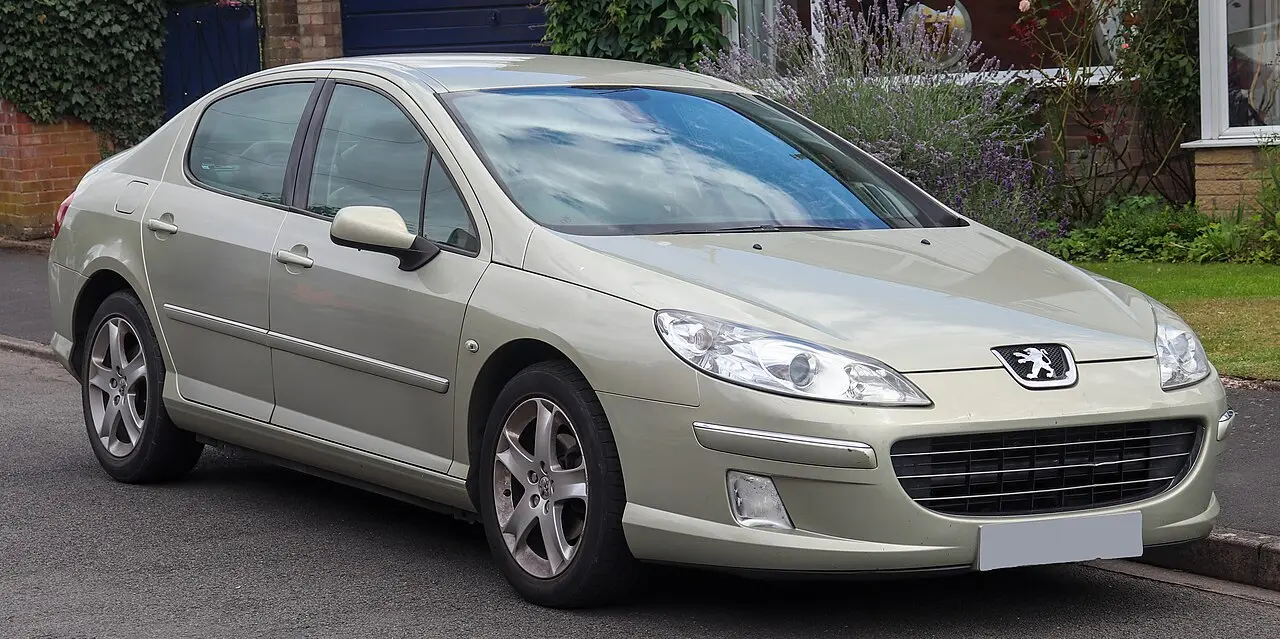
The official data lists 93 versions of the Peugeot 407 (2004–2015), in the European Union and the United Kingdom. Each market publishes its own figures, measured on its own test procedure.
At a glance
Years in the data
2004–2015
Markets
European Union, United Kingdom
Engines
1.6 L to 3.0 L
Power
82 kW (111 PS) to 177 kW (241 PS)
Fuels
Petrol, Diesel, Flex fuel (E85)
Lowest consumption (United Kingdom)
4.9 L/100 km (NEDC)
New registrations in the EU
61,269
What is the Peugeot 407?
The Peugeot 407 is a mid-size family car that replaced the 406. It arrived in 2004 as a saloon, followed by the SW estate and a coupé. The long, sharply drawn front end gave the range a distinctive look, while the three body styles offered different takes on the same family-car idea.
Peugeot 407 generations
The 407 had one generation, sold from 2004 to 2011. Its angular design marked a clear change from the 406, and the SW estate and coupé expanded the range beyond the saloon.
Engines and power
In EU registration figures, the 407 spans 1.6-litre to 3.0-litre engines and 80 kW (109 PS) to 177 kW (241 PS). The listed fuel types are petrol, diesel and other. UK VCA figures cover 1.6-litre to 2.9-litre engines, with 82 kW (111 PS) to 157 kW (214 PS), and include petrol, diesel and E85 flex-fuel versions.
How economical is the Peugeot 407?
The lowest UK figure is 4.9 L/100 km on the NEDC test. NEDC was the European test procedure used for these figures; it differs from the EPA procedure in the USA and the five-cycle test used in Canada.
Where was the Peugeot 407 sold?
Official figures cover the European Union and the United Kingdom. EU registrations total 61,269 for 2010–2015, while UK VCA figures cover 2004–2010.
Questions and answers
What body styles did the Peugeot 407 have?
It was sold as a saloon, SW estate and coupé.
When was the Peugeot 407 generation sold?
The single 407 generation ran from 2004 to 2011.
What was the lowest official UK consumption figure?
Model codes: D23, D22, D25 · Sold in: European Union and United Kingdom · References: en.wikipedia.org
European Union 22 versions
New cars registered in the EU (plus Norway and Iceland), from the European Environment Agency. Figures on the NEDC procedure until 2020 and on WLTP from 2021; versions are grouped by engine and power, with their number of registrations.
Years and version
Engine
Power
Fuel
CO₂
EU registrations
2011
2.0 L
103 kW (140 PS)
Diesel
151 g/km
3,992
2011
1.6 L
80 kW (109 PS)
Diesel
133 g/km
2,696
2011
2.0 L
120 kW (163 PS)
Diesel
157 g/km
1,238
2011
3.0 L
177 kW (241 PS)
Diesel
189 g/km
548
2011
2.0 L
100 kW (136 PS)
Diesel
155 g/km
218
2011
2.0 L
103 kW (140 PS)
Petrol
194 g/km
82
2011
1.7 L
92 kW (125 PS)
Petrol
180 g/km
34
2011
–
–
Petrol
193 g/km
24
2011
2.7 L
150 kW (204 PS)
Diesel
226 g/km
18
2011
2.2 L
–
Petrol
220 g/km
12
2010
2.0 L
–
Diesel
158 g/km
24,652
2010
1.6 L
–
Diesel
134 g/km
24,604
2010
3.0 L
–
Diesel
186 g/km
886
2010
2.0 L
–
Petrol
194 g/km
734
2010
1.7 L
–
Petrol
181 g/km
474
2010
2.2 L
–
Diesel
160 g/km
336
2010
–
–
Other fuel
190 g/km
92
2010
3.0 L
–
Diesel
189 g/km
58
2010
2.7 L
–
Diesel
225 g/km
50
2010
–
–
Petrol
206 g/km
24
2010
2.2 L
–
Petrol
219 g/km
20
2010
2.9 L
–
Petrol
204 g/km
10
United Kingdom 63 versions
New cars on sale in the UK, from the Vehicle Certification Agency. NEDC figures until 2018 and WLTP figures after; years are the editions a version appeared in.
New cars registered in the EU (plus Norway and Iceland), from the European Environment Agency. Figures on the NEDC procedure until 2020 and on WLTP from 2021; versions are grouped by engine and power, with their number of registrations.
Years and version
Engine
Power
Fuel
CO₂
EU registrations
2015
2.0 L
–
Petrol
192 g/km
26
2015
1.6 L
–
Diesel
129 g/km
24
2013
1.6 L
–
Diesel
132 g/km
18
2013
2.0 L
120 kW (163 PS)
Diesel
140 g/km
14
2013
2.0 L
–
Other fuel
170 g/km
10
2012
2.0 L
120 kW (163 PS)
Diesel
156 g/km
293
2012
3.0 L
177 kW (241 PS)
Diesel
189 g/km
68
2012
2.0 L
100 kW (136 PS)
Diesel
146 g/km
14
Official figures are measured on standard test procedures and differ between markets. Your consumption depends on how, where and in what conditions you drive.