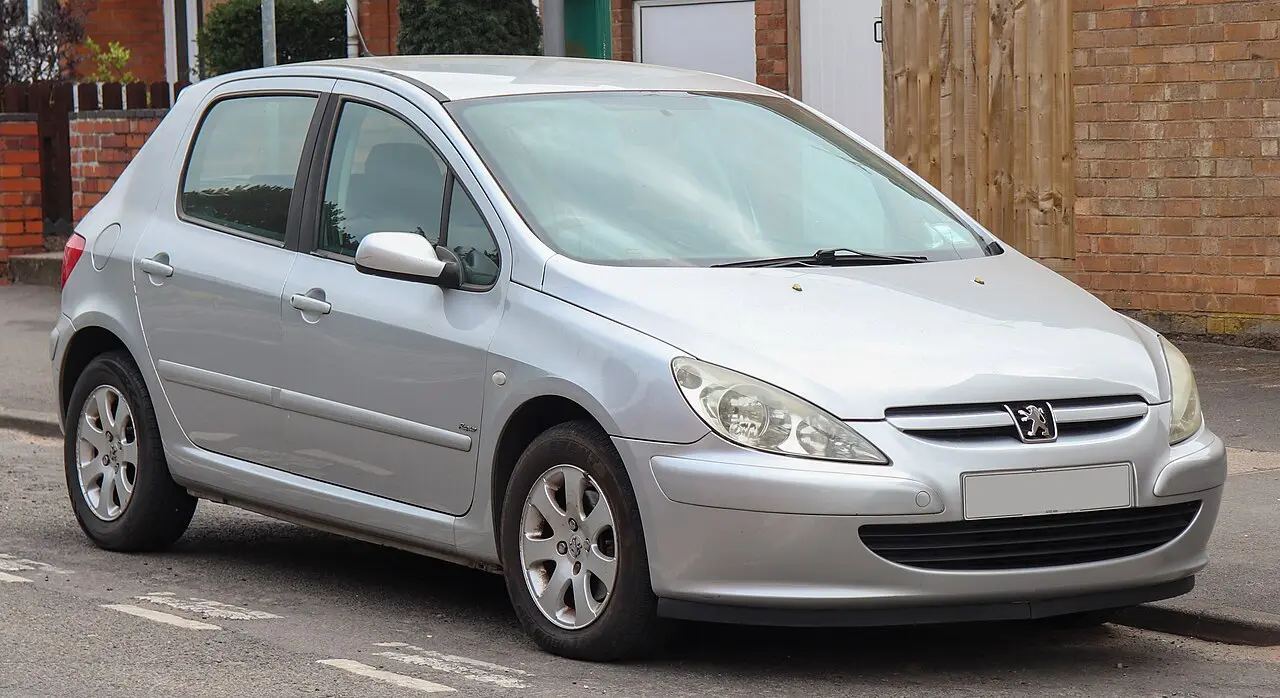
What kind of car is the Peugeot 307?
The Peugeot 307 is a compact family car from the maker’s 300 series. Its range included three-door and five-door hatchbacks, an estate-style SW and a coupé-cabriolet with a folding hardtop. The SW could be fitted with extra seats, giving families more flexibility alongside the everyday practicality of a hatchback.
The 307 generation ran from 2001 to 2008. Its range of body styles suited drivers looking for a family hatchback, extra luggage space or occasional additional seating.
Engines and power
In the UK, the 307 range covered 1.4-litre to 2.0-litre petrol and diesel engines. Listed power ran from 52 kW (71 PS) to 134 kW (182 PS), across a range of specifications.
EU registrations show petrol and diesel versions with 1.6-litre to 2.0-litre engines during 2010–2011. The most registered listed specification was a 2.0-litre diesel in 2011, followed by a 1.6-litre diesel in 2010.
Fuel consumption and CO₂
The lowest listed UK fuel consumption is 4.5 L/100 km on the NEDC test. That is the lowest result across the listed range; consumption varies by version.
The NEDC figure comes from the UK VCA figures. European tests use NEDC or WLTP, depending on the vehicle and period. The USA’s EPA procedure and Canada’s 5-cycle test use different methods, so results from these markets are not directly comparable.
Where was the 307 sold?
The 307 generation ran from 2001 to 2008. UK figures span 2001–2009, while EU registrations are recorded for 2010–2011, with 228 registrations across seven listed versions.
With hatchback, estate and coupé-cabriolet body styles, the 307 brought several uses together in Peugeot’s compact family-car range.
Questions and answers
When was the Peugeot 307 sold?
Its generation ran from 2001 to 2008; UK figures span 2001–2009.
What body styles did the 307 have?
The range included three-door and five-door hatchbacks, an SW estate with extra seating available, and a coupé-cabriolet with a folding hardtop.
What was the lowest listed fuel consumption?
The lowest listed UK figure is 4.5 L/100 km on the NEDC test.
What engines were available?
UK versions covered 1.4-litre to 2.0-litre petrol and diesel engines, with listed power from 52 kW (71 PS) to 134 kW (182 PS).