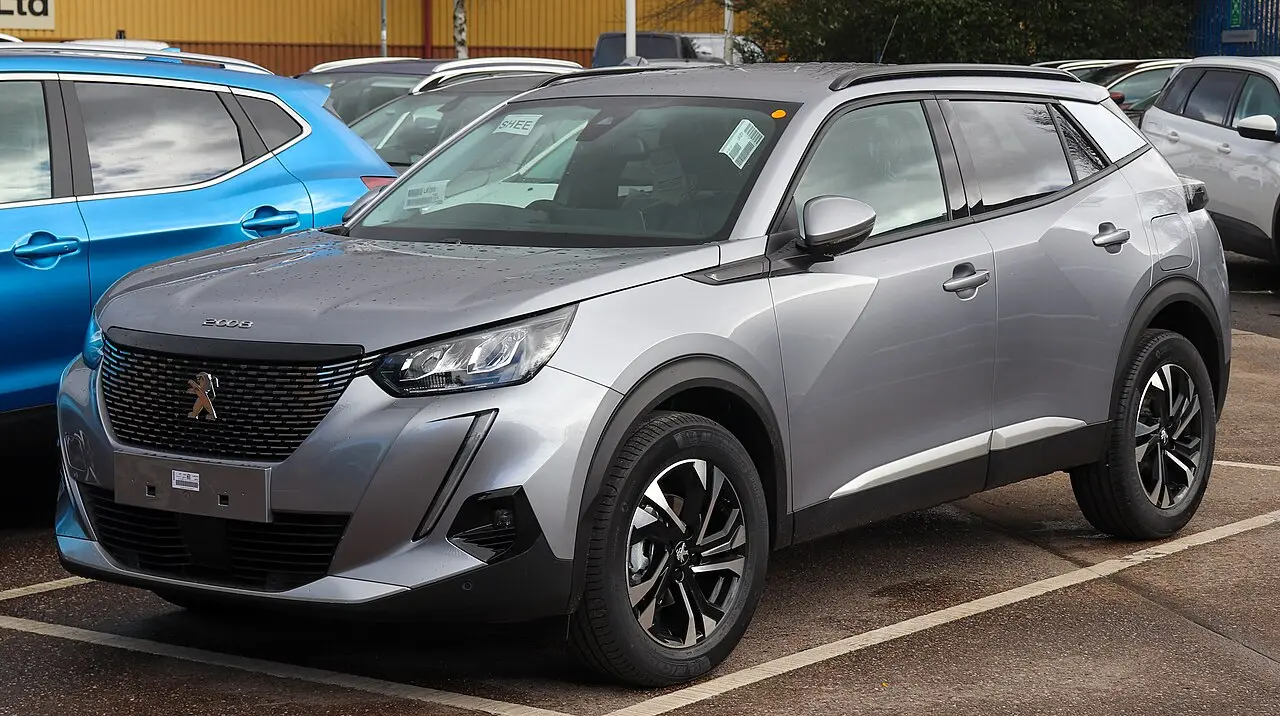
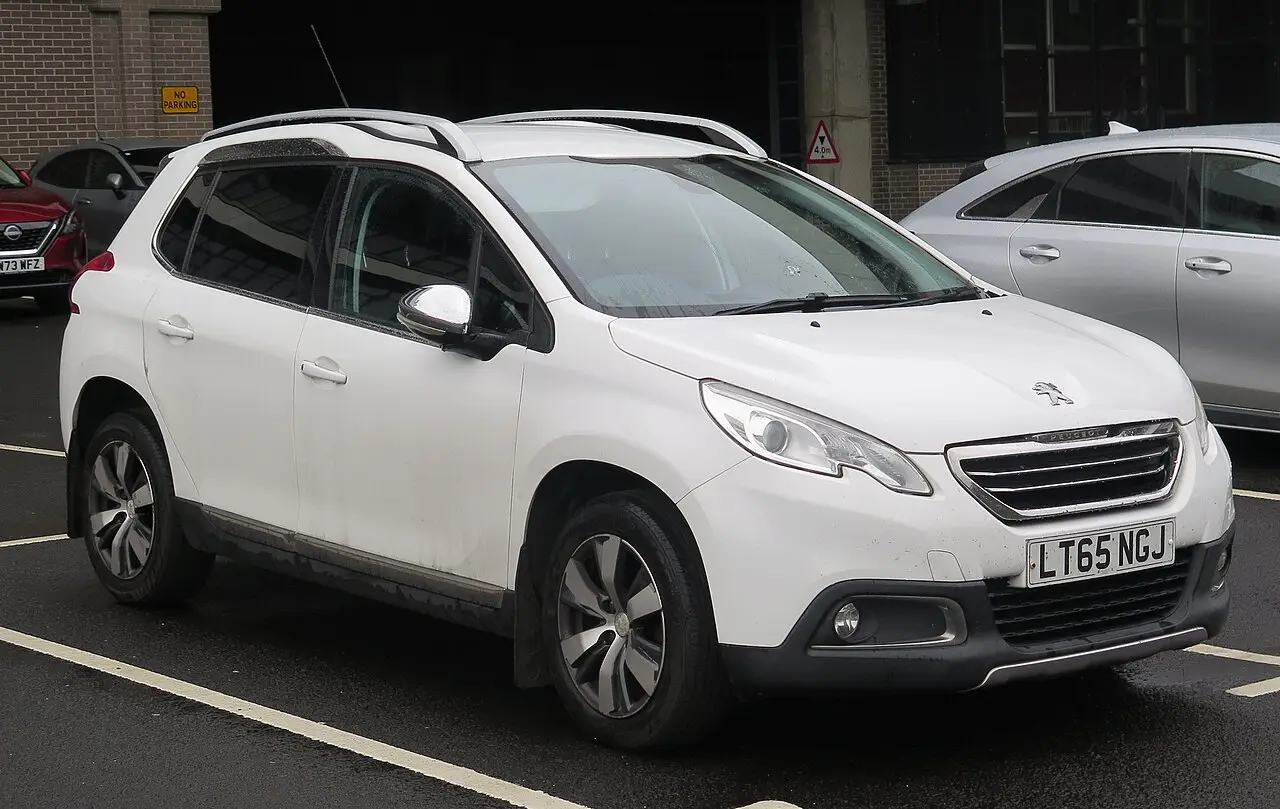
The official data lists 312 versions of the Peugeot 2008 (2013–2026), in the European Union, the United Kingdom, and France. Each market publishes its own figures, measured on its own test procedure.
At a glance
Years in the data
2013–2026
Markets
European Union, United Kingdom, France
Engines
1.2 L to 1.6 L
Power
50 kW (68 PS) to 136 kW (185 PS)
Fuels
Electric, Petrol, Diesel, Hybrid, Plug-in hybrid
Lowest consumption (United Kingdom)
3.5 L/100 km (NEDC)
Lowest consumption (France)
3.7 L/100 km (NEDC)
Lowest consumption (European Union)
4.3 L/100 km (WLTP)
Plug-in hybrid, weighted (European Union)
4.9 L/100 km (WLTP)
New registrations in the EU
3,328,207
What is the Peugeot 2008?
The Peugeot 2008 is a compact SUV in the brand’s small-car range. Its taller body gives it a different shape from the 208 hatchback, while it remains a compact option for everyday driving. The model has been offered with combustion engines and, in its later generation, electric power.
Peugeot 2008 generations
The 2008 I ran from 2013 to 2019. The 2008 II followed in 2019, developing the SUV styling and adding electric versions to the range. Both generations occupy the compact-SUV role, with powertrain choices broadening over time.
Engines, power and official consumption
Official EU registration figures from 2013 to 2025 include petrol, diesel, hybrid, plug-in hybrid, electric and other fuel types. Engine sizes range from 1.2 L to 1.6 L, and power from 50 kW (68 PS) to 122 kW (166 PS). The lowest stated petrol, diesel or hybrid consumption is 4.3 L/100 km on WLTP. The lowest plug-in hybrid figure is 4.9 L/100 km WLTP, a weighted figure that assumes part of the driving is electric.
UK figures for 2013–2026 give a lowest petrol, diesel or hybrid consumption of 3.5 L/100 km on NEDC. French figures for 2013–2026 give a lowest figure of 3.7 L/100 km NEDC. WLTP and NEDC are different European test procedures, so results from one should not be treated as directly equivalent to results from the other.
Where was the Peugeot 2008 sold?
The 2008 appears in official figures for the European Union, the United Kingdom and France. EU registration figures cover 2013–2025, while UK and French figures cover 2013–2026. Electric versions appear in all three markets, alongside petrol and diesel options; EU figures also include hybrid and plug-in hybrid fuel types.
Questions and answers
When did the Peugeot 2008 generations run?
The 2008 I ran from 2013 to 2019. The 2008 II began in 2019 and continues in the model timeline.
What is the lowest official consumption listed for the 2008?
The lowest listed figure is 3.5 L/100 km for petrol, diesel or hybrid versions in UK NEDC figures. The lowest EU WLTP figure for those fuel types is 4.3 L/100 km.
Is there an electric Peugeot 2008?
Yes. Electric versions appear in the EU, UK and French market figures.
Model codes: P24 · Sold in: European Union, United Kingdom, and France · References: 100cms.org
European Union 83 versions
New cars registered in the EU (plus Norway and Iceland), from the European Environment Agency. Figures on the NEDC procedure until 2020 and on WLTP from 2021; versions are grouped by engine and power, with their number of registrations.
Years and version
Engine
Power
Fuel
Consumption (combined)
CO₂
Electric range
EU registrations
2024–2025
1.2 L
100 kW (136 PS)
Hybrid
4.9 L/100 km WLTP
111 g/km
–
102,079
2025
1.2 L
74 kW (101 PS)
Petrol
5.7 L/100 km WLTP
128 g/km
–
42,108
2025
Electric motor
115 kW (156 PS)
Electric
17.0 kWh/100 km WLTP
0 g/km
386 km
14,318
2025
1.2 L
96 kW (131 PS)
Petrol
6.1 L/100 km WLTP
138 g/km
–
7,018
2025
Electric motor
100 kW (136 PS)
Electric
15.9 kWh/100 km WLTP
0 g/km
341 km
2,167
2025
Electric motor
62 kW (84 PS)
Electric
15.4 kWh/100 km WLTP
0 g/km
402 km
1,590
2025
1.2 L
100 kW (136 PS)
Plug-in hybrid
4.9 L/100 km WLTP
111 g/km
–
475
2025
1.2 L
74 kW (101 PS)
Hybrid
4.9 L/100 km WLTP
112 g/km
–
327
2025
Electric motor
57 kW (77 PS)
Electric
15.8 kWh/100 km WLTP
0 g/km
341 km
150
2025
1.5 L
96 kW (131 PS)
Diesel
5.1 L/100 km WLTP
134 g/km
–
51
2025
1.2 L
100 kW (136 PS)
Petrol
4.9 L/100 km WLTP
112 g/km
–
21
2024
1.2 L
74 kW (101 PS)
Petrol
5.6 L/100 km WLTP
126 g/km
–
50,486
2024
1.2 L
96 kW (131 PS)
Petrol
6.0 L/100 km WLTP
135 g/km
–
45,759
2023–2024
1.5 L
96 kW (131 PS)
Diesel
5.0 L/100 km WLTP
132 g/km
–
32,111
2024
Electric motor
100 kW (136 PS)
Electric
15.8 kWh/100 km WLTP
0 g/km
344 km
8,536
2024
Electric motor
115 kW (156 PS)
Electric
15.4 kWh/100 km WLTP
0 g/km
403 km
7,128
2024
1.2 L
100 kW (136 PS)
Petrol
5.0 L/100 km WLTP
114 g/km
–
849
2024
Electric motor
62 kW (84 PS)
Electric
15.4 kWh/100 km WLTP
0 g/km
403 km
574
2024
Electric motor
57 kW (77 PS)
Electric
15.9 kWh/100 km WLTP
0 g/km
341 km
262
2023
1.2 L
96 kW (131 PS)
Petrol
5.9 L/100 km WLTP
132 g/km
–
57,281
2023
1.2 L
74 kW (101 PS)
Petrol
5.5 L/100 km WLTP
123 g/km
–
37,469
2023
Electric motor
100 kW (136 PS)
Electric
15.9 kWh/100 km WLTP
0 g/km
337 km
15,047
2023
Electric motor
115 kW (156 PS)
Electric
15.3 kWh/100 km WLTP
0 g/km
403 km
3,252
2023
1.5 L
81 kW (110 PS)
Diesel
4.5 L/100 km WLTP
117 g/km
–
500
2023
Electric motor
57 kW (77 PS)
Electric
15.9 kWh/100 km WLTP
0 g/km
338 km
476
2023
1.2 L
114 kW (155 PS)
Petrol
6.2 L/100 km WLTP
141 g/km
–
87
2023
1.2 L
67 kW (91 PS)
Petrol
5.8 L/100 km WLTP
131 g/km
–
83
2023
1.2 L
110 kW (150 PS)
Petrol
5.9 L/100 km WLTP
133 g/km
–
34
2023
Electric motor
67 kW (91 PS)
Electric
15.9 kWh/100 km WLTP
0 g/km
343 km
20
2023
Electric motor
132 kW (179 PS)
Electric
15.9 kWh/100 km WLTP
0 g/km
334 km
19
2023
1.2 L
72 kW (98 PS)
Petrol
5.9 L/100 km WLTP
132 g/km
–
18
2023
1.2 L
81 kW (110 PS)
Petrol
5.8 L/100 km WLTP
132 g/km
–
16
2023
1.2 L
95 kW (129 PS)
Petrol
5.8 L/100 km WLTP
131 g/km
–
15
2023
1.2 L
112 kW (152 PS)
Petrol
5.9 L/100 km WLTP
133 g/km
–
13
2023
1.2 L
61 kW (83 PS)
Petrol
5.8 L/100 km WLTP
132 g/km
–
10
2023
1.2 L
68 kW (92 PS)
Petrol
5.9 L/100 km WLTP
134 g/km
–
10
2023
1.2 L
84 kW (114 PS)
Petrol
5.7 L/100 km WLTP
129 g/km
–
10
2023
1.2 L
120 kW (163 PS)
Petrol
5.8 L/100 km WLTP
130 g/km
–
10
2022
1.2 L
96 kW (131 PS)
Petrol
5.8 L/100 km WLTP
132 g/km
–
42,322
2022
1.2 L
74 kW (101 PS)
Petrol
5.4 L/100 km WLTP
123 g/km
–
25,013
2022
Electric motor
100 kW (136 PS)
Electric
16.1 kWh/100 km WLTP
0 g/km
334 km
21,226
2022
1.5 L
81 kW (110 PS)
Diesel
4.4 L/100 km WLTP
117 g/km
–
21,076
2022
1.5 L
96 kW (131 PS)
Diesel
4.9 L/100 km WLTP
127 g/km
–
14,602
2022
Electric motor
57 kW (77 PS)
Electric
16.3 kWh/100 km WLTP
0 g/km
332 km
2,008
2022
1.2 L
114 kW (155 PS)
Petrol
6.1 L/100 km WLTP
141 g/km
–
1,268
2021
1.2 L
96 kW (131 PS)
Petrol
5.7 L/100 km WLTP0.5 kWh/100 km WLTP
132 g/km
–
126,962
2021
1.5 L
81 kW (110 PS)
Diesel
4.4 L/100 km WLTP
116 g/km
–
65,995
2021
1.2 L
74 kW (101 PS)
Petrol
5.3 L/100 km WLTP
124 g/km
–
61,051
2021
1.5 L
96 kW (131 PS)
Diesel
4.7 L/100 km WLTP
126 g/km
–
53,362
2021
Electric motor
57 kW (77 PS)
Electric
17.6 kWh/100 km WLTP
0 g/km
321 km
26,237
2021
Electric motor
100 kW (136 PS)
Electric
17.6 kWh/100 km WLTP
0 g/km
320 km
17,495
2021
1.2 L
114 kW (155 PS)
Petrol
6.2 L/100 km WLTP
141 g/km
–
3,730
2021
1.5 L
75 kW (102 PS)
Diesel
4.3 L/100 km WLTP
119 g/km
–
3,017
2021
–
100 kW (136 PS)
Other fuel
–
125 g/km
–
91
2020
1.2 L
96 kW (131 PS)
Petrol
–
106 g/km
–
134,266
2019–2020
1.2 L
61 kW (83 PS)
Petrol
–
114 g/km
–
54,606
2020
1.5 L
75 kW (102 PS)
Diesel
–
95 g/km
–
46,350
2020
1.2 L
74 kW (101 PS)
Petrol
–
105 g/km
–
44,795
2020
1.5 L
96 kW (131 PS)
Diesel
–
100 g/km
–
36,355
2020
1.2 L
115 kW (156 PS)
Petrol
–
131 g/km
–
18,468
2020
Electric motor
57 kW (77 PS)
Electric
17.6 kWh/100 km NEDC
0 g/km
321 km
15,112
2020
1.2 L
114 kW (155 PS)
Petrol
–
114 g/km
–
9,137
2020
Electric motor
100 kW (136 PS)
Electric
17.6 kWh/100 km NEDC
0 g/km
319 km
8,314
2020
1.5 L
–
Diesel
–
96 g/km
–
1,818
2020
1.5 L
81 kW (110 PS)
Diesel
–
98 g/km
–
1,642
2020
1.2 L
81 kW (110 PS)
Petrol
–
113 g/km
–
398
2020
1.5 L
88 kW (120 PS)
Diesel
–
106 g/km
–
352
2019
1.2 L
81 kW (110 PS)
Petrol
–
122 g/km
–
102,116
2019
1.5 L
75 kW (102 PS)
Diesel
–
94 g/km
–
72,120
2019
1.2 L
96 kW (131 PS)
Petrol
–
117 g/km
–
58,844
2019
1.5 L
88 kW (120 PS)
Diesel
–
105 g/km
–
21,090
2019
1.2 L
–
Petrol
–
117 g/km
–
18,762
2019
1.5 L
–
Diesel
–
95 g/km
–
4,030
2019
1.5 L
96 kW (131 PS)
Diesel
–
100 g/km
–
1,516
2019
1.2 L
114 kW (155 PS)
Petrol
–
113 g/km
–
1,088
2019
1.2 L
60 kW (82 PS)
Petrol
–
114 g/km
–
354
2019
1.6 L
73 kW (99 PS)
Diesel
–
97 g/km
–
300
2019
1.6 L
88 kW (120 PS)
Diesel
–
96 g/km
–
198
2019
1.6 L
55 kW (75 PS)
Diesel
–
97 g/km
–
58
2019
1.2 L
75 kW (102 PS)
Petrol
–
121 g/km
–
26
2019
1.0 L
–
Petrol
–
93 g/km
–
16
2019
1.5 L
81 kW (110 PS)
Diesel
–
96 g/km
–
16
2019
1.5 L
61 kW (83 PS)
Diesel
–
98 g/km
–
12
United Kingdom 75 versions
New cars on sale in the UK, from the Vehicle Certification Agency. NEDC figures until 2018 and WLTP figures after; years are the editions a version appeared in.
Years and version
Engine
Power
Fuel
Gearbox
Consumption (combined)
CO₂
Electric range
2025–2026Electric 50 kWh · Electric 50 kWh (GT)
Electric motor
100 kW (136 PS)
Electric
Automatic
14.3 kWh/100 km WLTP
0 g/km
374 km
2025–2026Electric 50 kWh · Electric 50 kWh (GT)
Electric motor
100 kW (136 PS)
Electric
Automatic
16.7 kWh/100 km WLTP
0 g/km
324 km
2025–2026Electric 54 kWh (GT) · Electric 54 kWh · Electric 54 kWh 156 (VL)
Electric motor
115 kW (156 PS)
Electric
Automatic
14.2 kWh/100 km WLTP
0 g/km
436 km
2025–2026Electric 54 kWh (GT) · Electric 54 kWh · Electric 54 kWh 156 (VH)
Electric motor
115 kW (156 PS)
Electric
Automatic
16.7 kWh/100 km WLTP
0 g/km
366 km
2025–2026PureTech 100 (Active) · PureTech 100
1.2 L
74 kW (101 PS)
Petrol
6-speed manual
5.4 L/100 km WLTP
122 g/km
–
2025–2026PureTech 100 (Active) · PureTech 100
1.2 L
74 kW (101 PS)
Petrol
6-speed manual
5.9 L/100 km WLTP
133 g/km
–
2025–2026PureTech 100 (Allure)
1.2 L
74 kW (101 PS)
Petrol
6-speed manual
5.5 L/100 km WLTP
124 g/km
–
2025–2026PureTech 100 (Allure)
1.2 L
74 kW (101 PS)
Petrol
6-speed manual
6.2 L/100 km WLTP
140 g/km
–
2026Turbo 100 (VH)
1.2 L
74 kW (101 PS)
Petrol
6-speed manual
6.2 L/100 km WLTP
141 g/km
–
2026Turbo 100 (VL)
1.2 L
74 kW (101 PS)
Petrol
6-speed manual
5.2 L/100 km WLTP
117 g/km
–
2025–2026PureTech 130 (Allure USHNSK-S1G500)
1.2 L
96 kW (131 PS)
Petrol
6-speed manual
5.5 L/100 km WLTP
123 g/km
–
2025–2026PureTech 130 (Allure USHNSK-S1G500)
1.2 L
96 kW (131 PS)
Petrol
6-speed manual
6.0 L/100 km WLTP
136 g/km
–
2025–2026PureTech 130 (Allure USHNSK-S1D500)
1.2 L
96 kW (131 PS)
Petrol
6-speed manual
5.5 L/100 km WLTP
124 g/km
–
2025–2026PureTech 130 (Allure USHNSK-S1D500)
1.2 L
96 kW (131 PS)
Petrol
6-speed manual
6.4 L/100 km WLTP
144 g/km
–
2025–2026PureTech 130 (Allure USHNSS-S1G500) · PureTech 130 (GT) USHNSS-S1G700 · PureTech 130 and 1 more trim
New cars on sale in France, from ADEME Car Labelling. NEDC figures until 2015, WLTP figures in the current catalogue.
Years and version
Engine
Power
Fuel
Gearbox
Consumption (combined)
CO₂
Electric range
2026e-2008 (57Kw)
Electric motor
57 kW (77 PS)
Electric
Continuously variable (CVT)
14.5 kWh/100 km WLTP
–
363 km
2026e-2008 (57Kw)
Electric motor
57 kW (77 PS)
Electric
Continuously variable (CVT)
14.3 kWh/100 km WLTP
–
374 km
20262008 (130ch)
1.2 L
96 kW (131 PS)
Petrol
8-speed automatic
5.8 L/100 km WLTP
132 g/km
–
20262008 (110ch)
1.5 L
81 kW (110 PS)
Diesel
6-speed manual
4.3 L/100 km WLTP
113 g/km
–
20262008 (130ch)
1.5 L
96 kW (131 PS)
Diesel
8-speed automatic
4.8 L/100 km WLTP
127 g/km
–
20262008 (130ch)
1.5 L
96 kW (131 PS)
Diesel
8-speed automatic
4.5 L/100 km WLTP
119 g/km
–
20262008 (130ch)
1.5 L
96 kW (131 PS)
Diesel
8-speed automatic
4.8 L/100 km WLTP
126 g/km
–
Official figures are measured on standard test procedures and differ between markets. Your consumption depends on how, where and in what conditions you drive.