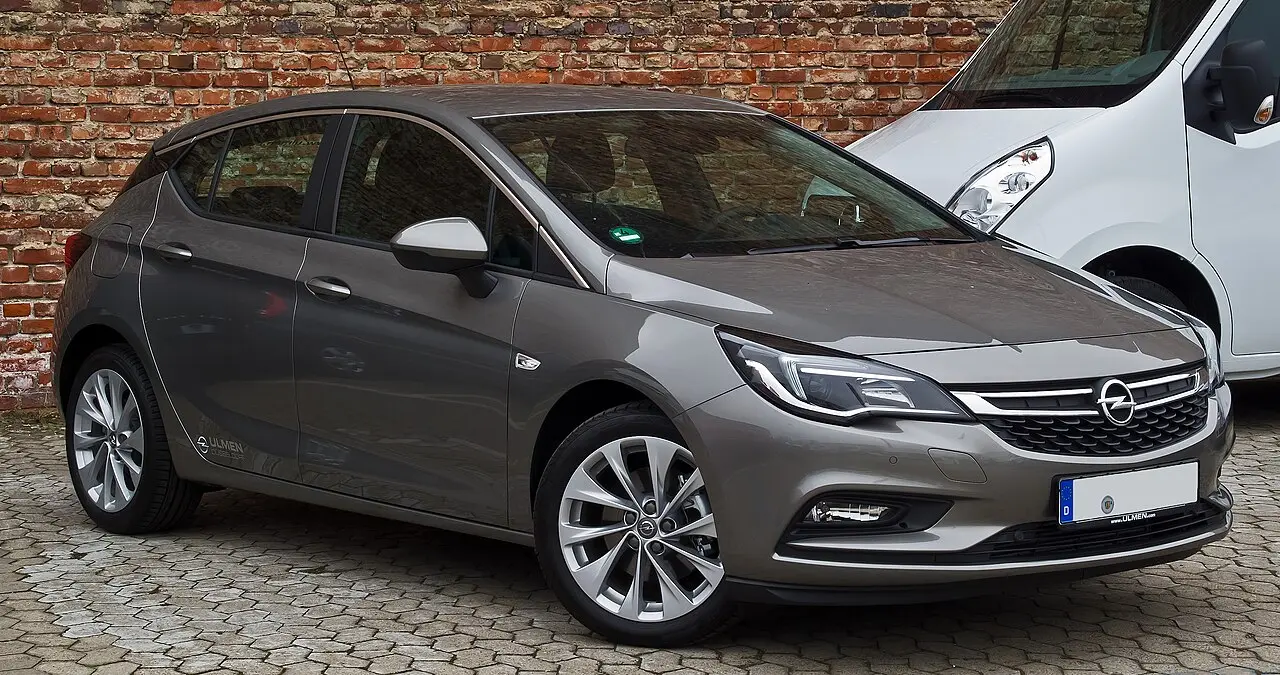
Opel

Opel Astra

Opel Astra
Photo: Alexander Migl / Wikimedia Commons · CC BY-SA 4.0

The official data lists 639 versions of the Opel Astra (2010–2025), in the European Union and France. Each market publishes its own figures, measured on its own test procedure.

At a glance

Years in the data
2010–2025
Markets
European Union, France
Engines
1.0 L to 2.0 L
Power
66 kW (90 PS) to 206 kW (280 PS)
Fuels
Petrol, Diesel, Hybrid, Electric, Plug-in hybrid, Natural gas, LPG
Lowest consumption (European Union)
1.3 L/100 km (WLTP)
Lowest consumption (France)
3.7 L/100 km (NEDC)
Plug-in hybrid, weighted (European Union)
1.0 L/100 km (WLTP)
New registrations in the EU
3,268,701

What kind of car is the Opel Astra?

The Astra is Opel’s compact family car, positioned above the Corsa in the range. Hatchback and estate versions have given it a practical role for everyday journeys and carrying passengers or luggage. The current generation is also available as a plug-in hybrid or electric car.

Astra generations

The Astra J ran from 2010 to 2015, the Astra K from 2015 to 2021, and the Astra L began in 2021. Each generation brought a fresh take on Opel’s compact car, with body styles and equipment varying by period and market. The latest generation extended the range to include hybrid, plug-in hybrid and electric versions alongside petrol and diesel.

Engines and power

Across EU registrations from 2010 to 2025, Astra versions use engines from 1.0 to 2.0 litres and span 64 kW (87 PS) to 206 kW (280 PS). The fuel mix includes petrol, diesel, hybrid, plug-in hybrid, electric, natural gas and LPG versions. France’s ADEME listings cover petrol and diesel versions, with outputs from 74 kW (101 PS) to 206 kW (280 PS).

How economical is the Opel Astra?

The lowest listed EU figure is 1.3 L/100 km under WLTP for petrol, diesel or hybrid versions. Plug-in hybrids have a separate weighted figure of 1 L/100 km under WLTP, assuming part of the driving is electric. France’s ADEME listings show a low of 3.7 L/100 km under NEDC. WLTP and NEDC are different European test procedures, so these figures are not directly comparable. EU registrations totalled 3,268,701 from 2010 to 2025.

Questions and answers

Which Astra generations are covered?

The Astra J ran from 2010 to 2015, the K from 2015 to 2021, and the L began in 2021.

How much power does the Astra offer in EU versions?

The recorded range is 64 kW (87 PS) to 206 kW (280 PS), with engines from 1.0 to 2.0 litres.

Why is the plug-in hybrid’s consumption figure so low?

Its 1 L/100 km WLTP figure is weighted and assumes that some driving is electric.
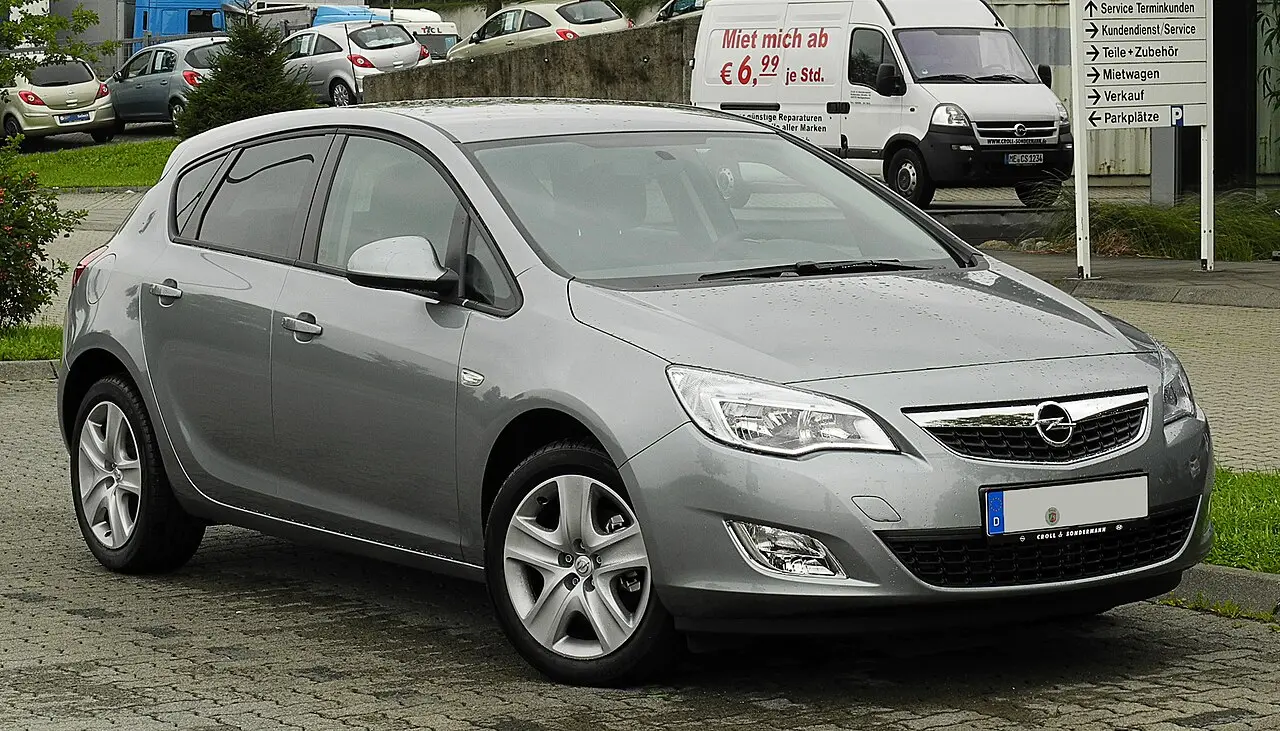
Astra J (2010–2015)

Opel Astra J
Photo: M 93 / Wikimedia Commons · CC BY-SA 3.0 de

Model codes: P10 · References: en.wikipedia.org

Show all 459 versions

Astra K (2015–2021)

Opel Astra K
Photo: M 93 / Wikimedia Commons · CC BY-SA 3.0 de

Model codes: B16 · References: en.wikipedia.org

Show all 212 versions

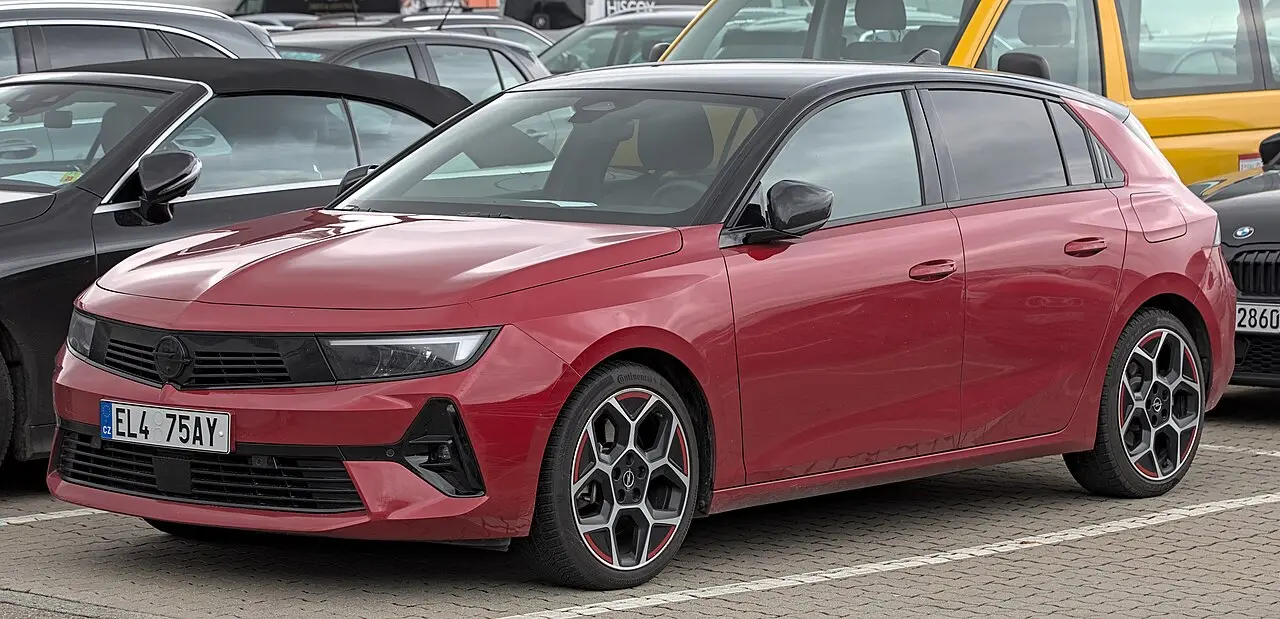
Astra L (since 2021)

Opel Astra L
Photo: Alexander Migl / Wikimedia Commons · CC BY-SA 4.0

Model codes: C02 · References: en.wikipedia.org

European Union 52 versions

New cars registered in the EU (plus Norway and Iceland), from the European Environment Agency. Figures on the NEDC procedure until 2020 and on WLTP from 2021; versions are grouped by engine and power, with their number of registrations.

Years and versionEnginePowerFuelConsumption (combined)CO₂Electric rangeEU registrations
2024–20251.5 L96 kW (131 PS)Diesel5.0 L/100 km WLTP131 g/km–28,260
20251.2 L96 kW (131 PS)Petrol5.8 L/100 km WLTP131 g/km–25,296
20251.2 L100 kW (136 PS)Hybrid4.9 L/100 km WLTP110 g/km–6,043
2025Electric motor115 kW (156 PS)Electric15.3 kWh/100 km WLTP0 g/km406 km3,525
20251.6 L110 kW (150 PS)Plug-in hybrid1.4 L/100 km WLTP15.7 kWh/100 km WLTP32 g/km61 km2,482
20251.2 L81 kW (110 PS)Petrol5.6 L/100 km WLTP126 g/km–1,869
20251.6 L132 kW (179 PS)Plug-in hybrid1.3 L/100 km WLTP17.4 kWh/100 km WLTP31 g/km58 km726
2025Electric motor62 kW (84 PS)Electric15.0 kWh/100 km WLTP0 g/km411 km108
20251.6 L–Hybrid5.8 L/100 km WLTP136 g/km–35
20251.2 L100 kW (136 PS)Petrol5.0 L/100 km WLTP111 g/km–14
20241.2 L96 kW (131 PS)Petrol5.7 L/100 km WLTP129 g/km–29,904
20241.2 L81 kW (110 PS)Petrol5.5 L/100 km WLTP125 g/km–8,228
20241.6 L110 kW (150 PS)Plug-in hybrid1.2 L/100 km WLTP15.6 kWh/100 km WLTP27 g/km60 km6,204
2024Electric motor115 kW (156 PS)Electric15.1 kWh/100 km WLTP0 g/km410 km3,375
20241.2 L100 kW (136 PS)Hybrid4.9 L/100 km WLTP110 g/km–3,015
20241.6 L132 kW (179 PS)Plug-in hybrid1.3 L/100 km WLTP17.1 kWh/100 km WLTP28 g/km59 km408
2024Electric motor62 kW (84 PS)Electric15.1 kWh/100 km WLTP0 g/km411 km200
2024Electric motor100 kW (136 PS)Electric15.0 kWh/100 km WLTP0 g/km412 km38
20231.2 L96 kW (131 PS)Petrol5.6 L/100 km WLTP128 g/km–19,537
20231.5 L96 kW (131 PS)Diesel5.0 L/100 km WLTP129 g/km–10,792
20231.6 L110 kW (150 PS)Plug-in hybrid1.0 L/100 km WLTP14.1 kWh/100 km WLTP23 g/km67 km6,646
20231.2 L81 kW (110 PS)Petrol5.5 L/100 km WLTP125 g/km–6,498
2023Electric motor115 kW (156 PS)Electric15.0 kWh/100 km WLTP0 g/km412 km1,720
20231.6 L132 kW (179 PS)Plug-in hybrid1.1 L/100 km WLTP15.1 kWh/100 km WLTP25 g/km64 km846
2023Electric motor62 kW (84 PS)Electric15.0 kWh/100 km WLTP0 g/km412 km79
20231.3 L107 kW (145 PS)Petrol5.9 L/100 km WLTP132 g/km–20
20231.2 L110 kW (150 PS)Petrol5.6 L/100 km WLTP126 g/km–10
20221.2 L96 kW (131 PS)Petrol5.5 L/100 km WLTP125 g/km–8,161
20221.6 L110 kW (150 PS)Plug-in hybrid4.9 L/100 km WLTP14.6 kWh/100 km WLTP24 g/km68 km5,495
20221.2 L81 kW (110 PS)Petrol5.4 L/100 km WLTP122 g/km–4,080
20221.5 L90 kW (122 PS)Diesel4.8 L/100 km WLTP127 g/km–3,950
20221.5 L96 kW (131 PS)Diesel4.4 L/100 km WLTP116 g/km–1,752
20221.3 L107 kW (145 PS)Petrol5.9 L/100 km WLTP131 g/km–1,646
20221.2 L107 kW (145 PS)Petrol5.2 L/100 km WLTP121 g/km–1,177
20221.5 L77 kW (105 PS)Diesel4.3 L/100 km WLTP114 g/km–995
20221.2 L96 kW (131 PS)Plug-in hybrid4.5 L/100 km WLTP147 g/km–74
20221.6 L110 kW (150 PS)Petrol1.3 L/100 km WLTP14.8 kWh/100 km WLTP151 g/km–74
20221.6 L132 kW (179 PS)Plug-in hybrid6.2 L/100 km WLTP15.2 kWh/100 km WLTP29 g/km63 km73
20221.5 L96 kW (131 PS)Diesel–––13
2022Electric motor62 kW (84 PS)Electric–0 g/km–10
20211.5 L90 kW (122 PS)Diesel4.7 L/100 km WLTP125 g/km–26,264
20211.2 L96 kW (131 PS)Petrol5.3 L/100 km WLTP121 g/km–23,785
20211.2 L81 kW (110 PS)Petrol5.3 L/100 km WLTP121 g/km–23,560
20211.2 L107 kW (145 PS)Petrol5.3 L/100 km WLTP122 g/km–12,922
20211.5 L77 kW (105 PS)Diesel4.3 L/100 km WLTP114 g/km–10,130
20211.3 L107 kW (145 PS)Petrol5.7 L/100 km WLTP132 g/km–8,735
20211.5 L96 kW (131 PS)Diesel–123 g/km–66
20211.6 L132 kW (179 PS)Plug-in hybrid–159 g/km–44
20211.5 L96 kW (131 PS)Diesel4.5 L/100 km WLTP116 g/km–42
20211.6 L110 kW (150 PS)Plug-in hybrid3.7 L/100 km WLTP14.7 kWh/100 km WLTP24 g/km69 km38
20211.2 L–Diesel4.7 L/100 km WLTP123 g/km–25
20211.5 L–Petrol5.7 L/100 km WLTP128 g/km–17

Official figures are measured on standard test procedures and differ between markets. Your consumption depends on how, where and in what conditions you drive.