Opel

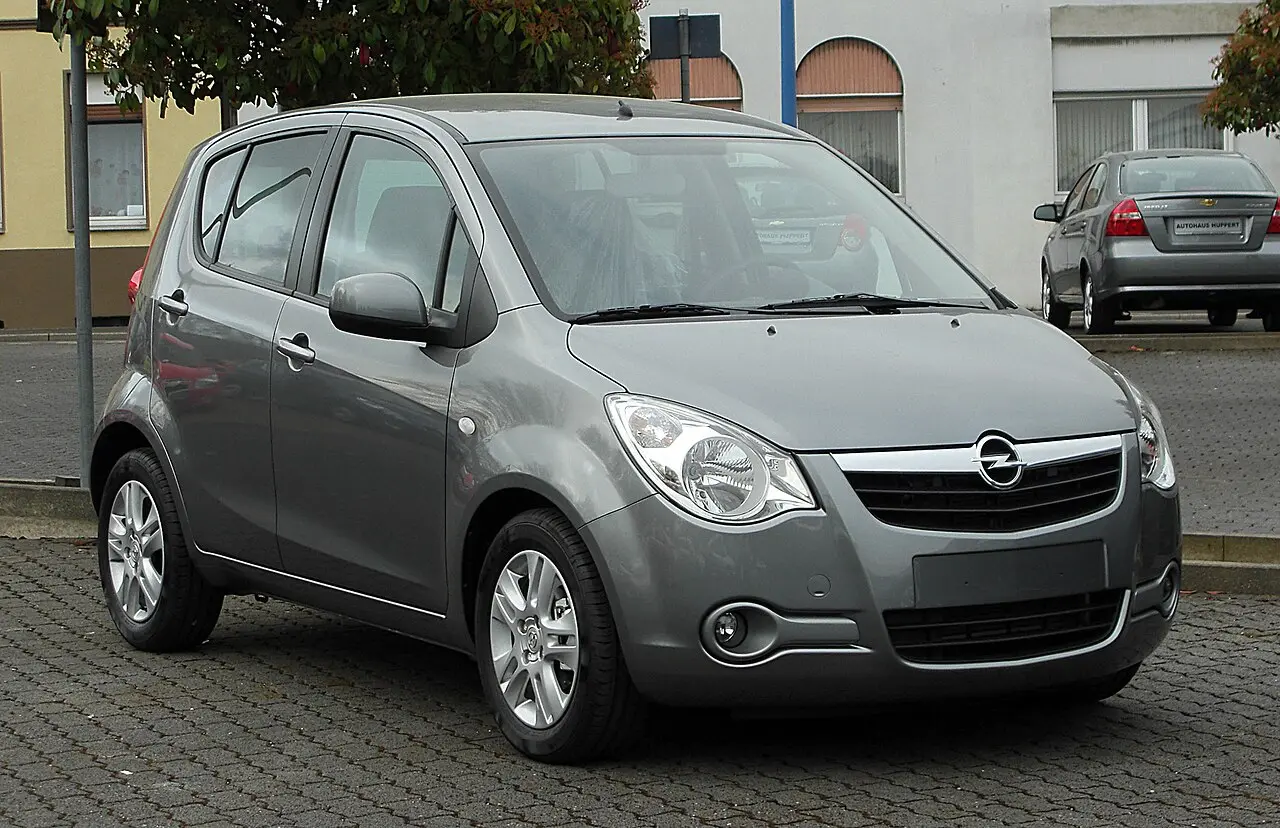
Opel Agila

Opel Agila
Photo: M 93 / Wikimedia Commons · Attribution

The official data lists 44 versions of the Opel Agila (2010–2015), in the European Union and France. Each market publishes its own figures, measured on its own test procedure.

At a glance

Years in the data
2010–2015
Markets
European Union, France
Engines
1.0 L to 1.2 L
Power
48 kW (65 PS) to 69 kW (94 PS)
Fuels
Petrol, LPG, Diesel
Lowest consumption (France)
4.6 L/100 km (NEDC)
New registrations in the EU
160,139

What is the Opel Agila?

The Agila is a small, tall-bodied city car, with an upright shape that makes it easy to use around town. It offers a more practical feel than a conventional small hatchback and sat among Opel’s smallest passenger cars.

The second-generation Agila, known as B, ran from 2007 to 2014. Its high roof and compact body gave it the character of a small people carrier, with an emphasis on easy access and everyday practicality.

Engines and power

In European Union registration figures from 2010 to 2015, the Agila appears with 1.0-litre and 1.2-litre engines and power from 48 kW (65 PS) to 69 kW (94 PS). The listed fuels include petrol, diesel and LPG. The leading combinations shown include 1.2-litre petrol versions and a 1.0-litre petrol version.

French ADEME figures from 2012 to 2015 list petrol versions with power from 50 kW (68 PS) to 69 kW (94 PS). Specifications varied by market.

How economical is the Opel Agila?

The lowest listed French consumption figure is 4.6 L/100 km on the NEDC test. It is an official test result, and everyday consumption can differ. European NEDC and WLTP results use different procedures; both also differ from the EPA procedure used in the USA and the 5-cycle test used in Canada.

Consumption depends on the version and market, so check which engine and test procedure a figure refers to.

Where was the Agila sold?

In European Union registration figures, the Agila appears from 2010 to 2015. French ADEME figures cover 2012 to 2015. With its compact footprint and upright cabin, the Agila served as a small everyday car in Opel’s passenger-car range.

Questions and answers

What years did the second-generation Opel Agila cover?

The Agila B generation ran from 2007 to 2014.

What engine sizes and power appear in EU figures?

EU figures list 1.0-litre to 1.2-litre engines, with power from 48 kW (65 PS) to 69 kW (94 PS).

What is the lowest listed French consumption figure?

The lowest listed French figure is 4.6 L/100 km on the NEDC test.

Agila B (2007–2014)

Opel Agila B
Photo: M 93 / Wikimedia Commons · Attribution

Model codes: H08 · References: en.wikipedia.org, opel-team-niedersachsen.de

European Union 27 versions

New cars registered in the EU (plus Norway and Iceland), from the European Environment Agency. Figures on the NEDC procedure until 2020 and on WLTP from 2021; versions are grouped by engine and power, with their number of registrations.

Years and versionEnginePowerFuelCO₂EU registrations
20141.2 L69 kW (94 PS)Petrol122 g/km8,758
20141.0 L50 kW (68 PS)Petrol108 g/km7,348
20131.2 L69 kW (94 PS)Petrol122 g/km10,454
20131.0 L50 kW (68 PS)Petrol108 g/km8,748
20131.0 L48 kW (65 PS)Petrol119 g/km22
20131.2 L–Other fuel118 g/km16
20121.0 L50 kW (68 PS)Petrol108 g/km16,106
20121.2 L69 kW (94 PS)Petrol123 g/km12,354
20121.0 L48 kW (65 PS)Petrol119 g/km388
2012––Petrol120 g/km16
20111.2 L69 kW (94 PS)Petrol123 g/km20,128
20111.0 L50 kW (68 PS)Petrol109 g/km8,578
20111.0 L48 kW (65 PS)Petrol119 g/km7,498
20111.2 L63 kW (86 PS)Petrol130 g/km1,799
20111.0 L48 kW (65 PS)LPG108 g/km925
20111.2 L55 kW (75 PS)Diesel120 g/km639
20111.2 L63 kW (86 PS)LPG119 g/km156
2011––Petrol126 g/km114
20111.0 L–Petrol139 g/km10
20101.2 L–Petrol132 g/km27,262
20101.0 L–Petrol119 g/km18,138
20101.0 L–LPG108 g/km2,793
20101.2 L–Diesel121 g/km2,670
20101.2 L–LPG119 g/km1,076
20101.0 L–Other fuel108 g/km357
2010––Petrol130 g/km350
2010––Other fuel131 g/km16

France 10 versions

New cars on sale in France, from ADEME Car Labelling. NEDC figures until 2015, WLTP figures in the current catalogue.

Years and versionEnginePowerFuelGearboxConsumption (combined)CO₂
2014AGILA 1.0 BVM5–50 kW (68 PS)Petrol5-speed manual4.7 L/100 km NEDC109 g/km
2014AGILA 1.0 ecoFLEX Start/Stop BVM5–50 kW (68 PS)Petrol5-speed manual4.6 L/100 km NEDC106 g/km
2014AGILA 1.2 BVA4–69 kW (94 PS)Petrol4-speed automatic5.7 L/100 km NEDC131 g/km
2014AGILA 1.2 BVM5–69 kW (94 PS)Petrol5-speed manual5.1 L/100 km NEDC118 g/km
2014AGILA 1.2 Start/Stop BVM5–69 kW (94 PS)Petrol5-speed manual5.0 L/100 km NEDC115 g/km
2012–2013AGILA 1.0 BVM5–50 kW (68 PS)Petrol5-speed manual4.7 L/100 km NEDC109 g/km
2012–2013AGILA 1.0 ecoFLEX Start/Stop BVM5–50 kW (68 PS)Petrol5-speed manual4.6 L/100 km NEDC106 g/km
2012–2013AGILA 1.2 BVA4–69 kW (94 PS)Petrol4-speed automatic5.7 L/100 km NEDC131 g/km
2012–2013AGILA 1.2 BVM5–69 kW (94 PS)Petrol5-speed manual5.1 L/100 km NEDC118 g/km
2012–2013AGILA 1.2 Start/Stop BVM5–69 kW (94 PS)Petrol5-speed manual5.0 L/100 km NEDC115 g/km

Versions outside these generations

European Union 2 versions

New cars registered in the EU (plus Norway and Iceland), from the European Environment Agency. Figures on the NEDC procedure until 2020 and on WLTP from 2021; versions are grouped by engine and power, with their number of registrations.

Years and versionEnginePowerFuelCO₂EU registrations
20151.0 L50 kW (68 PS)Petrol107 g/km1,764
20151.2 L69 kW (94 PS)Petrol121 g/km1,656

France 5 versions

New cars on sale in France, from ADEME Car Labelling. NEDC figures until 2015, WLTP figures in the current catalogue.

Years and versionEnginePowerFuelGearboxConsumption (combined)CO₂
2015AGILA 1.0 BVM5–50 kW (68 PS)Petrol5-speed manual4.7 L/100 km NEDC109 g/km
2015AGILA 1.0 ecoFLEX Start/Stop BVM5–50 kW (68 PS)Petrol5-speed manual4.6 L/100 km NEDC106 g/km
2015AGILA 1.2 BVA4–69 kW (94 PS)Petrol4-speed automatic5.7 L/100 km NEDC131 g/km
2015AGILA 1.2 BVM5–69 kW (94 PS)Petrol5-speed manual5.1 L/100 km NEDC118 g/km
2015AGILA 1.2 Start/Stop BVM5–69 kW (94 PS)Petrol5-speed manual5.0 L/100 km NEDC115 g/km

Official figures are measured on standard test procedures and differ between markets. Your consumption depends on how, where and in what conditions you drive.