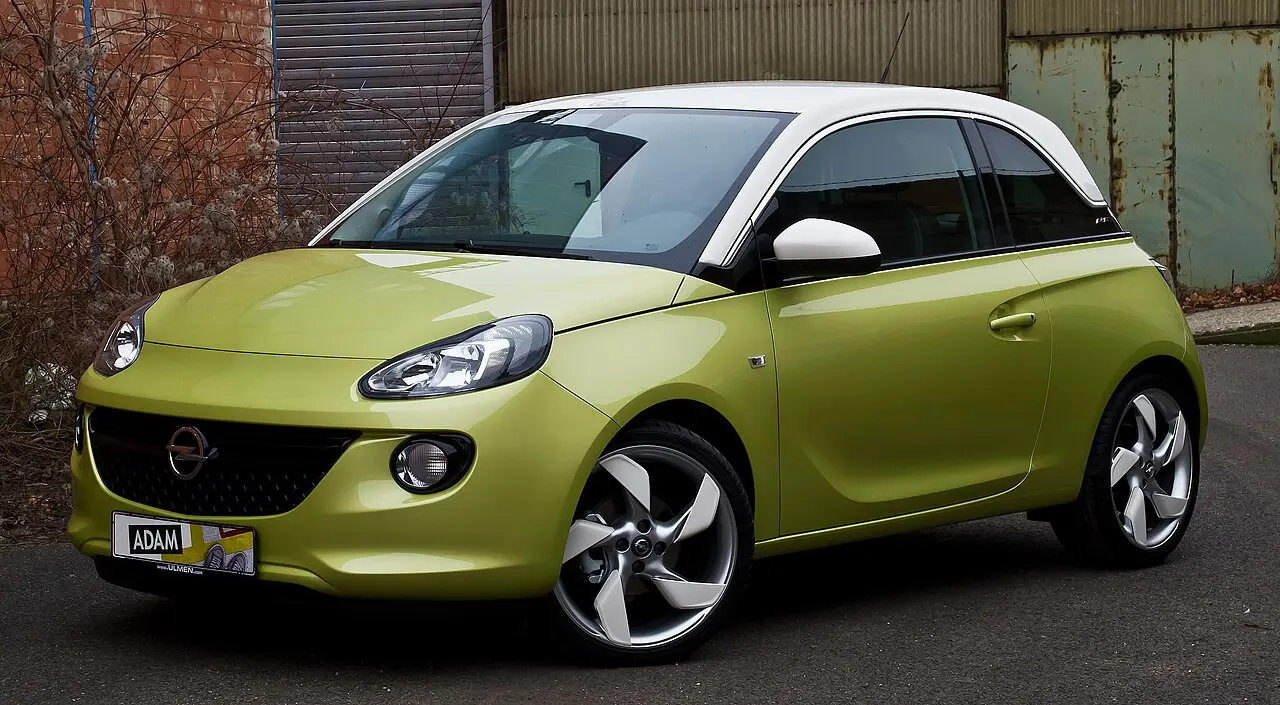
Opel

Opel Adam

Opel Adam
Photo: M 93 / Wikimedia Commons · CC BY-SA 3.0 de

The official data lists 88 versions of the Opel Adam (2012–2019), in the European Union and France. Each market publishes its own figures, measured on its own test procedure.

At a glance

Years in the data
2012–2019
Markets
European Union, France
Engines
1.0 L to 1.5 L
Power
51 kW (69 PS) to 110 kW (150 PS)
Fuels
Petrol, LPG, Diesel
Lowest consumption (France)
4.7 L/100 km (NEDC)
New registrations in the EU
530,446

What is the Opel Adam?

The Adam is a small city car with a distinctive, personalisable design. Opel gave it a broad choice of colours and trim combinations, making individual styling a central part of the car’s appeal. Its compact format suits urban trips and parking.

Adam generation

The Adam was a single-generation model, running from 2012 to 2019. Opel introduced it as a small, style-focused car, with a choice of colour and trim combinations and smartphone-connected infotainment. It was built at Opel’s Eisenach plant in Germany. Its name honours Adam Opel, the company’s founder.

Engines and consumption

European Union registration figures for 2012–2019 cover engines from 1.0 to 1.5 litres and power from 51 kW (69 PS) to 111 kW (151 PS). Listed fuel types include petrol, LPG, diesel and other. The leading configuration was the 1.2-litre petrol with 51 kW (69 PS), followed by the 1.4-litre petrol with 64 kW (87 PS).

France’s ADEME figures cover petrol versions from 2013 to 2015, with power from 51 kW (69 PS) to 110 kW (150 PS). The lowest stated consumption is 4.7 L/100 km on the NEDC test. NEDC is an older European test procedure; it differs from WLTP, and both differ from the US EPA and Canadian 5-cycle procedures.

Where was it sold?

European Union registration figures span 2012–2019 and total 530,446 registrations. France’s ADEME listing covers petrol versions from 2013 to 2015. In the UK, the Adam was sold under Opel’s sister brand, Vauxhall.

Questions and answers

Was there more than one Adam generation?

No. The Adam had one generation, running from 2012 to 2019.

Which engine configuration led EU registrations?

The 1.2-litre petrol with 51 kW (69 PS) was the leading configuration.

What is the lowest stated French consumption?

France’s ADEME figures give 4.7 L/100 km on the NEDC test for petrol versions.

Adam Adam (2012–2019)

Opel Adam Adam
Photo: M 93 / Wikimedia Commons · CC BY-SA 3.0 de

References: en.wikipedia.org

European Union 60 versions

New cars registered in the EU (plus Norway and Iceland), from the European Environment Agency. Figures on the NEDC procedure until 2020 and on WLTP from 2021; versions are grouped by engine and power, with their number of registrations.

Years and versionEnginePowerFuelCO₂EU registrations
20191.4 L64 kW (87 PS)Petrol132 g/km23,980
20191.4 L74 kW (101 PS)Petrol132 g/km11,938
20191.2 L51 kW (69 PS)Petrol129 g/km11,928
20191.4 L110 kW (150 PS)Petrol145 g/km2,716
20191.4 L64 kW (87 PS)LPG123 g/km2,346
20191.0 L66 kW (90 PS)Petrol110 g/km1,544
20191.0 L85 kW (116 PS)Petrol119 g/km1,014
20191.4 L96 kW (131 PS)Petrol128 g/km20
20181.4 L64 kW (87 PS)Petrol125 g/km31,232
20181.2 L51 kW (69 PS)Petrol126 g/km16,332
20181.4 L74 kW (101 PS)Petrol126 g/km8,474
20181.0 L85 kW (116 PS)Petrol114 g/km4,988
20181.4 L110 kW (150 PS)Petrol141 g/km4,402
20181.0 L66 kW (90 PS)Petrol102 g/km2,994
20181.4 L64 kW (87 PS)LPG125 g/km2,782
2015–20171.2 L51 kW (69 PS)Petrol122 g/km61,778
20171.4 L64 kW (87 PS)Petrol117 g/km34,512
20171.4 L74 kW (101 PS)Petrol121 g/km7,450
20171.0 L85 kW (116 PS)Petrol111 g/km5,596
20171.4 L110 kW (150 PS)Petrol139 g/km5,072
20171.0 L66 kW (90 PS)Other fuel100 g/km4,626
20171.4 L64 kW (87 PS)Other fuel116 g/km3,774
20171.4 L96 kW (131 PS)Petrol124 g/km160
20171.4 L64 kW (87 PS)LPG109 g/km154
20171.4 L111 kW (151 PS)Petrol125 g/km80
20171.2 L77 kW (105 PS)Petrol125 g/km32
20161.4 L64 kW (87 PS)Petrol118 g/km36,906
20161.4 L74 kW (101 PS)Petrol121 g/km6,082
20161.0 L66 kW (90 PS)Petrol102 g/km5,832
20161.4 L110 kW (150 PS)Petrol139 g/km5,472
20161.0 L85 kW (116 PS)Petrol114 g/km5,214
20161.4 L64 kW (87 PS)LPG115 g/km4,582
20161.4 L66 kW (90 PS)LPG114 g/km36
20161.4 L74 kW (101 PS)LPG125 g/km26
20161.6 L136 kW (185 PS)Petrol181 g/km22
20161.6 L104 kW (141 PS)Petrol167 g/km20
20151.4 L64 kW (87 PS)Petrol120 g/km33,156
20151.0 L66 kW (90 PS)Petrol102 g/km8,452
20151.0 L85 kW (116 PS)Petrol117 g/km7,814
20151.4 L74 kW (101 PS)Petrol122 g/km5,950
20151.4 L110 kW (150 PS)Petrol139 g/km5,776
20151.4 L64 kW (87 PS)LPG111 g/km3,796
20151.5 L–Petrol119 g/km90
20151.4 L64 kW (87 PS)Diesel125 g/km20
20141.4 L64 kW (87 PS)Petrol123 g/km31,156
20141.2 L51 kW (69 PS)Petrol122 g/km25,972
20141.4 L74 kW (101 PS)Petrol124 g/km12,678
20141.4 L64 kW (87 PS)LPG113 g/km4,204
20141.0 L85 kW (116 PS)Petrol118 g/km3,068
20141.0 L66 kW (90 PS)Petrol103 g/km1,288
2014––Petrol121 g/km20
20131.2 L51 kW (69 PS)Petrol122 g/km27,846
20131.4 L64 kW (87 PS)Petrol124 g/km26,436
20131.4 L74 kW (101 PS)Petrol125 g/km15,908
20131.4 L–Other fuel119 g/km1,634
20131.4 L64 kW (87 PS)LPG112 g/km880
20131.2 L–Other fuel118 g/km70
2013––Petrol124 g/km46
20121.2 L51 kW (69 PS)Petrol124 g/km40
20121.4 L74 kW (101 PS)Petrol128 g/km30

France 28 versions

New cars on sale in France, from ADEME Car Labelling. NEDC figures until 2015, WLTP figures in the current catalogue.

Years and versionEnginePowerFuelGearboxConsumption (combined)CO₂
2015ADAM 1.2 TWINPORT BVM5–51 kW (69 PS)Petrol5-speed manual5.3 L/100 km NEDC125 g/km
2015ADAM 1.4 Twinport Start/Stop BVM5–64 kW (87 PS)Petrol5-speed manual5.0 L/100 km NEDC118 g/km
2015ADAM 1.4 Twinport Start/Stop BVM5–64 kW (87 PS)Petrol5-speed manual4.7 L/100 km NEDC109 g/km
2015ADAM 1.4 Twinport Start/Stop BVM5–64 kW (87 PS)Petrol5-speed manual4.8 L/100 km NEDC112 g/km
2015ADAM 1.4 Twinport Start/Stop BVM5–64 kW (87 PS)Petrol5-speed manual5.0 L/100 km NEDC118 g/km
2015ADAM 1.4 Twinport Start/Stop BVM5–64 kW (87 PS)Petrol5-speed manual5.1 L/100 km NEDC119 g/km
2015ADAM 1.4 Twinport Start/Stop BVM5–64 kW (87 PS)Petrol5-speed manual4.8 L/100 km NEDC112 g/km
2015ADAM 1.4 Twinport Start/Stop BVM5–64 kW (87 PS)Petrol5-speed manual5.1 L/100 km NEDC119 g/km
2015ADAM 1.4 Twinport Start/Stop BVM5–64 kW (87 PS)Petrol5-speed manual5.0 L/100 km NEDC118 g/km
2015ADAM 1.0 ECOTEC Start/Stop BVM6–85 kW (116 PS)Petrol6-speed manual4.9 L/100 km NEDC114 g/km
2015ADAM 1.0 ECOTEC Start/Stop BVM6–85 kW (116 PS)Petrol6-speed manual5.1 L/100 km NEDC119 g/km
2015ADAM S 1.4 (150ch) Start/Stop BVM5–110 kW (150 PS)Petrol6-speed manual5.9 L/100 km NEDC139 g/km
2014ADAM 1.2 TWINPORT BVM5–51 kW (69 PS)Petrol5-speed manual5.3 L/100 km NEDC124 g/km
2014ADAM 1.2 TWINPORT BVM5–51 kW (69 PS)Petrol5-speed manual5.3 L/100 km NEDC125 g/km
2014ADAM 1.4 Twinport (87ch) Start/Stop BVM5–64 kW (87 PS)Petrol5-speed manual5.1 L/100 km NEDC119 g/km
2014ADAM 1.4 Twinport (87ch) Start/Stop BVM5–64 kW (87 PS)Petrol5-speed manual5.1 L/100 km NEDC120 g/km
2014ADAM 1.4 Twinport (100ch) BVM5–74 kW (101 PS)Petrol5-speed manual5.5 L/100 km NEDC129 g/km
2014ADAM 1.4 Twinport (100ch) BVM5–74 kW (101 PS)Petrol5-speed manual5.5 L/100 km NEDC130 g/km
2013ADAM 1.2 TWINPORT BVM5–51 kW (69 PS)Petrol5-speed manual5.3 L/100 km NEDC124 g/km
2013ADAM 1.4 Twinport (87ch) Start/Stop BVM5–64 kW (87 PS)Petrol5-speed manual5.1 L/100 km NEDC119 g/km
2013ADAM 1.4 Twinport (87ch) Start/Stop BVM5–64 kW (87 PS)Petrol5-speed manual5.1 L/100 km NEDC120 g/km
2013ADAM 1.4 Twinport (100ch) BVM5–74 kW (101 PS)Petrol5-speed manual5.5 L/100 km NEDC129 g/km
2013ADAM 1.4 Twinport (100ch) BVM5–74 kW (101 PS)Petrol5-speed manual5.5 L/100 km NEDC130 g/km

Official figures are measured on standard test procedures and differ between markets. Your consumption depends on how, where and in what conditions you drive.