Nissan

Nissan Versa

Nissan Versa
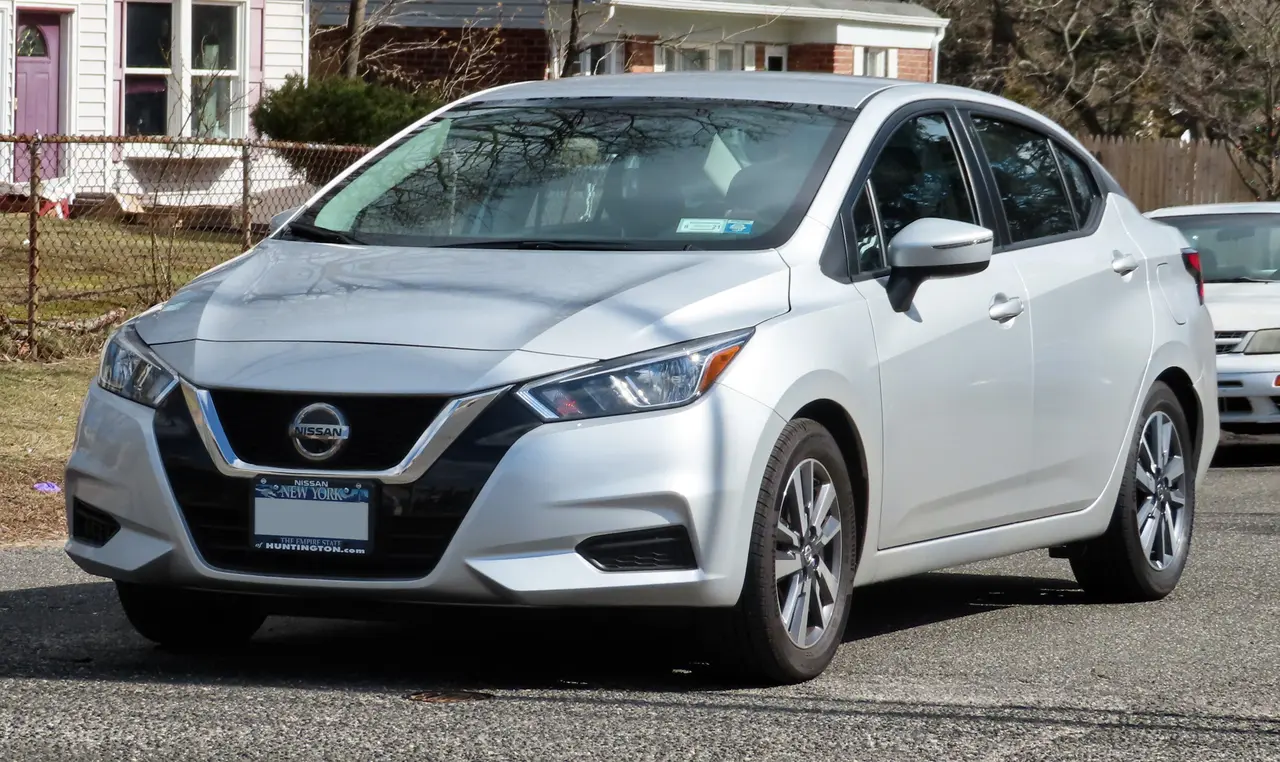
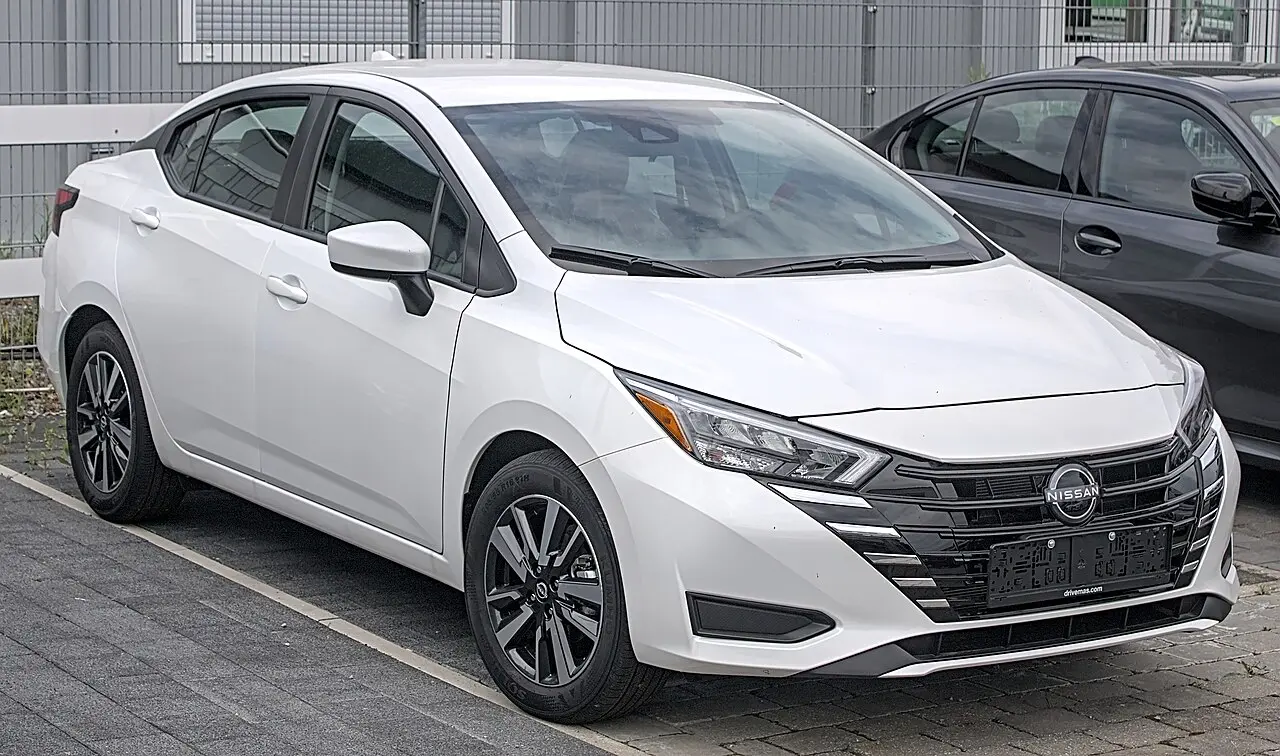
Photo: Alexander Migl / Wikimedia Commons · CC BY-SA 4.0

The official data lists 55 versions of the Nissan Versa (2007–2025), in the United States and Canada. Each market publishes its own figures, measured on its own test procedure.

At a glance

Years in the data
2007–2025
Markets
United States, Canada
Engines
1.6 L to 1.8 L
Fuels
Petrol
Lowest consumption (Canada)
6.6 L/100 km (5-cycle)
Lowest consumption (United States)
6.7 L/100 km (EPA)

What is the Nissan Versa?

The Versa is Nissan’s small car for North America, offered as a hatchback and a four-door sedan. Its roomy cabin gives passengers and luggage space in a compact package. It sits below the Sentra in Nissan’s range.

The first generation established the hatchback and sedan formats. Later generations changed the design and equipment while keeping the Versa’s role as a small everyday car.

Versa generations and engines

The first generation (2007–2012) was sold in the United States and Canada. The second (2012–2019) and third (2020–2025) generations followed in those markets. Their codes are C11, N17 and N18, respectively.

Across the listed North American versions, petrol engines range from 1.6 L to 1.8 L. The engine and power depend on the generation and version.

How economical is the Nissan Versa?

In the United States, EPA figures span 2007–2025, with a best combined result of 35 MPG and a lowest listed consumption of 6.7 L/100 km. Canadian NRCan figures cover the same years and list a lowest consumption of 6.6 L/100 km on the 5-cycle test.

The EPA and NRCan use different test procedures, so results are best understood within each market.

Where was the Versa sold?

The Versa was sold in the United States and Canada. Across those markets, it was offered as a hatchback and a sedan, with petrol engines.

Questions and answers

What body styles did the Nissan Versa have?

It was sold as a hatchback and a four-door sedan.

Which Versa generations are covered?

The first generation ran from 2007–2012, the second from 2012–2019 and the third from 2020–2025.

What is the best combined EPA fuel economy figure?

The best combined result is 35 MPG.

Was the Versa sold in Europe?

The Versa was sold in the United States and Canada.
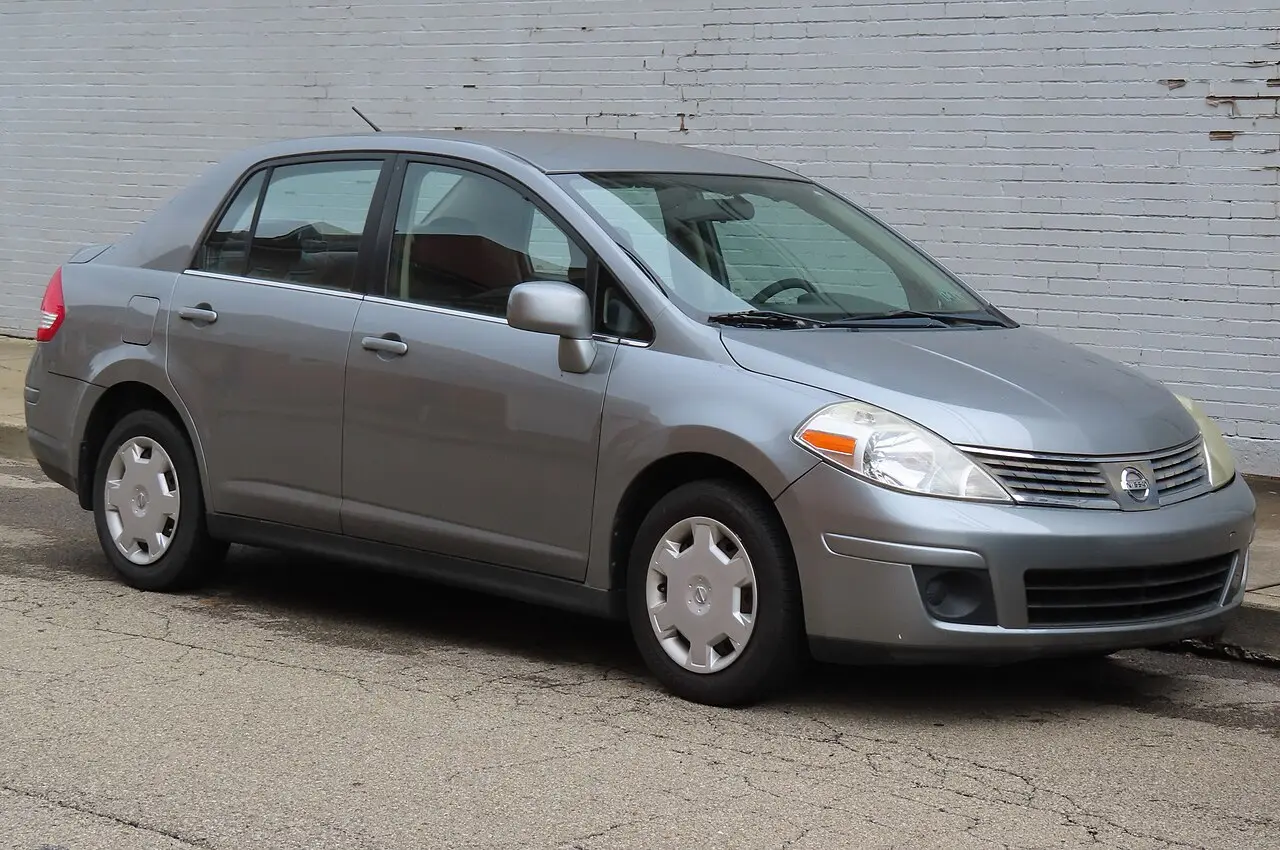
Versa first generation (2007–2012)

Nissan Versa first generation
Photo: MercurySable99 / Wikimedia Commons · CC BY-SA 4.0

Model codes: C11 · Sold in: United States and Canada · References: usa.nissannews.com, en.wikipedia.org

Show all 24 versions

Versa second generation (2012–2019)

Nissan Versa second generation
Photo: Kevauto / Wikimedia Commons · CC BY-SA 4.0

Model codes: N17 · Sold in: United States and Canada · References: canada.nissannews.com, en.wikipedia.org

Show all 28 versions

Versa third generation (2020–2025)

Nissan Versa third generation
Photo: Alexander Migl / Wikimedia Commons · CC BY-SA 4.0

Model codes: N18 · Sold in: United States and Canada · References: en.wikipedia.org, canada.nissannews.com

United States 4 versions

Model years sold in the USA, from the EPA and the Department of Energy (fueleconomy.gov). MPG on the EPA test; litres per 100 km = 235.215 ÷ MPG.

Years and versionEngineFuelGearboxDriveConsumption (combined)CO₂
2020–20251.6 LPetrol5-speed manualFront-wheel drive30 MPG (7.8 L/100 km) EPA184 g/km
20251.6 LPetrolContinuously variable (CVT)Front-wheel drive35 MPG (6.7 L/100 km) EPA157 g/km
2021–20241.6 LPetrolContinuously variable (CVT)Front-wheel drive35 MPG (6.7 L/100 km) EPA158 g/km
20201.6 LPetrolContinuously variable (CVT)Front-wheel drive35 MPG (6.7 L/100 km) EPA157 g/km

Canada 3 versions

Model years sold in Canada, from Natural Resources Canada fuel consumption ratings (5-cycle test).

Years and versionEngineFuelGearboxConsumption (combined)CO₂
2020–2025Compact1.6 LPetrol5-speed manual7.7 L/100 km 5-cycle181 g/km
2025Compact1.6 LPetrolContinuously variable (CVT)6.8 L/100 km 5-cycle159 g/km
2020–2024Compact1.6 LPetrolContinuously variable (CVT)6.7 L/100 km 5-cycle158 g/km

Official figures are measured on standard test procedures and differ between markets. Your consumption depends on how, where and in what conditions you drive.