Nissan

Nissan Titan

Nissan Titan
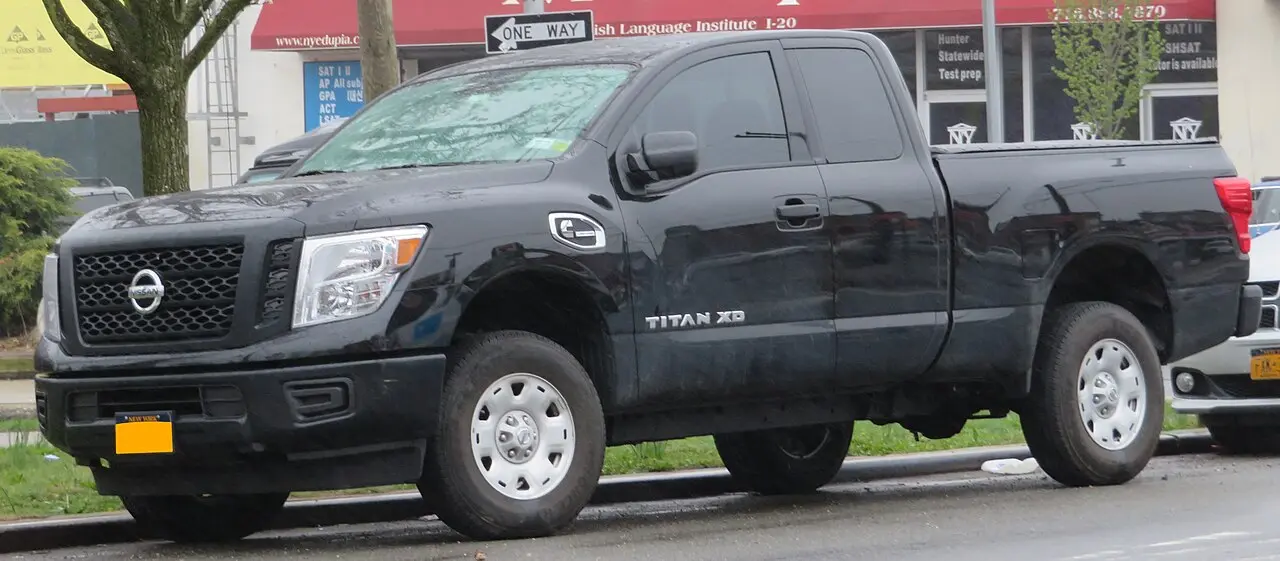
Photo: Kevauto / Wikimedia Commons · CC BY-SA 4.0

The official data lists 63 versions of the Nissan Titan (2004–2024), in the United States and Canada. Each market publishes its own figures, measured on its own test procedure.

At a glance

Years in the data
2004–2024
Markets
United States, Canada
Engines
5.6 L
Fuels
Petrol, Flex fuel (E85)
Lowest consumption (United States)
13.1 L/100 km (EPA)
Lowest consumption (Canada)
13.3 L/100 km (5-cycle)

What is the Nissan Titan?

The Titan is Nissan’s full-size pickup truck for North America. It extended the company’s pickup range into the full-size class and kept a traditional truck format across its two generations: A60 (2004–2015) and A61 (2016–2024). The second generation was redesigned while retaining the Titan’s full-size pickup role.

Engines and power

The listed engine is 5.6 L throughout. US versions used petrol or flex-fuel E85, while Canadian listings cover petrol. The second-generation Titan used a 5.6 L V8.

How economical is the Nissan Titan?

The lowest listed US consumption is 13.1 L/100 km, with a best combined EPA rating of 18 MPG. Canada’s lowest listed figure is 13.3 L/100 km on the NRCan 5-cycle test. WLTP and NEDC in Europe, EPA in the United States and the 5-cycle test in Canada use different procedures, so these ratings are best understood within their own markets.

Where was the Titan sold?

The Titan was sold in the United States and Canada. US listings span 2004–2024, while Canadian listings span 2004–2021.

Questions and answers

What kind of truck is the Nissan Titan?

It is a full-size pickup truck designed for the North American market.

What are the Titan generations?

The Titan has two generations: A60 (2004–2015) and A61 (2016–2024).

What engine does the Titan use?

The listed engine is 5.6 L; the second-generation Titan used a 5.6 L V8.

What is the Titan’s lowest listed fuel consumption?

The lowest listed figure is 13.1 L/100 km in US EPA ratings. Canada’s lowest is 13.3 L/100 km on the NRCan 5-cycle test.
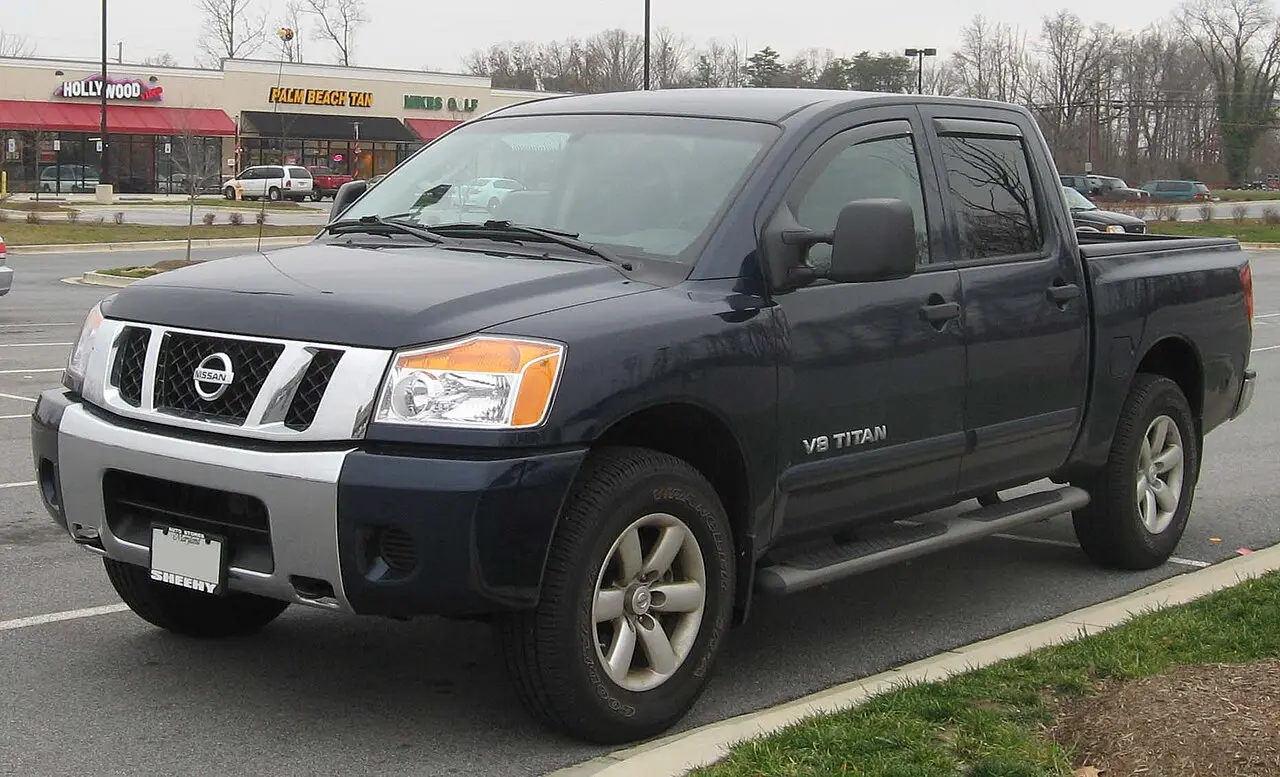
Titan A60 (2004–2015)

Nissan Titan A60
Photo: IFCAR / Wikimedia Commons · Public domain

Model codes: A60 · Sold in: United States and Canada · References: en.wikipedia.org, carsdirect.com

Show all 41 versions

Titan A61 (2016–2024)

Nissan Titan A61
Photo: Kevauto / Wikimedia Commons · CC BY-SA 4.0

Model codes: A61 · Sold in: United States and Canada · References: en.wikipedia.org, carsdirect.com

United States 14 versions

Model years sold in the USA, from the EPA and the Department of Energy (fueleconomy.gov). MPG on the EPA test; litres per 100 km = 235.215 ÷ MPG.

Years and versionEngineFuelGearboxDriveConsumption (combined)CO₂
2024SIDI5.6 LPetrol9-speed automaticRear-wheel drive17 MPG (13.8 L/100 km) EPA317 g/km
2024SIDI5.6 LPetrol9-speed automaticPart-time four-wheel drive17 MPG (13.8 L/100 km) EPA322 g/km
2024SIDI5.6 LPetrol9-speed automaticPart-time four-wheel drive16 MPG (14.7 L/100 km) EPA339 g/km
2021–2023SIDI5.6 LPetrol9-speed automaticRear-wheel drive18 MPG (13.1 L/100 km) EPA313 g/km
2022–2023SIDI5.6 LPetrol9-speed automaticPart-time four-wheel drive18 MPG (13.1 L/100 km) EPA314 g/km
2022–2023SIDI5.6 LPetrol9-speed automaticPart-time four-wheel drive17 MPG (13.8 L/100 km) EPA321 g/km
2021SIDI5.6 LPetrol9-speed automaticPart-time four-wheel drive18 MPG (13.1 L/100 km) EPA320 g/km
2021SIDI5.6 LPetrol9-speed automaticPart-time four-wheel drive17 MPG (13.8 L/100 km) EPA322 g/km
2020SIDI5.6 LPetrol9-speed automaticRear-wheel drive18 MPG (13.1 L/100 km) EPA304 g/km
2020SIDI5.6 LPetrol9-speed automaticPart-time four-wheel drive18 MPG (13.1 L/100 km) EPA319 g/km
2020SIDI5.6 LPetrol9-speed automaticPart-time four-wheel drive17 MPG (13.8 L/100 km) EPA326 g/km
2017–2019SIDI5.6 LPetrol7-speed automaticRear-wheel drive18 MPG (13.1 L/100 km) EPA314 g/km
2017–2019SIDI5.6 LPetrol7-speed automaticPart-time four-wheel drive18 MPG (13.1 L/100 km) EPA314 g/km
2017–2019SIDI5.6 LPetrol7-speed automaticPart-time four-wheel drive17 MPG (13.8 L/100 km) EPA329 g/km

Canada 8 versions

Model years sold in Canada, from Natural Resources Canada fuel consumption ratings (5-cycle test).

Years and versionEngineFuelGearboxConsumption (combined)CO₂
2021Pickup truck: Standard5.6 LPetrol9-speed automatic13.4 L/100 km 5-cycle314 g/km
2021Pickup truck: Standard5.6 LPetrol9-speed automatic13.6 L/100 km 5-cycle321 g/km
2020Pickup truck: Standard5.6 LPetrol9-speed automatic13.3 L/100 km 5-cycle313 g/km
2017–2019Pickup truck: Standard5.6 LPetrol7-speed automatic13.3 L/100 km 5-cycle312 g/km
2017–2019Pickup truck: Standard5.6 LPetrol7-speed automatic13.4 L/100 km 5-cycle315 g/km
2018–2019Pickup truck: Standard5.6 LPetrol7-speed automatic14.1 L/100 km 5-cycle331 g/km
2017Pickup truck: Standard5.6 LPetrol7-speed automatic14.2 L/100 km 5-cycle333 g/km

Official figures are measured on standard test procedures and differ between markets. Your consumption depends on how, where and in what conditions you drive.