Nissan

Nissan Note

Nissan Note
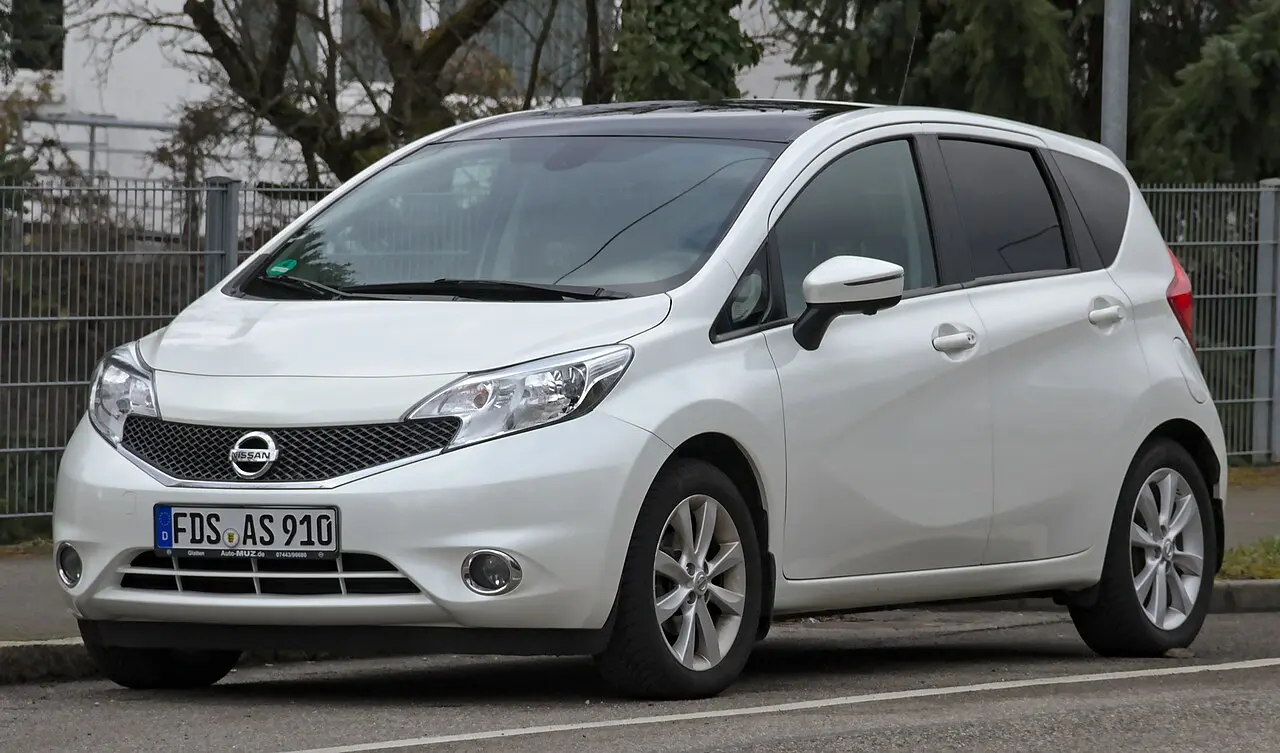
Photo: Alexander Migl / Wikimedia Commons · CC BY-SA 4.0

The official data lists 99 versions of the Nissan Note (2006–2019), in the European Union, the United Kingdom, and France. Each market publishes its own figures, measured on its own test procedure.

At a glance

Years in the data
2006–2019
Markets
European Union, United Kingdom, France
Engines
1.2 L to 1.6 L
Power
59 kW (80 PS) to 81 kW (110 PS)
Fuels
Petrol, Diesel, LPG
Lowest consumption (France)
3.5 L/100 km (NEDC)
Lowest consumption (United Kingdom)
3.5 L/100 km (NEDC)
New registrations in the EU
588,537

What is the Nissan Note?

The Nissan Note is a compact, tall-bodied five-door family car. Its upright shape makes good use of cabin space while keeping the car easy to manoeuvre around town. In Europe, Nissan placed it in the B-segment, its small-car class.

Note generations

The first-generation Note, E11, ran from 2006 to 2013. The second generation, E12, followed from 2013 to 2017. Nissan described the European E12 as combining design with technology and kept it in the B-segment. The model’s generations brought changes to its design and equipment while retaining its compact family-car role.

Engines and power

Across EU registrations, the Note’s engines range from 1.2 to 1.6 litres, with power from 59 kW (80 PS) to 89 kW (121 PS). Listed fuels include petrol, diesel, LPG and other classifications. EU figures span 2010–2019 and total 588,537 registrations. The leading entries are 1.2-litre petrol versions rated at 59 kW (80 PS), with the highest annual totals in 2014, 2015 and 2016.

UK figures cover 2006–2018 and list 1.2- to 1.6-litre petrol and diesel engines, with power from 50 kW (68 PS) to 76 kW (103 PS). French figures cover 2012–2015, with petrol and diesel power from 59 kW (80 PS) to 81 kW (110 PS). The lowest stated consumption in both markets is 3.5 L/100 km under NEDC.

Where was the Note sold?

The Note appears in EU, UK and French figures. Its E11 and E12 generations mark the model’s progression through Nissan’s European small-car range. UK and French consumption figures use the NEDC test, an older European procedure; WLTP results are measured differently and are not directly comparable.

Questions and answers

What kind of car is the Nissan Note?

It is a compact, tall-bodied five-door family car that Nissan placed in Europe’s B-segment.

What are the Note’s generations?

The first-generation E11 ran from 2006 to 2013; the second-generation E12 ran from 2013 to 2017.

What is the lowest stated Note consumption?

The UK and French figures both show 3.5 L/100 km under the NEDC test.

What power range is listed for EU Notes?

EU figures span 59 kW (80 PS) to 89 kW (121 PS), with engines from 1.2 to 1.6 litres.
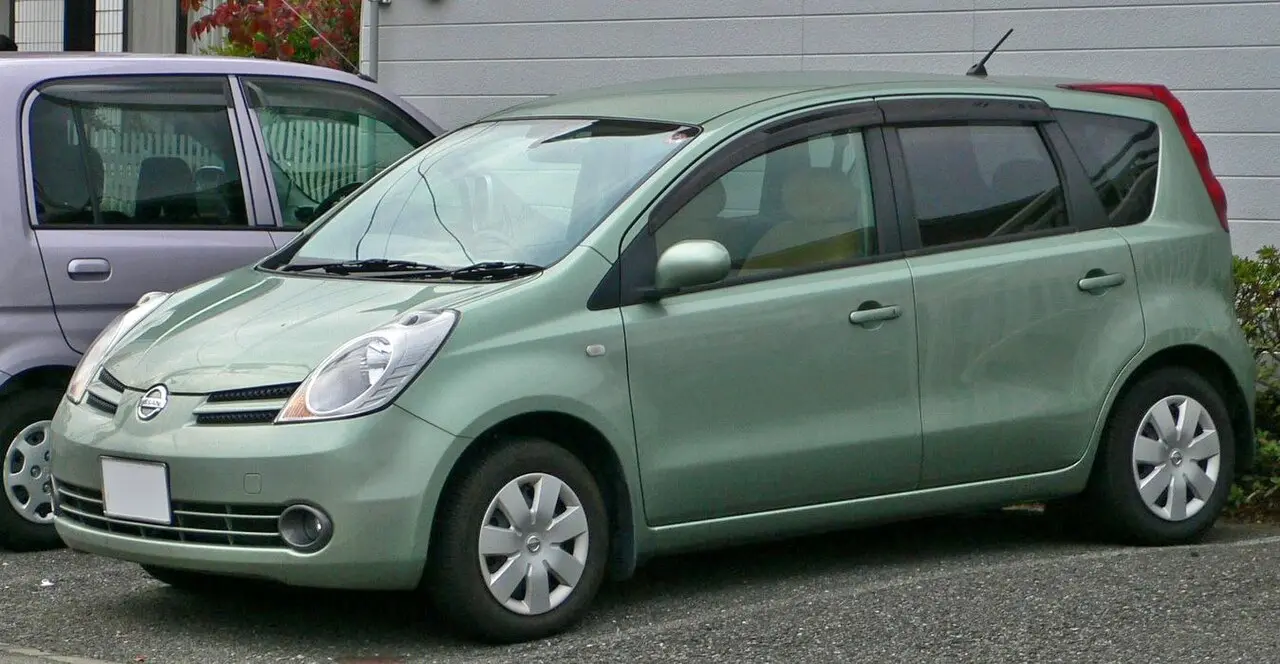
Note First generation (2006–2013)

Nissan Note First generation
Photo: Mytho88 / Wikimedia Commons · CC BY-SA 3.0

Model codes: E11 · Sold in: European Union and United Kingdom · References: en.wikipedia.org, europe.nissannews.com

Show all 54 versions

Note Second generation (2013–2017)

Nissan Note Second generation
Photo: Alexander Migl / Wikimedia Commons · CC BY-SA 4.0

Model codes: E12 · Sold in: European Union and United Kingdom · References: en.wikipedia.org, europe.nissannews.com

European Union 33 versions

New cars registered in the EU (plus Norway and Iceland), from the European Environment Agency. Figures on the NEDC procedure until 2020 and on WLTP from 2021; versions are grouped by engine and power, with their number of registrations.

Years and versionEnginePowerFuelCO₂EU registrations
2017–20191.5 L66 kW (90 PS)Diesel93 g/km4,244
20171.2 L59 kW (80 PS)Petrol109 g/km14,882
20171.2 L72 kW (98 PS)Petrol110 g/km2,066
20171.5 L66 kW (90 PS)Other fuel93 g/km922
20171.2 L89 kW (121 PS)Petrol109 g/km84
20171.2 L59 kW (80 PS)Other fuel99 g/km20
20161.2 L59 kW (80 PS)Petrol109 g/km48,444
20161.5 L66 kW (90 PS)Diesel92 g/km13,926
20161.2 L72 kW (98 PS)Petrol109 g/km8,136
20161.2 L59 kW (80 PS)LPG103 g/km1,400
20151.2 L59 kW (80 PS)Petrol109 g/km60,420
20151.5 L66 kW (90 PS)Diesel91 g/km20,744
20151.2 L72 kW (98 PS)Petrol108 g/km9,586
2014–20151.2 L59 kW (80 PS)LPG99 g/km1,538
20141.2 L59 kW (80 PS)Petrol109 g/km77,754
20141.5 L66 kW (90 PS)Diesel93 g/km36,596
20141.2 L72 kW (98 PS)Petrol108 g/km13,678
20141.2 L72 kW (98 PS)Diesel99 g/km256
2014––Petrol117 g/km240
20141.4 L65 kW (88 PS)Petrol139 g/km88
20141.6 L81 kW (110 PS)Petrol154 g/km42
2014––Diesel91 g/km20
20131.5 L66 kW (90 PS)Diesel104 g/km21,506
20131.4 L65 kW (88 PS)Petrol139 g/km19,458
20131.2 L59 kW (80 PS)Petrol109 g/km14,684
20131.6 L81 kW (110 PS)Petrol153 g/km7,278
20131.5 L–Other fuel98 g/km1,166
20131.2 L–Other fuel109 g/km808
20131.4 L–Other fuel139 g/km692
20131.2 L59 kW (80 PS)Petrol112 g/km540
2013––Petrol141 g/km162
20131.6 L–Other fuel161 g/km38
2013––Diesel102 g/km14

United Kingdom 15 versions

New cars on sale in the UK, from the Vehicle Certification Agency. NEDC figures until 2018 and WLTP figures after; years are the editions a version appeared in.

Years and versionEnginePowerFuelGearboxConsumption (combined)CO₂
2015–20181.2 Petrol · 1.21.2 L–Petrol5-speed manual4.7 L/100 km NEDC109 g/km
2015–20181.2 Super charge · 1.2 DIGT-S1.2 L–Petrol5-speed manual4.3 L/100 km NEDC99 g/km
2015–20181.2 Super charge CVT · 1.2 DIGT-S CVT1.2 L–PetrolContinuously variable (CVT)5.1 L/100 km NEDC119 g/km
2016–20181.5 dCi1.5 L–Diesel5-speed manual3.6 L/100 km NEDC93 g/km
20151.5 dCi1.5 L–Diesel5-speed manual3.5 L/100 km NEDC90 g/km
20141.2 Super charge1.2 L–PetrolManual4.3 L/100 km NEDC99 g/km
20141.2 Petrol1.2 L–PetrolManual4.7 L/100 km NEDC109 g/km
20141.2 Super charge CVT1.2 L–PetrolAutomatic5.1 L/100 km NEDC119 g/km
20141.5 dCi1.5 L–DieselManual3.5 L/100 km NEDC90 g/km
20131.41.4 L–PetrolManual5.9 L/100 km NEDC139 g/km
20131.4 88ps1.4 L65 kW (88 PS)PetrolManual5.9 L/100 km NEDC139 g/km
20131.5 dCi 66kW1.5 L66 kW (90 PS)DieselManual4.2 L/100 km NEDC110 g/km
20131.61.6 L–PetrolManual6.6 L/100 km NEDC149 g/km
20131.61.6 L–PetrolAutomatic6.8 L/100 km NEDC159 g/km

Versions outside these generations

European Union 2 versions

New cars registered in the EU (plus Norway and Iceland), from the European Environment Agency. Figures on the NEDC procedure until 2020 and on WLTP from 2021; versions are grouped by engine and power, with their number of registrations.

Years and versionEnginePowerFuelCO₂EU registrations
20181.2 L59 kW (80 PS)Petrol109 g/km70
20181.2 L72 kW (98 PS)Petrol111 g/km10

France 12 versions

New cars on sale in France, from ADEME Car Labelling. NEDC figures until 2015, WLTP figures in the current catalogue.

Years and versionEnginePowerFuelGearboxConsumption (combined)CO₂
2015NOTE 1.2–59 kW (80 PS)Petrol5-speed manual4.7 L/100 km NEDC109 g/km
2015NOTE 1.5 dCi–66 kW (90 PS)Diesel5-speed manual3.5 L/100 km NEDC90 g/km
2015NOTE 1.2 DIG-S MT–72 kW (98 PS)Petrol5-speed manual4.3 L/100 km NEDC99 g/km
2015NOTE 1.2 DIG-S CVT–72 kW (98 PS)PetrolContinuously variable (CVT)5.1 L/100 km NEDC119 g/km
2014NOTE 1.5 dCi–59 kW (80 PS)Petrol5-speed manual4.7 L/100 km NEDC109 g/km
2014NOTE 1.2–66 kW (90 PS)Diesel5-speed manual3.6 L/100 km NEDC92 g/km
2014NOTE 1.2 DIG-S CVT–72 kW (98 PS)PetrolContinuously variable (CVT)5.1 L/100 km NEDC119 g/km
2014NOTE 1.2 DIG-S MT–72 kW (98 PS)Petrol5-speed manual4.3 L/100 km NEDC99 g/km
2012–2013NOTE 1.4–65 kW (88 PS)Petrol5-speed manual5.9 L/100 km NEDC139 g/km
2012–2013NOTE 1.5 dCi (86ch)–66 kW (90 PS)Diesel5-speed manual4.2 L/100 km NEDC110 g/km
2012–2013NOTE 1.6–81 kW (110 PS)Petrol5-speed manual6.6 L/100 km NEDC149 g/km
2012–2013NOTE 1.6 BVA4–81 kW (110 PS)Petrol4-speed automatic6.8 L/100 km NEDC159 g/km

Official figures are measured on standard test procedures and differ between markets. Your consumption depends on how, where and in what conditions you drive.