The official data lists 215 versions of the Nissan Micra (2000–2026), in the European Union, the United Kingdom, France, and Canada. Each market publishes its own figures, measured on its own test procedure.
At a glance
Years in the data
2000–2026
Markets
European Union, United Kingdom, France, Canada
Engines
0.9 L to 1.6 L
Power
48 kW (65 PS) to 110 kW (150 PS)
Fuels
Petrol, Electric, LPG, Hybrid, Diesel
Lowest consumption (United Kingdom)
3.2 L/100 km (NEDC)
Lowest consumption (France)
4.1 L/100 km (NEDC)
Lowest consumption (European Union)
4.5 L/100 km (WLTP)
New registrations in the EU
1,462,346
What is the Nissan Micra?
The Micra is Nissan’s small hatchback, designed for everyday driving in town and beyond. In Japan, the related model is known as the March. Nissan has kept the name in its compact-car range across markets, with successive generations bringing fresh designs while retaining the small hatchback format.
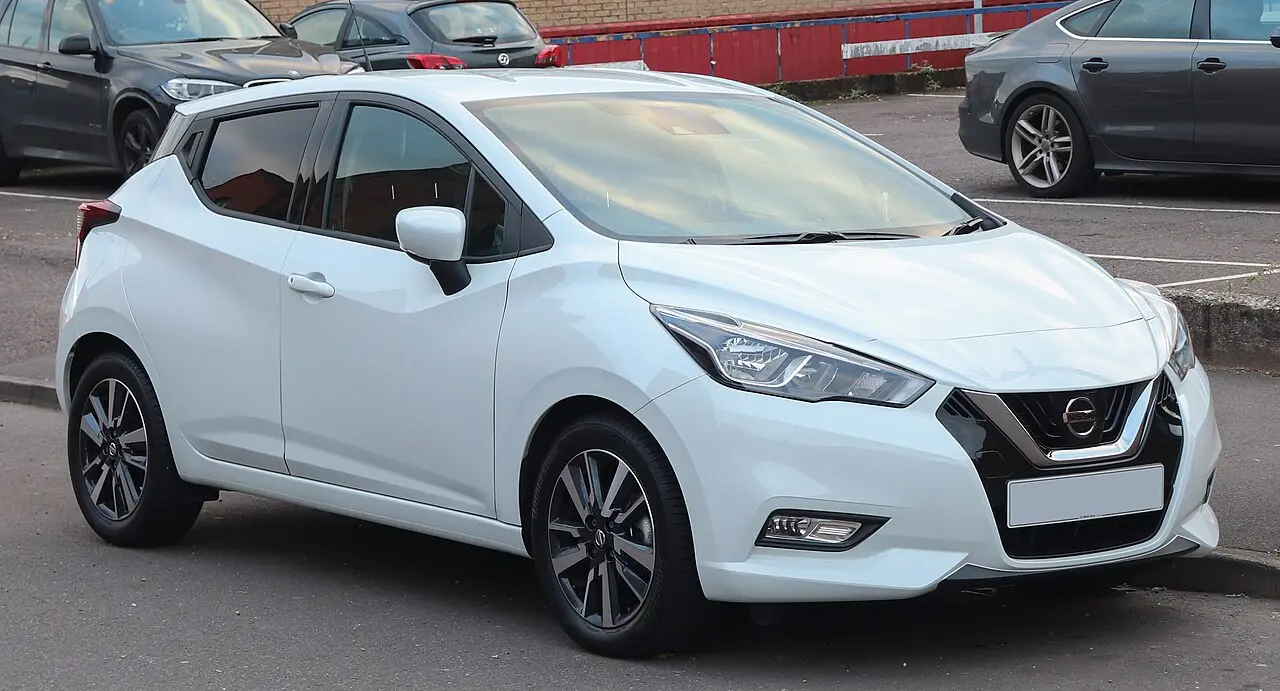
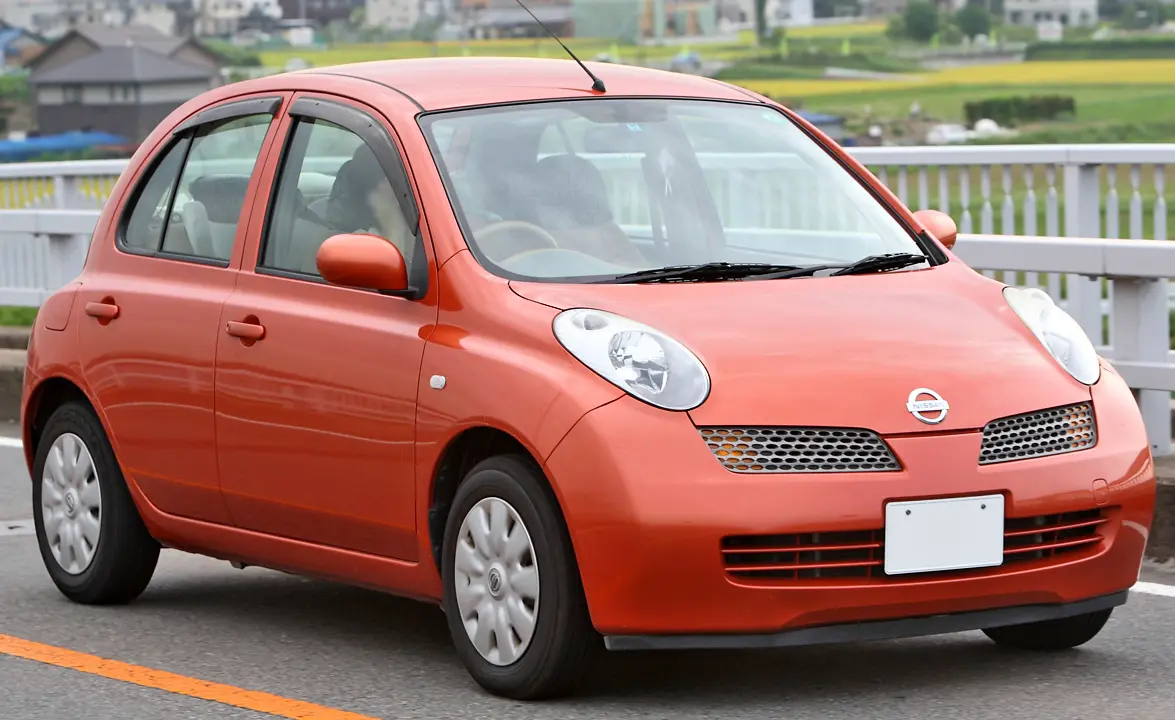
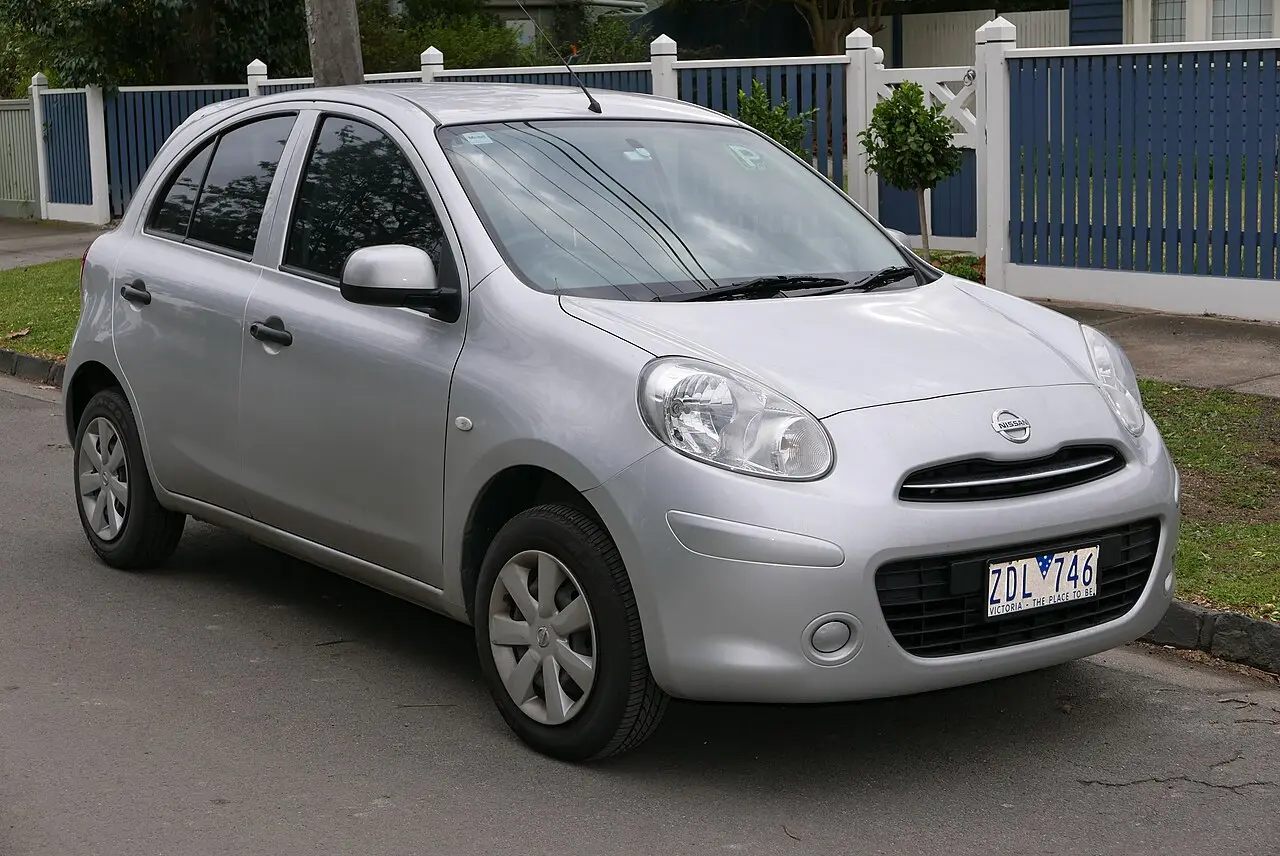
The generations covered here begin with the third-generation K12 (2002–2010), followed by the fourth-generation K13 (2010–2017) and fifth-generation K14 (2017–2023). The K12 was produced in Japan and the UK, reflecting the model’s international reach.
Engines and power
Official EU registration figures cover Micras from 2010 to 2025, with engines from 0.9 to 1.5 litres and power from 52 kW (71 PS) to 110 kW (150 PS). Fuels include petrol, diesel, hybrid, LPG, electric and other types. UK figures span 2000–2026, with 0.9- to 1.6-litre engines and power from 48 kW (65 PS) to 110 kW (150 PS). French figures cover 2012–2026 and list 1.0-litre petrol versions with power from 59 kW (80 PS) to 72 kW (98 PS).
Canadian figures cover petrol Micras with 1.6-litre engines from 2015 to 2019. In EU registration figures, the most registered listed entry is the 1.2-litre petrol rated at 59 kW (80 PS), appearing in 2011, 2015 and 2016.
How economical is the Nissan Micra?
The lowest listed EU consumption for petrol, diesel and hybrid versions is 4.5 L/100 km on WLTP. The UK low is 3.2 L/100 km on NEDC, while France lists 4.1 L/100 km on NEDC. Canada lists a low of 7.7 L/100 km for petrol versions on its five-cycle test. WLTP and NEDC are European procedures; Canada’s five-cycle method differs, so results across markets are not directly comparable.
Official EU registration figures record 1,462,346 Micras across 2010–2025. UK figures begin in 2000, while Canadian figures cover 2015–2019.
Questions and answers
What are the Micra generations?
They are the third-generation K12 (2002–2010), fourth-generation K13 (2010–2017) and fifth-generation K14 (2017–2023).
What is the lowest listed Micra consumption in the EU?
It is 4.5 L/100 km on WLTP for petrol, diesel and hybrid versions.
Was the Micra sold in Canada?
Yes. Canadian figures cover petrol Micras with 1.6-litre engines from 2015 to 2019.
Why do Micra consumption figures differ between markets?
Europe uses WLTP or NEDC, while Canada uses its five-cycle test. These procedures differ, so their results are not directly comparable.
Model codes: K14 · Sold in: European Union, United Kingdom, and France · References: en.wikipedia.org, nissan.nl
European Union 47 versions
New cars registered in the EU (plus Norway and Iceland), from the European Environment Agency. Figures on the NEDC procedure until 2020 and on WLTP from 2021; versions are grouped by engine and power, with their number of registrations.
Years and version
Engine
Power
Fuel
Consumption (combined)
CO₂
EU registrations
2023–2024
1.0 L
68 kW (92 PS)
Petrol
5.5 L/100 km WLTP
125 g/km
6,699
2022–2023
1.0 L
68 kW (92 PS)
LPG
6.2 L/100 km WLTP
111 g/km
3,439
2022
1.0 L
68 kW (92 PS)
Petrol
5.5 L/100 km WLTP
126 g/km
24,276
2022
1.0 L
206 kW (280 PS)
Petrol
–
137 g/km
79
2022
1.0 L
86 kW (117 PS)
Petrol
–
122 g/km
42
2021
1.0 L
68 kW (92 PS)
Petrol
5.2 L/100 km WLTP
127 g/km
48,518
2021
1.0 L
74 kW (101 PS)
Petrol
5.1 L/100 km WLTP
131 g/km
7,169
2021
1.0 L
68 kW (92 PS)
LPG
4.5 L/100 km WLTP
114 g/km
1,079
2021
1.0 L
66 kW (90 PS)
LPG
–
119 g/km
678
2021
1.0 L
86 kW (117 PS)
Petrol
5.2 L/100 km WLTP
133 g/km
140
2021
1.0 L
68 kW (92 PS)
Hybrid
5.7 L/100 km WLTP
128 g/km
21
2021
1.0 L
52 kW (71 PS)
Petrol
5.2 L/100 km WLTP
135 g/km
10
2020
1.0 L
74 kW (101 PS)
Petrol
–
105 g/km
68,806
2019–2020
1.0 L
86 kW (117 PS)
Petrol
–
114 g/km
9,688
2020
1.0 L
52 kW (71 PS)
Petrol
–
119 g/km
2,333
2020
1.0 L
68 kW (92 PS)
Petrol
–
105 g/km
1,302
2020
1.5 L
66 kW (90 PS)
Diesel
–
112 g/km
890
2020
0.9 L
66 kW (90 PS)
Petrol
–
119 g/km
136
2020
0.9 L
64 kW (87 PS)
LPG
–
125 g/km
23
2020
0.9 L
66 kW (90 PS)
LPG
–
125 g/km
23
2019
1.0 L
74 kW (101 PS)
Petrol
–
105 g/km
66,860
2019
1.0 L
52 kW (71 PS)
Petrol
–
119 g/km
22,724
2019
0.9 L
66 kW (90 PS)
Petrol
–
116 g/km
13,934
2019
1.5 L
66 kW (90 PS)
Diesel
–
108 g/km
12,160
2019
0.9 L
64 kW (87 PS)
LPG
–
126 g/km
2,380
2019
1.0 L
–
Petrol
–
120 g/km
2,254
2019
1.0 L
66 kW (90 PS)
Petrol
–
117 g/km
22
2019
0.9 L
52 kW (71 PS)
Petrol
–
112 g/km
12
2018
0.9 L
66 kW (90 PS)
Petrol
–
105 g/km
76,798
2018
1.0 L
52 kW (71 PS)
Petrol
–
113 g/km
39,770
2018
1.5 L
66 kW (90 PS)
Diesel
–
99 g/km
31,060
2018
1.0 L
–
Petrol
–
121 g/km
1,276
2018
1.2 L
59 kW (80 PS)
Petrol
–
115 g/km
1,270
2018
1.0 L
74 kW (101 PS)
Petrol
–
104 g/km
778
2018
–
–
Petrol
–
111 g/km
41
2018
1.3 L
117 kW (159 PS)
Petrol
–
98 g/km
31
2017
1.2 L
59 kW (80 PS)
Petrol
–
116 g/km
62,264
2017
0.9 L
66 kW (90 PS)
Petrol
–
101 g/km
51,840
2017
1.5 L
66 kW (90 PS)
Diesel
–
86 g/km
33,460
2017
1.0 L
52 kW (71 PS)
Petrol
–
103 g/km
20,150
2017
1.2 L
59 kW (80 PS)
Other fuel
–
95 g/km
3,822
2017
1.2 L
89 kW (121 PS)
Petrol
–
116 g/km
1,936
2017
0.9 L
99 kW (135 PS)
Diesel
–
107 g/km
1,142
2017
0.9 L
99 kW (135 PS)
Petrol
–
115 g/km
486
2017
1.2 L
72 kW (98 PS)
Petrol
–
104 g/km
406
2017
1.0 L
78 kW (106 PS)
Petrol
–
103 g/km
224
2017
1.5 L
99 kW (135 PS)
Diesel
–
98 g/km
40
United Kingdom 18 versions
New cars on sale in the UK, from the Vehicle Certification Agency. NEDC figures until 2018 and WLTP figures after; years are the editions a version appeared in.
Years and version
Engine
Power
Fuel
Gearbox
Consumption (combined)
CO₂
2021–2023MICRA IGT92 ACEN
1.0 L
68 kW (92 PS)
Petrol
5-speed manual
5.3 L/100 km WLTP
121 g/km
2021–2023MICRA IGT92 ACEN XT
1.0 L
68 kW (92 PS)
Petrol
7-speed automatic
6.0 L/100 km WLTP
137 g/km
2021–2023MICRA IGT92 NSPORT · MICRA IGT92 TEKNA
1.0 L
68 kW (92 PS)
Petrol
5-speed manual
5.6 L/100 km WLTP
126 g/km
2021–2023MICRA IGT92 NSPORT XT
1.0 L
68 kW (92 PS)
Petrol
7-speed automatic
6.3 L/100 km WLTP
143 g/km
2021–2023MICRA IGT92 TEKNA XT
1.0 L
68 kW (92 PS)
Petrol
7-speed automatic
6.3 L/100 km WLTP
142 g/km
2021–2023MICRA IGT92 VISIA
1.0 L
68 kW (92 PS)
Petrol
5-speed manual
5.3 L/100 km WLTP
120 g/km
2017–2018898cc 15-16 inch wheel stop start
0.9 L
–
Petrol
5-speed manual
4.4 L/100 km NEDC
99 g/km
2017–2018898cc 15-16 inch wheel
0.9 L
–
Petrol
5-speed manual
4.6 L/100 km NEDC
107 g/km
2017–2018898cc 17 inch wheel stop start
0.9 L
–
Petrol
5-speed manual
4.6 L/100 km NEDC
104 g/km
2017–2018898cc 17 inch wheel
0.9 L
–
Petrol
5-speed manual
5.1 L/100 km NEDC
115 g/km
20181.0 71ps 15/16 inch wheel
1.0 L
52 kW (71 PS)
Petrol
5-speed manual
4.6 L/100 km NEDC
103 g/km
20181.0 71ps 17 inch wheel
1.0 L
52 kW (71 PS)
Petrol
5-speed manual
4.8 L/100 km NEDC
108 g/km
2017–20181.2 CVT 80ps · 1.2 CVT 80PS
1.2 L
59 kW (80 PS)
Petrol
Continuously variable (CVT)
5.4 L/100 km NEDC
125 g/km
2017–20181.2 80ps · 1.2 80PS
1.2 L
59 kW (80 PS)
Petrol
5-speed manual
5.0 L/100 km NEDC
115 g/km
2017–20181461cc 15-16 inch wheel stop start
1.5 L
–
Diesel
5-speed manual
3.2 L/100 km NEDC
85 g/km
2017–20181461cc 15-16 inch wheel
1.5 L
–
Diesel
5-speed manual
3.7 L/100 km NEDC
97 g/km
2017–20181461cc 17 inch wheel stop start
1.5 L
–
Diesel
5-speed manual
3.5 L/100 km NEDC
92 g/km
2017–20181461cc 17 inch wheel
1.5 L
–
Diesel
5-speed manual
3.8 L/100 km NEDC
101 g/km
Versions outside these generations
European Union 2 versions
New cars registered in the EU (plus Norway and Iceland), from the European Environment Agency. Figures on the NEDC procedure until 2020 and on WLTP from 2021; versions are grouped by engine and power, with their number of registrations.
Years and version
Engine
Power
Fuel
Consumption (combined)
CO₂
Electric range
EU registrations
2025
Electric motor
110 kW (150 PS)
Electric
15.9 kWh/100 km WLTP
0 g/km
404 km
536
2025
Electric motor
90 kW (122 PS)
Electric
14.4 kWh/100 km WLTP
0 g/km
315 km
193
United Kingdom 23 versions
New cars on sale in the UK, from the Vehicle Certification Agency. NEDC figures until 2018 and WLTP figures after; years are the editions a version appeared in.
Years and version
Engine
Power
Fuel
Gearbox
Consumption (combined)
CO₂
Electric range
2026MICRA 40KWH ENGAGE · MICRA 40KWH ADVANCE
Electric motor
90 kW (122 PS)
Electric
Automatic
14.2 kWh/100 km WLTP
0 g/km
315 km
2026MICRA 52KWH ADVANCE · MICRA 52KWH EVOLVE
Electric motor
110 kW (150 PS)
Electric
Automatic
14.7 kWh/100 km WLTP
0 g/km
414 km
2025–2026MICRA IGT92 ACEN
1.0 L
68 kW (92 PS)
Petrol
5-speed manual
5.3 L/100 km WLTP
121 g/km
–
2025–2026MICRA IGT92 ACEN XT
1.0 L
68 kW (92 PS)
Petrol
7-speed automatic
6.0 L/100 km WLTP
137 g/km
–
2025–2026MICRA IGT92 NSPORT · MICRA IGT92 TEKNA
1.0 L
68 kW (92 PS)
Petrol
5-speed manual
5.6 L/100 km WLTP
126 g/km
–
2025–2026MICRA IGT92 NSPORT XT
1.0 L
68 kW (92 PS)
Petrol
7-speed automatic
6.3 L/100 km WLTP
143 g/km
–
2025–2026MICRA IGT92 TEKNA XT
1.0 L
68 kW (92 PS)
Petrol
7-speed automatic
6.3 L/100 km WLTP
142 g/km
–
2025–2026MICRA IGT92 VISIA
1.0 L
68 kW (92 PS)
Petrol
5-speed manual
5.3 L/100 km WLTP
120 g/km
–
2024MICRA IGT92 VISIA
1.0 L
92 kW (125 PS)
Petrol
5-speed manual
5.3 L/100 km WLTP
120 g/km
–
2024MICRA IGT92 ACEN
1.0 L
92 kW (125 PS)
Petrol
5-speed manual
5.3 L/100 km WLTP
121 g/km
–
2024MICRA IGT92 NSPORT · MICRA IGT92 TEKNA
1.0 L
92 kW (125 PS)
Petrol
5-speed manual
5.6 L/100 km WLTP
126 g/km
–
2024MICRA IGT92 ACEN XT
1.0 L
92 kW (125 PS)
Petrol
7-speed automatic
6.0 L/100 km WLTP
137 g/km
–
2024MICRA IGT92 TEKNA XT
1.0 L
92 kW (125 PS)
Petrol
7-speed automatic
6.3 L/100 km WLTP
142 g/km
–
2024MICRA IGT92 NSPORT XT
1.0 L
92 kW (125 PS)
Petrol
7-speed automatic
6.3 L/100 km WLTP
143 g/km
–
2001–20021.0 3/5 door
1.0 L
–
Petrol
Manual
6.0 L/100 km NEDC
149 g/km
–
2001–20021.0 3/5 door
1.0 L
–
Petrol
Continuously variable (CVT)
6.1 L/100 km NEDC
149 g/km
–
2001–20021.4 3/5 door
1.3 L
–
Petrol
Manual
6.1 L/100 km NEDC
147 g/km
–
2001–20021.4 3/5 door
1.3 L
–
Petrol
Continuously variable (CVT)
6.4 L/100 km NEDC
155 g/km
–
20011.0E 3 door (14" wheel size)
1.0 L
–
Petrol
Manual
5.8 L/100 km NEDC
142 g/km
–
20001.0 Hatchback
1.0 L
–
Petrol
5-speed manual
6.0 L/100 km NEDC
152 g/km
–
20001.0 Hatchback
1.0 L
–
Petrol
Continuously variable (CVT)
6.1 L/100 km NEDC
154 g/km
–
20001.3 Hatchback
1.3 L
–
Petrol
5-speed manual
6.1 L/100 km NEDC
151 g/km
–
20001.3 Hatchback
1.3 L
–
Petrol
Continuously variable (CVT)
6.2 L/100 km NEDC
155 g/km
–
France 2 versions
New cars on sale in France, from ADEME Car Labelling. NEDC figures until 2015, WLTP figures in the current catalogue.
Years and version
Engine
Power
Fuel
Gearbox
Consumption (combined)
CO₂
2026MICRA IG-T (92ch) BM5 Stop&Start ACENTA/TEKNA/BUSINESS EDITION/ENIGMA EURO 6d Full · MICRA IG-T (92ch) BM5 Stop&Start VISIA PACK EURO 6d Full
1.0 L
68 kW (92 PS)
Petrol
5-speed manual
5.3 L/100 km WLTP
121 g/km
2026MICRA IG-T (92ch) XTRONIC Stop&Start ACENTA/TEKNA/BUSINESS EDITION/ENIGMA EURO 6d Full
1.0 L
68 kW (92 PS)
Petrol
Continuously variable (CVT)
6.0 L/100 km WLTP
136 g/km
Canada 2 versions
Model years sold in Canada, from Natural Resources Canada fuel consumption ratings (5-cycle test).
Years and version
Engine
Fuel
Gearbox
Consumption (combined)
CO₂
2018–2019Compact
1.6 L
Petrol
4-speed automatic
8.0 L/100 km 5-cycle
188 g/km
2018–2019Compact
1.6 L
Petrol
5-speed manual
7.9 L/100 km 5-cycle
186 g/km
Official figures are measured on standard test procedures and differ between markets. Your consumption depends on how, where and in what conditions you drive.