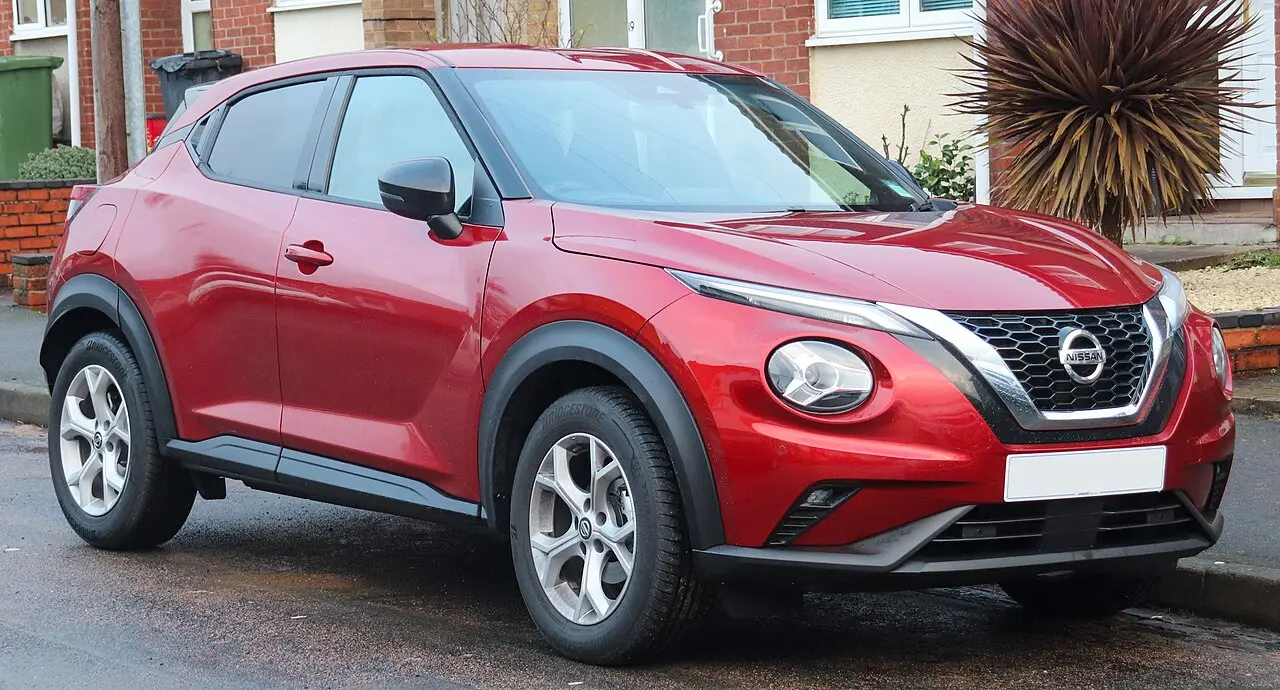
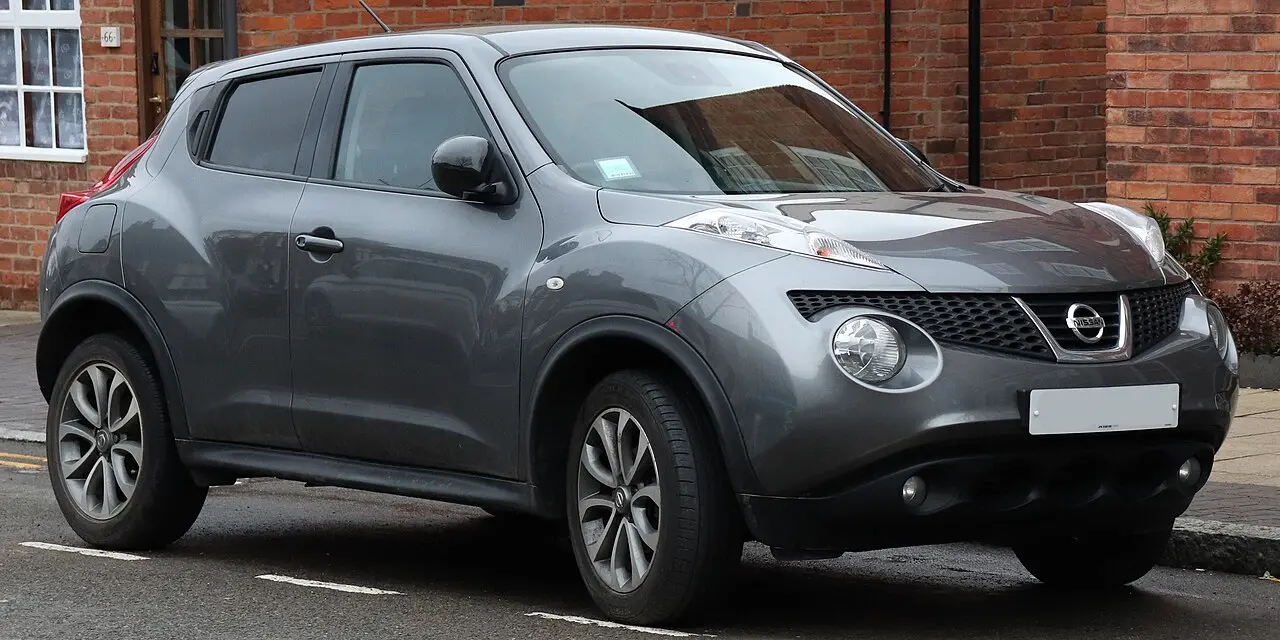
The official data lists 283 versions of the Nissan Juke (2010–2026), in the European Union, the United Kingdom, France, the United States, and Canada. Each market publishes its own figures, measured on its own test procedure.
At a glance
Years in the data
2010–2026
Markets
European Union, United Kingdom, France, United States, Canada
Engines
1.0 L to 1.6 L
Power
69 kW (94 PS) to 160 kW (218 PS)
Fuels
Petrol, Diesel, Hybrid, Plug-in hybrid, LPG
Lowest consumption (France)
4.0 L/100 km (NEDC)
Lowest consumption (United Kingdom)
4.0 L/100 km (NEDC)
Lowest consumption (European Union)
4.8 L/100 km (WLTP)
Plug-in hybrid, weighted (European Union)
4.8 L/100 km (WLTP)
New registrations in the EU
2,019,228
What is the Nissan Juke?
The Juke is a small crossover with a compact footprint and a distinctive, high-riding design. Nissan introduced it in 2010 as a B-segment crossover, giving it a clear place in the European range alongside the larger Qashqai. Its bold styling carried over to the second generation, while the newer model developed the original idea for European drivers.
The first generation, F15, ran from 2010 to 2019. The second generation, F16, began in 2019 and continues today. Both generations keep the Juke’s compact crossover format, with the later model carrying forward its distinctive design.
Engines and power
EU registration figures cover 2010–2025, with engine sizes from 1.0 to 1.6 litres and power from 69 kW (94 PS) to 206 kW (280 PS). Fuels include petrol, diesel, hybrid, plug-in hybrid, LPG and other types. UK figures from 2012–2026 cover 1.0- to 1.6-litre engines with power from 71 kW (96 PS) to 140 kW (190 PS). French figures from 2012–2026 list 1.0-litre versions with power from 69 kW (94 PS) to 160 kW (218 PS).
The US and Canadian figures cover petrol Jukes with 1.6-litre engines from 2011 to 2017.
How economical is the Nissan Juke?
The lowest listed EU consumption for petrol, diesel and hybrid Jukes is 4.8 L/100 km on WLTP. The EU’s weighted plug-in hybrid figure is also 4.8 L/100 km WLTP, assuming some driving is electric. UK and French figures each give a low of 4 L/100 km on NEDC.
In the US, the lowest listed consumption is 7.8 L/100 km on the EPA test, with a best combined rating of 30 MPG. Canada lists a low of 7.7 L/100 km on its five-cycle test. These procedures differ, so results across markets are not directly comparable. Official EU registration figures record 2,019,228 Jukes across 2010–2025. The largest annual entries listed are a 1.0-litre petrol version rated at 86 kW (117 PS) in 2020 and 1.5-litre diesel versions rated at 81 kW (110 PS) in 2012 and 2014.
Questions and answers
What are the Juke generations?
The first generation (F15) ran from 2010 to 2019; the second (F16) began in 2019 and continues today.
What is the lowest listed Juke consumption in the EU?
It is 4.8 L/100 km WLTP for petrol, diesel and hybrid versions. The weighted plug-in hybrid figure is also 4.8 L/100 km WLTP.
Was the Juke sold in the United States?
The US figures cover petrol Jukes with 1.6-litre engines from 2011 to 2017.
How do Juke consumption figures differ between the US and Canada?
The lowest listed figure is 7.8 L/100 km on the US EPA test and 7.7 L/100 km on Canada’s five-cycle test. The procedures differ, so the figures are not directly comparable.
Model codes: F16 · Sold in: European Union, United Kingdom, and France · References: en.wikipedia.org
European Union 35 versions
New cars registered in the EU (plus Norway and Iceland), from the European Environment Agency. Figures on the NEDC procedure until 2020 and on WLTP from 2021; versions are grouped by engine and power, with their number of registrations.
Years and version
Engine
Power
Fuel
Consumption (combined)
CO₂
EU registrations
2025
1.0 L
84 kW (114 PS)
Petrol
5.9 L/100 km WLTP
134 g/km
32,676
2025
1.6 L
69 kW (94 PS)
Hybrid
4.8 L/100 km WLTP
109 g/km
21,658
2025
1.6 L
69 kW (94 PS)
Plug-in hybrid
4.8 L/100 km WLTP
109 g/km
134
2025
1.6 L
69 kW (94 PS)
Petrol
5.0 L/100 km WLTP
112 g/km
13
2024
1.0 L
84 kW (114 PS)
Petrol
5.9 L/100 km WLTP
135 g/km
32,191
2024
1.6 L
69 kW (94 PS)
Hybrid
4.9 L/100 km WLTP
111 g/km
25,044
2023
1.0 L
84 kW (114 PS)
Petrol
5.9 L/100 km WLTP
135 g/km
25,507
2023
1.6 L
69 kW (94 PS)
Hybrid
5.0 L/100 km WLTP
113 g/km
18,906
2022
1.0 L
84 kW (114 PS)
Petrol
5.8 L/100 km WLTP
136 g/km
24,875
2022
1.6 L
69 kW (94 PS)
Hybrid
5.1 L/100 km WLTP
115 g/km
4,578
2022
1.6 L
116 kW (158 PS)
Hybrid
–
113 g/km
143
2022
1.0 L
206 kW (280 PS)
Petrol
–
140 g/km
73
2021
1.0 L
84 kW (114 PS)
Petrol
5.6 L/100 km WLTP
138 g/km
73,351
2021
1.0 L
86 kW (117 PS)
Petrol
5.3 L/100 km WLTP
139 g/km
10,464
2021
1.0 L
84 kW (114 PS)
Hybrid
6.2 L/100 km WLTP
139 g/km
74
2020
1.0 L
86 kW (117 PS)
Petrol
–
114 g/km
113,939
2020
1.0 L
84 kW (114 PS)
Petrol
–
115 g/km
3,366
2020
1.5 L
81 kW (110 PS)
Diesel
–
123 g/km
226
2020
1.6 L
83 kW (113 PS)
Petrol
–
154 g/km
178
2020
1.6 L
83 kW (113 PS)
LPG
–
120 g/km
60
2020
1.0 L
82 kW (111 PS)
Petrol
–
115 g/km
34
2019
1.6 L
83 kW (113 PS)
Petrol
16.1 kWh/100 km NEDC
155 g/km
62,974
2019
1.5 L
81 kW (110 PS)
Diesel
–
121 g/km
14,502
2019
1.0 L
86 kW (117 PS)
Petrol
–
115 g/km
7,410
2019
1.6 L
83 kW (113 PS)
LPG
–
139 g/km
4,636
2019
1.2 L
85 kW (116 PS)
Petrol
–
128 g/km
2,676
2019
1.6 L
86 kW (117 PS)
Petrol
–
141 g/km
326
2019
1.6 L
86 kW (117 PS)
LPG
–
129 g/km
156
2019
1.6 L
140 kW (190 PS)
Petrol
–
153 g/km
76
2019
1.6 L
157 kW (213 PS)
Petrol
–
172 g/km
60
2019
1.6 L
69 kW (94 PS)
Petrol
–
138 g/km
56
2019
1.6 L
160 kW (218 PS)
Petrol
–
168 g/km
34
2019
1.5 L
83 kW (113 PS)
Diesel
–
117 g/km
16
2019
1.6 L
81 kW (110 PS)
Petrol
–
154 g/km
12
2019
1.6 L
59 kW (80 PS)
Petrol
–
154 g/km
10
United Kingdom 38 versions
New cars on sale in the UK, from the Vehicle Certification Agency. NEDC figures until 2018 and WLTP figures after; years are the editions a version appeared in.
Official figures are measured on standard test procedures and differ between markets. Your consumption depends on how, where and in what conditions you drive.