Nissan

Nissan Armada

Nissan Armada
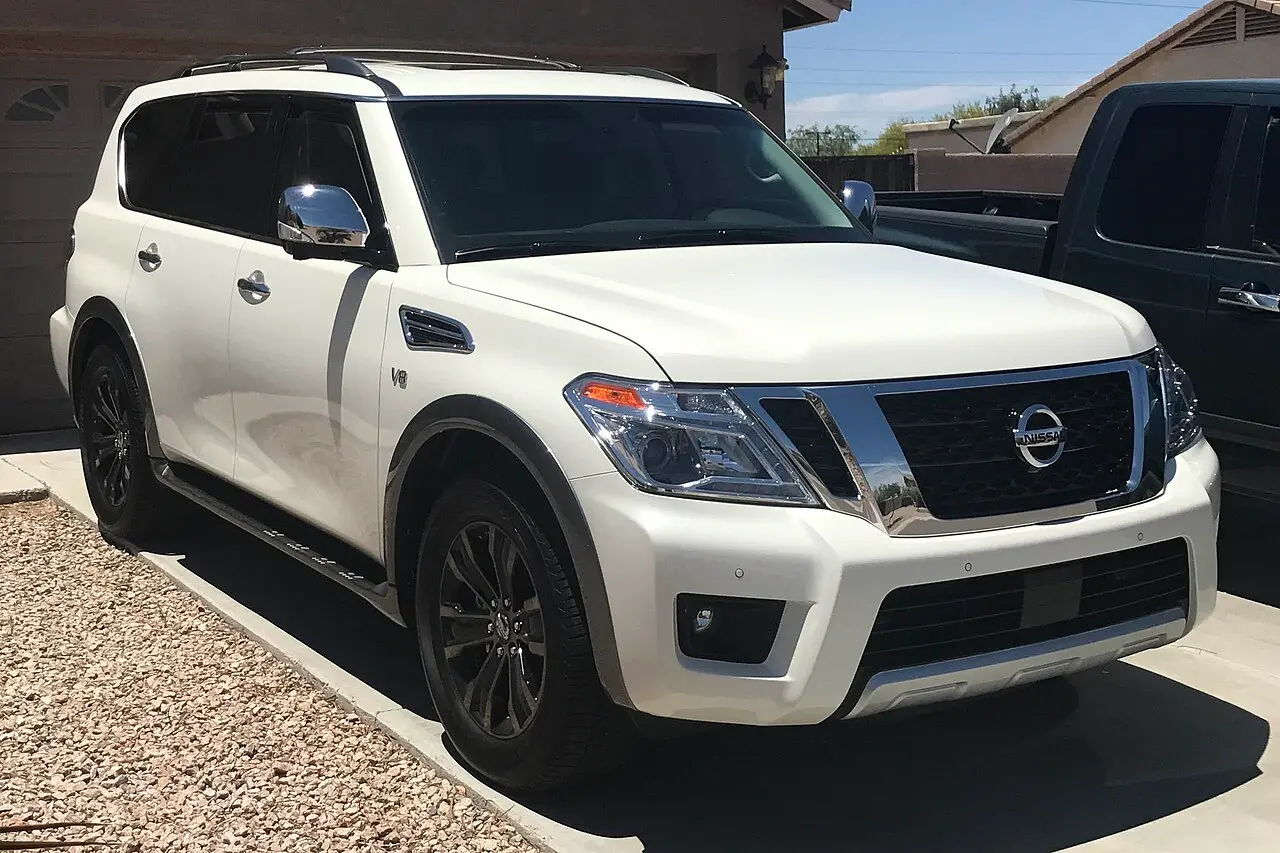
Photo: HJUdall / Wikimedia Commons · CC0

The official data lists 43 versions of the Nissan Armada (2004–2026), in the United States and Canada. Each market publishes its own figures, measured on its own test procedure.

At a glance

Years in the data
2004–2026
Markets
United States, Canada
Engines
3.5 L to 5.6 L
Fuels
Petrol, Flex fuel (E85)
Lowest consumption (United States)
13.1 L/100 km (EPA)
Lowest consumption (Canada)
13.7 L/100 km (5-cycle)

What is the Nissan Armada?

The Armada is Nissan’s full-size SUV for North America. It has been part of the brand’s large-vehicle lineup since the 2004 model year, with a spacious cabin and a truck-based design.

The first generation used a V8. The 2025 redesign brought a twin-turbocharged V6, marking a change in the Armada’s long-running powertrain approach.

Armada generations and engines

The first generation ran from 2004–2015, followed by the second from 2017–2024 and the third from 2025 onward. Their model codes are WA60 and TA60 for the first generation, Y62 for the second and Y63 for the third.

The listed North American engine range spans 3.5 L to 5.6 L. Petrol is listed in both the US and Canadian ranges; US versions also include flex-fuel E85. The original Armada used a 5.6-litre V8, while the 2025 model introduced a 3.5-litre twin-turbo V6.

How economical is the Nissan Armada?

US EPA figures span 2004–2026, with a best combined result of 18 MPG and a lowest listed consumption of 13.1 L/100 km. Canadian NRCan figures cover the same years and list a lowest consumption of 13.7 L/100 km on the 5-cycle test.

The EPA and Canadian 5-cycle procedures differ, so results are best understood within each market.

Where was the Armada sold?

The Armada was sold in the United States and Canada. Its generations and engine range reflect its place as Nissan’s full-size SUV for North America.

Questions and answers

What kind of vehicle is the Nissan Armada?

It is a full-size SUV sold in the United States and Canada.

What are the Armada generations?

The first generation ran from 2004–2015, the second from 2017–2024 and the third from 2025 onward.

What engine did the 2025 Armada introduce?

The 2025 generation introduced a 3.5-litre twin-turbocharged V6.

What is the best combined EPA fuel economy figure?

The best combined EPA result is 18 MPG.
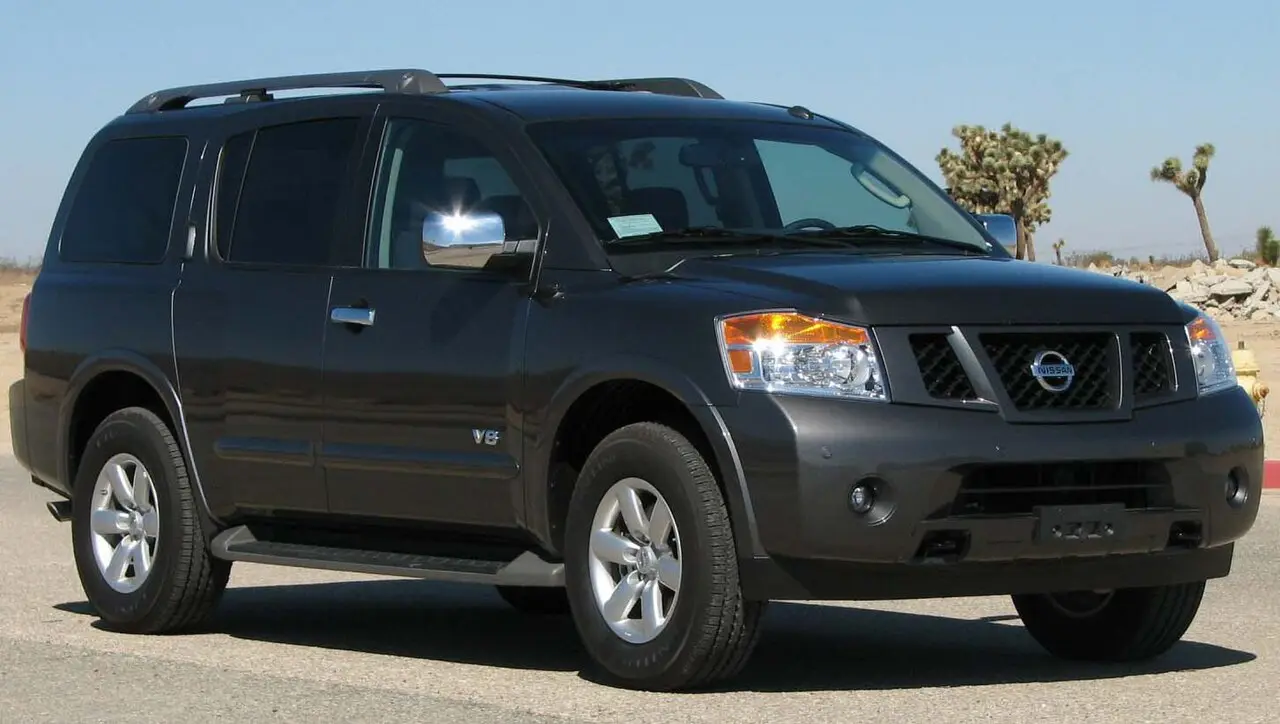
Armada I (2004–2015)

Nissan Armada I
Photo: U.S. National Highway Traffic Safety Administration / Wikimedia Commons · Public domain

Model codes: WA60, TA60 · Sold in: United States and Canada · References: en.wikipedia.org, carsdirect.com

Show all 23 versions

Armada II (2017–2024)

Nissan Armada II
Photo: Bravosser / Wikimedia Commons · CC BY-SA 4.0

Model codes: Y62 · Sold in: United States and Canada · References: en.wikipedia.org, niarmada.com

Show all 14 versions

Armada III (since 2025)

Nissan Armada III
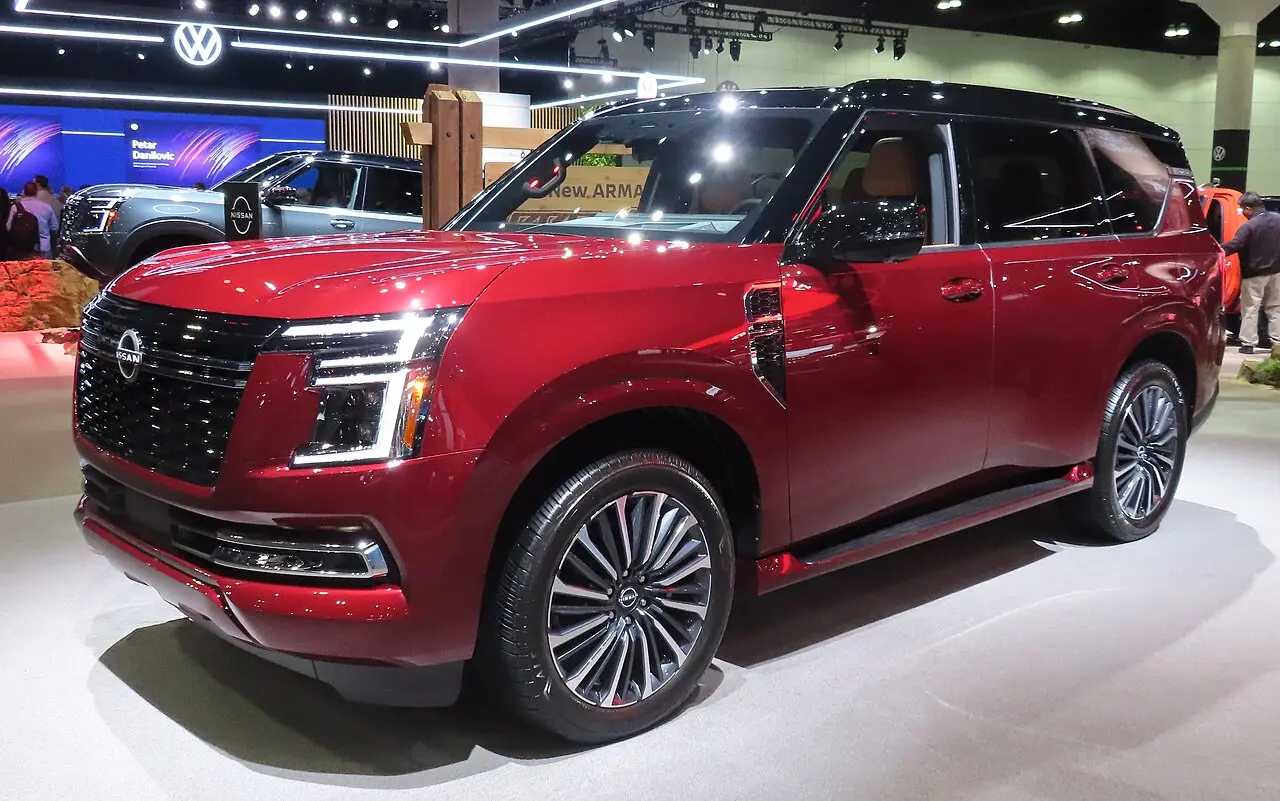
Photo: HJUdall / Wikimedia Commons · CC0

Model codes: Y63 · Sold in: United States and Canada · References: en.wikipedia.org, niarmada.com

United States 4 versions

Model years sold in the USA, from the EPA and the Department of Energy (fueleconomy.gov). MPG on the EPA test; litres per 100 km = 235.215 ÷ MPG.

Years and versionEngineFuelGearboxDriveConsumption (combined)CO₂
2025–2026SIDI3.5 LPetrol9-speed automaticFour-wheel drive17 MPG (13.8 L/100 km) EPA326 g/km
2025–2026SIDI3.5 LPetrol9-speed automaticFour-wheel drive16 MPG (14.7 L/100 km) EPA345 g/km
2026SIDI3.5 LPetrol9-speed automaticRear-wheel drive18 MPG (13.1 L/100 km) EPA314 g/km
2025SIDI3.5 LPetrol9-speed automaticRear-wheel drive18 MPG (13.1 L/100 km) EPA309 g/km

Canada 2 versions

Model years sold in Canada, from Natural Resources Canada fuel consumption ratings (5-cycle test).

Years and versionEngineFuelGearboxConsumption (combined)CO₂
2025–2026Sport utility vehicle: Standard3.5 LPetrol9-speed automatic13.7 L/100 km 5-cycle323 g/km
2025–2026Sport utility vehicle: Standard3.5 LPetrol9-speed automatic14.4 L/100 km 5-cycle339 g/km

Official figures are measured on standard test procedures and differ between markets. Your consumption depends on how, where and in what conditions you drive.