NIO

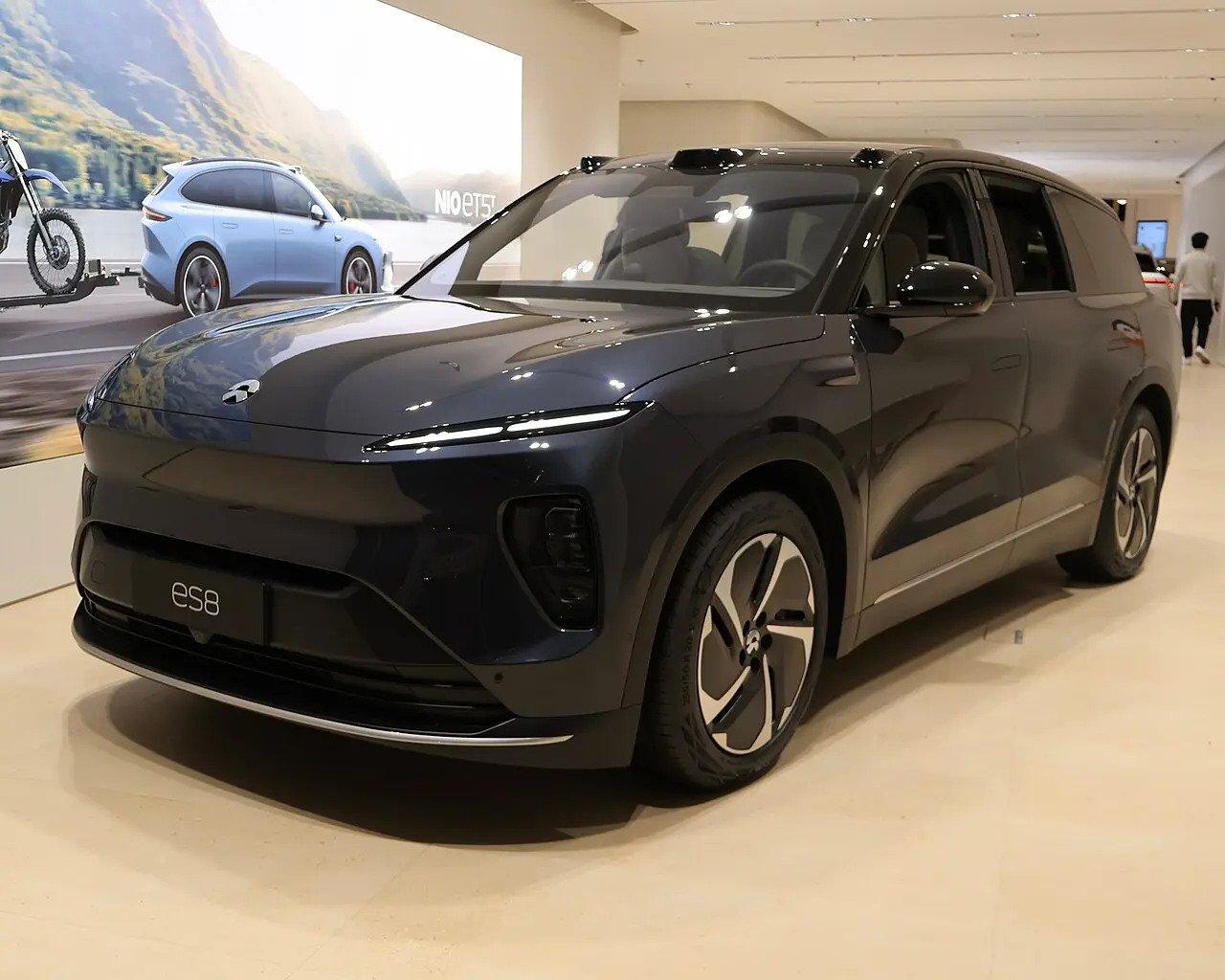
NIO ES8

NIO ES8
Photo: S5A-0043 / Wikimedia Commons · CC BY 4.0

The official data lists 6 versions of the NIO ES8 (2021–2024), in the European Union. Each market publishes its own figures, measured on its own test procedure.

At a glance

Years in the data
2021–2024
Markets
European Union
Power
160 kW (218 PS) to 240 kW (326 PS)
Fuels
Electric
New registrations in the EU
1,963

What is the NIO ES8?

The ES8 is NIO’s large electric SUV, with a spacious layout suited to family travel. It has held a flagship role in the brand’s range since its debut as NIO’s first volume-produced vehicle. The model is part of the company’s focus on connected electric cars and battery services.

The ES8’s second generation uses NIO’s NT2.0 platform and is listed for 2023–2025. The European registration figures cover 2021–2024, spanning both the period before and the years when this generation was listed.

Engines and power

The ES8 versions recorded in Europe are all electric. Their power ranges from 160 kW (218 PS) to 240 kW (326 PS). As a large SUV, the ES8 gives NIO’s electric range a higher-riding, passenger-focused option alongside its ET saloons.

How economical is the NIO ES8?

Official EEA registration figures list the ES8 from 2021 to 2024, with 1,963 cars across six versions. All are electric, so there is no petrol or diesel consumption figure.

Registration and motor-power figures do not give an electricity-consumption or CO₂ test result. European efficiency testing uses WLTP or, for some earlier vehicles, NEDC. The USA uses EPA procedures, while Canada uses a five-cycle test, so figures from those markets are not directly interchangeable.

Questions and answers

Is the NIO ES8 fully electric?

Yes. All six versions in the European registration figures are electric.

What power does the ES8 have?

The recorded versions range from 160 kW (218 PS) to 240 kW (326 PS).

What is the second-generation ES8?

The second generation uses NIO’s NT2.0 platform and is listed for 2023–2025.

How many ES8 registrations are recorded in Europe?

The EEA figures record 1,963 registrations from 2021 to 2024.

ES8 second generation (2023–2025)

NIO ES8 second generation
Photo: S5A-0043 / Wikimedia Commons · CC BY 4.0

Model codes: NT2.0 · References: en.wikipedia.org, nio.com

European Union 3 versions

New cars registered in the EU (plus Norway and Iceland), from the European Environment Agency. Figures on the NEDC procedure until 2020 and on WLTP from 2021; versions are grouped by engine and power, with their number of registrations.

Years and versionEnginePowerFuelConsumption (combined)CO₂Electric rangeEU registrations
2024Electric motor240 kW (326 PS)Electric24.2 kWh/100 km WLTP0 g/km424 km159
2023Electric motor160 kW (218 PS)Electric24.0 kWh/100 km WLTP0 g/km440 km316
2023Electric motor400 kW (544 PS)Electric23.6 kWh/100 km WLTP0 g/km470 km10

Versions outside these generations

European Union 3 versions

New cars registered in the EU (plus Norway and Iceland), from the European Environment Agency. Figures on the NEDC procedure until 2020 and on WLTP from 2021; versions are grouped by engine and power, with their number of registrations.

Years and versionEnginePowerFuelConsumption (combined)CO₂Electric rangeEU registrations
2022Electric motor160 kW (218 PS)Electric24.0 kWh/100 km WLTP0 g/km455 km1,062
2022Electric motor120 kW (163 PS)Electric22.2 kWh/100 km WLTP0 g/km466 km22
2021Electric motor240 kW (326 PS)Electric23.8 kWh/100 km WLTP0 g/km469 km394

Official figures are measured on standard test procedures and differ between markets. Your consumption depends on how, where and in what conditions you drive.