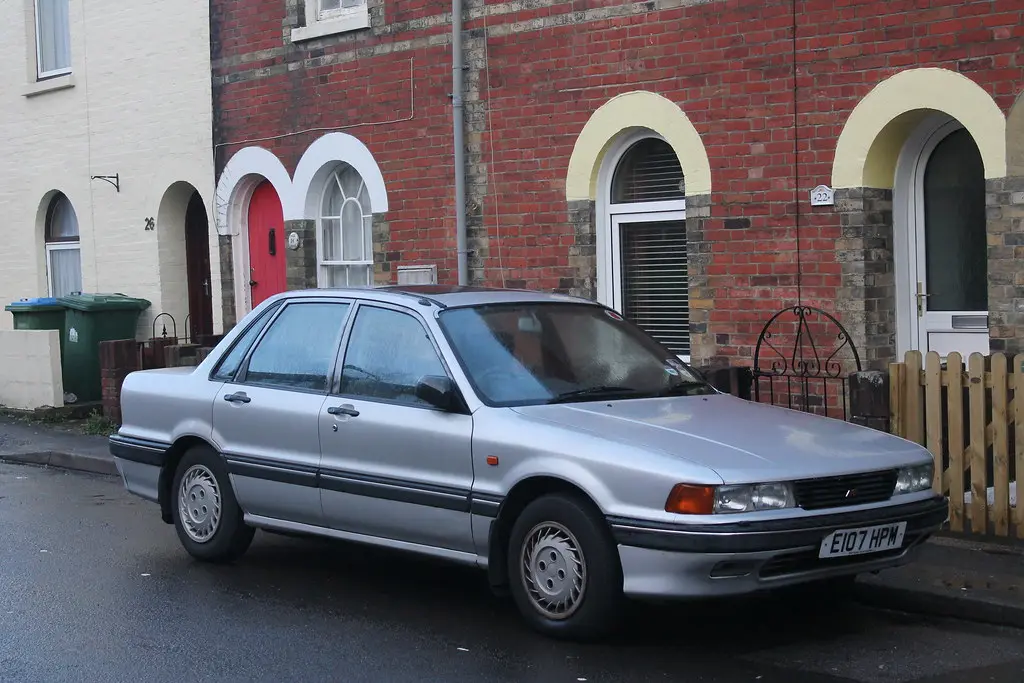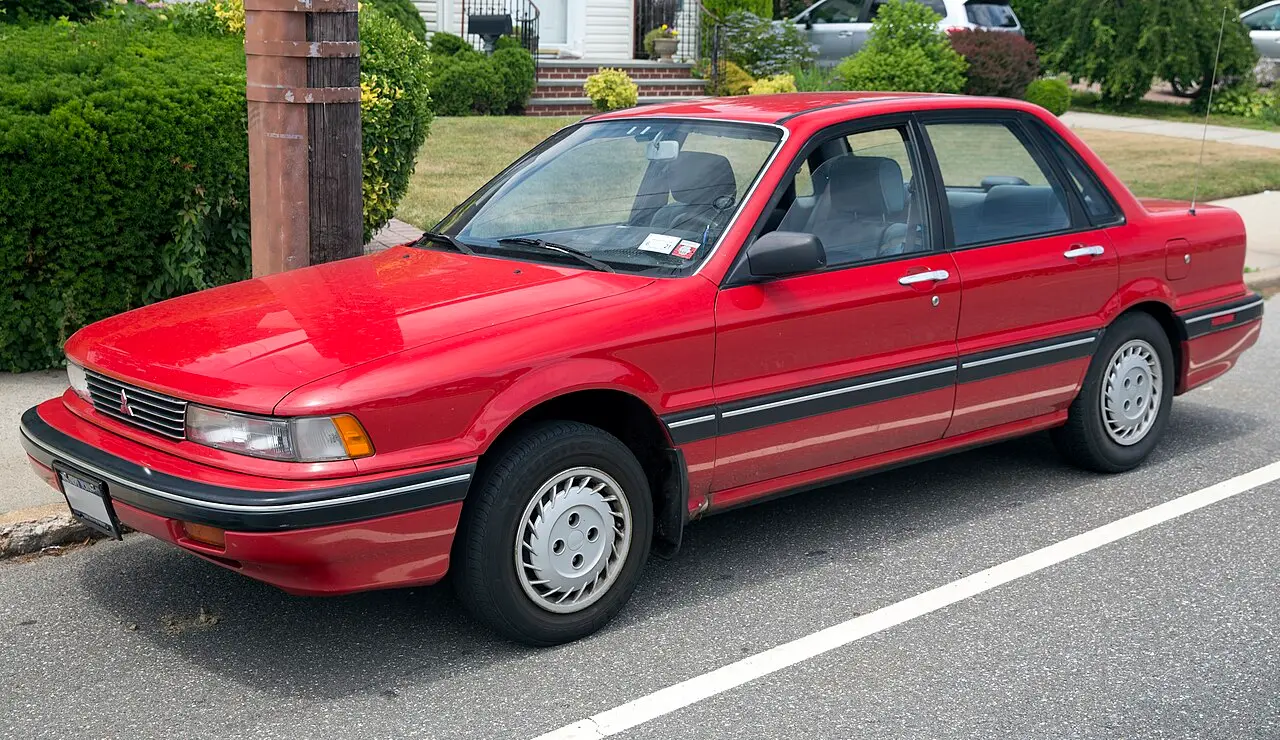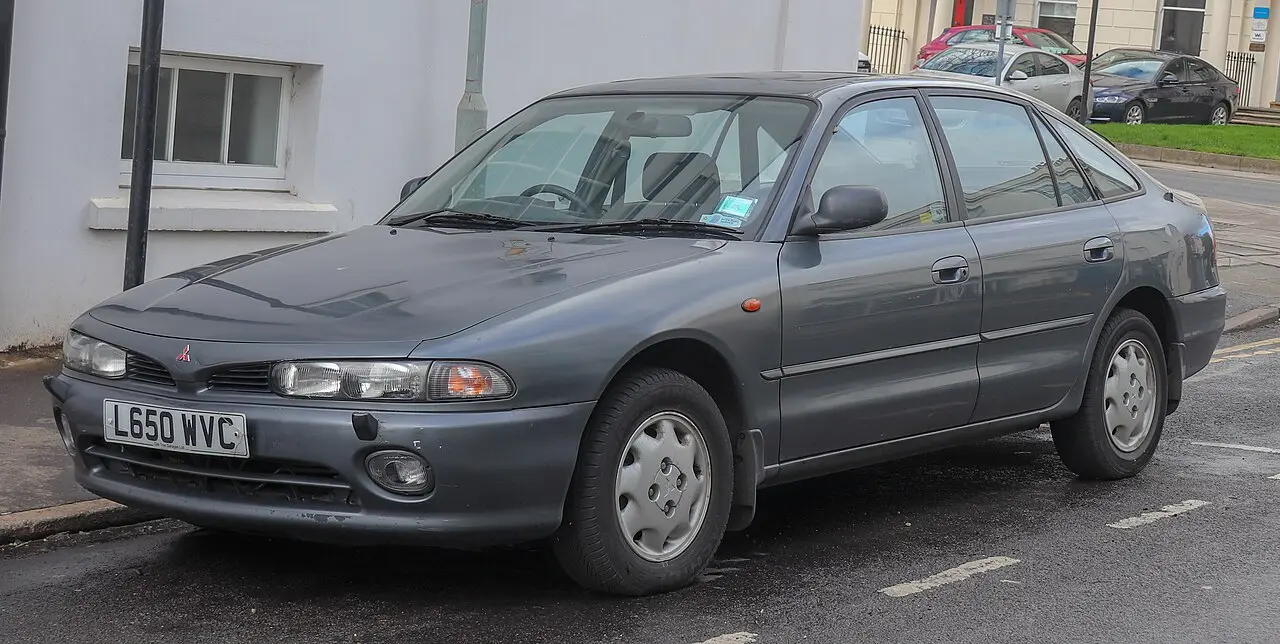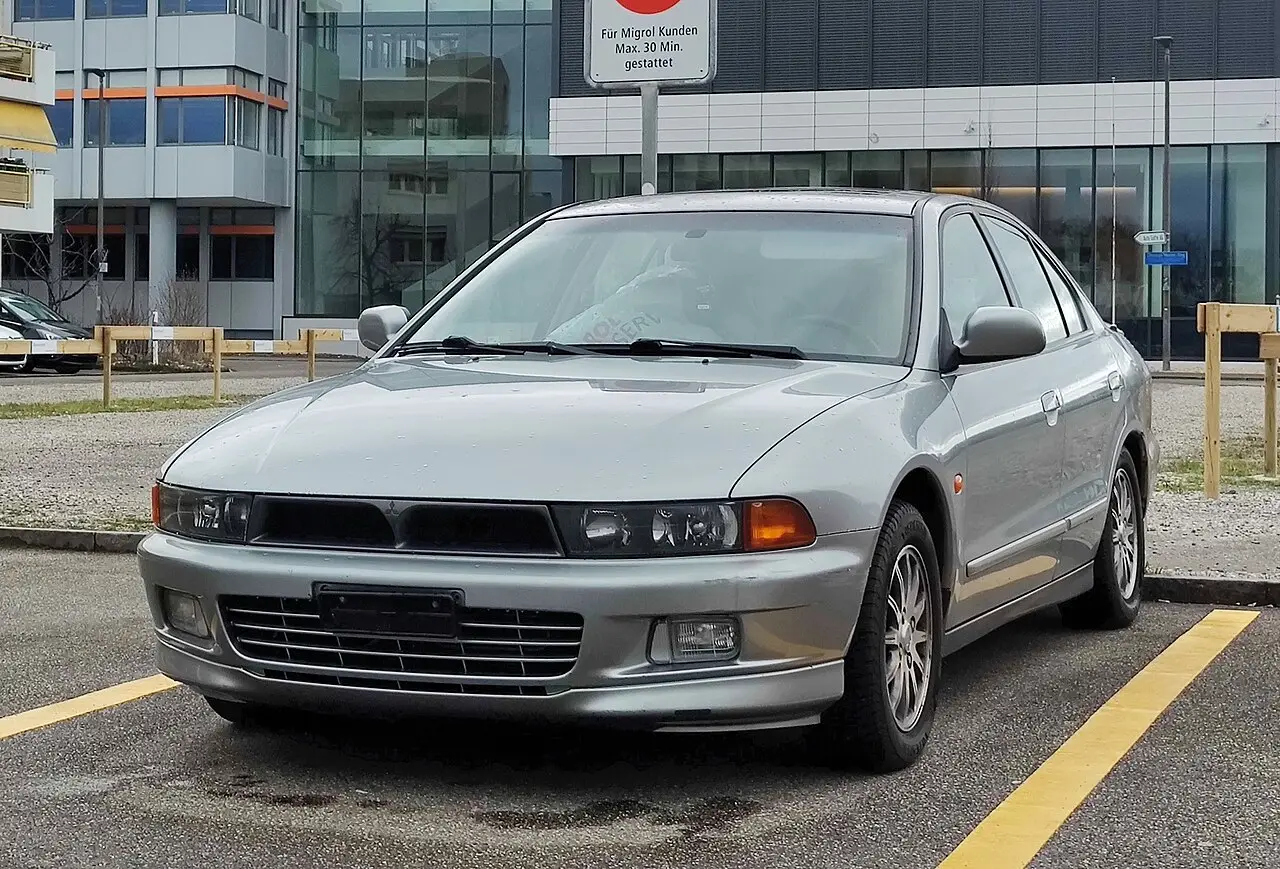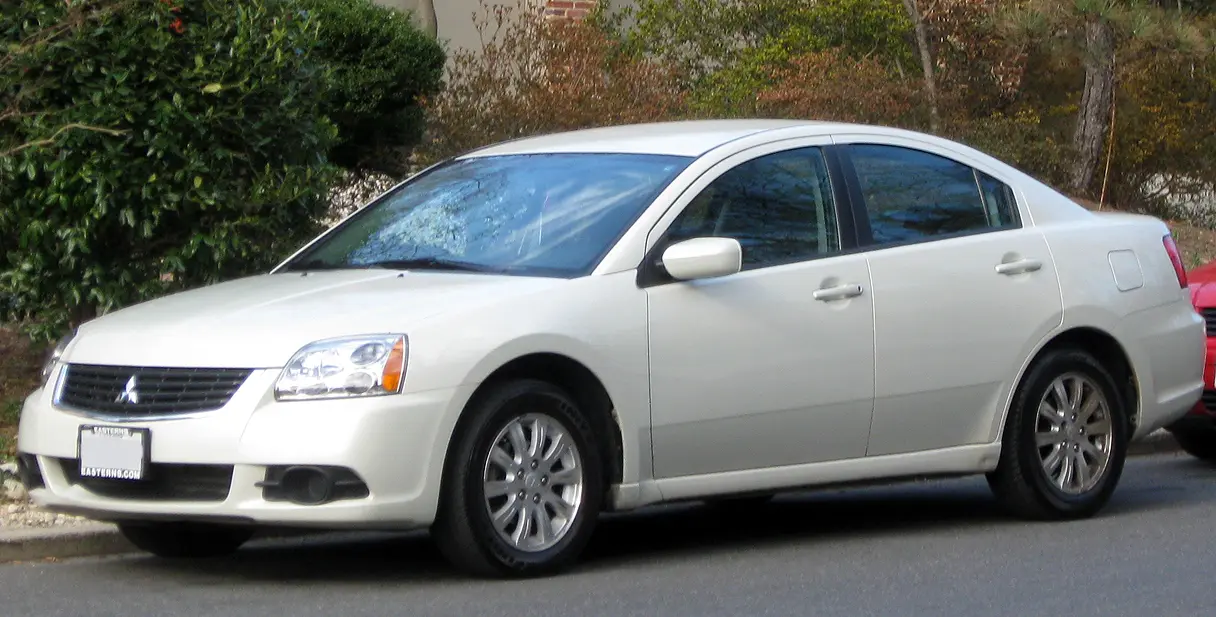
What is the Mitsubishi Galant?
The Galant was Mitsubishi’s family sedan, growing over time from a compact car into a larger model. Its fifth generation brought a major change: a front-engine, front-wheel-drive layout created more room for passengers and luggage. The name also had a sporting side. The Galant VR-4 paired a turbocharged engine with four-wheel drive and became a prominent part of Mitsubishi’s rally story.
Galant generations
The generations shown across these markets are V (1985–1987), VI (1987–1992), VII (1992–1996), VIII (1996–2003) and IX (2004–2012). The UK figures cover generation VIII; Canadian figures cover VIII and IX; and US figures span V to IX. Across its history, the Galant grew into a roomier family sedan, while versions such as the VR-4 brought performance and four-wheel-drive technology to the range.
Engines and fuel consumption
The UK range uses petrol engines from 2.0 L to 2.5 L. The US range spans 2.0 L to 3.8 L, and Canada’s spans 2.4 L to 3.8 L. The lowest listed consumption is 8.2 L/100 km in UK NEDC figures, 9.8 L/100 km in US EPA figures and 9.7 L/100 km in Canadian 5-cycle figures. The US listing also gives a best combined rating of 24 MPG. Test procedures differ between markets: NEDC in Europe, EPA in the US and 5-cycle testing in Canada, so each result is best understood within its own system.
Where was the Galant sold?
The market figures cover the UK from 2000 to 2003, the US from 1985 to 2012, and Canada from 2003 to 2010. The UK period falls within generation VIII, while the North American figures span more of the Galant’s history.
Questions and answers
What kind of car was the Mitsubishi Galant?
It was a family sedan that grew into a larger model over time. Some generations also included the turbocharged, four-wheel-drive Galant VR-4.
What engine sizes are listed for the Galant?
The UK range is 2.0 L to 2.5 L; the US range is 2.0 L to 3.8 L; and the Canadian range is 2.4 L to 3.8 L.
What is the Galant’s lowest listed fuel consumption?
The lowest figures are 8.2 L/100 km under UK NEDC, 9.8 L/100 km under US EPA, and 9.7 L/100 km under Canada’s 5-cycle procedure. The test methods differ by market.