Mitsubishi

Mitsubishi ASX

Mitsubishi ASX
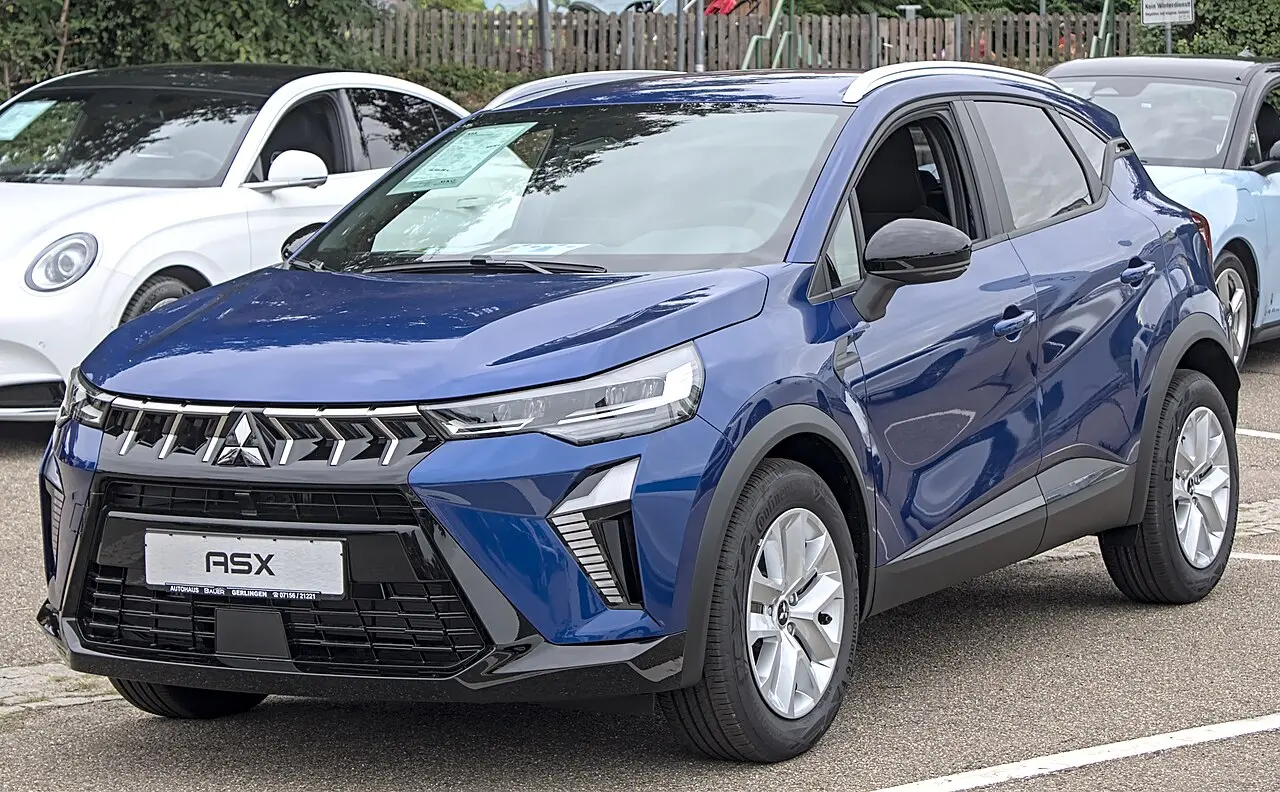
Photo: Alexander-93 / Wikimedia Commons · CC BY-SA 4.0

The official data lists 230 versions of the Mitsubishi ASX (2010–2027), in the European Union, the United Kingdom, France, the United States, and Canada. Each market publishes its own figures, measured on its own test procedure.

At a glance

Years in the data
2010–2027
Markets
European Union, United Kingdom, France, United States, Canada
Engines
1.0 L to 2.4 L
Power
67 kW (91 PS) to 116 kW (158 PS)
Fuels
Diesel, Petrol, Hybrid, Plug-in hybrid, LPG
Lowest consumption (European Union)
4.4 L/100 km (WLTP)
Lowest consumption (France)
4.5 L/100 km (NEDC)
Lowest consumption (United Kingdom)
4.6 L/100 km (NEDC)
Plug-in hybrid, weighted (European Union)
1.3 L/100 km (WLTP)
New registrations in the EU
712,631

What is the Mitsubishi ASX?

The ASX is Mitsubishi’s compact crossover SUV, with a raised driving position and a practical layout for everyday use. It has been sold in Europe since 2010. In the United States, the closely related model is known as the Outlander Sport.

ASX generations

The first-generation ASX, code GA, dates from 2010. A second-generation model arrived in Europe in 2023, using the CMF-B platform.

Engines, power and consumption

In the EU, ASX versions span 1.0 L to 2.3 L engines and petrol, hybrid, plug-in hybrid, LPG, diesel and other fuel types. Power ranges from 67 kW (91 PS) to 126 kW (171 PS). The lowest listed non-plug-in consumption is 4.4 L/100 km on WLTP. The plug-in hybrid’s official weighted figure is 1.3 L/100 km, assuming some driving is electric.

In the UK, versions span 1.6 L to 2.3 L engines and produce 86 kW (117 PS); the lowest listed consumption is 4.6 L/100 km on NEDC. France’s listed versions produce 85 kW (116 PS) to 110 kW (150 PS), with a 4.5 L/100 km NEDC low. US and Canadian versions use 2.0 L to 2.4 L petrol engines. Their lowest listed figures are 8.4 L/100 km on EPA testing and Canada’s 5-cycle test, respectively. Test procedures differ: Europe uses WLTP or the older NEDC, the US uses EPA testing, and Canada uses its 5-cycle procedure.

Where was the ASX sold?

The ASX appears in EU registration figures from 2010–2025, with 712,631 registrations. The UK listing spans 2012–2021, France 2012–2015, the US 2011–2027 and Canada 2011–2026.

Questions and answers

Is the ASX a hatchback or an SUV?

It is a compact crossover SUV.

Does the ASX have a plug-in hybrid version?

Yes. EU versions include plug-in hybrids, with an official weighted WLTP consumption figure of 1.3 L/100 km that assumes some driving is electric.

What is the lowest listed ASX fuel consumption?

The lowest listed non-plug-in EU figure is 4.4 L/100 km on WLTP; the plug-in hybrid weighted figure is 1.3 L/100 km.
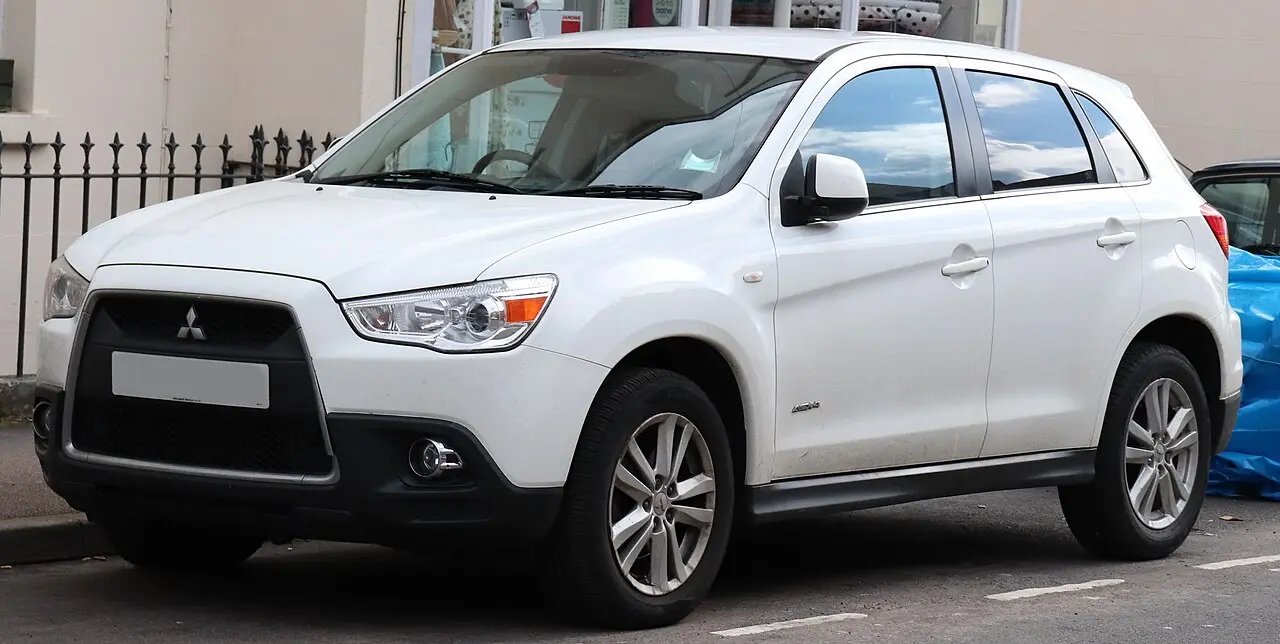
ASX first generation (since 2010)

Mitsubishi ASX first generation
Photo: Vauxford / Wikimedia Commons · CC BY-SA 4.0

Model codes: GA · Sold in: United States, Canada, European Union, United Kingdom, and France · References: en.wikipedia.org, cars.com

Show all 230 versions

ASX second generation (2023–2025)

Mitsubishi ASX second generation
Photo: Alexander-93 / Wikimedia Commons · CC BY-SA 4.0

Model codes: CMF-B · Sold in: European Union, United Kingdom, and France · References: mitsubishi-motors.com, mitsubishi-motors.com

European Union 27 versions

New cars registered in the EU (plus Norway and Iceland), from the European Environment Agency. Figures on the NEDC procedure until 2020 and on WLTP from 2021; versions are grouped by engine and power, with their number of registrations.

Years and versionEnginePowerFuelConsumption (combined)CO₂Electric rangeEU registrations
20251.0 L67 kW (91 PS)Petrol5.9 L/100 km WLTP133 g/km–2,494
20251.3 L103 kW (140 PS)Hybrid5.9 L/100 km WLTP133 g/km–2,131
20251.6 L69 kW (94 PS)Hybrid4.6 L/100 km WLTP105 g/km–1,752
20251.3 L116 kW (158 PS)Hybrid6.0 L/100 km WLTP135 g/km–1,700
2024–20251.6 L68 kW (92 PS)Plug-in hybrid1.3 L/100 km WLTP13.3 kWh/100 km WLTP30 g/km48 km1,514
20251.8 L80 kW (109 PS)Hybrid4.4 L/100 km WLTP100 g/km–1,044
20251.0 L67 kW (91 PS)LPG7.6 L/100 km WLTP119 g/km–183
20251.3 L103 kW (140 PS)Petrol5.9 L/100 km WLTP134 g/km–179
20251.0 L74 kW (101 PS)LPG6.1 L/100 km WLTP121 g/km–143
20251.6 L69 kW (94 PS)Plug-in hybrid2.8 L/100 km WLTP13.3 kWh/100 km WLTP63 g/km48 km119
20251.3 L104 kW (141 PS)Hybrid5.9 L/100 km WLTP134 g/km–112
20251.3 L116 kW (158 PS)Plug-in hybrid5.9 L/100 km WLTP136 g/km–77
20251.3 L103 kW (140 PS)Plug-in hybrid5.9 L/100 km WLTP134 g/km–59
20251.8 L80 kW (109 PS)Plug-in hybrid4.4 L/100 km WLTP101 g/km–28
20251.2 L84 kW (114 PS)Petrol5.7 L/100 km WLTP129 g/km–22
20241.3 L103 kW (140 PS)Hybrid5.8 L/100 km WLTP131 g/km–3,628
20241.0 L67 kW (91 PS)Petrol5.8 L/100 km WLTP131 g/km–3,356
20241.3 L116 kW (158 PS)Hybrid5.9 L/100 km WLTP133 g/km–2,828
20241.6 L69 kW (94 PS)Hybrid4.7 L/100 km WLTP107 g/km–2,353
20241.6 L69 kW (94 PS)Plug-in hybrid1.3 L/100 km WLTP13.3 kWh/100 km WLTP30 g/km48 km177
20241.6 L51 kW (69 PS)Hybrid4.7 L/100 km WLTP107 g/km–109
20241.0 L67 kW (91 PS)LPG7.7 L/100 km WLTP121 g/km–63
20231.3 L116 kW (158 PS)Hybrid5.9 L/100 km WLTP133 g/km–2,011
20231.3 L103 kW (140 PS)Hybrid5.8 L/100 km WLTP131 g/km–1,993
20231.6 L69 kW (94 PS)Hybrid4.7 L/100 km WLTP107 g/km–1,906
20231.0 L67 kW (91 PS)Petrol5.8 L/100 km WLTP130 g/km–1,524
20231.6 L68 kW (92 PS)Plug-in hybrid1.4 L/100 km WLTP13.3 kWh/100 km WLTP31 g/km48 km904

Official figures are measured on standard test procedures and differ between markets. Your consumption depends on how, where and in what conditions you drive.