The official data lists 342 versions of the Mercedes-Benz SL (1994–2027), in the European Union, the United Kingdom, France, the United States, and Canada. Each market publishes its own figures, measured on its own test procedure.
At a glance
Years in the data
1994–2027
Markets
European Union, United Kingdom, France, United States, Canada
Engines
2.0 L to 6.2 L
Power
225 kW (306 PS) to 585 kW (795 PS)
Fuels
Petrol, Hybrid, Plug-in hybrid
Lowest consumption (France)
6.8 L/100 km (NEDC)
Lowest consumption (United Kingdom)
7.2 L/100 km (NEDC)
Lowest consumption (European Union)
9.2 L/100 km (WLTP)
Plug-in hybrid, weighted (European Union)
7.7 L/100 km (WLTP)
Plug-in hybrid, weighted (United States)
13.1 L/100 km (EPA)
New registrations in the EU
45,272
What is the Mercedes-Benz SL?
The Mercedes-Benz SL is a luxury roadster for open-air drives and long-distance touring. It pairs a sporty shape with the comfort expected of a grand tourer, and sits among the most performance-focused cars in the Mercedes-Benz range. Over the years, its roof has shifted between folding hardtops and fabric; the latest generation returned to a fabric soft top.
The SL brings together relaxed touring and a sporting character. Its long history includes changing designs and engineering, while the core idea remains a powerful, open-top luxury car.
SL generations
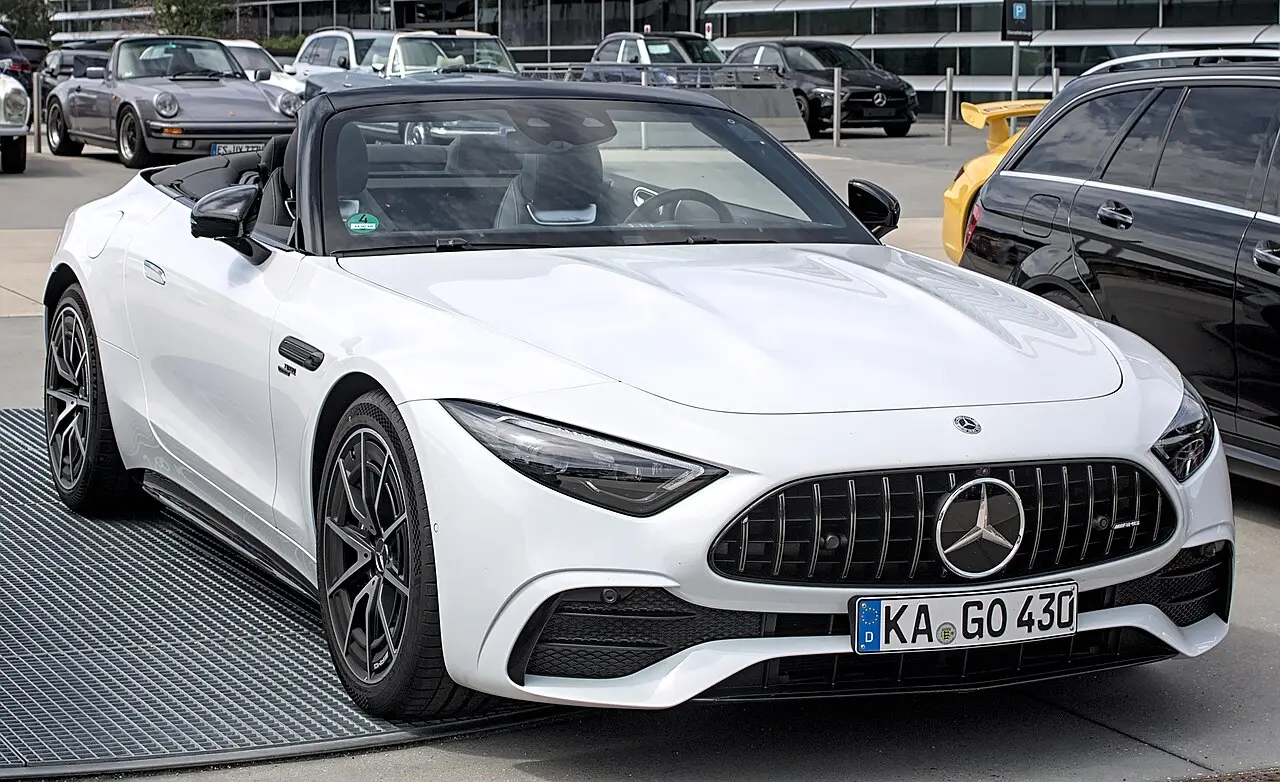
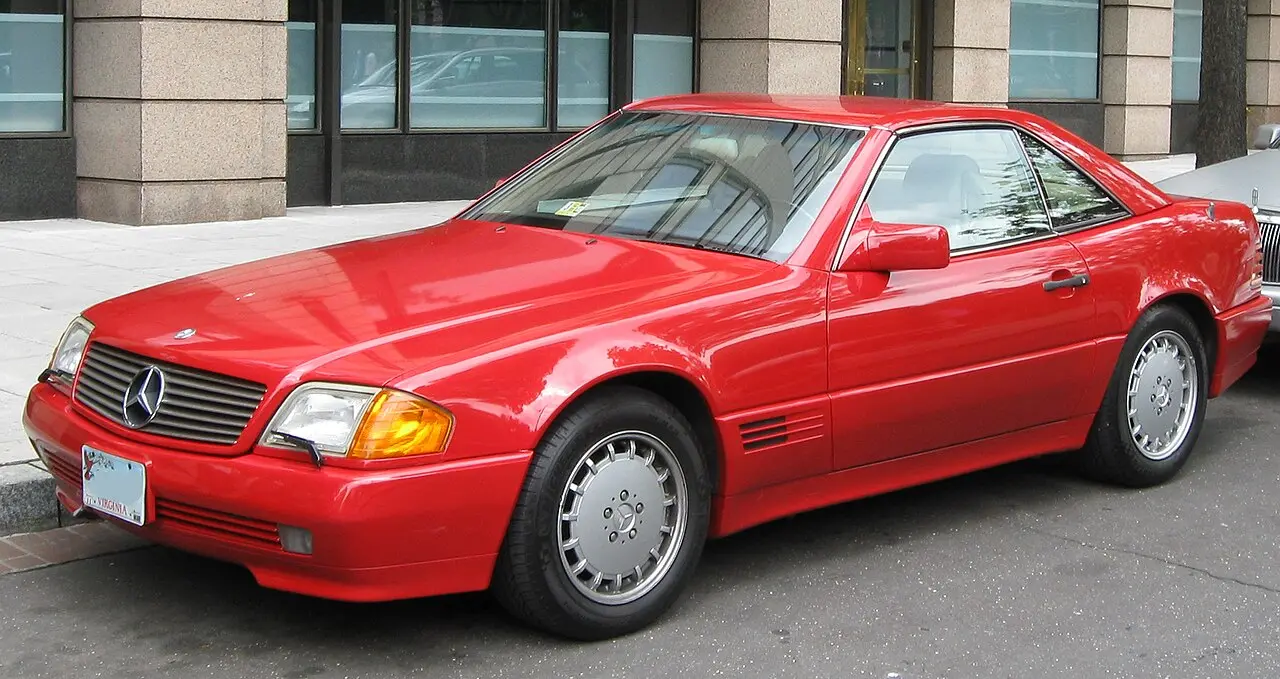
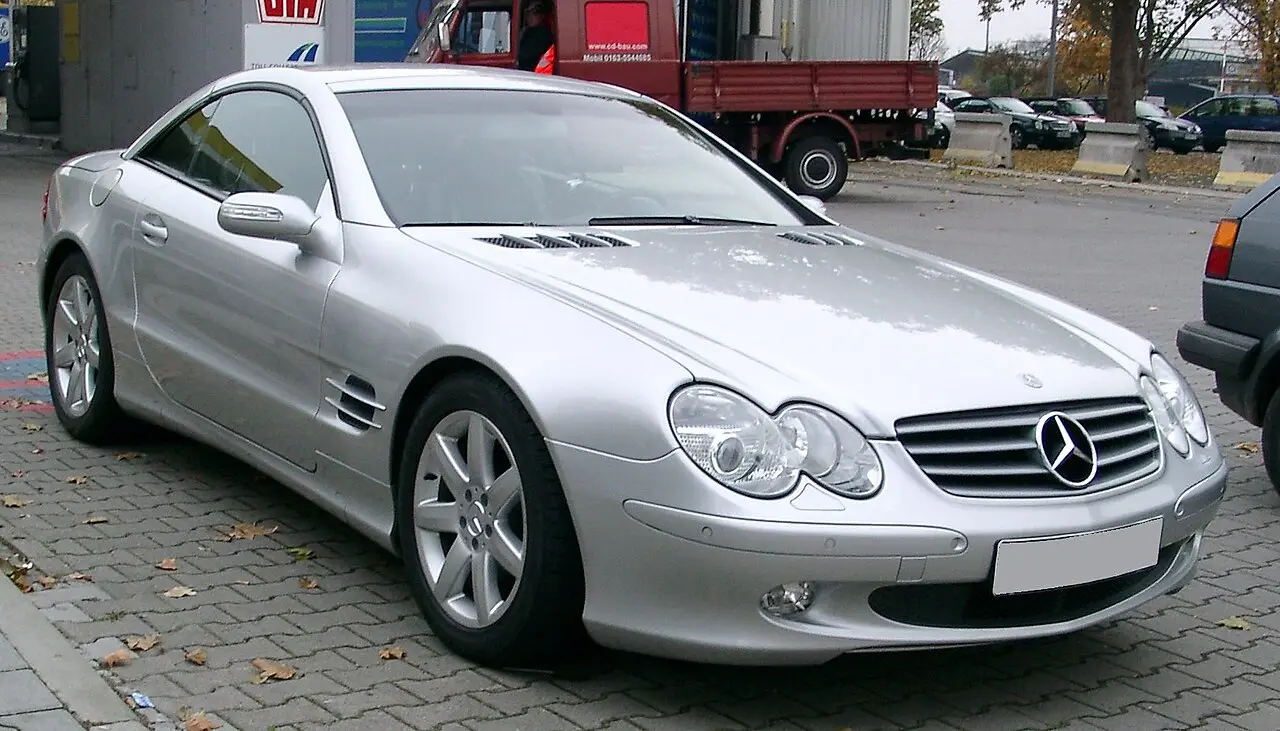
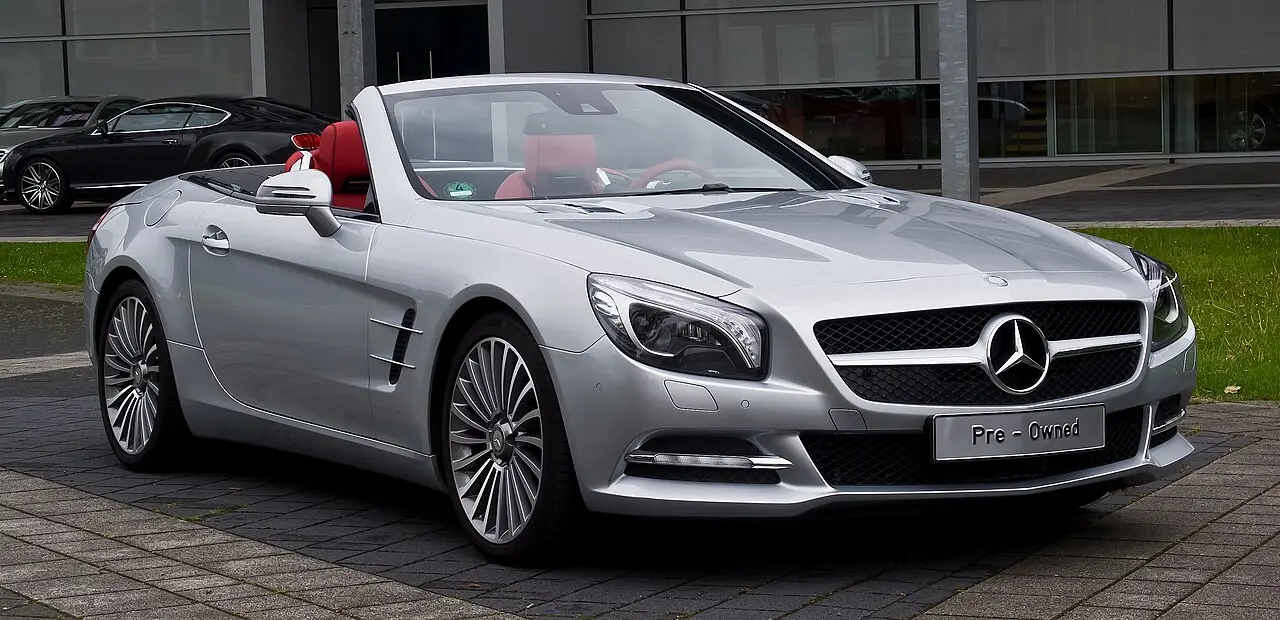
The fourth generation, R129, ran from 1989 to 2002. The fifth, R230, followed from 2002 to 2012 and introduced a folding steel vario-roof, allowing the roadster to become a closed coupé. The sixth generation, R231, ran from 2012 to 2020, with weight reduction among its design priorities. The seventh generation, R232, began in 2022 and brought back a fabric soft top, along with a sportier character shaped by Mercedes-AMG.
The SL has appeared in official registration and vehicle data across several major markets. EU registration figures cover 2010–2025, UK figures 2000–2026, French figures 2012–2015, US EPA figures 1994–2027, and Canadian figures 1995–2026.
Engines and power
In the EU, the SL range includes petrol, hybrid, plug-in hybrid and other fuel categories, with engines from 2.0 to 6.2 litres and power from 225 kW (306 PS) to 463 kW (630 PS). UK figures list power from 270 kW (367 PS) to 612 kW (832 PS), with engines from 2.0 to 6.2 litres. US figures also span 2.0 to 6.2 litres. Canada’s listed petrol engines range from 3.0 to 6.2 litres, while French figures cover petrol models.
The lowest listed EU consumption is 9.2 L/100 km on WLTP for petrol, diesel or hybrid versions. The plug-in hybrid weighted figure is 7.7 L/100 km, assuming part of the driving is electric. The UK’s lowest listed figure is 7.2 L/100 km on NEDC, and France’s is 6.8 L/100 km on NEDC. The US EPA figure is 10.2 L/100 km, with a best combined rating of 23 MPG. Canada’s lowest listed figure is 10.1 L/100 km on the NRCan 5-cycle test. These procedures differ, so figures from different markets are not directly equivalent.
Questions and answers
Is the Mercedes-Benz SL a convertible or a coupé?
It is a roadster, and some generations can also be closed into a coupé. The R230 has a folding steel vario-roof, while the R232 uses a fabric soft top.
What is the most powerful SL figure listed?
The UK range reaches 612 kW (832 PS). The EU range reaches 463 kW (630 PS).
Which market lists the lowest SL fuel consumption?
France lists 6.8 L/100 km on NEDC. The UK lists 7.2 L/100 km on NEDC, while the EU figure is 9.2 L/100 km on WLTP. Test procedures differ between markets.
New cars registered in the EU (plus Norway and Iceland), from the European Environment Agency. Figures on the NEDC procedure until 2020 and on WLTP from 2021; versions are grouped by engine and power, with their number of registrations.
Years and version
Engine
Power
Fuel
Consumption (combined)
CO₂
Electric range
EU registrations
2025
4.0 L
430 kW (585 PS)
Petrol
13.2 L/100 km WLTP
301 g/km
–
321
2025
2.0 L
310 kW (421 PS)
Hybrid
9.3 L/100 km WLTP
213 g/km
–
194
2025
4.0 L
350 kW (476 PS)
Petrol
13.2 L/100 km WLTP
301 g/km
–
146
2025
4.0 L
450 kW (612 PS)
Plug-in hybrid
8.0 L/100 km WLTP13.1 kWh/100 km WLTP
190 g/km
12 km
115
2025
2.0 L
280 kW (381 PS)
Hybrid
9.3 L/100 km WLTP
211 g/km
–
64
2025
3.0 L
280 kW (381 PS)
Hybrid
–
227 g/km
–
11
2024
4.0 L
430 kW (585 PS)
Petrol
13.1 L/100 km WLTP
296 g/km
–
811
2024
2.0 L
280 kW (381 PS)
Hybrid
9.2 L/100 km WLTP
209 g/km
–
530
2024
4.0 L
350 kW (476 PS)
Petrol
13.1 L/100 km WLTP
297 g/km
–
250
2024
4.0 L
450 kW (612 PS)
Plug-in hybrid
7.7 L/100 km WLTP29.7 kWh/100 km WLTP
180 g/km
13 km
80
2024
2.0 L
310 kW (421 PS)
Hybrid
9.4 L/100 km WLTP
213 g/km
–
19
2023
4.0 L
430 kW (585 PS)
Petrol
13.0 L/100 km WLTP
295 g/km
–
2,247
2023
2.0 L
280 kW (381 PS)
Hybrid
9.3 L/100 km WLTP
210 g/km
–
1,389
2023
4.0 L
350 kW (476 PS)
Petrol
13.0 L/100 km WLTP
295 g/km
–
294
2023
4.0 L
450 kW (612 PS)
Plug-in hybrid
–
190 g/km
–
27
2022
4.0 L
430 kW (585 PS)
Petrol
12.9 L/100 km WLTP
291 g/km
–
1,468
2022
2.0 L
280 kW (381 PS)
Hybrid
9.3 L/100 km WLTP
210 g/km
–
480
2022
4.0 L
350 kW (476 PS)
Petrol
12.7 L/100 km WLTP
287 g/km
–
89
2022
4.0 L
450 kW (612 PS)
Plug-in hybrid
21.0 kWh/100 km WLTP
162 g/km
–
18
United Kingdom 28 versions
New cars on sale in the UK, from the Vehicle Certification Agency. NEDC figures until 2018 and WLTP figures after; years are the editions a version appeared in.
Years and version
Engine
Power
Fuel
Gearbox
Consumption (combined)
CO₂
Electric range
2025–2026AMG SL 43
2.0 L
310 kW (421 PS)
Hybrid
9-speed automatic
9.0 L/100 km WLTP
205 g/km
–
2025–2026AMG SL 43
2.0 L
310 kW (421 PS)
Hybrid
9-speed automatic
9.5 L/100 km WLTP
216 g/km
–
2025–2026AMG SL 55 4MATIC+
4.0 L
350 kW (476 PS)
Petrol
9-speed automatic
12.9 L/100 km WLTP
293 g/km
–
2025–2026AMG SL 55 4MATIC+
4.0 L
350 kW (476 PS)
Petrol
9-speed automatic
13.4 L/100 km WLTP
306 g/km
–
2025–2026Maybach SL 680 Monogram Series
4.0 L
430 kW (585 PS)
Petrol
9-speed automatic
13.6 L/100 km WLTP
309 g/km
–
2025–2026AMG SL 63 4MATIC+
4.0 L
430 kW (585 PS)
Petrol
9-speed automatic
13.0 L/100 km WLTP
296 g/km
–
2025–2026AMG SL 63 4MATIC+
4.0 L
430 kW (585 PS)
Petrol
9-speed automatic
13.4 L/100 km WLTP
305 g/km
–
2025–2026AMG SL 63 S E Performance
4.0 L
450 kW (612 PS)
Plug-in hybrid
9-speed automatic
5.2 kWh/100 km WLTP
–
12 km
2026AMG SL 63 S E Performance
4.0 L
600 kW (816 PS)
Plug-in hybrid
9-speed automatic
5.2 kWh/100 km WLTP
–
12 km
2024Mercedes-AMG SL 43
2.0 L
421 kW (572 PS)
Hybrid
9-speed automatic
9.0 L/100 km WLTP
205 g/km
–
2024Mercedes-AMG SL 43
2.0 L
421 kW (572 PS)
Hybrid
9-speed automatic
9.5 L/100 km WLTP
217 g/km
–
2024Mercedes-AMG SL 55 4MATIC+
4.0 L
476 kW (647 PS)
Petrol
9-speed automatic
12.9 L/100 km WLTP
293 g/km
–
2024Mercedes-AMG SL 55 4MATIC+
4.0 L
476 kW (647 PS)
Petrol
9-speed automatic
13.4 L/100 km WLTP
306 g/km
–
2024Mercedes-AMG SL 63 4MATIC+
4.0 L
585 kW (795 PS)
Petrol
9-speed automatic
13.0 L/100 km WLTP
296 g/km
–
2024Mercedes-AMG SL 63 4MATIC+
4.0 L
585 kW (795 PS)
Petrol
9-speed automatic
13.4 L/100 km WLTP
306 g/km
–
2024Mercedes-AMG SL 63 S E Performance
4.0 L
612 kW (832 PS)
Plug-in hybrid
9-speed automatic
11.5 kWh/100 km WLTP
–
14 km
2023Mercedes-AMG SL 43
2.0 L
280 kW (381 PS)
Hybrid
9-speed automatic
8.9 L/100 km WLTP
201 g/km
–
2023Mercedes-AMG SL 43
2.0 L
280 kW (381 PS)
Hybrid
9-speed automatic
9.4 L/100 km WLTP
214 g/km
–
2022–2023AMG SL 43
2.0 L
381 kW (518 PS)
Hybrid
9-speed automatic
8.9 L/100 km WLTP
201 g/km
–
2022–2023AMG SL 43
2.0 L
381 kW (518 PS)
Hybrid
9-speed automatic
9.4 L/100 km WLTP
214 g/km
–
2023Mercedes-AMG SL 55 4MATIC+
4.0 L
350 kW (476 PS)
Petrol
9-speed automatic
12.6 L/100 km WLTP
286 g/km
–
2023Mercedes-AMG SL 55 4MATIC+
4.0 L
350 kW (476 PS)
Petrol
9-speed automatic
13.2 L/100 km WLTP
299 g/km
–
2023Mercedes-AMG SL 63 4MATIC+
4.0 L
430 kW (585 PS)
Petrol
9-speed automatic
12.8 L/100 km WLTP
290 g/km
–
2023Mercedes-AMG SL 63 4MATIC+
4.0 L
430 kW (585 PS)
Petrol
9-speed automatic
13.2 L/100 km WLTP
299 g/km
–
2022–2023AMG SL 55 4MATIC+
4.0 L
476 kW (647 PS)
Petrol
9-speed automatic
12.3 L/100 km WLTP
278 g/km
–
2022–2023AMG SL 55 4MATIC+
4.0 L
476 kW (647 PS)
Petrol
9-speed automatic
13.0 L/100 km WLTP
293 g/km
–
2022–2023AMG SL 63 4MATIC+
4.0 L
585 kW (795 PS)
Petrol
9-speed automatic
12.5 L/100 km WLTP
282 g/km
–
2022–2023AMG SL 63 4MATIC+
4.0 L
585 kW (795 PS)
Petrol
9-speed automatic
13.0 L/100 km WLTP
294 g/km
–
United States 12 versions
Model years sold in the USA, from the EPA and the Department of Energy (fueleconomy.gov). MPG on the EPA test; litres per 100 km = 235.215 ÷ MPG.
Years and version
Engine
Fuel
Gearbox
Drive
Consumption (combined)
CO₂
2027SIDI; Mild Hybrid
2.0 L
Hybrid
9-speed automatic
Rear-wheel drive
23 MPG (10.2 L/100 km) EPA
241 g/km
2026–2027SIDI
4.0 L
Petrol
9-speed automatic
All-wheel drive
16 MPG (14.7 L/100 km) EPA
347 g/km
2026–2027SIDI
4.0 L
Petrol
9-speed automatic
All-wheel drive
16 MPG (14.7 L/100 km) EPA
343 g/km
2025–2026SIDI; Mild Hybrid
2.0 L
Hybrid
9-speed automatic
Rear-wheel drive
22 MPG (10.7 L/100 km) EPA
249 g/km
2025SIDI
4.0 L
Petrol
9-speed automatic
All-wheel drive
16 MPG (14.7 L/100 km) EPA
347 g/km
2025SIDI; PHEV
4.0 L
Plug-in hybrid
9-speed automatic
All-wheel drive
18 MPG (13.1 L/100 km) EPA
235 g/km
2024SIDI; Mild Hybrid
2.0 L
Hybrid
9-speed automatic
Rear-wheel drive
22 MPG (10.7 L/100 km) EPA
247 g/km
2024SIDI
4.0 L
Petrol
9-speed automatic
All-wheel drive
16 MPG (14.7 L/100 km) EPA
341 g/km
2023SIDI; Mild Hybrid
2.0 L
Hybrid
9-speed automatic
Rear-wheel drive
23 MPG (10.2 L/100 km) EPA
239 g/km
2023SIDI
4.0 L
Petrol
9-speed automatic
All-wheel drive
16 MPG (14.7 L/100 km) EPA
338 g/km
2023SIDI
4.0 L
Petrol
9-speed automatic
All-wheel drive
16 MPG (14.7 L/100 km) EPA
349 g/km
2022SIDI
4.0 L
Petrol
9-speed automatic
All-wheel drive
16 MPG (14.7 L/100 km) EPA
339 g/km
Canada 7 versions
Model years sold in Canada, from Natural Resources Canada fuel consumption ratings (5-cycle test).
Years and version
Engine
Fuel
Gearbox
Consumption (combined)
CO₂
2025–2026Minicompact
2.0 L
Petrol
9-speed automatic
10.7 L/100 km 5-cycle
249 g/km
2026Minicompact
4.0 L
Petrol
9-speed automatic
14.7 L/100 km 5-cycle
343 g/km
2026Minicompact
4.0 L
Petrol
9-speed automatic
14.7 L/100 km 5-cycle
347 g/km
2025Minicompact
4.0 L
Petrol
9-speed automatic
15.1 L/100 km 5-cycle
347 g/km
2024Minicompact
4.0 L
Petrol
9-speed automatic
14.5 L/100 km 5-cycle
340 g/km
2023Minicompact
4.0 L
Petrol
9-speed automatic
15.3 L/100 km 5-cycle
360 g/km
2022Minicompact
4.0 L
Petrol
9-speed automatic
14.5 L/100 km 5-cycle
339 g/km
Versions outside these generations
European Union 8 versions
New cars registered in the EU (plus Norway and Iceland), from the European Environment Agency. Figures on the NEDC procedure until 2020 and on WLTP from 2021; versions are grouped by engine and power, with their number of registrations.
Years and version
Engine
Power
Fuel
Consumption (combined)
CO₂
EU registrations
2021
4.0 L
430 kW (585 PS)
Petrol
–
306 g/km
96
2021
4.0 L
450 kW (612 PS)
Plug-in hybrid
21.0 kWh/100 km WLTP
218 g/km
64
2021
4.0 L
350 kW (476 PS)
Petrol
–
287 g/km
54
2021
2.0 L
333 kW (453 PS)
Plug-in hybrid
–
205 g/km
48
2021
2.0 L
280 kW (381 PS)
Hybrid
–
210 g/km
34
2021
2.0 L
315 kW (428 PS)
Hybrid
–
204 g/km
26
2021
4.7 L
335 kW (455 PS)
Petrol
10.4 L/100 km WLTP
238 g/km
16
2021
3.0 L
270 kW (367 PS)
Petrol
9.5 L/100 km WLTP
216 g/km
10
Official figures are measured on standard test procedures and differ between markets. Your consumption depends on how, where and in what conditions you drive.