Mercedes-Benz

Mercedes-Benz Metris

Mercedes-Benz Metris
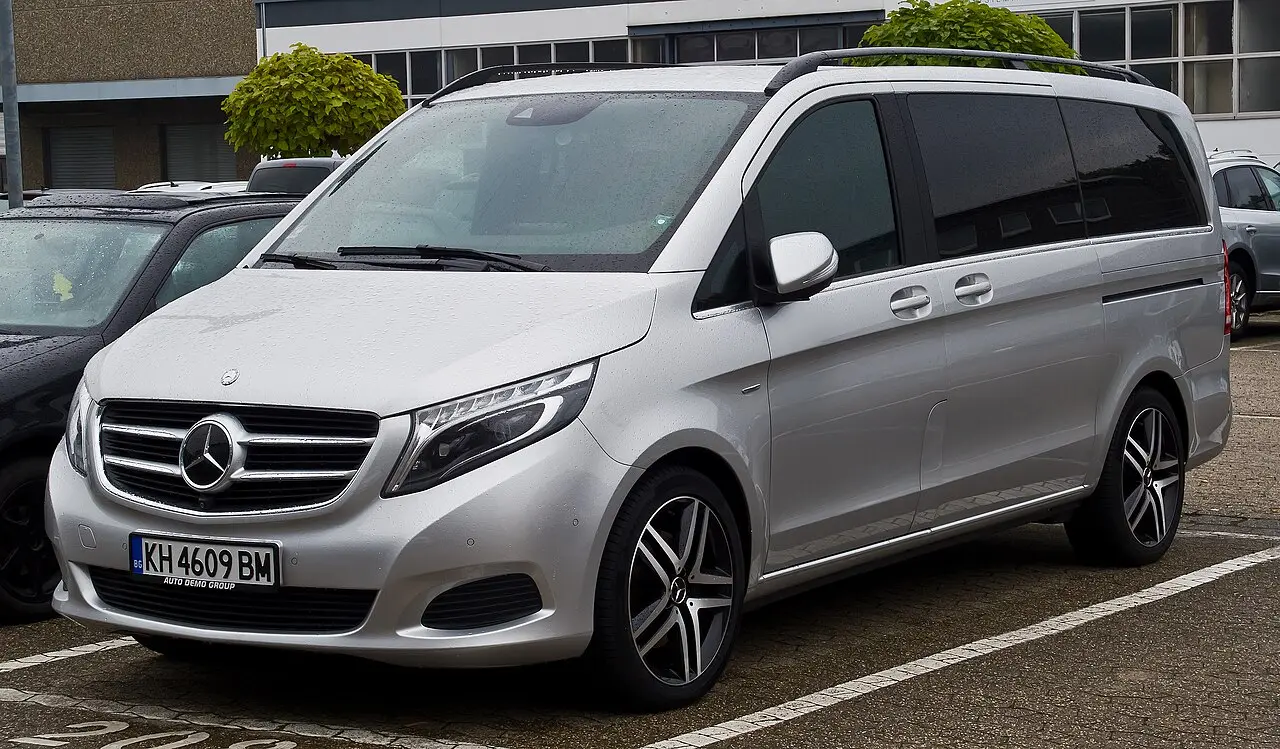
Photo: M 93 / Wikimedia Commons · CC BY-SA 3.0 de

The official data lists 34 versions of the Mercedes-Benz Metris (2016–2023), in the United States and Canada. Each market publishes its own figures, measured on its own test procedure.

At a glance

Years in the data
2016–2023
Markets
United States, Canada
Engines
2.0 L
Fuels
Petrol
Lowest consumption (Canada)
10.2 L/100 km (5-cycle)
Lowest consumption (United States)
10.7 L/100 km (EPA)

What is the Mercedes-Benz Metris?

The Metris is Mercedes-Benz’s mid-size van for North America. It served both work and passenger-carrying roles, extending the brand’s commercial-vehicle range below the Sprinter in the North American market. Its van body offered room for people or cargo in a more compact format than a full-size van.

The Metris is part of the W447 family, related to the Vito and V-Class sold in other regions. Mercedes-Benz introduced the mid-size van to North America under the Metris name.

W447 generation and engine

The Metris W447 appears in US and Canadian figures from 2016 to 2023. Its listed powertrain is a 2.0 L petrol engine in both markets.

As a mid-size van, the Metris could serve passenger transport as well as work involving equipment or cargo. Its place below the Sprinter made it part of Mercedes-Benz’s commercial-vehicle range for North America.

How economical is the Mercedes-Benz Metris?

In the United States, the best combined EPA rating is 22 MPG, and the lowest listed consumption is 10.7 L/100 km. In Canada, the lowest listed consumption is 10.2 L/100 km under the NRCan 5-cycle procedure. The EPA and Canadian 5-cycle methods differ, so their figures are not a direct like-for-like comparison.

European cars are rated on WLTP or, for older models, NEDC procedures. Those tests differ from North American methods.

Where was the Metris sold?

The US and Canadian market figures cover 2016 to 2023. Both list petrol versions with a 2.0 L engine.

Questions and answers

What generation is the Mercedes-Benz Metris?

The Metris is the W447 generation, shown from 2016 to 2023.

What engine does the Metris have in these market figures?

The US and Canadian figures list a 2.0 L petrol engine.

What is the Metris’s best combined EPA rating?

The best combined EPA rating listed is 22 MPG.

Metris I (2016–2023)

Mercedes-Benz Metris I
Photo: M 93 / Wikimedia Commons · CC BY-SA 3.0 de

Model codes: W447 · Sold in: United States and Canada · References: usecarscout.com

United States 18 versions

Model years sold in the USA, from the EPA and the Department of Energy (fueleconomy.gov). MPG on the EPA test; litres per 100 km = 235.215 ÷ MPG.

Years and versionEngineFuelGearboxDriveConsumption (combined)CO₂
2023SIDI2.0 LPetrol9-speed automaticRear-wheel drive21 MPG (11.2 L/100 km) EPA258 g/km
2023SIDI2.0 LPetrol9-speed automaticRear-wheel drive19 MPG (12.4 L/100 km) EPA285 g/km
2023SIDI2.0 LPetrol9-speed automaticRear-wheel drive20 MPG (11.8 L/100 km) EPA271 g/km
2022SIDI2.0 LPetrol9-speed automaticRear-wheel drive19 MPG (12.4 L/100 km) EPA281 g/km
2022SIDI2.0 LPetrol9-speed automaticRear-wheel drive21 MPG (11.2 L/100 km) EPA267 g/km
2022SIDI2.0 LPetrol9-speed automaticRear-wheel drive22 MPG (10.7 L/100 km) EPA255 g/km
2021SIDI2.0 LPetrol9-speed automaticRear-wheel drive19 MPG (12.4 L/100 km) EPA284 g/km
2021SIDI2.0 LPetrol9-speed automaticRear-wheel drive21 MPG (11.2 L/100 km) EPA268 g/km
2018–2020SIDI · SIDI; Stop-Start2.0 LPetrol7-speed automaticRear-wheel drive22 MPG (10.7 L/100 km) EPA247 g/km
2020SIDI; Stop-Start2.0 LPetrol7-speed automaticRear-wheel drive21 MPG (11.2 L/100 km) EPA257 g/km
2020SIDI; Stop-Start2.0 LPetrol7-speed automaticRear-wheel drive22 MPG (10.7 L/100 km) EPA245 g/km
2020SIDI2.0 LPetrol7-speed automaticRear-wheel drive21 MPG (11.2 L/100 km) EPA265 g/km
2020SIDI2.0 LPetrol7-speed automaticRear-wheel drive22 MPG (10.7 L/100 km) EPA254 g/km
2020SIDI2.0 LPetrol7-speed automaticRear-wheel drive22 MPG (10.7 L/100 km) EPA252 g/km
2018–2019SIDI2.0 LPetrol7-speed automaticRear-wheel drive21 MPG (11.2 L/100 km) EPA268 g/km
2018–2019SIDI2.0 LPetrol7-speed automaticRear-wheel drive22 MPG (10.7 L/100 km) EPA251 g/km
2016–2017SIDI2.0 LPetrol7-speed automaticRear-wheel drive22 MPG (10.7 L/100 km) EPA257 g/km
2016–2017SIDI2.0 LPetrol7-speed automaticRear-wheel drive22 MPG (10.7 L/100 km) EPA246 g/km

Canada 16 versions

Model years sold in Canada, from Natural Resources Canada fuel consumption ratings (5-cycle test).

Years and versionEngineFuelGearboxConsumption (combined)CO₂
2023Special purpose vehicle2.0 LPetrol9-speed automatic11.6 L/100 km 5-cycle271 g/km
2023Special purpose vehicle2.0 LPetrol9-speed automatic12.3 L/100 km 5-cycle285 g/km
2022Special purpose vehicle2.0 LPetrol9-speed automatic11.5 L/100 km 5-cycle267 g/km
2022Special purpose vehicle2.0 LPetrol9-speed automatic12.1 L/100 km 5-cycle282 g/km
2021Special purpose vehicle2.0 LPetrol9-speed automatic11.5 L/100 km 5-cycle268 g/km
2021Special purpose vehicle2.0 LPetrol9-speed automatic12.2 L/100 km 5-cycle284 g/km
2020Special purpose vehicle2.0 LPetrol7-speed automatic10.5 L/100 km 5-cycle247 g/km
2020Special purpose vehicle2.0 LPetrol7-speed automatic10.5 L/100 km 5-cycle246 g/km
2020Special purpose vehicle2.0 LPetrol7-speed automatic11.0 L/100 km 5-cycle257 g/km
2018–2019Special purpose vehicle2.0 LPetrol7-speed automatic10.7 L/100 km 5-cycle251 g/km
2018–2019Special purpose vehicle2.0 LPetrol7-speed automatic11.4 L/100 km 5-cycle268 g/km
2019Special purpose vehicle2.0 LPetrol7-speed automatic10.5 L/100 km 5-cycle248 g/km
2017Special purpose vehicle2.0 LPetrol7-speed automatic10.2 L/100 km 5-cycle240 g/km
2017Special purpose vehicle2.0 LPetrol7-speed automatic10.5 L/100 km 5-cycle248 g/km
2016Special purpose vehicle2.0 LPetrol7-speed automatic10.2 L/100 km 5-cycle233 g/km
2016Special purpose vehicle2.0 LPetrol7-speed automatic10.9 L/100 km 5-cycle248 g/km

Official figures are measured on standard test procedures and differ between markets. Your consumption depends on how, where and in what conditions you drive.