The official data lists 293 versions of the Mercedes-Benz G-Class (2002–2027), in the European Union, the United Kingdom, France, the United States, and Canada. Each market publishes its own figures, measured on its own test procedure.
At a glance
Years in the data
2002–2027
Markets
European Union, United Kingdom, France, United States, Canada
Engines
2.9 L to 6.0 L
Power
135 kW (184 PS) to 587 kW (798 PS)
Fuels
Diesel, Petrol, Hybrid, Electric, Plug-in hybrid
Lowest consumption (France)
7.4 L/100 km (NEDC)
Lowest consumption (United Kingdom)
8.7 L/100 km (WLTP)
Lowest consumption (European Union)
9.0 L/100 km (WLTP)
Plug-in hybrid, weighted (European Union)
9.0 L/100 km (WLTP)
New registrations in the EU
162,657
What is the Mercedes-Benz G-Class?
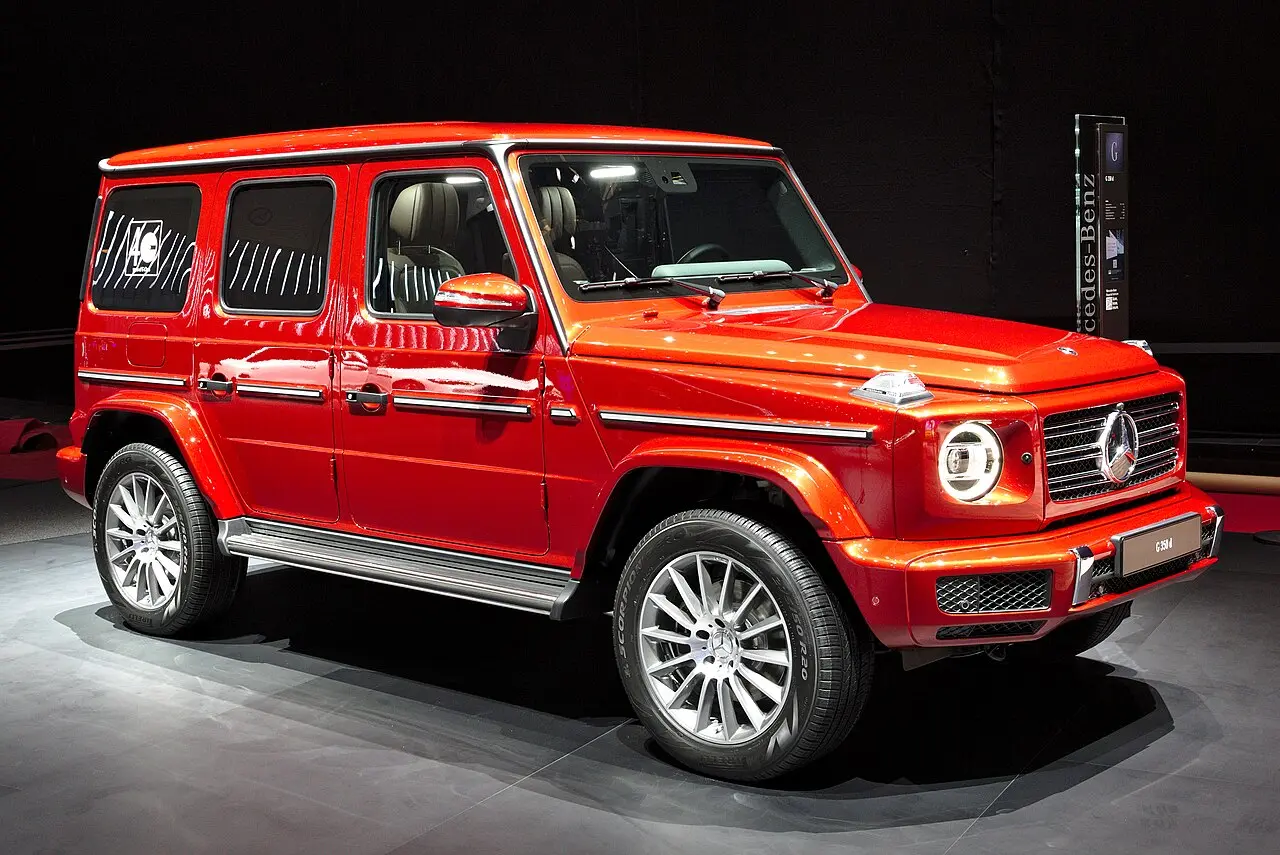
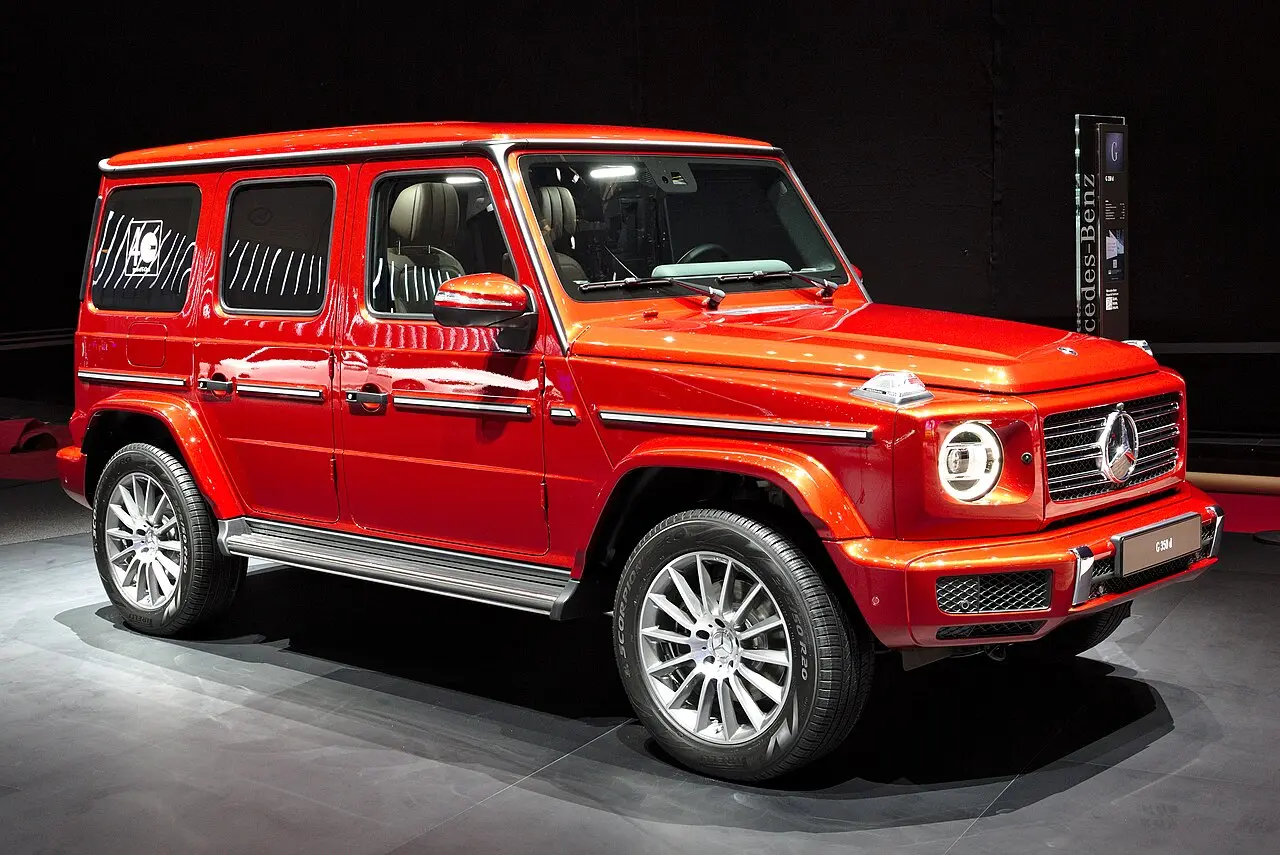
The G-Class is a large, boxy SUV with a long off-road heritage. Its upright shape and purposeful stance remain central to its identity. Today it combines traditional off-road ability with a more comfort-focused cabin, and sits among the most distinctive SUVs in the Mercedes-Benz range.
G-Class generations
The first generation, W463, ran from 1990 to 2018. The second generation, also designated W463, began in 2018. The redesign kept the familiar exterior character while bringing changes beneath it, including a revised chassis and independent front suspension.
Engines and power
Across EU versions, engines range from 2.9 to 6.0 litres and outputs from 135 kW (184 PS) to 463 kW (630 PS). Listed fuels include petrol, diesel, hybrid and plug-in hybrid. The UK range reaches 587 kW (798 PS), while US listings cover engines from 3.0 to 6.0 litres. Electric versions also appear in the market listings.
How economical is the G-Class?
The lowest listed EU figure for petrol, diesel and hybrid versions is 9 L/100 km on WLTP. The listed plug-in hybrid result is also 9 L/100 km, an official weighted figure that assumes part of the driving is electric. The UK’s lowest listed figure is 8.7 L/100 km on WLTP; France records 7.4 L/100 km on NEDC. In the USA, the lowest figure is 13.1 L/100 km under EPA testing, or 18 MPG combined. Canada’s lowest is 10.9 L/100 km on the NRCan 5-cycle test. These results are not directly comparable because European WLTP and NEDC, the US EPA procedure and Canada’s 5-cycle test use different methods.
Questions and answers
When did the second-generation G-Class begin?
The second generation began in 2018, following the first-generation W463, which ran from 1990 to 2018.
What is the lowest listed EU fuel consumption?
It is 9 L/100 km on WLTP for petrol, diesel and hybrid versions. The listed plug-in hybrid result is also 9 L/100 km, weighted to assume some electric driving.
How much power does the G-Class make?
The EU range spans 135 kW (184 PS) to 463 kW (630 PS); the UK range reaches 587 kW (798 PS).
New cars registered in the EU (plus Norway and Iceland), from the European Environment Agency. Figures on the NEDC procedure until 2020 and on WLTP from 2021; versions are grouped by engine and power, with their number of registrations.
Years and version
Engine
Power
Fuel
Consumption (combined)
CO₂
Electric range
EU registrations
2024–2025
4.0 L
430 kW (585 PS)
Hybrid
14.8 L/100 km WLTP
338 g/km
–
7,797
2025
3.0 L
270 kW (367 PS)
Hybrid
9.0 L/100 km WLTP
237 g/km
–
3,539
2025
Electric motor
432 kW (587 PS)
Electric
30.3 kWh/100 km WLTP
0 g/km
429 km
1,768
2025
3.0 L
330 kW (449 PS)
Hybrid
11.4 L/100 km WLTP
259 g/km
–
288
2025
4.0 L
430 kW (585 PS)
Petrol
17.4 L/100 km WLTP
395 g/km
–
194
2025
3.0 L
330 kW (449 PS)
Hybrid
11.3 L/100 km WLTP
258 g/km
–
184
2025
4.0 L
430 kW (585 PS)
Plug-in hybrid
14.8 L/100 km WLTP
338 g/km
–
169
2025
Electric motor
223 kW (303 PS)
Electric
29.0 kWh/100 km WLTP
0 g/km
454 km
90
2025
3.0 L
270 kW (367 PS)
Plug-in hybrid
9.0 L/100 km WLTP
237 g/km
–
86
2025
3.0 L
270 kW (367 PS)
Diesel
9.0 L/100 km WLTP
252 g/km
–
74
2025
Electric motor
222 kW (302 PS)
Electric
–
0 g/km
–
55
2025
Electric motor
280 kW (381 PS)
Electric
–
0 g/km
–
27
2025
4.0 L
310 kW (421 PS)
Petrol
14.9 L/100 km WLTP
339 g/km
–
23
2025
Electric motor
230 kW (313 PS)
Electric
–
0 g/km
–
14
2025
3.0 L
330 kW (449 PS)
Petrol
11.6 L/100 km WLTP
289 g/km
–
12
2025
3.0 L
330 kW (449 PS)
Plug-in hybrid
11.3 L/100 km WLTP
257 g/km
–
11
2024
4.0 L
430 kW (585 PS)
Petrol
16.4 L/100 km WLTP
373 g/km
–
2,705
2023–2024
4.0 L
310 kW (421 PS)
Petrol
14.9 L/100 km WLTP
339 g/km
–
2,190
2024
3.0 L
270 kW (367 PS)
Hybrid
9.0 L/100 km WLTP
236 g/km
–
1,511
2024
2.9 L
243 kW (330 PS)
Diesel
11.1 L/100 km WLTP
290 g/km
–
767
2024
Electric motor
432 kW (587 PS)
Electric
28.6 kWh/100 km WLTP
0 g/km
456 km
417
2024
3.0 L
330 kW (449 PS)
Hybrid
11.3 L/100 km WLTP
259 g/km
–
312
2024
Electric motor
223 kW (303 PS)
Electric
29.0 kWh/100 km WLTP
0 g/km
454 km
30
2024
3.0 L
330 kW (449 PS)
Petrol
–
355 g/km
–
26
2024
Electric motor
160 kW (218 PS)
Electric
–
0 g/km
–
16
2024
3.0 L
272 kW (370 PS)
Diesel
–
309 g/km
–
11
2023
4.0 L
430 kW (585 PS)
Petrol
16.5 L/100 km WLTP
374 g/km
–
5,569
2023
2.9 L
243 kW (330 PS)
Diesel
11.1 L/100 km WLTP
290 g/km
–
2,489
2023
2.9 L
210 kW (286 PS)
Diesel
11.1 L/100 km WLTP
290 g/km
–
25
2023
4.0 L
430 kW (585 PS)
Hybrid
–
309 g/km
–
19
2023
3.0 L
330 kW (449 PS)
Petrol
15.0 L/100 km WLTP
354 g/km
–
11
2023
Electric motor
160 kW (218 PS)
Electric
–
0 g/km
460 km
10
2022
4.0 L
430 kW (585 PS)
Petrol
16.1 L/100 km WLTP
371 g/km
–
4,119
2022
2.9 L
243 kW (330 PS)
Diesel
10.8 L/100 km WLTP
290 g/km
–
1,723
2022
4.0 L
310 kW (421 PS)
Petrol
14.7 L/100 km WLTP
338 g/km
–
951
2022
2.9 L
210 kW (286 PS)
Diesel
11.0 L/100 km WLTP
290 g/km
–
327
2022
3.0 L
330 kW (449 PS)
Petrol
–
351 g/km
–
19
2022
4.0 L
430 kW (585 PS)
Hybrid
–
313 g/km
–
17
2022
3.0 L
272 kW (370 PS)
Diesel
–
309 g/km
–
13
2022
3.0 L
287 kW (390 PS)
Diesel
–
309 g/km
–
10
2022
4.0 L
206 kW (280 PS)
Petrol
–
369 g/km
–
10
2022
4.0 L
450 kW (612 PS)
Hybrid
–
299 g/km
–
10
2021
4.0 L
430 kW (585 PS)
Petrol
16.2 L/100 km WLTP
372 g/km
–
6,244
2021
2.9 L
243 kW (330 PS)
Diesel
10.5 L/100 km WLTP
283 g/km
–
2,326
2021
4.0 L
310 kW (421 PS)
Petrol
14.7 L/100 km WLTP
338 g/km
–
2,162
2021
2.9 L
210 kW (286 PS)
Diesel
10.7 L/100 km WLTP
283 g/km
–
1,224
2021
3.0 L
330 kW (449 PS)
Petrol
–
347 g/km
–
24
2021
3.0 L
183 kW (249 PS)
Diesel
–
–
–
14
2021
3.0 L
272 kW (370 PS)
Diesel
–
309 g/km
–
12
2021
5.5 L
430 kW (585 PS)
Petrol
–
305 g/km
–
12
2020
4.0 L
430 kW (585 PS)
Petrol
–
300 g/km
–
4,913
2020
2.9 L
210 kW (286 PS)
Diesel
–
251 g/km
–
3,116
2020
4.0 L
310 kW (421 PS)
Petrol
–
264 g/km
–
1,885
2020
2.9 L
243 kW (330 PS)
Diesel
–
252 g/km
–
1,529
2020
5.5 L
430 kW (585 PS)
Petrol
–
289 g/km
–
18
2020
3.0 L
135 kW (184 PS)
Diesel
–
299 g/km
–
12
2020
2.0 L
110 kW (150 PS)
Diesel
–
128 g/km
–
11
2019
4.0 L
430 kW (585 PS)
Petrol
–
299 g/km
–
9,450
2019
4.0 L
310 kW (421 PS)
Petrol
–
265 g/km
–
4,784
2019
2.9 L
210 kW (286 PS)
Diesel
–
253 g/km
–
1,774
2018–2019
5.5 L
420 kW (571 PS)
Petrol
–
322 g/km
–
1,352
2019
2.9 L
243 kW (330 PS)
Diesel
–
253 g/km
–
530
2019
3.0 L
183 kW (249 PS)
Diesel
–
293 g/km
–
32
2019
2.0 L
190 kW (258 PS)
Petrol
–
338 g/km
–
12
2019
2.9 L
210 kW (286 PS)
Diesel
–
277 g/km
–
12
2019
6.0 L
463 kW (630 PS)
Petrol
–
397 g/km
–
12
2018
4.0 L
310 kW (421 PS)
Petrol
–
276 g/km
–
5,420
2018
3.0 L
180 kW (245 PS)
Diesel
–
261 g/km
–
2,976
2018
4.0 L
430 kW (585 PS)
Petrol
–
300 g/km
–
1,600
2018
6.0 L
463 kW (630 PS)
Petrol
–
397 g/km
–
150
United Kingdom 30 versions
New cars on sale in the UK, from the Vehicle Certification Agency. NEDC figures until 2018 and WLTP figures after; years are the editions a version appeared in.
Years and version
Engine
Power
Fuel
Gearbox
Consumption (combined)
CO₂
Electric range
2025–2026G 580
Electric motor
432 kW (587 PS)
Electric
–
27.7 kWh/100 km WLTP
0 g/km
473 km
2025–2026G 580
Electric motor
432 kW (587 PS)
Electric
–
30.3 kWh/100 km WLTP
0 g/km
434 km
2026G 580
Electric motor
432 kW (587 PS)
Electric
–
30.0 kWh/100 km WLTP
0 g/km
447 km
2024–2026G 450 d
3.0 L
367 kW (499 PS)
Diesel
9-speed automatic
8.7 L/100 km WLTP
227 g/km
–
2025–2026G 450 d
3.0 L
367 kW (499 PS)
Diesel
9-speed automatic
9.9 L/100 km WLTP
261 g/km
–
2026G 450 d
3.0 L
367 kW (499 PS)
Hybrid
9-speed automatic
8.7 L/100 km WLTP
228 g/km
–
2026G 450 d
3.0 L
367 kW (499 PS)
Hybrid
9-speed automatic
9.9 L/100 km WLTP
260 g/km
–
2025–2026G 500
3.0 L
449 kW (610 PS)
Petrol
9-speed automatic
11.0 L/100 km WLTP
249 g/km
–
2025–2026G 500
3.0 L
449 kW (610 PS)
Petrol
9-speed automatic
12.4 L/100 km WLTP
281 g/km
–
2026G 500
3.0 L
449 kW (610 PS)
Hybrid
9-speed automatic
12.2 L/100 km WLTP
279 g/km
–
2024–2026Mercedes-AMG G 63 · AMG G 63
4.0 L
585 kW (795 PS)
Petrol
9-speed automatic
14.7 L/100 km WLTP
335 g/km
–
2024–2026Mercedes-AMG G 63 · AMG G 63
4.0 L
585 kW (795 PS)
Petrol
9-speed automatic
15.7 L/100 km WLTP
358 g/km
–
2026AMG G 63
4.0 L
585 kW (795 PS)
Hybrid
9-speed automatic
15.6 L/100 km WLTP
356 g/km
–
2024G 580 with EQ Technology
Electric motor
587 kW (798 PS)
Electric
–
30.3 kWh/100 km WLTP
0 g/km
434 km
2024G 580 with EQ Technology
Electric motor
587 kW (798 PS)
Electric
–
27.7 kWh/100 km WLTP
0 g/km
473 km
2024G 450 d
3.0 L
367 kW (499 PS)
Diesel
9-speed automatic
10.0 L/100 km WLTP
261 g/km
–
2024G 500
3.0 L
449 kW (610 PS)
Petrol
9-speed automatic
10.9 L/100 km WLTP
248 g/km
–
2024G 500
3.0 L
449 kW (610 PS)
Petrol
9-speed automatic
12.3 L/100 km WLTP
281 g/km
–
2022–2023G 400 d
2.9 L
243 kW (330 PS)
Diesel
9-speed automatic
10.9 L/100 km WLTP
286 g/km
–
2022–2023G 400 d
2.9 L
243 kW (330 PS)
Diesel
9-speed automatic
11.8 L/100 km WLTP
309 g/km
–
2023G 400 d
2.9 L
330 kW (449 PS)
Diesel
9-speed automatic
10.9 L/100 km WLTP
286 g/km
–
2023G 400 d
2.9 L
330 kW (449 PS)
Diesel
9-speed automatic
11.8 L/100 km WLTP
309 g/km
–
2022–2023AMG G 63
4.0 L
430 kW (585 PS)
Petrol
9-speed automatic
16.0 L/100 km WLTP
363 g/km
–
2023Mercedes-AMG G 63
4.0 L
585 kW (795 PS)
Petrol
9-speed automatic
16.2 L/100 km WLTP
369 g/km
–
2023Mercedes-AMG G 63 4x4²
4.0 L
585 kW (795 PS)
Petrol
9-speed automatic
20.1 L/100 km WLTP
456 g/km
–
2021G 400 d
2.9 L
243 kW (330 PS)
Diesel
9-speed automatic
11.0 L/100 km WLTP
288 g/km
–
2021G 400 d
2.9 L
243 kW (330 PS)
Diesel
9-speed automatic
11.0 L/100 km WLTP
290 g/km
–
2021AMG G 63
4.0 L
430 kW (585 PS)
Petrol
9-speed automatic
16.4 L/100 km WLTP
77 g/km
–
2021AMG G 63
4.0 L
430 kW (585 PS)
Petrol
9-speed automatic
16.4 L/100 km WLTP
377 g/km
–
2018AMG G 63 4MATIC with 20'' rear wheels · AMG G 63 4MATIC with 21'' rear wheels · AMG G 63 4MATIC with 22'' rear wheels
4.0 L
–
Petrol
9-speed automatic
13.1 L/100 km NEDC
299 g/km
–
United States 14 versions
Model years sold in the USA, from the EPA and the Department of Energy (fueleconomy.gov). MPG on the EPA test; litres per 100 km = 235.215 ÷ MPG.
Years and version
Engine
Fuel
Gearbox
Drive
Consumption (combined)
CO₂
Electric range
2027
Electric motor
Electric
2-speed automatic
Four-wheel drive
71 MPGe EPA
0 g/km
401 km
2025–2027SIDI; Mild Hybrid
4.0 L
Hybrid
9-speed automatic
Four-wheel drive
15 MPG (15.7 L/100 km) EPA
378 g/km
–
2025–2026
Electric motor
Electric
2-speed automatic
Four-wheel drive
62 MPGe EPA
0 g/km
385 km
2025–2026SIDI; Mild Hybrid
3.0 L
Hybrid
9-speed automatic
Four-wheel drive
18 MPG (13.1 L/100 km) EPA
304 g/km
–
2023–2024SIDI
4.0 L
Petrol
9-speed automatic
Four-wheel drive
14 MPG (16.8 L/100 km) EPA
383 g/km
–
2023–2024SIDI
4.0 L
Petrol
9-speed automatic
Four-wheel drive
14 MPG (16.8 L/100 km) EPA
386 g/km
–
2023–2024
4.0 L
Petrol
9-speed automatic
Four-wheel drive
11 MPG (21.4 L/100 km) EPA
508 g/km
–
2022SIDI
4.0 L
Petrol
9-speed automatic
Four-wheel drive
16 MPG (14.7 L/100 km) EPA
354 g/km
–
2022SIDI
4.0 L
Petrol
9-speed automatic
Four-wheel drive
14 MPG (16.8 L/100 km) EPA
388 g/km
–
2021SIDI
4.0 L
Petrol
9-speed automatic
Four-wheel drive
14 MPG (16.8 L/100 km) EPA
396 g/km
–
2021SIDI
4.0 L
Petrol
9-speed automatic
Four-wheel drive
18 MPG (13.1 L/100 km) EPA
307 g/km
–
2019–2020SIDI
4.0 L
Petrol
9-speed automatic
Four-wheel drive
14 MPG (16.8 L/100 km) EPA
378 g/km
–
2019–2020SIDI
4.0 L
Petrol
9-speed automatic
Four-wheel drive
14 MPG (16.8 L/100 km) EPA
396 g/km
–
2018SIDI
5.5 L
Petrol
7-speed automatic
Four-wheel drive
13 MPG (18.1 L/100 km) EPA
419 g/km
–
Canada 17 versions
Model years sold in Canada, from Natural Resources Canada fuel consumption ratings (5-cycle test).
Years and version
Engine
Power
Fuel
Gearbox
Consumption (combined)
CO₂
Electric range
2025–2026Sport utility vehicle: Standard
Electric motor
432 kW (587 PS)
Electric
Automatic
33.6 kWh/100 km 5-cycle
0 g/km
385 km
2025–2026Sport utility vehicle: Standard
3.0 L
–
Petrol
9-speed automatic
13.1 L/100 km 5-cycle
305 g/km
–
2026Sport utility vehicle: Standard
4.0 L
–
Petrol
9-speed automatic
16.2 L/100 km 5-cycle
383 g/km
–
2025Sport utility vehicle: Standard
4.0 L
–
Petrol
9-speed automatic
16.2 L/100 km 5-cycle
378 g/km
–
2023–2024Sport utility vehicle: Standard
4.0 L
–
Petrol
9-speed automatic
17.7 L/100 km 5-cycle
415 g/km
–
2023–2024Sport utility vehicle: Standard
4.0 L
–
Petrol
9-speed automatic
21.7 L/100 km 5-cycle
508 g/km
–
2023–2024Sport utility vehicle: Standard
4.0 L
–
Petrol
9-speed automatic
16.3 L/100 km 5-cycle
383 g/km
–
2022Sport utility vehicle: Standard
4.0 L
–
Petrol
9-speed automatic
17.6 L/100 km 5-cycle
412 g/km
–
2022Sport utility vehicle: Standard
4.0 L
–
Petrol
9-speed automatic
20.2 L/100 km 5-cycle
470 g/km
–
2022Sport utility vehicle: Standard
4.0 L
–
Petrol
9-speed automatic
15.1 L/100 km 5-cycle
354 g/km
–
2021Sport utility vehicle: Standard
4.0 L
–
Petrol
9-speed automatic
17.2 L/100 km 5-cycle
396 g/km
–
2021Sport utility vehicle: Standard
4.0 L
–
Petrol
9-speed automatic
13.1 L/100 km 5-cycle
307 g/km
–
2019–2020Sport utility vehicle: Standard
4.0 L
–
Petrol
9-speed automatic
17.0 L/100 km 5-cycle
396 g/km
–
2019–2020Sport utility vehicle: Standard
4.0 L
–
Petrol
9-speed automatic
16.3 L/100 km 5-cycle
378 g/km
–
2018Sport utility vehicle: Standard
4.0 L
–
Petrol
7-speed automatic
17.5 L/100 km 5-cycle
410 g/km
–
2018Sport utility vehicle: Standard
5.5 L
–
Petrol
7-speed automatic
17.9 L/100 km 5-cycle
419 g/km
–
2018Sport utility vehicle: Standard
6.0 L
–
Petrol
7-speed automatic
20.3 L/100 km 5-cycle
473 g/km
–
Official figures are measured on standard test procedures and differ between markets. Your consumption depends on how, where and in what conditions you drive.