Mercedes-Benz

Mercedes-Benz eVito

Mercedes-Benz eVito
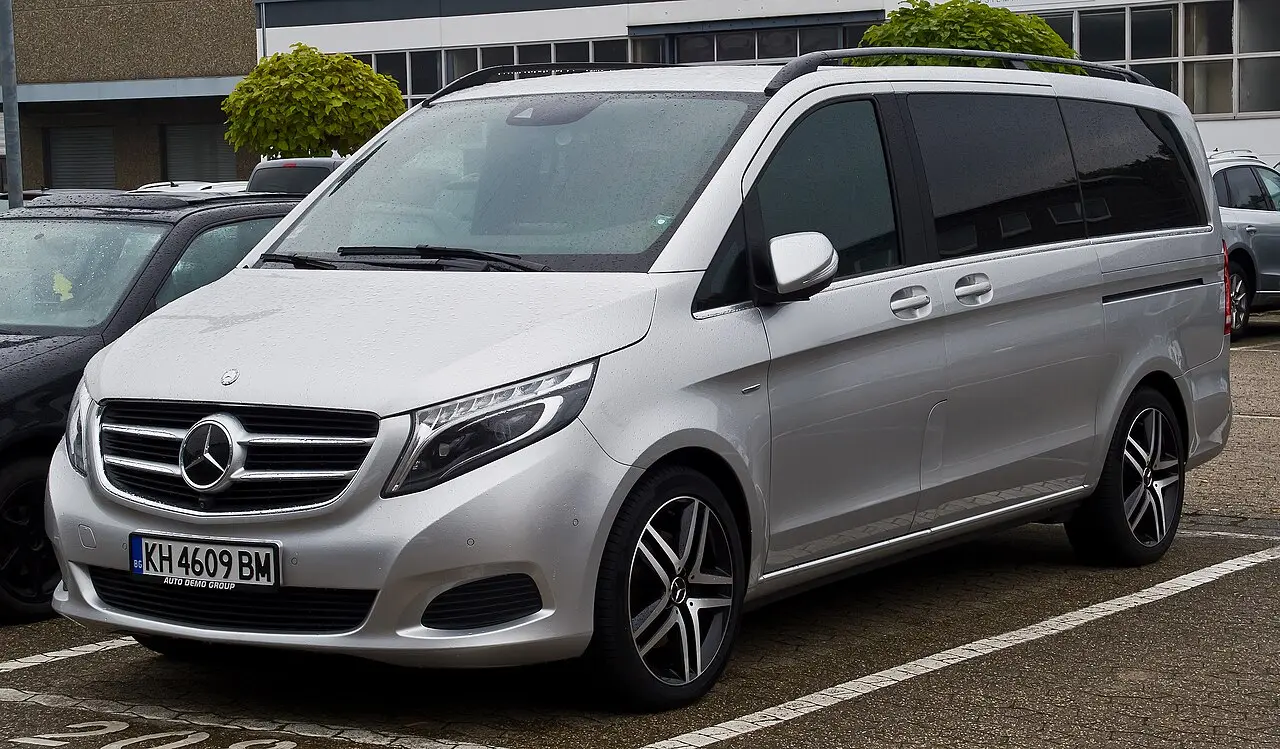
Photo: M 93 / Wikimedia Commons · CC BY-SA 3.0 de

The official data lists 17 versions of the Mercedes-Benz eVito (2019–2025), in the European Union. Each market publishes its own figures, measured on its own test procedure.

At a glance

Years in the data
2019–2025
Markets
European Union
Power
70 kW (95 PS) to 150 kW (204 PS)
Fuels
Electric, Diesel
New registrations in the EU
7,510

What is the Mercedes-Benz eVito?

The eVito is the battery-electric version of Mercedes-Benz’s Vito, a mid-size van offered for cargo work and passenger transport. It suits businesses that need a van for deliveries, trades or local services, and it can also carry passengers in Tourer form.

Mercedes-Benz introduced the series-production eVito in 2018. It belongs to the W447 Vito generation. Alongside the electric version, the Vito family includes diesel models, giving businesses a choice of powertrains in the same van range.

Engines and power

The eVito is electric. Across the EU versions from 2019 to 2025, power ranges from 70 kW (95 PS) to 150 kW (204 PS). The output depends on the version and model year.

How economical is the Mercedes-Benz eVito?

The eVito is powered by electricity, so fuel consumption in litres per 100 km does not describe how much energy it uses. Its EU registration figures total 7,510 vehicles from 2019 to 2025.

The most registered single entries were the 150 kW (204 PS) electric version in 2023, with 1,436 registrations, and the 70 kW (95 PS) version in 2021 and 2020, with 1,071 and 1,068 registrations respectively.

Where was the eVito sold?

The eVito’s role is to bring battery-electric driving to Mercedes-Benz’s mid-size van range. It is offered in cargo and passenger forms, serving businesses that need to move goods or people.

Questions and answers

What generation is the Mercedes-Benz eVito?

The eVito belongs to the W447 Vito generation.

How much power does the eVito have?

EU versions from 2019 to 2025 range from 70 kW (95 PS) to 150 kW (204 PS).

Is the eVito electric or diesel?

The eVito is electric. The wider Vito family also includes diesel versions.

How many eVitos were registered in the EU?

EU registration figures total 7,510 from 2019 to 2025.

eVito W447 (since 2019)

Mercedes-Benz eVito W447
Photo: M 93 / Wikimedia Commons · CC BY-SA 3.0 de

Model codes: W447 · References: static.oneweb.mercedes-benz.com, de.wikipedia.org

European Union 17 versions

New cars registered in the EU (plus Norway and Iceland), from the European Environment Agency. Figures on the NEDC procedure until 2020 and on WLTP from 2021; versions are grouped by engine and power, with their number of registrations.

Years and versionEnginePowerFuelConsumption (combined)CO₂Electric rangeEU registrations
2025Electric motor150 kW (204 PS)Electric27.6 kWh/100 km WLTP0 g/km339 km909
2025Electric motor70 kW (95 PS)Electric27.5 kWh/100 km WLTP0 g/km357 km91
2024Electric motor150 kW (204 PS)Electric27.8 kWh/100 km WLTP0 g/km347 km651
2024Electric motor70 kW (95 PS)Electric27.8 kWh/100 km WLTP0 g/km353 km105
2023Electric motor150 kW (204 PS)Electric28.3 kWh/100 km WLTP0 g/km351 km1,436
2023Electric motor70 kW (95 PS)Electric28.1 kWh/100 km WLTP0 g/km353 km106
2022Electric motor150 kW (204 PS)Electric27.3 kWh/100 km WLTP0 g/km385 km713
2022Electric motor70 kW (95 PS)Electric27.9 kWh/100 km WLTP0 g/km349 km163
20222.0 L140 kW (190 PS)Diesel7.2 L/100 km WLTP209 g/km–10
2021Electric motor70 kW (95 PS)Electric27.5 kWh/100 km WLTP0 g/km376 km1,071
2021Electric motor150 kW (204 PS)Electric28.2 kWh/100 km WLTP0 g/km361 km530
2021Electric motor140 kW (190 PS)Electric27.3 kWh/100 km WLTP0 g/km353 km10
2020Electric motor70 kW (95 PS)Electric28.1 kWh/100 km NEDC0 g/km307 km1,068
2020Electric motor85 kW (116 PS)Electric19.1 kWh/100 km NEDC0 g/km137 km80
2020Electric motor150 kW (204 PS)Electric27.8 kWh/100 km NEDC0 g/km316 km42
2019Electric motor70 kW (95 PS)Electric25.6 kWh/100 km NEDC0 g/km–451
2019Electric motor85 kW (116 PS)Electric24.1 kWh/100 km NEDC0 g/km–74

Official figures are measured on standard test procedures and differ between markets. Your consumption depends on how, where and in what conditions you drive.