Mercedes-Benz

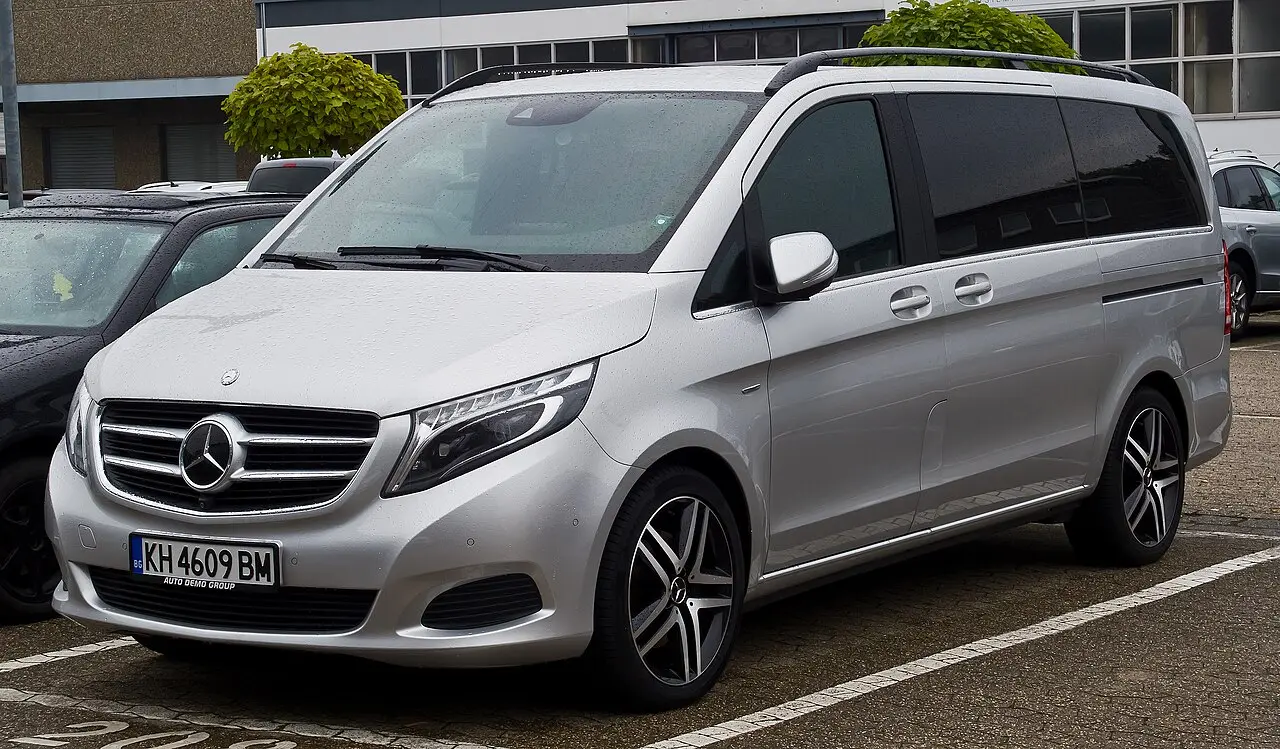
Mercedes-Benz EQV

Mercedes-Benz EQV
Photo: M 93 / Wikimedia Commons · CC BY-SA 3.0 de

The official data lists 32 versions of the Mercedes-Benz EQV (2020–2025), in the European Union and the United Kingdom. Each market publishes its own figures, measured on its own test procedure.

At a glance

Years in the data
2020–2025
Markets
European Union, United Kingdom
Engines
2.0 L
Power
70 kW (95 PS) to 150 kW (204 PS)
Fuels
Electric, Diesel
Lowest consumption (European Union)
7.1 L/100 km (WLTP)
New registrations in the EU
20,817

What is the Mercedes-Benz EQV?

The EQV is an all-electric passenger van in the Mercedes-Benz Vans range. It is based on the V-Class and is built around carrying people, with a spacious cabin suited to family journeys and passenger transport.

The EQV belongs to the W447 generation. Mercedes-Benz introduced it as an electric V-Class for passenger transport, adding electric drive to the people-carrying van.

Generation and power

The EQV’s W447 generation began in 2020. EU listings include electric versions with outputs from 70 kW (95 PS) to 150 kW (204 PS). UK VCA entries from 2021 to 2023 list electric versions at 150 kW (204 PS).

Electric range and energy use

For an electric van, energy use and driving range describe day-to-day travel more clearly than fuel consumption in L/100 km. EU registration figures include electric, diesel and other fuel categories under the EQV name, so the listed 7.1 L/100 km WLTP figure does not describe electric driving.

Where was the EQV sold?

The EQV appears in EU registration figures for 2020 to 2025 and UK VCA entries for 2021 to 2023. The EU figures include electric versions, and the UK entries list electric versions.

Questions and answers

Is the Mercedes-Benz EQV electric?

Yes. The EQV is an all-electric passenger van, and UK VCA entries list electric versions.

What power outputs are listed for the EQV?

EU listings range from 70 kW (95 PS) to 150 kW (204 PS); UK entries list 150 kW (204 PS).

Does the EQV have a fuel-consumption figure in L/100 km?

EU registration figures list 7.1 L/100 km on WLTP, but that figure does not describe electric driving.

EQV W447 (since 2020)

Mercedes-Benz EQV W447
Photo: M 93 / Wikimedia Commons · CC BY-SA 3.0 de

Model codes: W447 · References: de.wikipedia.org, group.mercedes-benz.com

European Union 26 versions

New cars registered in the EU (plus Norway and Iceland), from the European Environment Agency. Figures on the NEDC procedure until 2020 and on WLTP from 2021; versions are grouped by engine and power, with their number of registrations.

Years and versionEnginePowerFuelConsumption (combined)CO₂Electric rangeEU registrations
2025Electric motor150 kW (204 PS)Electric28.3 kWh/100 km WLTP0 g/km345 km2,206
2025Electric motor70 kW (95 PS)Electric28.0 kWh/100 km WLTP0 g/km353 km306
20252.0 L100 kW (136 PS)Diesel7.1 L/100 km WLTP187 g/km–76
20252.0 L140 kW (190 PS)Diesel7.4 L/100 km WLTP196 g/km–64
20252.0 L120 kW (163 PS)Diesel7.2 L/100 km WLTP192 g/km–55
20252.0 L174 kW (237 PS)Diesel8.1 L/100 km WLTP207 g/km–14
2024Electric motor150 kW (204 PS)Electric28.3 kWh/100 km WLTP0 g/km347 km2,684
2024Electric motor70 kW (95 PS)Electric28.4 kWh/100 km WLTP0 g/km345 km227
2024Electric motor80 kW (109 PS)Electric23.9 kWh/100 km WLTP0 g/km–10
2023Electric motor150 kW (204 PS)Electric28.9 kWh/100 km WLTP0 g/km344 km2,423
2023Electric motor70 kW (95 PS)Electric28.9 kWh/100 km WLTP0 g/km344 km320
2023Electric motor90 kW (122 PS)Electric–0 g/km–14
2022Electric motor150 kW (204 PS)Electric27.3 kWh/100 km WLTP0 g/km392 km2,090
2022Electric motor70 kW (95 PS)Electric28.6 kWh/100 km WLTP0 g/km344 km399
20222.0 L174 kW (237 PS)Diesel7.2 L/100 km WLTP205 g/km–44
20222.0 L100 kW (136 PS)Diesel7.2 L/100 km WLTP190 g/km–30
20222.0 L140 kW (190 PS)Diesel7.1 L/100 km WLTP200 g/km–21
20222.0 L120 kW (163 PS)Diesel–193 g/km–15
2021Electric motor70 kW (95 PS)Electric27.9 kWh/100 km WLTP0 g/km372 km4,571
2021Electric motor150 kW (204 PS)Electric28.9 kWh/100 km WLTP0 g/km352 km1,093
2021–150 kW (204 PS)Other fuel–192 g/km–53
2021Electric motor140 kW (190 PS)Electric27.6 kWh/100 km WLTP0 g/km348 km42
20211.8 L75 kW (102 PS)Diesel–200 g/km–23
20212.0 L174 kW (237 PS)Diesel–209 g/km–10
2020Electric motor70 kW (95 PS)Electric28.2 kWh/100 km NEDC0 g/km365 km3,357
2020Electric motor150 kW (204 PS)Electric28.9 kWh/100 km NEDC0 g/km347 km670

United Kingdom 6 versions

New cars on sale in the UK, from the Vehicle Certification Agency. NEDC figures until 2018 and WLTP figures after; years are the editions a version appeared in.

Years and versionEnginePowerFuelConsumption (combined)CO₂Electric range
2023EQV 300Electric motor150 kW (204 PS)Electric21.3 kWh/100 km WLTP0 g/km437 km
2023EQV 300Electric motor150 kW (204 PS)Electric25.0 kWh/100 km WLTP0 g/km373 km
2021EQV 300Electric motor150 kW (204 PS)Electric28.9 kWh/100 km WLTP0 g/km340 km
2021EQV 300Electric motor150 kW (204 PS)Electric29.3 kWh/100 km WLTP0 g/km344 km
2021EQV 300Electric motor150 kW (204 PS)Electric29.3 kWh/100 km WLTP0 g/km340 km
2021EQV 300Electric motor150 kW (204 PS)Electric28.9 kWh/100 km WLTP0 g/km344 km

Official figures are measured on standard test procedures and differ between markets. Your consumption depends on how, where and in what conditions you drive.