Mercedes-Benz

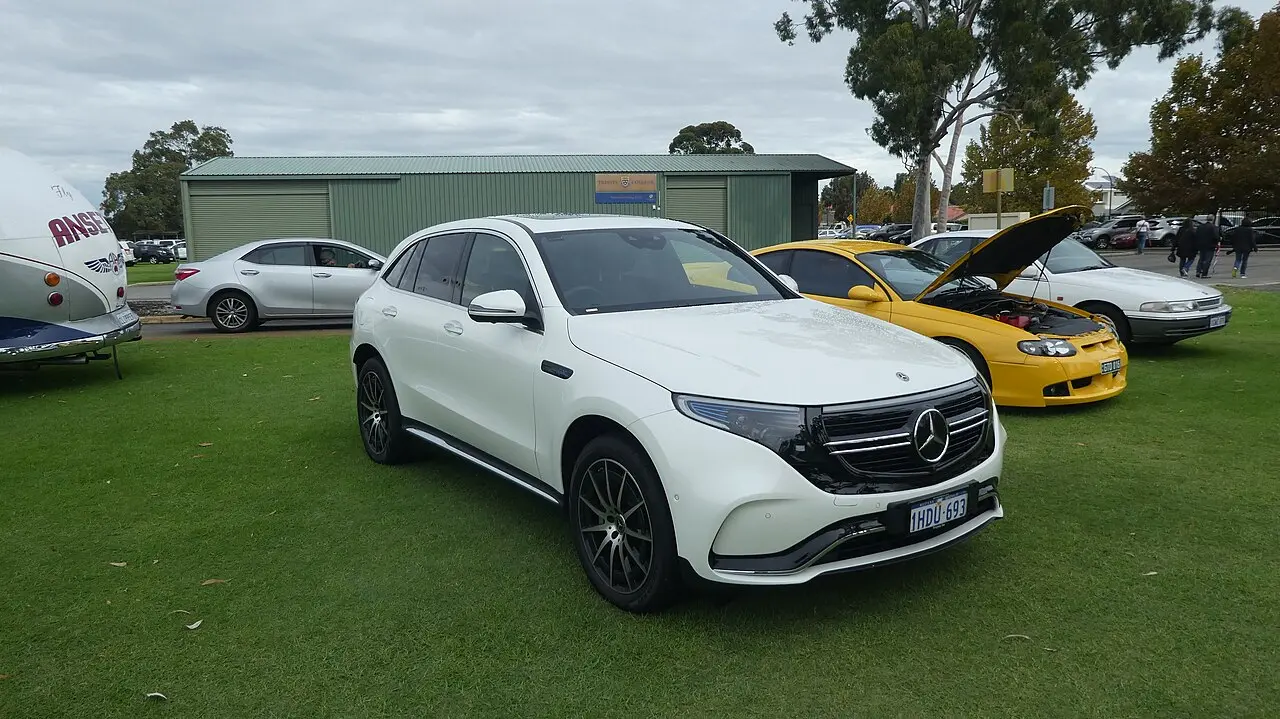
Mercedes-Benz EQC

Mercedes-Benz EQC
Photo: ZidaneHartono / Wikimedia Commons · CC BY-SA 4.0

The official data lists 27 versions of the Mercedes-Benz EQC (2019–2025), in the European Union and the United Kingdom. Each market publishes its own figures, measured on its own test procedure.

At a glance

Years in the data
2019–2025
Markets
European Union, United Kingdom
Power
145 kW (197 PS) to 600 kW (816 PS)
Fuels
Electric
New registrations in the EU
69,810

What is the Mercedes-Benz EQC?

The Mercedes-Benz EQC is an electric SUV in the brand’s EQ family. Its raised-body shape gives it the familiar format of a family SUV, with battery-electric drive. The EQC brought Mercedes-Benz’s electric-car identity to this type of vehicle.

The EQC’s N293 generation ran from 2019 to 2023. It was offered with electric drive rather than petrol or diesel engines.

Power and electric versions

EU figures list power from 145 kW (197 PS) to 600 kW (816 PS), while UK figures run from 150 kW (204 PS) to 300 kW (408 PS). Among the leading EU registration entries, an electric version with 300 kW (408 PS) recorded registrations in 2020 and 2021. A 145 kW (197 PS) electric version also appears among the leading entries.

EU registration figures cover 2019–2025, and UK figures cover 2020–2023.

Electricity consumption and emissions

The EQC runs on electric power, so petrol consumption figures do not apply. Market figures classify its versions as electric or other in the EU, and electric in the UK.

Questions and answers

Is the Mercedes-Benz EQC an electric car?

Yes. EU and UK market figures list electric versions.

What is the EQC’s most powerful listed version?

The EU range reaches 600 kW (816 PS); the UK range reaches 300 kW (408 PS).

When was the EQC sold?

Its N293 generation ran from 2019 to 2023. EU registration figures cover 2019–2025 and UK figures cover 2020–2023.

EQC N293 (2019–2023)

Mercedes-Benz EQC N293
Photo: ZidaneHartono / Wikimedia Commons · CC BY-SA 4.0

Model codes: N293 · Sold in: European Union and United Kingdom · References: media.mercedes-benz.com

European Union 13 versions

New cars registered in the EU (plus Norway and Iceland), from the European Environment Agency. Figures on the NEDC procedure until 2020 and on WLTP from 2021; versions are grouped by engine and power, with their number of registrations.

Years and versionEnginePowerFuelConsumption (combined)CO₂Electric rangeEU registrations
2023Electric motor300 kW (408 PS)Electric22.8 kWh/100 km WLTP0 g/km399 km5,014
2023Electric motor145 kW (197 PS)Electric22.6 kWh/100 km WLTP0 g/km413 km240
2023Electric motor600 kW (816 PS)Electric22.9 kWh/100 km WLTP0 g/km409 km120
2022Electric motor300 kW (408 PS)Electric22.9 kWh/100 km WLTP0 g/km422 km10,115
2022Electric motor145 kW (197 PS)Electric22.9 kWh/100 km WLTP0 g/km408 km1,133
2021Electric motor300 kW (408 PS)Electric23.4 kWh/100 km WLTP0 g/km395 km11,357
2021Electric motor145 kW (197 PS)Electric23.3 kWh/100 km WLTP0 g/km417 km10,557
2021–300 kW (408 PS)Other fuel23.2 kWh/100 km WLTP73 g/km452 km261
2020Electric motor300 kW (408 PS)Electric23.1 kWh/100 km NEDC0 g/km405 km17,712
2020Electric motor145 kW (197 PS)Electric23.1 kWh/100 km NEDC0 g/km436 km10,376
2019Electric motor145 kW (197 PS)Electric25.7 kWh/100 km NEDC0 g/km–1,668
2019Electric motor300 kW (408 PS)Electric22.6 kWh/100 km NEDC0 g/km–918
2019Electric motor65 kW (88 PS)Electric14.5 kWh/100 km NEDC0 g/km–18

United Kingdom 10 versions

New cars on sale in the UK, from the Vehicle Certification Agency. NEDC figures until 2018 and WLTP figures after; years are the editions a version appeared in.

Years and versionEnginePowerFuelConsumption (combined)CO₂Electric range
2022–2023EQV 300Electric motor150 kW (204 PS)Electric21.3 kWh/100 km WLTP0 g/km437 km
2022–2023EQV 300Electric motor150 kW (204 PS)Electric25.0 kWh/100 km WLTP0 g/km373 km
2022–2023EQC 400 4MATICElectric motor300 kW (408 PS)Electric21.3 kWh/100 km WLTP0 g/km437 km
2022–2023EQC 400 4MATICElectric motor300 kW (408 PS)Electric25.0 kWh/100 km WLTP0 g/km373 km
2020–2021EQC 400Electric motor300 kW (408 PS)Electric22.7 kWh/100 km WLTP0 g/km445 km
2020–2021EQC 400Electric motor300 kW (408 PS)Electric22.9 kWh/100 km WLTP0 g/km471 km
2021EQC 400 4MATICElectric motor300 kW (408 PS)Electric22.6 kWh/100 km WLTP0 g/km400 km
2021EQC 400 4MATICElectric motor300 kW (408 PS)Electric23.0 kWh/100 km WLTP0 g/km407 km
2021EQC 400 4MATICElectric motor300 kW (408 PS)Electric21.3 kWh/100 km WLTP0 g/km373 km
2021EQC 400 4MATICElectric motor300 kW (408 PS)Electric25.0 kWh/100 km WLTP0 g/km437 km

Versions outside these generations

European Union 4 versions

New cars registered in the EU (plus Norway and Iceland), from the European Environment Agency. Figures on the NEDC procedure until 2020 and on WLTP from 2021; versions are grouped by engine and power, with their number of registrations.

Years and versionEnginePowerFuelConsumption (combined)CO₂Electric rangeEU registrations
2025Electric motor300 kW (408 PS)Electric22.6 kWh/100 km WLTP0 g/km414 km12
2024Electric motor300 kW (408 PS)Electric22.8 kWh/100 km WLTP0 g/km412 km276
2024Electric motor600 kW (816 PS)Electric23.0 kWh/100 km WLTP0 g/km406 km17
2024Electric motor145 kW (197 PS)Electric22.4 kWh/100 km WLTP0 g/km417 km16

Official figures are measured on standard test procedures and differ between markets. Your consumption depends on how, where and in what conditions you drive.