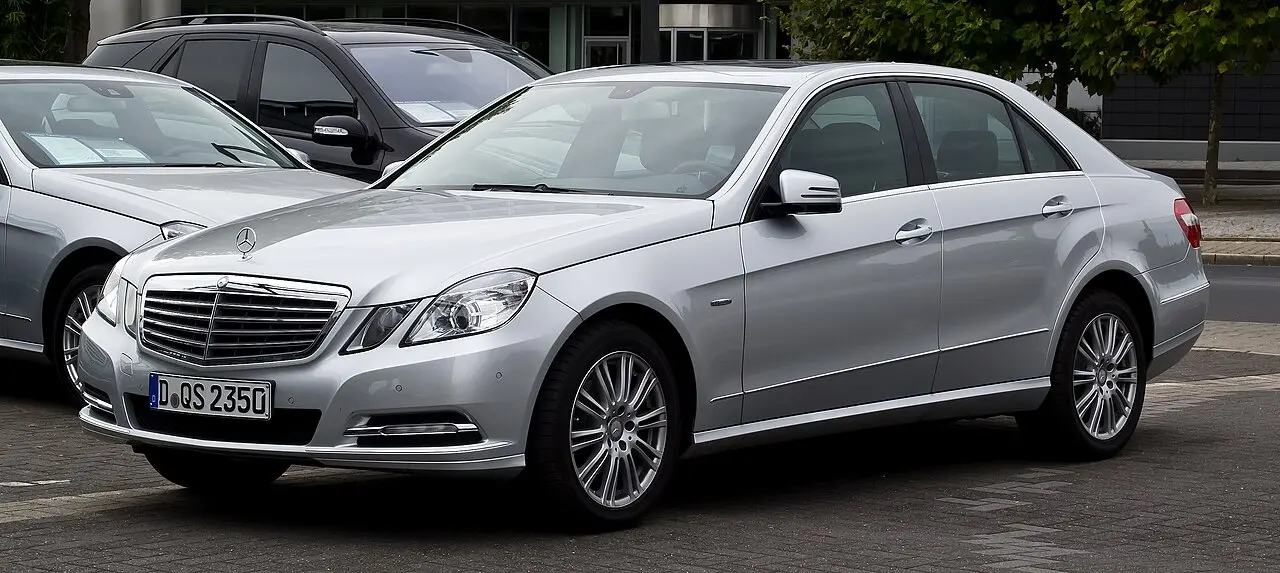
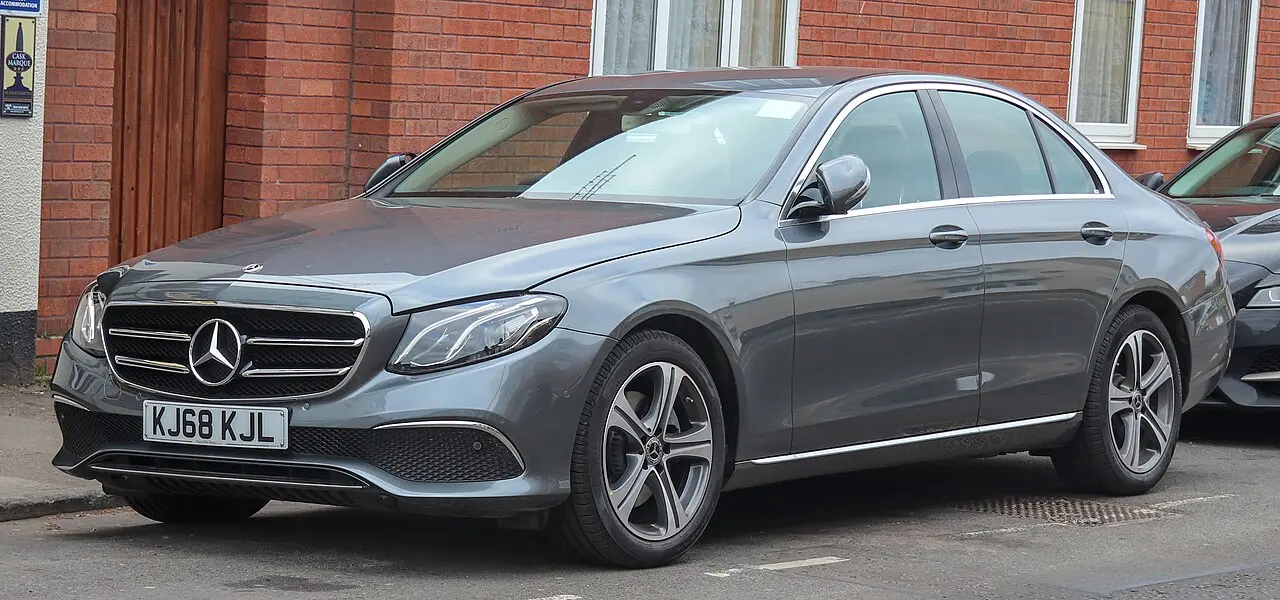
The official data lists 2803 versions of the Mercedes-Benz E-Class (1994–2027), in the European Union, the United Kingdom, France, the United States, and Canada. Each market publishes its own figures, measured on its own test procedure.
At a glance
Years in the data
1994–2027
Markets
European Union, United Kingdom, France, United States, Canada
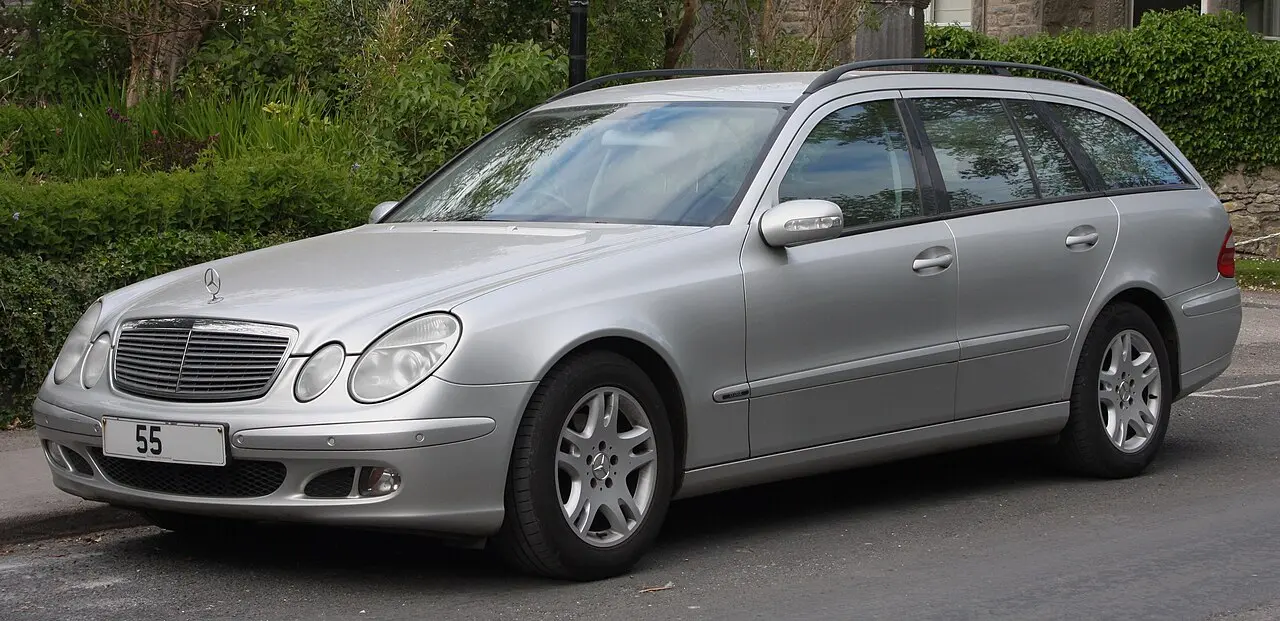
The E-Class is Mercedes-Benz’s upper-mid-size executive car, with saloon and estate versions suited to everyday travel and longer journeys. Its history also includes coupés, convertibles and other body styles. It occupies the space between the C-Class and S-Class in the traditional Mercedes-Benz passenger-car line-up.
The E-Class name was applied to the W124 series. The model’s lineage reaches further back, through earlier Mercedes-Benz cars in the same class.
E-Class generations
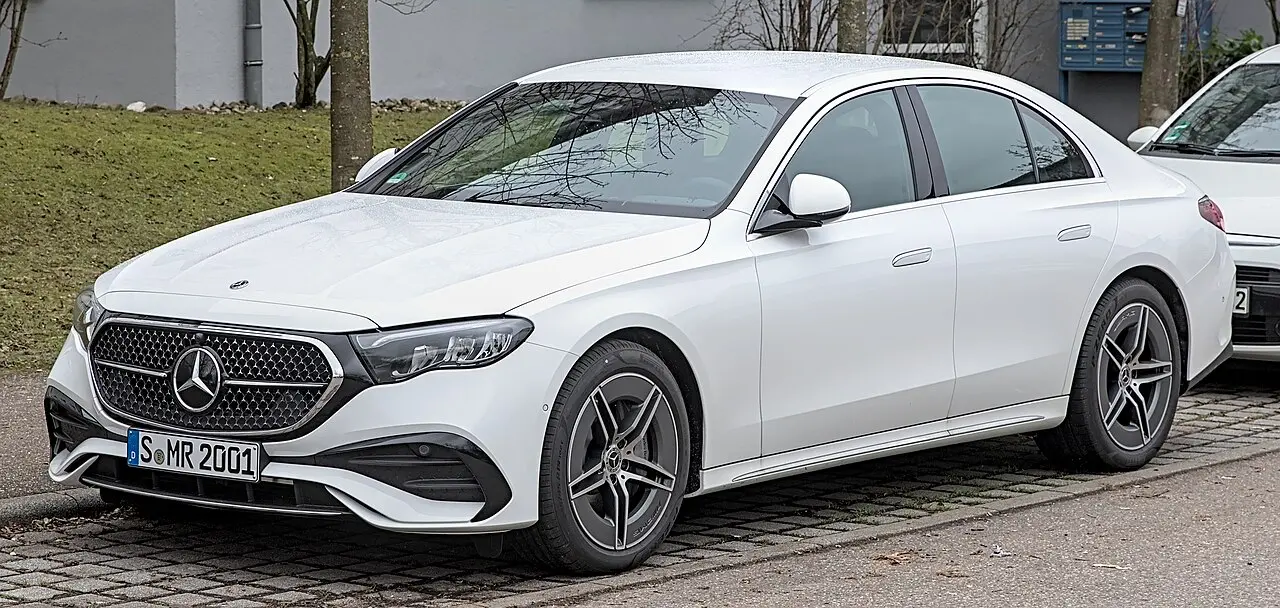
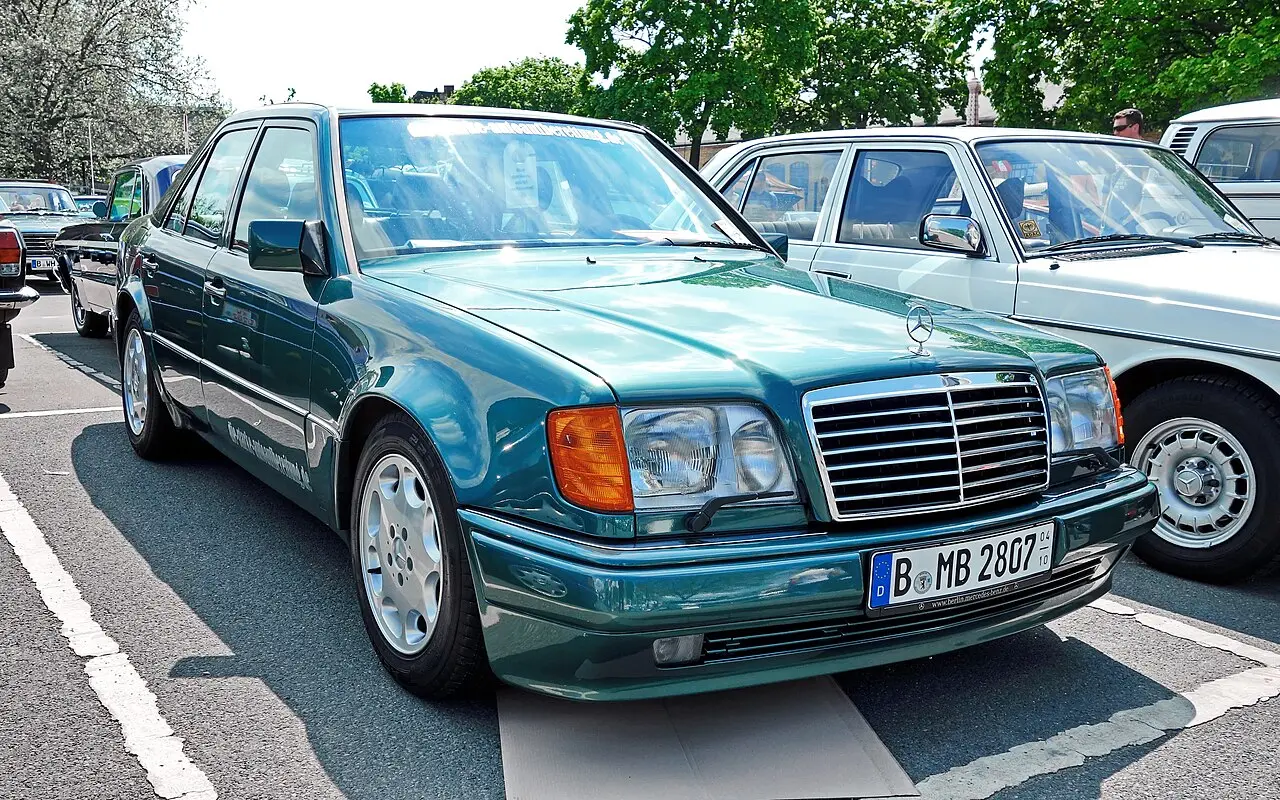
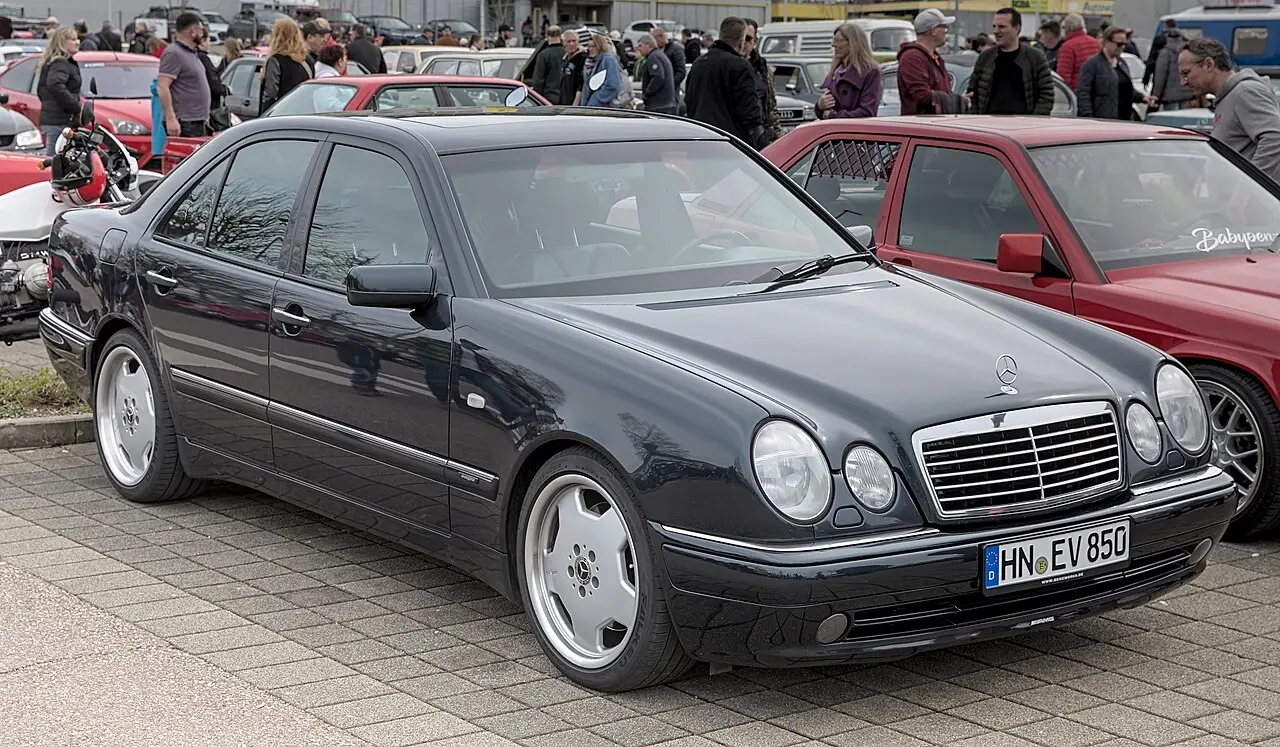
The generations are W124 (1994–1995), W210 (1995–2002), W211 (2003–2009), W212 (2010–2016), W213 (2017–2023) and W214 (2024–today). The W124 was the first to carry the E-Class name. The W210 introduced a distinctive four-headlamp front design; later generations brought updated styling, assistance systems and powertrain choices. The W212 family also included coupé and convertible versions, while the W213 added an All-Terrain estate variant.
Related body styles sometimes used different series codes and had different sales periods, so they did not necessarily run throughout each generation.
Engines, power and official consumption
In the European Union, E-Class engines range from 1.6 L to 5.5 L and power from 60 kW (82 PS) to 450 kW (612 PS). Petrol, diesel, hybrid and plug-in hybrid versions are among the types recorded. The lowest listed EU consumption for petrol, diesel and hybrid versions is 4.9 L/100 km on WLTP. For plug-in hybrids, it is 0.6 L/100 km on WLTP, a weighted figure that assumes some driving is electric.
The UK’s lowest listed figures are 3.9 L/100 km for petrol, diesel and hybrid versions and 2.1 L/100 km for plug-in hybrids, both on NEDC. France lists 3.8 L/100 km on NEDC for non-plug-in versions and 1.1 L/100 km on WLTP for plug-in hybrids. In the USA, the lowest listed figure is 8.4 L/100 km on EPA testing, with a best combined rating of 28 MPG. Canada’s lowest listed figure is 7.2 L/100 km on the 5-cycle test. WLTP and NEDC in Europe, EPA in the USA, and Canada’s 5-cycle procedure differ, so results across these markets are not directly comparable.
Where is the E-Class sold?
The E-Class is recorded in the European Union, the United Kingdom, France, the United States and Canada. EU registrations total 2,457,134. European versions include natural gas and LPG entries as well as petrol, diesel and electrified options.
New cars registered in the EU (plus Norway and Iceland), from the European Environment Agency. Figures on the NEDC procedure until 2020 and on WLTP from 2021; versions are grouped by engine and power, with their number of registrations.
Years and version
Engine
Power
Fuel
Consumption (combined)
CO₂
Electric range
EU registrations
2025
2.0 L
145 kW (197 PS)
Hybrid
5.0 L/100 km WLTP
131 g/km
–
11,630
2025
2.0 L
145 kW (197 PS)
Plug-in hybrid
1.0 L/100 km WLTP20.1 kWh/100 km WLTP
23 g/km
103 km
10,600
2025
2.0 L
150 kW (204 PS)
Plug-in hybrid
1.1 L/100 km WLTP19.2 kWh/100 km WLTP
25 g/km
109 km
5,934
2025
2.0 L
150 kW (204 PS)
Hybrid
6.7 L/100 km WLTP
153 g/km
–
4,304
2025
3.0 L
330 kW (449 PS)
Plug-in hybrid
1.6 L/100 km WLTP23.8 kWh/100 km WLTP
39 g/km
94 km
3,581
2025
3.0 L
270 kW (367 PS)
Hybrid
6.2 L/100 km WLTP
164 g/km
–
2,714
2025
2.0 L
120 kW (163 PS)
Hybrid
4.9 L/100 km WLTP
128 g/km
–
1,140
2025
3.0 L
280 kW (381 PS)
Hybrid
7.9 L/100 km WLTP
180 g/km
–
826
2025
2.0 L
145 kW (197 PS)
Diesel
4.9 L/100 km WLTP
130 g/km
–
694
2025
2.0 L
185 kW (252 PS)
Plug-in hybrid
1.1 L/100 km WLTP20.0 kWh/100 km WLTP
32 g/km
103 km
521
2025
3.0 L
330 kW (449 PS)
Plug-in hybrid
1.2 L/100 km WLTP25.7 kWh/100 km WLTP
30 g/km
95 km
174
2025
2.0 L
150 kW (204 PS)
Petrol
6.6 L/100 km WLTP
149 g/km
–
156
2025
3.0 L
270 kW (367 PS)
Diesel
6.2 L/100 km WLTP
161 g/km
–
57
2025
3.0 L
280 kW (381 PS)
Hybrid
7.9 L/100 km WLTP
181 g/km
–
40
2025
Electric motor
490 kW (666 PS)
Electric
25.6 kWh/100 km WLTP
0 g/km
–
28
2025
3.0 L
–
Petrol
5.8 L/100 km WLTP
175 g/km
–
22
2025
2.0 L
190 kW (258 PS)
Hybrid
–
261 g/km
–
13
2025
Electric motor
290 kW (394 PS)
Electric
25.6 kWh/100 km WLTP
0 g/km
–
12
2025
3.0 L
280 kW (381 PS)
Plug-in hybrid
7.7 L/100 km WLTP
175 g/km
–
10
2024
2.0 L
145 kW (197 PS)
Hybrid
5.1 L/100 km WLTP
133 g/km
–
11,569
2024
2.0 L
145 kW (197 PS)
Plug-in hybrid
0.6 L/100 km WLTP21.8 kWh/100 km WLTP
15 g/km
100 km
10,549
2024
2.0 L
150 kW (204 PS)
Plug-in hybrid
0.6 L/100 km WLTP20.7 kWh/100 km WLTP
15 g/km
110 km
7,773
2024
2.0 L
150 kW (204 PS)
Hybrid
6.8 L/100 km WLTP
153 g/km
–
4,606
2024
3.0 L
270 kW (367 PS)
Hybrid
6.2 L/100 km WLTP
165 g/km
–
2,069
2024
3.0 L
280 kW (381 PS)
Hybrid
7.9 L/100 km WLTP
182 g/km
–
1,186
2024
3.0 L
330 kW (449 PS)
Plug-in hybrid
1.0 L/100 km WLTP25.5 kWh/100 km WLTP
31 g/km
93 km
1,180
2024
2.0 L
147 kW (200 PS)
Hybrid
5.2 L/100 km WLTP
138 g/km
–
1,007
2024
2.0 L
185 kW (252 PS)
Plug-in hybrid
0.7 L/100 km WLTP21.6 kWh/100 km WLTP
20 g/km
105 km
795
2024
2.0 L
143 kW (194 PS)
Plug-in hybrid
1.4 L/100 km WLTP21.2 kWh/100 km WLTP
37 g/km
51 km
270
2024
2.0 L
145 kW (197 PS)
Hybrid
7.8 L/100 km WLTP
179 g/km
–
241
2024
1.6 L
118 kW (160 PS)
Diesel
5.2 L/100 km WLTP
138 g/km
–
194
2024
2.0 L
143 kW (194 PS)
Diesel
5.8 L/100 km WLTP
155 g/km
–
140
2024
2.0 L
195 kW (265 PS)
Hybrid
6.3 L/100 km WLTP
165 g/km
–
108
2024
3.0 L
320 kW (435 PS)
Hybrid
9.6 L/100 km WLTP
217 g/km
–
106
2024
2.9 L
243 kW (330 PS)
Diesel
7.3 L/100 km WLTP
191 g/km
–
72
2024
3.0 L
330 kW (449 PS)
Plug-in hybrid
1.0 L/100 km WLTP25.4 kWh/100 km WLTP
22 g/km
94 km
69
2024
2.0 L
155 kW (211 PS)
Plug-in hybrid
1.7 L/100 km WLTP20.2 kWh/100 km WLTP
38 g/km
54 km
67
2024
2.0 L
120 kW (163 PS)
Hybrid
5.0 L/100 km WLTP
134 g/km
–
63
2024
3.0 L
270 kW (367 PS)
Hybrid
8.9 L/100 km WLTP
204 g/km
–
55
2024
4.0 L
450 kW (612 PS)
Petrol
12.3 L/100 km WLTP
279 g/km
–
53
2024
2.0 L
190 kW (258 PS)
Hybrid
8.0 L/100 km WLTP
181 g/km
–
47
2024
3.0 L
280 kW (381 PS)
Hybrid
7.9 L/100 km WLTP
182 g/km
–
23
United Kingdom 67 versions
New cars on sale in the UK, from the Vehicle Certification Agency. NEDC figures until 2018 and WLTP figures after; years are the editions a version appeared in.
Years and version
Engine
Power
Fuel
Gearbox
Consumption (combined)
CO₂
Electric range
2025–2026E 220 d
2.0 L
145 kW (197 PS)
Hybrid
9-speed automatic
4.9 L/100 km WLTP
129 g/km
–
2025–2026E 220 d
2.0 L
145 kW (197 PS)
Hybrid
9-speed automatic
5.6 L/100 km WLTP
146 g/km
–
2025–2026E 220 d
2.0 L
145 kW (197 PS)
Hybrid
9-speed automatic
4.7 L/100 km WLTP
123 g/km
–
2025–2026E 220 d
2.0 L
145 kW (197 PS)
Hybrid
9-speed automatic
5.4 L/100 km WLTP
141 g/km
–
2026E 220 d
2.0 L
145 kW (197 PS)
Hybrid
9-speed automatic
4.7 L/100 km WLTP
122 g/km
–
2025–2026E 300 de
2.0 L
230 kW (313 PS)
Plug-in hybrid
9-speed automatic
20.1 kWh/100 km WLTP
–
102 km
2025–2026E 300 de
2.0 L
230 kW (313 PS)
Plug-in hybrid
9-speed automatic
22.6 kWh/100 km WLTP
–
88 km
2025–2026E 300 de
2.0 L
230 kW (313 PS)
Plug-in hybrid
9-speed automatic
19.2 kWh/100 km WLTP
–
106 km
2025–2026E 300 de
2.0 L
230 kW (313 PS)
Plug-in hybrid
9-speed automatic
21.5 kWh/100 km WLTP
–
93 km
2026E 300 de
2.0 L
230 kW (313 PS)
Plug-in hybrid
9-speed automatic
15.0 kWh/100 km WLTP
–
102 km
2026E 300 de
2.0 L
230 kW (313 PS)
Plug-in hybrid
9-speed automatic
16.1 kWh/100 km WLTP
–
89 km
2026E 300 de
2.0 L
230 kW (313 PS)
Plug-in hybrid
9-speed automatic
14.6 kWh/100 km WLTP
–
107 km
2026E 300 de
2.0 L
230 kW (313 PS)
Plug-in hybrid
9-speed automatic
15.5 kWh/100 km WLTP
–
94 km
2025–2026E 200
2.0 L
150 kW (204 PS)
Hybrid
9-speed automatic
7.3 L/100 km WLTP
166 g/km
–
2025–2026E 200
2.0 L
150 kW (204 PS)
Hybrid
9-speed automatic
7.6 L/100 km WLTP
172 g/km
–
2025–2026E 200
2.0 L
150 kW (204 PS)
Hybrid
9-speed automatic
6.7 L/100 km WLTP
153 g/km
–
2025–2026E 200
2.0 L
150 kW (204 PS)
Hybrid
9-speed automatic
6.4 L/100 km WLTP
145 g/km
–
2026E 200
2.0 L
150 kW (204 PS)
Hybrid
9-speed automatic
7.5 L/100 km WLTP
171 g/km
–
2026E 200
2.0 L
150 kW (204 PS)
Hybrid
9-speed automatic
7.3 L/100 km WLTP
165 g/km
–
2025–2026E 300 e
2.0 L
230 kW (313 PS)
Plug-in hybrid
9-speed automatic
20.0 kWh/100 km WLTP
–
105 km
2025–2026E 300 e
2.0 L
230 kW (313 PS)
Plug-in hybrid
9-speed automatic
22.5 kWh/100 km WLTP
–
89 km
2025–2026E 300 e
2.0 L
230 kW (313 PS)
Plug-in hybrid
9-speed automatic
19.2 kWh/100 km WLTP
–
110 km
2025–2026E 300 e
2.0 L
230 kW (313 PS)
Plug-in hybrid
9-speed automatic
21.6 kWh/100 km WLTP
–
93 km
2026E 300 e
2.0 L
230 kW (313 PS)
Plug-in hybrid
9-speed automatic
15.0 kWh/100 km WLTP
–
105 km
2026E 300 e
2.0 L
230 kW (313 PS)
Plug-in hybrid
9-speed automatic
16.1 kWh/100 km WLTP
–
89 km
2026E 300 e
2.0 L
230 kW (313 PS)
Plug-in hybrid
9-speed automatic
14.6 kWh/100 km WLTP
–
110 km
2026E 300 e
2.0 L
230 kW (313 PS)
Plug-in hybrid
9-speed automatic
15.6 kWh/100 km WLTP
–
93 km
2025–2026E 450 d 4MATIC
3.0 L
270 kW (367 PS)
Hybrid
9-speed automatic
6.1 L/100 km WLTP
161 g/km
–
2025–2026E 450 d 4MATIC
3.0 L
270 kW (367 PS)
Hybrid
9-speed automatic
6.9 L/100 km WLTP
180 g/km
–
2025–2026E 450 d 4MATIC
3.0 L
270 kW (367 PS)
Hybrid
9-speed automatic
5.9 L/100 km WLTP
154 g/km
–
2025–2026E 450 d 4MATIC
3.0 L
270 kW (367 PS)
Hybrid
9-speed automatic
6.6 L/100 km WLTP
173 g/km
–
2026E 450 d 4MATIC
3.0 L
270 kW (367 PS)
Hybrid
9-speed automatic
6.1 L/100 km WLTP
159 g/km
–
2026E 450 d 4MATIC
3.0 L
270 kW (367 PS)
Hybrid
9-speed automatic
6.8 L/100 km WLTP
178 g/km
–
2026E 450 d 4MATIC
3.0 L
270 kW (367 PS)
Hybrid
9-speed automatic
5.8 L/100 km WLTP
152 g/km
–
2026E 450 d 4MATIC
3.0 L
270 kW (367 PS)
Hybrid
9-speed automatic
6.5 L/100 km WLTP
171 g/km
–
2025–2026AMG E 53 HYBRID 4MATIC+
3.0 L
330 kW (449 PS)
Plug-in hybrid
9-speed automatic
24.9 kWh/100 km WLTP
–
95 km
2025–2026AMG E 53 HYBRID 4MATIC+
3.0 L
330 kW (449 PS)
Plug-in hybrid
9-speed automatic
26.7 kWh/100 km WLTP
–
88 km
2025–2026AMG E 53 HYBRID 4MATIC+
3.0 L
330 kW (449 PS)
Plug-in hybrid
9-speed automatic
24.1 kWh/100 km WLTP
–
100 km
2025–2026AMG E 53 HYBRID 4MATIC+
3.0 L
330 kW (449 PS)
Plug-in hybrid
9-speed automatic
25.9 kWh/100 km WLTP
–
90 km
2026AMG E 53 HYBRID 4MATIC+
3.0 L
430 kW (585 PS)
Plug-in hybrid
9-speed automatic
17.8 kWh/100 km WLTP
–
94 km
2026AMG E 53 HYBRID 4MATIC+
3.0 L
430 kW (585 PS)
Plug-in hybrid
9-speed automatic
18.3 kWh/100 km WLTP
–
88 km
2026AMG E 53 HYBRID 4MATIC+
3.0 L
430 kW (585 PS)
Plug-in hybrid
9-speed automatic
17.5 kWh/100 km WLTP
–
99 km
2026AMG E 53 HYBRID 4MATIC+
3.0 L
430 kW (585 PS)
Plug-in hybrid
9-speed automatic
18.0 kWh/100 km WLTP
–
90 km
2024E 220 d
2.0 L
197 kW (268 PS)
Hybrid
9-speed automatic
4.7 L/100 km WLTP
125 g/km
–
2024E 220 d
2.0 L
197 kW (268 PS)
Hybrid
9-speed automatic
5.0 L/100 km WLTP
131 g/km
–
2024E 220 d
2.0 L
197 kW (268 PS)
Hybrid
9-speed automatic
5.5 L/100 km WLTP
143 g/km
–
2024E 220 d
2.0 L
197 kW (268 PS)
Hybrid
9-speed automatic
5.6 L/100 km WLTP
148 g/km
–
2024E 300 de
2.0 L
313 kW (426 PS)
Plug-in hybrid
9-speed automatic
22.7 kWh/100 km WLTP
–
88 km
2024E 300 de
2.0 L
313 kW (426 PS)
Plug-in hybrid
9-speed automatic
21.6 kWh/100 km WLTP
–
93 km
2024E 300 de
2.0 L
313 kW (426 PS)
Plug-in hybrid
9-speed automatic
20.1 kWh/100 km WLTP
–
102 km
2024E 300 de
2.0 L
313 kW (426 PS)
Plug-in hybrid
9-speed automatic
19.2 kWh/100 km WLTP
–
106 km
2024E 200
2.0 L
204 kW (277 PS)
Hybrid
9-speed automatic
6.3 L/100 km WLTP
144 g/km
–
2024E 200
2.0 L
204 kW (277 PS)
Hybrid
9-speed automatic
6.7 L/100 km WLTP
152 g/km
–
2024E 200
2.0 L
204 kW (277 PS)
Hybrid
9-speed automatic
7.3 L/100 km WLTP
166 g/km
–
2024E 200
2.0 L
204 kW (277 PS)
Hybrid
9-speed automatic
7.6 L/100 km WLTP
172 g/km
–
2024E 300 e
2.0 L
313 kW (426 PS)
Plug-in hybrid
9-speed automatic
22.5 kWh/100 km WLTP
–
89 km
2024E 300 e
2.0 L
313 kW (426 PS)
Plug-in hybrid
9-speed automatic
21.7 kWh/100 km WLTP
–
93 km
2024E 300 e
2.0 L
313 kW (426 PS)
Plug-in hybrid
9-speed automatic
20.0 kWh/100 km WLTP
–
105 km
2024E 300 e
2.0 L
313 kW (426 PS)
Plug-in hybrid
9-speed automatic
19.2 kWh/100 km WLTP
–
110 km
2024E 450 d 4MATIC
3.0 L
367 kW (499 PS)
Diesel
9-speed automatic
5.9 L/100 km WLTP
154 g/km
–
2024E 450 d 4MATIC
3.0 L
367 kW (499 PS)
Diesel
9-speed automatic
6.1 L/100 km WLTP
161 g/km
–
2024E 450 d 4MATIC
3.0 L
367 kW (499 PS)
Diesel
9-speed automatic
6.6 L/100 km WLTP
173 g/km
–
2024E 450 d 4MATIC
3.0 L
367 kW (499 PS)
Diesel
9-speed automatic
6.9 L/100 km WLTP
180 g/km
–
2024Mercedes-AMG E 53 HYBRID 4MATIC+
3.0 L
449 kW (610 PS)
Plug-in hybrid
9-speed automatic
26.7 kWh/100 km WLTP
–
87 km
2024Mercedes-AMG E 53 HYBRID 4MATIC+
3.0 L
449 kW (610 PS)
Plug-in hybrid
9-speed automatic
25.9 kWh/100 km WLTP
–
90 km
2024Mercedes-AMG E 53 HYBRID 4MATIC+
3.0 L
449 kW (610 PS)
Plug-in hybrid
9-speed automatic
25.0 kWh/100 km WLTP
–
95 km
2024Mercedes-AMG E 53 HYBRID 4MATIC+
3.0 L
449 kW (610 PS)
Plug-in hybrid
9-speed automatic
24.1 kWh/100 km WLTP
–
100 km
France 7 versions
New cars on sale in France, from ADEME Car Labelling. NEDC figures until 2015, WLTP figures in the current catalogue.
Years and version
Engine
Power
Fuel
Gearbox
Consumption (combined)
CO₂
Electric range
2026E 300 de
2.0 L
143 kW (194 PS)
Plug-in hybrid
9-speed automatic
1.1 L/100 km WLTP15.5 kWh/100 km WLTP
29 g/km
57 km
2026E 300 e
2.0 L
155 kW (211 PS)
Plug-in hybrid
9-speed automatic
1.3 L/100 km WLTP14.7 kWh/100 km WLTP
30 g/km
60 km
2026E 220 d 4MATIC All-Terrain
2.0 L
147 kW (200 PS)
Hybrid
9-speed automatic
5.7 L/100 km WLTP
150 g/km
–
2026E 220 d
2.0 L
147 kW (200 PS)
Hybrid
9-speed automatic
5.4 L/100 km WLTP
141 g/km
–
2026E 220 d
2.0 L
147 kW (200 PS)
Hybrid
9-speed automatic
4.7 L/100 km WLTP
124 g/km
–
2026E 400 d 4MATIC
2.9 L
243 kW (330 PS)
Diesel
9-speed automatic
6.5 L/100 km WLTP
169 g/km
–
2026AMG E 53 4MATIC+
3.0 L
320 kW (435 PS)
Hybrid
9-speed automatic
9.0 L/100 km WLTP
204 g/km
–
United States 7 versions
Model years sold in the USA, from the EPA and the Department of Energy (fueleconomy.gov). MPG on the EPA test; litres per 100 km = 235.215 ÷ MPG.
Years and version
Engine
Fuel
Gearbox
Drive
Consumption (combined)
CO₂
2024–2027SIDI; Mild Hybrid
2.0 L
Hybrid
9-speed automatic
All-wheel drive
27 MPG (8.7 L/100 km) EPA
203 g/km
2025–2027SIDI; Mild Hybrid
2.0 L
Hybrid
9-speed automatic
Rear-wheel drive
28 MPG (8.4 L/100 km) EPA
196 g/km
2024–2027SIDI; Mild Hybrid
3.0 L
Hybrid
9-speed automatic
All-wheel drive
25 MPG (9.4 L/100 km) EPA
221 g/km
2024–2027SIDI; Mild Hybrid
3.0 L
Hybrid
9-speed automatic
All-wheel drive
25 MPG (9.4 L/100 km) EPA
218 g/km
2026SIDI; PHEV
3.0 L
Plug-in hybrid
9-speed automatic
All-wheel drive
24 MPG (9.8 L/100 km) EPA
71 g/km
2026SIDI; PHEV
3.0 L
Plug-in hybrid
9-speed automatic
All-wheel drive
22 MPG (10.7 L/100 km) EPA
79 g/km
2025SIDI; PHEV
3.0 L
Plug-in hybrid
9-speed automatic
All-wheel drive
23 MPG (10.2 L/100 km) EPA
73 g/km
Canada 7 versions
Model years sold in Canada, from Natural Resources Canada fuel consumption ratings (5-cycle test).
Years and version
Engine
Fuel
Gearbox
Consumption (combined)
CO₂
Electric range
2025–2026Mid-size
2.0 L
Petrol
9-speed automatic
8.7 L/100 km 5-cycle
203 g/km
–
2026Mid-size
3.0 L
Plug-in hybrid
9-speed automatic
10.0 L/100 km 5-cycle
71 g/km
71 km
2026Station wagon: Mid-size
3.0 L
Plug-in hybrid
9-speed automatic
10.5 L/100 km 5-cycle
79 g/km
66 km
2024–2026Mid-size
3.0 L
Petrol
9-speed automatic
9.4 L/100 km 5-cycle
221 g/km
–
2026Station wagon: Mid-size
3.0 L
Petrol
9-speed automatic
9.3 L/100 km 5-cycle
218 g/km
–
2025Mid-size
3.0 L
Plug-in hybrid
9-speed automatic
10.2 L/100 km 5-cycle
73 g/km
69 km
2024Mid-size
2.0 L
Petrol
9-speed automatic
8.6 L/100 km 5-cycle
203 g/km
–
Official figures are measured on standard test procedures and differ between markets. Your consumption depends on how, where and in what conditions you drive.