Mercedes-Benz

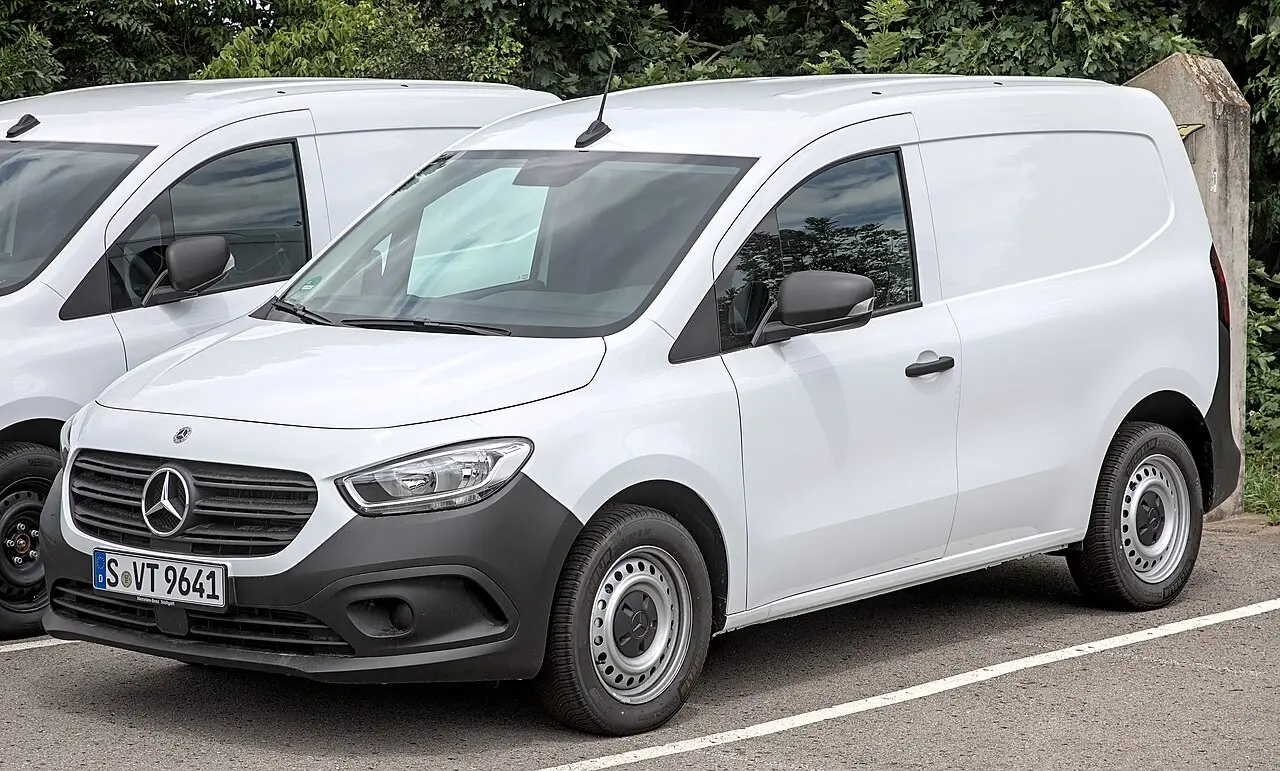
Mercedes-Benz Citan

Mercedes-Benz Citan
Photo: Alexander Migl / Wikimedia Commons · CC BY-SA 4.0

The official data lists 113 versions of the Mercedes-Benz Citan (2012–2025), in the European Union and France. Each market publishes its own figures, measured on its own test procedure.

At a glance

Years in the data
2012–2025
Markets
European Union, France
Engines
1.2 L to 1.5 L
Power
51 kW (69 PS) to 96 kW (131 PS)
Fuels
Diesel, Petrol, Electric
Lowest consumption (France)
4.3 L/100 km (NEDC)
Lowest consumption (European Union)
5.2 L/100 km (WLTP)
New registrations in the EU
109,699

What is the Mercedes-Benz Citan?

The Citan is Mercedes-Benz’s small van, suited to urban deliveries and other light commercial work. Passenger versions offer a compact option with flexible cabin space. It sits below the Vito and Sprinter in the Mercedes-Benz Vans range.

Generations and design

The first Citan generation, W415, ran from 2012 to 2021. The W420 followed from 2022, continuing the model’s role as a small van with commercial and passenger versions.

Engines and power

EU listings include petrol and diesel engines from 1.2 L to 1.5 L, as well as electric and other entries. Across those listings, power ranges from 51 kW (69 PS) to 99 kW (135 PS). French listings for 2013–2015 show petrol and diesel versions from 55 kW (75 PS) to 84 kW (114 PS). A 1.5 L diesel rated at 81 kW (110 PS) was among the most registered EU configurations.

Fuel consumption and CO₂

The lowest listed figure is 5.2 L/100 km on WLTP in EU listings. French NEDC listings give 4.3 L/100 km. These figures apply to petrol, diesel or hybrid categories, rather than the electric Citan. EU registration figures total 109,699 over 2012–2025. Europe uses WLTP or older NEDC, while the USA uses EPA testing and Canada uses the 5-cycle procedure; each method has its own test conditions.

Where was the Citan sold?

The Citan appears in EU and French market listings. EU figures span 2012–2025, while French listings cover 2013–2015. As the smallest van in the Mercedes-Benz Vans range, it serves customers looking for a more compact work or passenger vehicle.

Questions and answers

What type of vehicle is the Mercedes-Benz Citan?

It is a small van available in commercial and passenger-oriented forms.

What are the Citan generations?

The first generation is W415, which ran from 2012 to 2021. W420 followed from 2022.

What engines and power figures are listed?

EU listings include 1.2 L to 1.5 L petrol and diesel engines, plus electric and other entries, with power from 51 kW (69 PS) to 99 kW (135 PS).

What is the lowest listed fuel consumption?

EU listings show 5.2 L/100 km on WLTP; French listings show 4.3 L/100 km on NEDC.
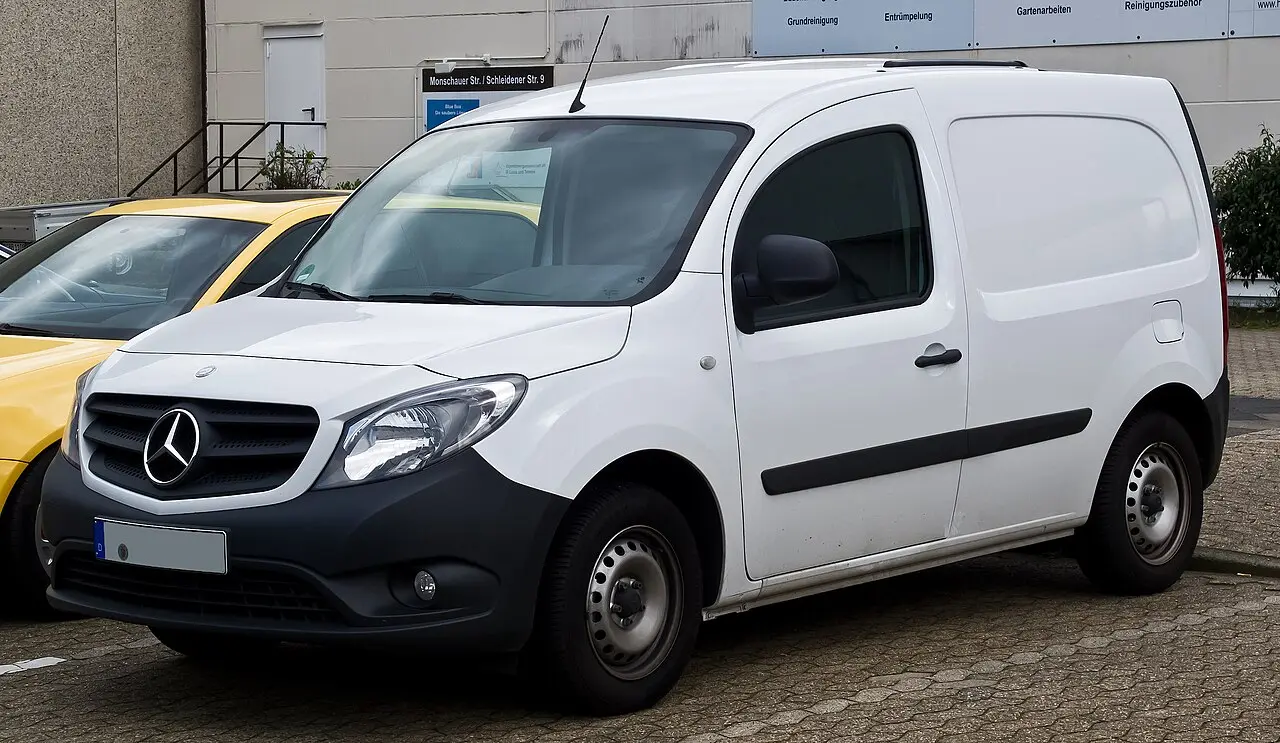
Citan W415 (2012–2021)

Mercedes-Benz Citan W415
Photo: M 93 / Wikimedia Commons · CC BY-SA 3.0 de

Model codes: W415 · Sold in: European Union and France · References: wilcodirect.co.uk

Show all 91 versions

Citan W420 (since 2022)

Mercedes-Benz Citan W420
Photo: Alexander Migl / Wikimedia Commons · CC BY-SA 4.0

Model codes: W420 · Sold in: European Union and France · References: klasseshop.nl

European Union 22 versions

New cars registered in the EU (plus Norway and Iceland), from the European Environment Agency. Figures on the NEDC procedure until 2020 and on WLTP from 2021; versions are grouped by engine and power, with their number of registrations.

Years and versionEnginePowerFuelConsumption (combined)CO₂Electric rangeEU registrations
20251.5 L70 kW (95 PS)Diesel5.2 L/100 km WLTP137 g/km–1,067
20251.5 L85 kW (116 PS)Diesel5.4 L/100 km WLTP141 g/km–571
20251.3 L96 kW (131 PS)Petrol7.1 L/100 km WLTP160 g/km–536
2025Electric motor90 kW (122 PS)Electric20.1 kWh/100 km WLTP0 g/km272 km504
20251.3 L75 kW (102 PS)Petrol6.6 L/100 km WLTP156 g/km–165
2025Electric motor51 kW (69 PS)Electric19.6 kWh/100 km WLTP0 g/km276 km86
20241.5 L85 kW (116 PS)Diesel5.4 L/100 km WLTP142 g/km–3,066
20241.3 L96 kW (131 PS)Petrol7.0 L/100 km WLTP158 g/km–2,340
20241.5 L70 kW (95 PS)Diesel5.2 L/100 km WLTP138 g/km–1,390
2024Electric motor90 kW (122 PS)Electric19.9 kWh/100 km WLTP0 g/km272 km878
20241.3 L75 kW (102 PS)Petrol6.9 L/100 km WLTP157 g/km–243
2024Electric motor51 kW (69 PS)Electric19.7 kWh/100 km WLTP0 g/km275 km95
20231.5 L85 kW (116 PS)Diesel5.6 L/100 km WLTP147 g/km–4,888
20231.3 L96 kW (131 PS)Petrol6.9 L/100 km WLTP157 g/km–3,004
20231.5 L70 kW (95 PS)Diesel5.4 L/100 km WLTP141 g/km–2,909
2023Electric motor90 kW (122 PS)Electric19.9 kWh/100 km WLTP0 g/km272 km573
20231.3 L75 kW (102 PS)Petrol6.9 L/100 km WLTP156 g/km–472
2023Electric motor51 kW (69 PS)Electric19.6 kWh/100 km WLTP0 g/km275 km128
20221.5 L85 kW (116 PS)Diesel5.6 L/100 km WLTP149 g/km–2,734
20221.5 L70 kW (95 PS)Diesel5.3 L/100 km WLTP141 g/km–2,487
20221.3 L96 kW (131 PS)Petrol6.8 L/100 km WLTP155 g/km–857
20221.3 L75 kW (102 PS)Petrol6.9 L/100 km WLTP156 g/km–276

Official figures are measured on standard test procedures and differ between markets. Your consumption depends on how, where and in what conditions you drive.