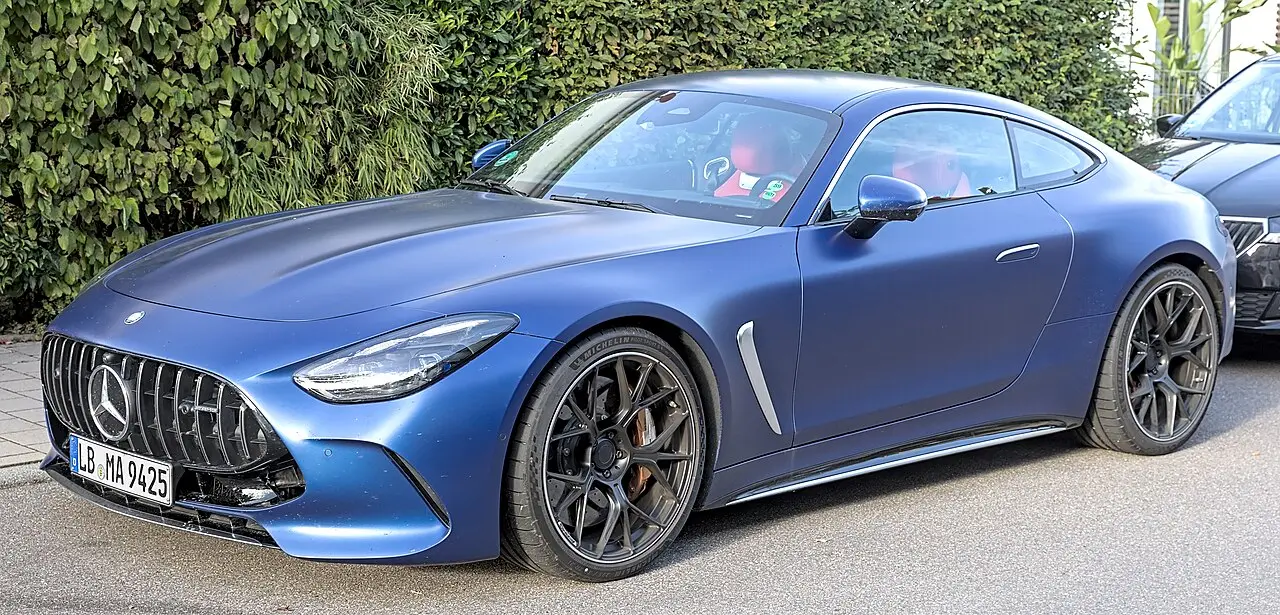
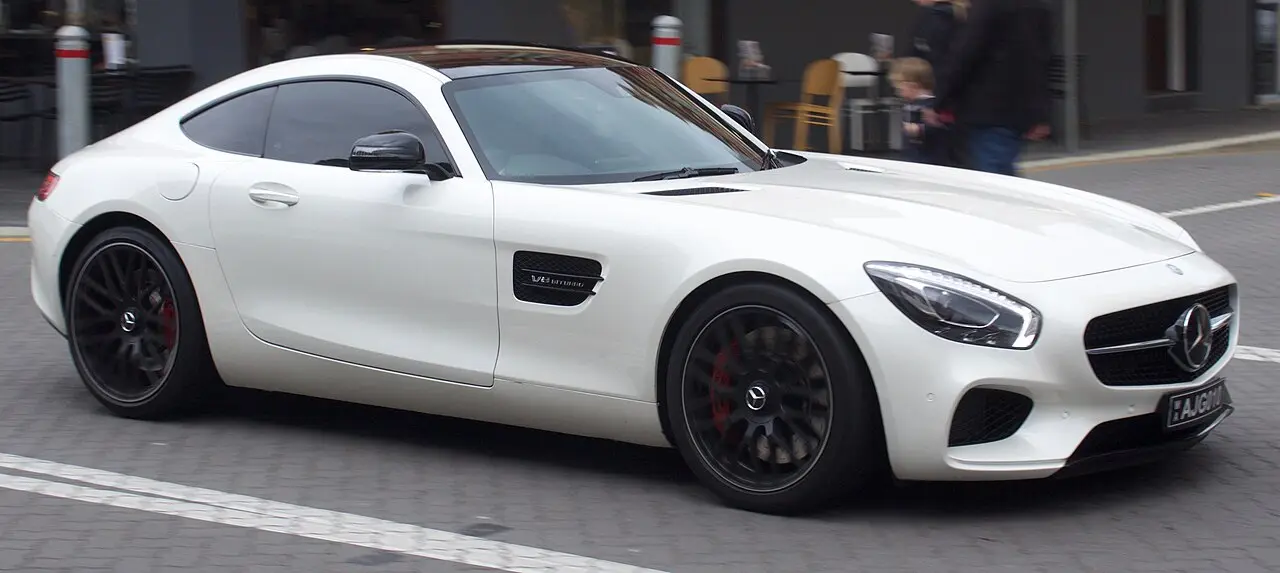
The official data lists 224 versions of the Mercedes-Benz AMG GT (2014–2027), in the European Union, the United Kingdom, France, the United States, and Canada. Each market publishes its own figures, measured on its own test procedure.
At a glance
Years in the data
2014–2027
Markets
European Union, United Kingdom, France, United States, Canada
Engines
2.0 L to 4.0 L
Power
270 kW (367 PS) to 600 kW (816 PS)
Fuels
Petrol, Hybrid, Plug-in hybrid, Electric
Lowest consumption (France)
9.3 L/100 km (NEDC)
Lowest consumption (United Kingdom)
9.3 L/100 km (NEDC)
Lowest consumption (European Union)
9.4 L/100 km (WLTP)
Plug-in hybrid, weighted (European Union)
7.9 L/100 km (WLTP)
Plug-in hybrid, weighted (United States)
12.4 L/100 km (EPA)
New registrations in the EU
51,685
What is the Mercedes-AMG GT?
The Mercedes-AMG GT is a sports car developed by Mercedes-AMG, the performance division of Mercedes-Benz. The first generation came as a low two-door coupé and roadster, with a long bonnet and a cabin set toward the rear. It occupies the sporting end of the Mercedes range, with a driver-focused layout and powerful engines.
The first generation, C190, ran from 2015 to 2023. The C192 followed in 2023. The model’s range has broadened over time: market figures include petrol, hybrid, plug-in hybrid and electric categories.
Engines and power
The EU range spans 3.0- to 4.0-litre engines and 270 kW (367 PS) to 537 kW (730 PS), with petrol, hybrid, plug-in hybrid and electric categories represented. In the UK, the listed engine range is 2.0 to 4.0 litres and power runs from 310 kW (421 PS) to 860 kW (1,169 PS). US figures cover 2.0- to 4.0-litre engines, and Canada’s range also begins at 2.0 litres.
Four-litre petrol versions feature among the leading EU registration entries. The 375 kW (510 PS) version recorded 6,808 registrations in 2015–2016. Other leading entries include a 470 kW (639 PS) version and a 410 kW (557 PS) version.
Fuel consumption
The lowest listed EU consumption is 9.4 L/100 km on WLTP for petrol, diesel or hybrid versions. The plug-in hybrid weighted figure is 7.9 L/100 km, assuming some driving is electric. In the UK, the lowest listed figure is 9.3 L/100 km on NEDC; France also lists 9.3 L/100 km on NEDC.
The US EPA figure is 10.7 L/100 km for petrol, diesel or hybrid versions, with a best combined rating of 22 MPG. The plug-in hybrid weighted figure is 12.4 L/100 km. Canada lists 10.8 L/100 km on the NRCan 5-cycle test and 13.1 L/100 km for its plug-in hybrid weighted figure. WLTP and NEDC procedures in Europe, the EPA test in the US and Canada’s 5-cycle procedure differ, so market figures should be read within their own test systems.
Where was the AMG GT sold?
EU registration figures cover 2014–2025 and UK figures cover 2015–2026. France’s listed figures cover 2015, while US EPA and Canadian NRCan figures cover 2016–2027 and 2016–2026, respectively.
Questions and answers
What are the Mercedes-AMG GT generations?
The first generation is C190, from 2015 to 2023. The second is C192, beginning in 2023.
What is the AMG GT’s lowest listed fuel consumption in the EU?
It is 9.4 L/100 km on the WLTP test for petrol, diesel or hybrid versions. The plug-in hybrid weighted figure is 7.9 L/100 km and assumes some electric driving.
Does the AMG GT have plug-in hybrid versions?
Plug-in hybrid versions appear in the EU, UK, US and Canadian market figures.
New cars registered in the EU (plus Norway and Iceland), from the European Environment Agency. Figures on the NEDC procedure until 2020 and on WLTP from 2021; versions are grouped by engine and power, with their number of registrations.
Years and version
Engine
Power
Fuel
Consumption (combined)
CO₂
Electric range
EU registrations
2024–2025
4.0 L
430 kW (585 PS)
Petrol
14.0 L/100 km WLTP
318 g/km
–
1,767
2024–2025
3.0 L
270 kW (367 PS)
Hybrid
9.8 L/100 km WLTP
223 g/km
–
417
2025
4.0 L
450 kW (612 PS)
Plug-in hybrid
8.6 L/100 km WLTP12.5 kWh/100 km WLTP
200 g/km
13 km
224
2025
2.0 L
310 kW (421 PS)
Hybrid
10.3 L/100 km WLTP
235 g/km
–
191
2025
4.0 L
450 kW (612 PS)
Petrol
14.0 L/100 km WLTP
319 g/km
–
167
2025
3.0 L
320 kW (435 PS)
Hybrid
9.9 L/100 km WLTP
224 g/km
–
129
2025
4.0 L
470 kW (639 PS)
Petrol
13.1 L/100 km WLTP
296 g/km
–
118
2025
4.0 L
470 kW (639 PS)
Plug-in hybrid
9.1 L/100 km WLTP13.1 kWh/100 km WLTP
214 g/km
18 km
98
2025
4.0 L
350 kW (476 PS)
Petrol
14.0 L/100 km WLTP
319 g/km
–
69
2025
Electric motor
350 kW (476 PS)
Electric
22.9 kWh/100 km WLTP
0 g/km
–
62
2025
Electric motor
190 kW (258 PS)
Electric
18.9 kWh/100 km WLTP
0 g/km
–
30
2025
Electric motor
180 kW (245 PS)
Electric
21.3 kWh/100 km WLTP
0 g/km
750 km
28
2025
3.0 L
270 kW (367 PS)
Hybrid
9.7 L/100 km WLTP
221 g/km
–
27
2025
4.0 L
450 kW (612 PS)
Hybrid
–
325 g/km
–
26
2025
Electric motor
230 kW (313 PS)
Electric
21.3 kWh/100 km WLTP
0 g/km
–
22
2025
Electric motor
490 kW (666 PS)
Electric
25.6 kWh/100 km WLTP
0 g/km
–
20
2025
3.0 L
320 kW (435 PS)
Hybrid
9.8 L/100 km WLTP
224 g/km
–
19
2025
Electric motor
440 kW (598 PS)
Electric
22.8 kWh/100 km WLTP
0 g/km
–
14
2025
Electric motor
300 kW (408 PS)
Electric
22.8 kWh/100 km WLTP
0 g/km
–
11
2024
4.0 L
470 kW (639 PS)
Plug-in hybrid
8.4 L/100 km WLTP31.4 kWh/100 km WLTP
196 g/km
12 km
278
2024
3.0 L
320 kW (435 PS)
Hybrid
9.8 L/100 km WLTP
223 g/km
–
259
2024
4.0 L
470 kW (639 PS)
Petrol
13.0 L/100 km WLTP
298 g/km
–
216
2024
4.0 L
450 kW (612 PS)
Plug-in hybrid
8.2 L/100 km WLTP36.9 kWh/100 km WLTP
205 g/km
13 km
76
2024
Electric motor
350 kW (476 PS)
Electric
22.8 kWh/100 km WLTP
0 g/km
–
58
2023–2024
4.0 L
537 kW (730 PS)
Petrol
12.8 L/100 km WLTP
292 g/km
–
44
2024
4.0 L
350 kW (476 PS)
Petrol
14.1 L/100 km WLTP
319 g/km
–
29
2024
2.0 L
310 kW (421 PS)
Hybrid
10.3 L/100 km WLTP
247 g/km
–
22
2024
2.0 L
280 kW (381 PS)
Hybrid
–
217 g/km
–
18
2024
4.0 L
450 kW (612 PS)
Petrol
14.0 L/100 km WLTP
323 g/km
–
16
2024
Electric motor
180 kW (245 PS)
Electric
21.3 kWh/100 km WLTP
0 g/km
–
15
2023
4.0 L
470 kW (639 PS)
Plug-in hybrid
7.9 L/100 km WLTP32.4 kWh/100 km WLTP
182 g/km
13 km
720
2023
3.0 L
270 kW (367 PS)
Hybrid
9.7 L/100 km WLTP
220 g/km
–
576
2023
3.0 L
320 kW (435 PS)
Hybrid
9.7 L/100 km WLTP
221 g/km
–
449
2023
4.0 L
470 kW (639 PS)
Petrol
13.3 L/100 km WLTP
303 g/km
–
244
2023
4.0 L
430 kW (585 PS)
Petrol
13.6 L/100 km WLTP
301 g/km
–
136
2023
4.0 L
450 kW (612 PS)
Plug-in hybrid
–
160 g/km
–
32
2023
2.0 L
280 kW (381 PS)
Hybrid
–
210 g/km
–
17
United Kingdom 14 versions
New cars on sale in the UK, from the Vehicle Certification Agency. NEDC figures until 2018 and WLTP figures after; years are the editions a version appeared in.
Years and version
Engine
Power
Fuel
Gearbox
Consumption (combined)
CO₂
Electric range
2026AMG GT 53
Electric motor
400 kW (544 PS)
Electric
–
18.5 kWh/100 km WLTP
0 g/km
685 km
2026AMG GT 55
Electric motor
600 kW (816 PS)
Electric
–
20.7 kWh/100 km WLTP
0 g/km
605 km
2026AMG GT 63
Electric motor
860 kW (1,169 PS)
Electric
–
20.9 kWh/100 km WLTP
0 g/km
601 km
2025–2026AMG GT 43
2.0 L
310 kW (421 PS)
Petrol
9-speed automatic
10.3 L/100 km WLTP
235 g/km
–
2025–2026AMG GT 55 4MATIC+
4.0 L
350 kW (476 PS)
Petrol
9-speed automatic
14.0 L/100 km WLTP
319 g/km
–
2025–2026AMG GT 63 4MATIC+
4.0 L
430 kW (585 PS)
Petrol
9-speed automatic
14.0 L/100 km WLTP
319 g/km
–
2025–2026AMG GT 63 PRO 4MATIC+
4.0 L
450 kW (612 PS)
Petrol
9-speed automatic
14.0 L/100 km WLTP
319 g/km
–
2025–2026AMG GT 63 S E PERFORMANCE
4.0 L
450 kW (612 PS)
Plug-in hybrid
9-speed automatic
5.3 kWh/100 km WLTP
–
11 km
2025–2026AMG GT 63 S 4MATIC+
4.0 L
470 kW (639 PS)
Petrol
9-speed automatic
12.6 L/100 km WLTP
286 g/km
–
2025–2026AMG GT 63 S 4MATIC+
4.0 L
470 kW (639 PS)
Petrol
9-speed automatic
13.3 L/100 km WLTP
301 g/km
–
2025–2026AMG GT 63 S E PERFORMANCE
4.0 L
470 kW (639 PS)
Plug-in hybrid
9-speed automatic
5.4 kWh/100 km WLTP
–
11 km
2026AMG GT 63 S E PERFORMANCE
4.0 L
600 kW (816 PS)
Plug-in hybrid
9-speed automatic
5.3 kWh/100 km WLTP
–
11 km
2024Mercedes-AMG GT 63 4MATIC+
4.0 L
585 kW (795 PS)
Petrol
9-speed automatic
14.1 L/100 km WLTP
319 g/km
–
2024Mercedes-AMG GT 63 S E PERFORMANCE
4.0 L
612 kW (832 PS)
Plug-in hybrid
9-speed automatic
12.6 kWh/100 km WLTP
–
11 km
United States 11 versions
Model years sold in the USA, from the EPA and the Department of Energy (fueleconomy.gov). MPG on the EPA test; litres per 100 km = 235.215 ÷ MPG.
Years and version
Engine
Fuel
Gearbox
Drive
Consumption (combined)
CO₂
2025–2027SIDI; Mild Hybrid
2.0 L
Hybrid
9-speed automatic
Rear-wheel drive
22 MPG (10.7 L/100 km) EPA
252 g/km
2026–2027SIDI
4.0 L
Petrol
9-speed automatic
All-wheel drive
16 MPG (14.7 L/100 km) EPA
347 g/km
2026SIDI; Mild Hybrid
3.0 L
Hybrid
9-speed automatic
All-wheel drive
21 MPG (11.2 L/100 km) EPA
262 g/km
2024–2026SIDI
4.0 L
Petrol
9-speed automatic
All-wheel drive
17 MPG (13.8 L/100 km) EPA
318 g/km
2025SIDI; Mild Hybrid
3.0 L
Hybrid
9-speed automatic
All-wheel drive
21 MPG (11.2 L/100 km) EPA
263 g/km
2025SIDI
4.0 L
Petrol
9-speed automatic
All-wheel drive
14 MPG (16.8 L/100 km) EPA
387 g/km
2025SIDI; PHEV
4.0 L
Plug-in hybrid
9-speed automatic
All-wheel drive
19 MPG (12.4 L/100 km) EPA
247 g/km
2025SIDI; PHEV
4.0 L
Plug-in hybrid
9-speed automatic
All-wheel drive
18 MPG (13.1 L/100 km) EPA
262 g/km
2023–2024SIDI; Mild Hybrid
3.0 L
Hybrid
9-speed automatic
All-wheel drive
21 MPG (11.2 L/100 km) EPA
262 g/km
2024SIDI
4.0 L
Petrol
9-speed automatic
All-wheel drive
16 MPG (14.7 L/100 km) EPA
353 g/km
2023SIDI
4.0 L
Petrol
9-speed automatic
All-wheel drive
17 MPG (13.8 L/100 km) EPA
329 g/km
Canada 11 versions
Model years sold in Canada, from Natural Resources Canada fuel consumption ratings (5-cycle test).
Years and version
Engine
Fuel
Gearbox
Consumption (combined)
CO₂
Electric range
2026Subcompact
2.0 L
Petrol
9-speed automatic
10.8 L/100 km 5-cycle
252 g/km
–
2025–2026Compact · Station wagon: Small
3.0 L
Petrol
9-speed automatic
11.3 L/100 km 5-cycle
263 g/km
–
2025–2026Compact
4.0 L
Plug-in hybrid
9-speed automated manual
13.3 L/100 km 5-cycle
262 g/km
16 km
2024–2026Compact · Station wagon: Small
4.0 L
Petrol
9-speed automatic
13.5 L/100 km 5-cycle
318 g/km
–
2026Subcompact
4.0 L
Petrol
9-speed automatic
14.8 L/100 km 5-cycle
346 g/km
–
2026Subcompact
4.0 L
Petrol
9-speed automatic
15.1 L/100 km 5-cycle
346 g/km
–
2025Subcompact
4.0 L
Petrol
9-speed automatic
16.5 L/100 km 5-cycle
387 g/km
–
2023–2024Compact
3.0 L
Petrol
9-speed automatic
11.2 L/100 km 5-cycle
262 g/km
–
2024Compact
4.0 L
Plug-in hybrid
9-speed automated manual
13.1 L/100 km 5-cycle
259 g/km
18 km
2024Subcompact
4.0 L
Petrol
9-speed automatic
15.0 L/100 km 5-cycle
353 g/km
–
2023Compact
4.0 L
Petrol
9-speed automatic
14.0 L/100 km 5-cycle
329 g/km
–
Versions outside these generations
European Union 1 version
New cars registered in the EU (plus Norway and Iceland), from the European Environment Agency. Figures on the NEDC procedure until 2020 and on WLTP from 2021; versions are grouped by engine and power, with their number of registrations.
Official figures are measured on standard test procedures and differ between markets. Your consumption depends on how, where and in what conditions you drive.