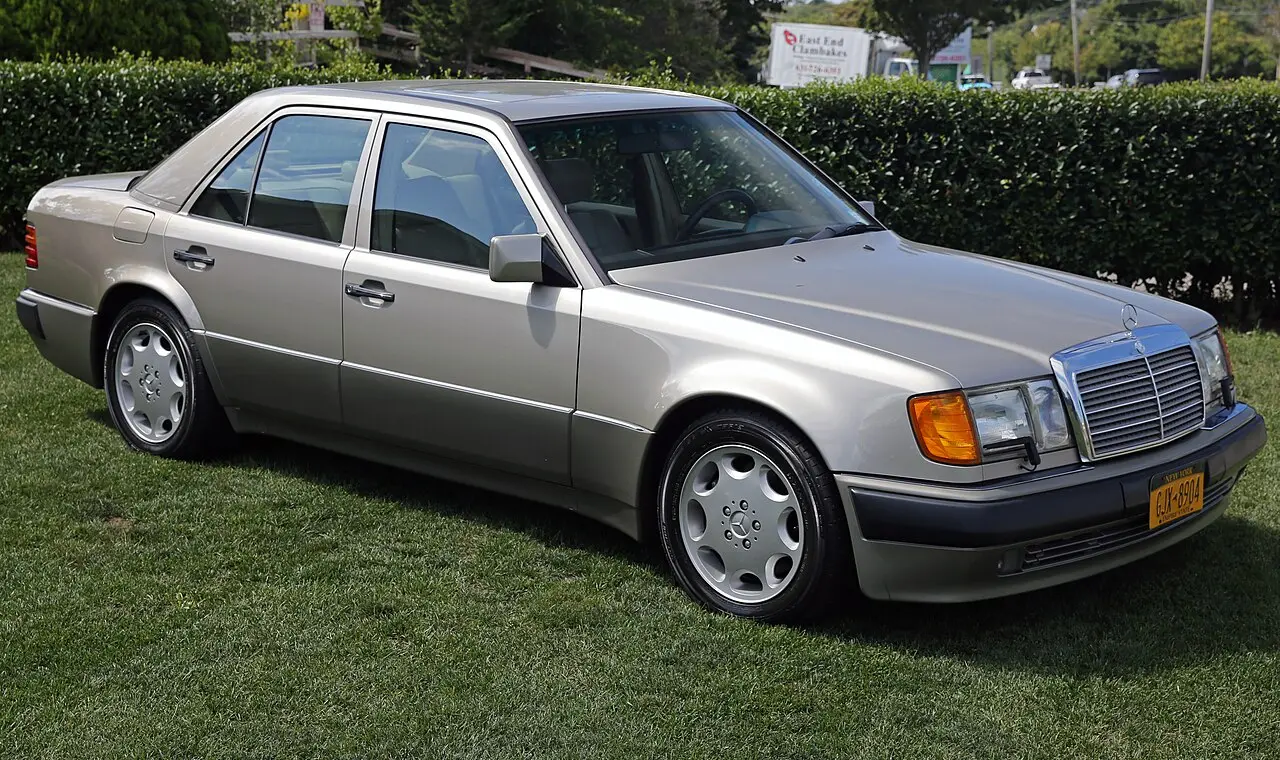
What does Mercedes-Benz 500 mean?
Mercedes-Benz used the 500 name across several model families, including the SL, S-Class and E-Class. In the US EPA listings, it spans versions of luxury roadsters, saloons and coupés, rather than one continuous model line.
The generation entries are R107 (1984–1989), W126 (1984–1991), W124 (1991–1993) and W140 (1991–1993). The W124 500 E brought a V8 version to the E-Class family and was developed with Porsche. The other entries belong to SL- and S-Class-related model families.
Engines and power
US EPA listings cover petrol engines from 5.0 L to 5.6 L across 12 versions. Those capacities reflect the different cars that carried the 500 name.
How economical is the Mercedes-Benz 500?
The lowest listed US consumption is 14.7 L/100 km, and the best rating is 16 MPG combined on the EPA test. These figures apply to US EPA listings from 1984 to 1993. EPA results use a different procedure from European WLTP or NEDC and Canada’s 5-cycle test.
Where was the Mercedes-Benz 500 sold?
US EPA listings cover 12 versions from 1984 to 1993. The generation entries date the R107, W126, W124 and W140, which belong to different model families and body styles.
Questions and answers
Was the Mercedes-Benz 500 one model?
No. The name was used across several model families, including SL, S-Class and E-Class-related cars.
Which generations are included?
The entries are R107 (1984–1989), W126 (1984–1991), W124 (1991–1993) and W140 (1991–1993).
What engine sizes appear in the US EPA figures?
The US listings cover petrol engines from 5.0 L to 5.6 L.
What is the lowest listed US fuel consumption?
It is 14.7 L/100 km on the EPA test, with a best rating of 16 MPG combined.