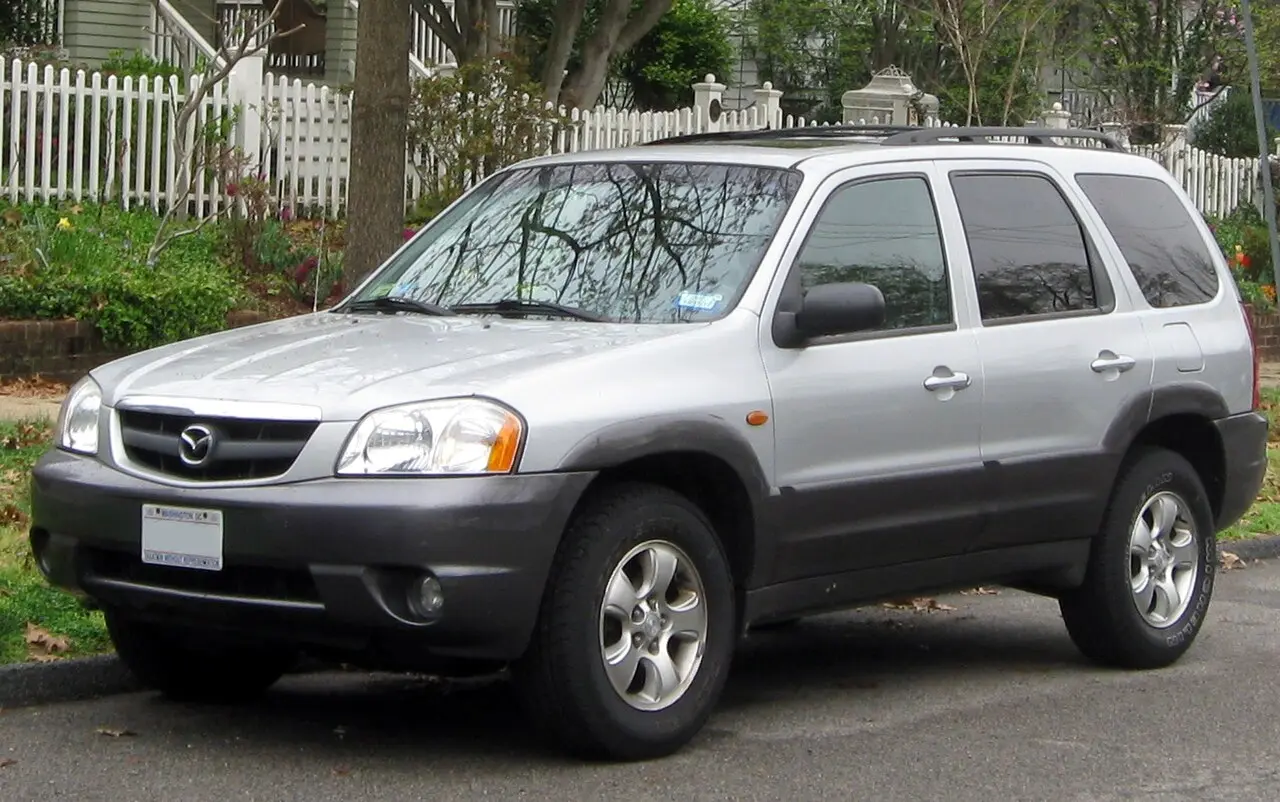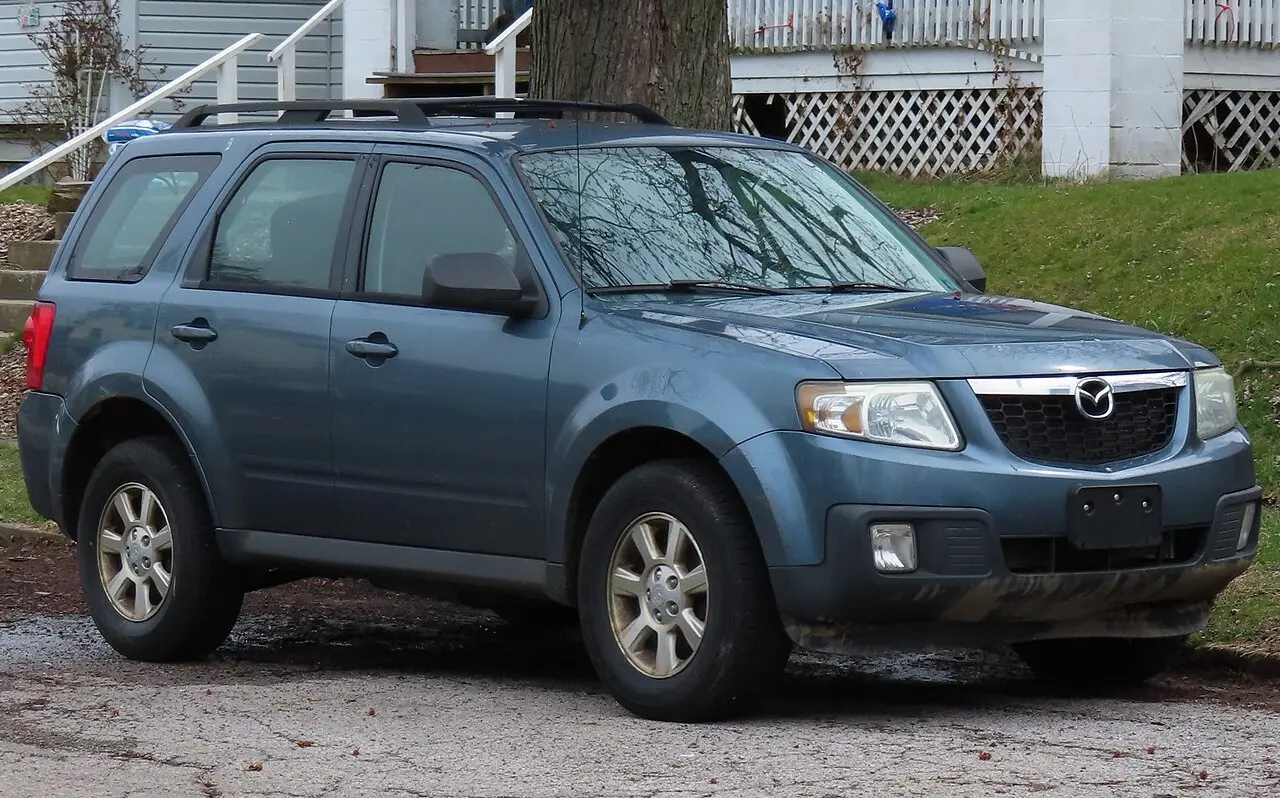
What is the Mazda Tribute?
The Tribute is a compact SUV with a practical cabin and an upright driving position. It was jointly developed with Ford and was Mazda’s first SUV. Mazda’s history notes that it was the first light SUV with a 3.0 L V6 engine.
The Tribute had two generations. The first ran from 2001 to 2007; the second followed from 2008 to 2011 in North America. The later model brought updated styling and continued the Tribute name in the US and Canada.
Engines and power
The listed engine sizes range from 2.0 L to 3.0 L. US versions included petrol, hybrid and flex-fuel E85 options; UK figures cover petrol versions, while Canadian figures cover petrol and E85. A 3.0 L V6 was among the engines offered.
Engine and fuel options varied by country and year. The Tribute was offered with additional fuel choices in North America, alongside petrol versions.
How economical was the Mazda Tribute?
The lowest UK figure is 9.4 L/100 km on the NEDC test. In the United States, the lowest listed figure is 7.4 L/100 km under EPA testing, with a best combined rating of 32 MPG. Canada’s lowest is 9.5 L/100 km using the NRCan five-cycle procedure.
These figures use different test procedures: NEDC in the UK, EPA testing in the US and the five-cycle test in Canada.
Where was the Tribute sold?
UK figures cover 2001 to 2004, while US and Canadian figures cover 2001 to 2011. The US listing includes 43 versions and Canada 46. Mazda introduced the Tribute as its first SUV, and the name continued in North America through the second generation.
Questions and answers
How many generations of Mazda Tribute were there?
Two: the first generation ran from 2001 to 2007 and the second from 2008 to 2011.
What engines were available?
The listed engine sizes range from 2.0 L to 3.0 L, including a 3.0 L V6.
What is the Tribute’s best listed fuel economy?
The US EPA listing gives a best combined rating of 32 MPG.
Why do the economy figures differ by country?
The UK uses NEDC figures, the US uses EPA ratings and Canada uses its five-cycle procedure. Each test measures consumption differently.