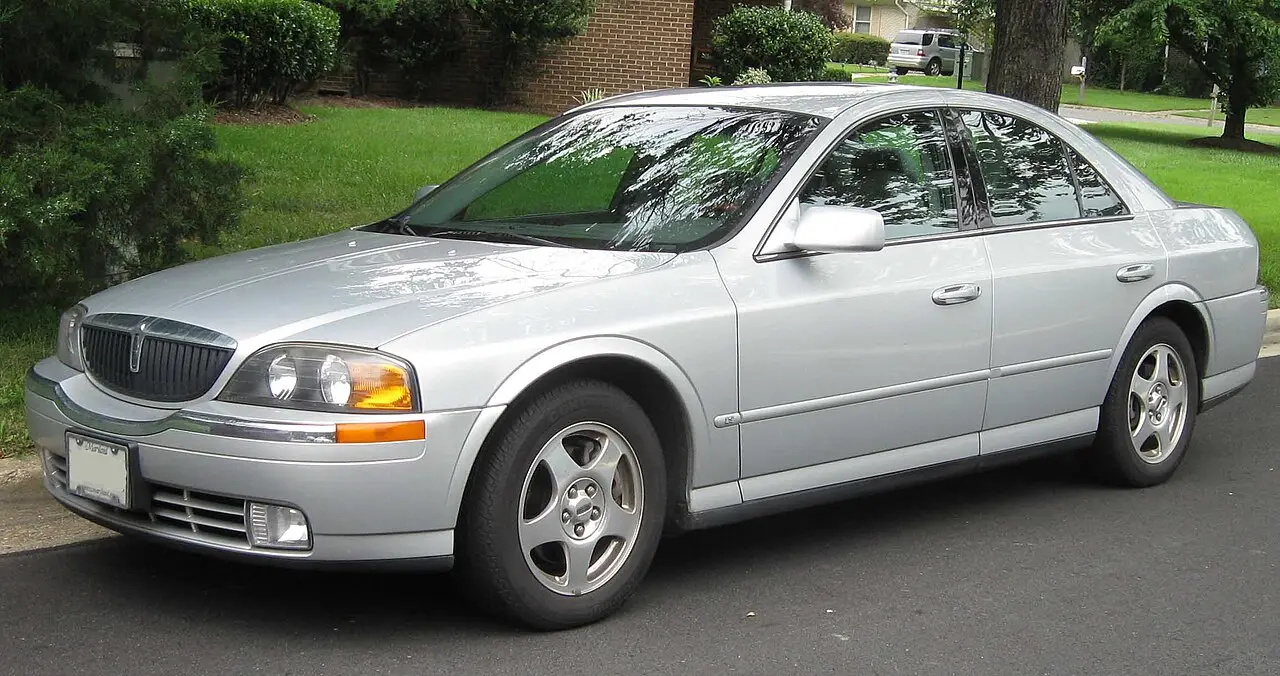
Lincoln

Lincoln LS

Lincoln LS
Photo: IFCAR / Wikimedia Commons · Public domain

The official data lists 34 versions of the Lincoln LS (2000–2006), in the United States and Canada. Each market publishes its own figures, measured on its own test procedure.

At a glance

Years in the data
2000–2006
Markets
United States, Canada
Engines
3.0 L to 3.9 L
Fuels
Petrol
Lowest consumption (United States)
11.2 L/100 km (EPA)
Lowest consumption (Canada)
11.5 L/100 km (5-cycle)

What is the Lincoln LS?

The LS is a luxury sedan with a sportier, rear-wheel-drive character. It offered four doors and a conventional sedan shape for drivers drawn to a more engaging style of motoring within Lincoln’s range. Lincoln sold it in the United States and Canada from 2000 through 2006.

Built on the DEW98 platform, the LS marked a distinctive turn for Lincoln, a brand better known for comfort-focused luxury sedans.

Generation, engines and power

The LS had one generation, sold from 2000 to 2006. Its petrol engine range ran from 3.0 L to 3.9 L, with V6 and V8 choices. Power varied by engine and version.

Fuel consumption and CO₂

In the United States, the best combined EPA rating is 21 MPG, and the lowest listed consumption is 11.2 L/100 km. Canada’s lowest listed figure is 11.5 L/100 km under NRCan’s 5-cycle test. EPA and NRCan use different procedures, so the results are not directly comparable.

Where was the LS sold?

The LS was sold in the United States and Canada over its single-generation run. Its rear-wheel-drive layout and sportier character gave it a distinct place in Lincoln’s history.

Questions and answers

When was the Lincoln LS sold?

The LS was sold from 2000 through 2006.

Was the Lincoln LS rear-wheel drive?

Yes. The LS was a rear-wheel-drive luxury sedan.

What is its best combined EPA rating?

The best listed combined EPA rating is 21 MPG.

LS first generation (2000–2006)

Lincoln LS first generation
Photo: IFCAR / Wikimedia Commons · Public domain

Model codes: DEW98 · References: en.wikipedia.org

United States 15 versions

Model years sold in the USA, from the EPA and the Department of Energy (fueleconomy.gov). MPG on the EPA test; litres per 100 km = 235.215 ÷ MPG.

Years and versionEngineFuelGearboxDriveConsumption (combined)CO₂
2005–2006CLKUP3.9 LPetrol5-speed automaticRear-wheel drive18 MPG (13.1 L/100 km) EPA307 g/km
2006CLKUP3.9 LPetrol5-speed automaticRear-wheel drive18 MPG (13.1 L/100 km) EPA307 g/km
2003–2005CLKUP3.0 LPetrol5-speed automaticRear-wheel drive20 MPG (11.8 L/100 km) EPA276 g/km
2003–2004SST, CLKUP · CLKUP3.0 LPetrol5-speed automaticRear-wheel drive21 MPG (11.2 L/100 km) EPA263 g/km
2004CLKUP3.9 LPetrol5-speed automaticRear-wheel drive18 MPG (13.1 L/100 km) EPA307 g/km
2003CLKUP3.9 LPetrol5-speed automaticRear-wheel drive18 MPG (13.1 L/100 km) EPA307 g/km
2003SST, CLKUP3.9 LPetrol5-speed automaticRear-wheel drive18 MPG (13.1 L/100 km) EPA307 g/km
2001–2002CLKUP3.0 LPetrol5-speed automaticRear-wheel drive19 MPG (12.4 L/100 km) EPA291 g/km
2001–20023.0 LPetrol5-speed manualRear-wheel drive19 MPG (12.4 L/100 km) EPA291 g/km
2001–2002CLKUP · 3.0M, CLKUP3.0 LPetrol5-speed automaticRear-wheel drive18 MPG (13.1 L/100 km) EPA307 g/km
2000–2002SELECT SFT, CLKUP · 3.9L4V-N, CLKUP · CLKUP3.9 LPetrol5-speed automaticRear-wheel drive17 MPG (13.8 L/100 km) EPA325 g/km
2000CLKUP3.0 LPetrol5-speed automaticRear-wheel drive18 MPG (13.1 L/100 km) EPA307 g/km
2000SELECT SFT, CLKUP3.0 LPetrol5-speed automaticRear-wheel drive18 MPG (13.1 L/100 km) EPA307 g/km
200033.0 LPetrol5-speed manualRear-wheel drive18 MPG (13.1 L/100 km) EPA307 g/km

Canada 19 versions

Model years sold in Canada, from Natural Resources Canada fuel consumption ratings (5-cycle test).

Years and versionEngineFuelGearboxConsumption (combined)CO₂
2006Mid-size3.9 LPetrol5-speed automatic13.1 L/100 km 5-cycle301 g/km
2006Mid-size3.9 LPetrol5-speed automatic12.8 L/100 km 5-cycle294 g/km
2005Mid-size3.0 LPetrol5-speed automatic11.8 L/100 km 5-cycle271 g/km
2005Mid-size3.9 LPetrol5-speed automatic13.0 L/100 km 5-cycle299 g/km
2003–2004Mid-size3.0 LPetrol5-speed automatic11.8 L/100 km 5-cycle271 g/km
2003–2004Mid-size3.0 LPetrol5-speed automatic11.5 L/100 km 5-cycle265 g/km
2004Mid-size3.9 LPetrol5-speed automatic13.6 L/100 km 5-cycle313 g/km
2004Mid-size3.9 LPetrol5-speed automatic13.0 L/100 km 5-cycle299 g/km
2003Mid-size3.9 LPetrol5-speed automatic13.1 L/100 km 5-cycle301 g/km
2003Mid-size3.9 LPetrol5-speed automatic12.8 L/100 km 5-cycle294 g/km
2001–2002Mid-size3.0 LPetrol5-speed automatic13.3 L/100 km 5-cycle306 g/km
2001–2002Mid-size3.0 LPetrol5-speed manual12.5 L/100 km 5-cycle288 g/km
2002Mid-size3.0 LPetrol5-speed automatic12.6 L/100 km 5-cycle290 g/km
2000–2002Mid-size3.9 LPetrol5-speed automatic13.6 L/100 km 5-cycle313 g/km
2002Mid-size3.9 LPetrol5-speed automatic14.1 L/100 km 5-cycle324 g/km
2001Mid-size3.9 LPetrol5-speed automatic13.5 L/100 km 5-cycle311 g/km
2000Mid-size3.0 LPetrol5-speed automatic13.2 L/100 km 5-cycle304 g/km
2000Mid-size3.0 LPetrol5-speed manual13.2 L/100 km 5-cycle304 g/km

Official figures are measured on standard test procedures and differ between markets. Your consumption depends on how, where and in what conditions you drive.