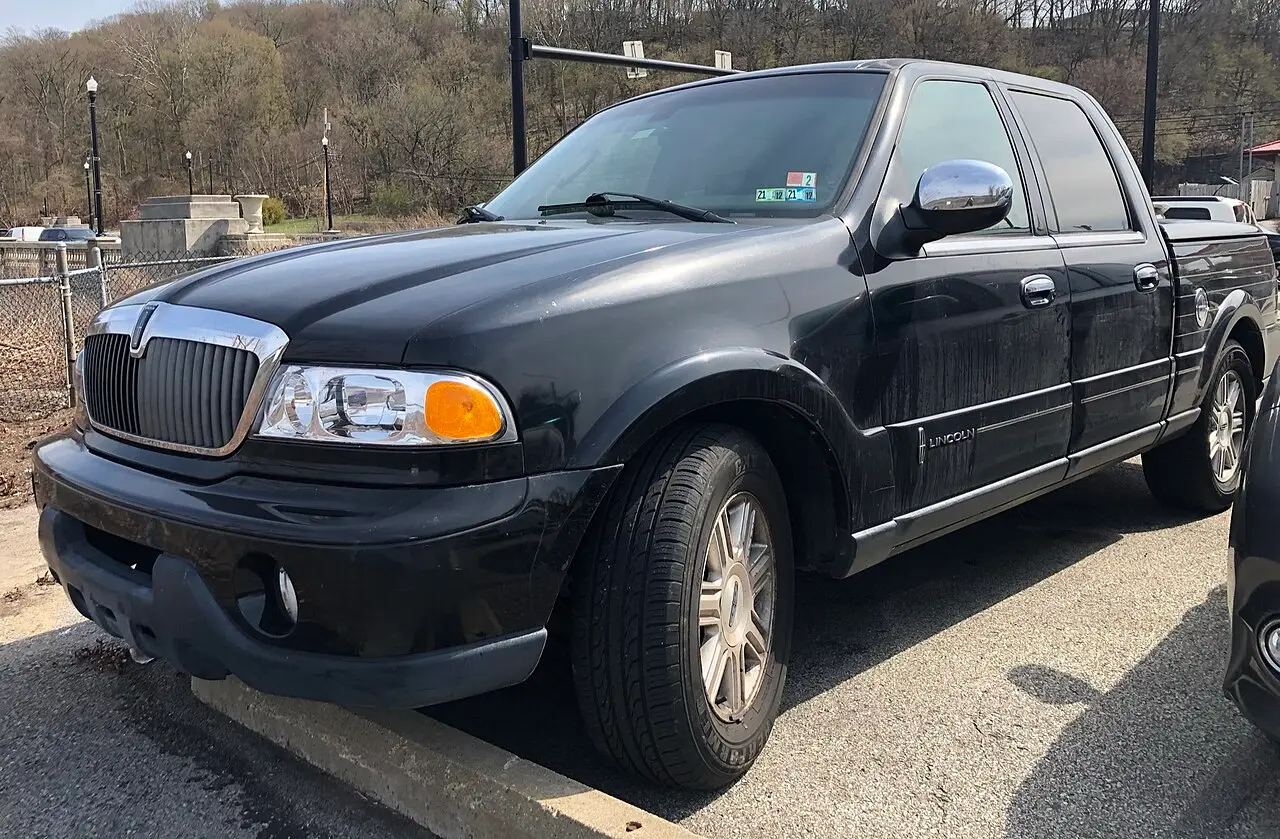
What is the Lincoln Blackwood?
The Blackwood brought Lincoln’s luxury-car styling to a pickup. Based on the Ford F-150, it paired a full-size truck body with a more lavish cabin. Its covered cargo bed was designed to resemble a trunk, giving the truck a distinctive look.
The Blackwood was a brief entry in Lincoln’s history, listed in the United States for 2002 and 2003.
Engines and power
The US-market Blackwood used a 5.4-litre petrol engine.
How economical is the Blackwood?
The lowest listed US fuel consumption is 18.1 L/100 km, and the best combined EPA rating is 13 MPG. EPA results use a different test procedure from Europe’s WLTP or NEDC tests and Canada’s 5-cycle test.
Where was it sold?
The Blackwood was listed in the United States for 2002–2003, with two petrol versions. It was an unusual pickup in Lincoln’s range.
Questions and answers
Was the Blackwood a pickup truck?
Yes. It was a full-size pickup based on the Ford F-150, with Lincoln styling and a covered cargo bed.
What engine did the US Blackwood use?
A 5.4-litre petrol engine.
What is its combined EPA fuel economy?
The best listed combined rating is 13 MPG, equivalent in the listing to 18.1 L/100 km.