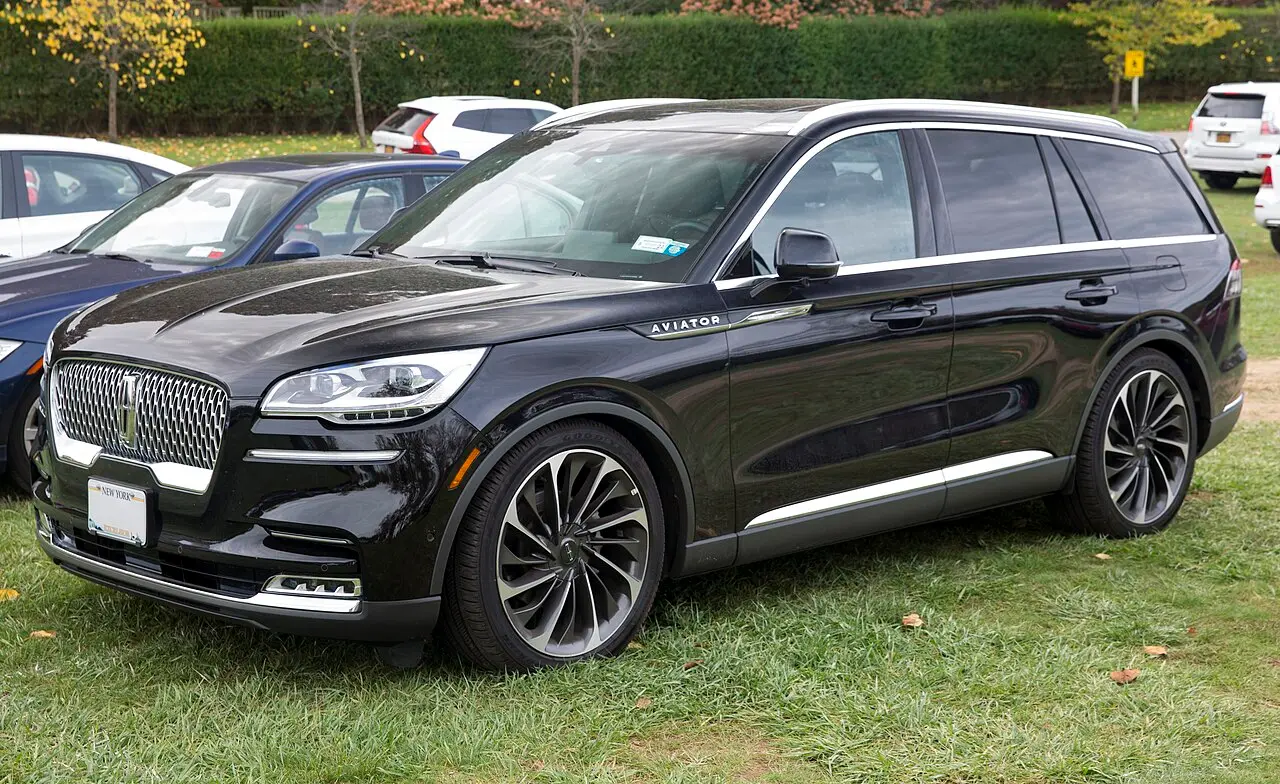
What is the Lincoln Aviator?
The Lincoln Aviator is a three-row luxury SUV, with room for passengers and the flexibility that makes an SUV useful for family travel. It sits among the larger vehicles in Lincoln’s range.
The name has appeared in two generations. The first ran from 2003 to 2005, then the second generation has been built since 2020. The modern Aviator brought plug-in hybrid power to the name alongside petrol engines.
Generations and engines
The first-generation Aviator was powered by a V8. The second generation brought a different mix of powertrains, including petrol and plug-in hybrid versions. Engine sizes across the listed US and Canadian markets range from 3.0 L to 4.6 L.
The plug-in hybrid combines a petrol engine with electric drive. Its official weighted fuel figure assumes some driving is done on electric power, so it is measured differently from a petrol-only figure.
Fuel consumption and markets
In the United States, EPA figures cover 2003–2027. The lowest listed petrol consumption is 11.2 L/100 km, the lowest plug-in hybrid weighted figure is 10.2 L/100 km, and the best combined rating is 21 MPG. Canadian NRCan figures cover 2003 onward, with a lowest petrol figure of 11.9 L/100 km and a plug-in hybrid weighted figure of 10.3 L/100 km.
The United States uses EPA ratings, while Canada uses NRCan’s five-cycle test. Because the test procedures differ, figures from the two markets are not directly equivalent.
Questions and answers
What kind of vehicle is the Lincoln Aviator?
It is a three-row luxury SUV.
What are the Aviator’s generations?
The first generation ran from 2003 to 2005, and the second generation has been built since 2020.
Is the Aviator available as a plug-in hybrid?
Yes. Plug-in hybrid versions are listed in both the US and Canadian markets.
How do US and Canadian fuel figures differ?
The lowest listed petrol figure is 11.2 L/100 km under the US EPA test and 11.9 L/100 km under Canada’s NRCan five-cycle test. The procedures differ, so the results are not directly equivalent.