Lexus

Lexus IS

Lexus IS
Photo: Elise240SX / Wikimedia Commons · CC BY-SA 4.0

The official data lists 248 versions of the Lexus IS (2001–2026), in the European Union, the United Kingdom, France, the United States, and Canada. Each market publishes its own figures, measured on its own test procedure.

At a glance

Years in the data
2001–2026
Markets
European Union, United Kingdom, France, United States, Canada
Engines
2.0 L to 5.0 L
Power
110 kW (150 PS) to 311 kW (423 PS)
Fuels
Diesel, Hybrid, Petrol
Lowest consumption (France)
4.2 L/100 km (NEDC)
Lowest consumption (United Kingdom)
4.2 L/100 km (NEDC)
Lowest consumption (European Union)
5.3 L/100 km (WLTP)
New registrations in the EU
111,302

What is the Lexus IS?

The IS is Lexus’s compact sports sedan, a four-door model with a rear-wheel-drive heritage. Its history began in 1999, and it sits among the smaller sedans in the Lexus range. Over the years, the IS has been offered with a broad mix of engines.

The listed generations are the first (2001–2005), second (2006–2013), third (2014–2020) and fourth (2021–today). The EU figures span 2010–2021, while UK figures cover 2002–2020. The fourth generation appears in US and Canadian figures.

Engines and power

Engine sizes range from 2.0 to 5.0 litres in EU, UK, US and Canadian figures. EU power spans 110 kW (150 PS) to 311 kW (423 PS). EU figures include petrol, diesel, hybrid and other fuels; UK and French listings include petrol, diesel and hybrid, while the US and Canadian listings are petrol.

The IS range has included four-cylinder and larger petrol engines, diesel options in Europe, and a hybrid. The leading version in the listed EU registration years was the 2.5-litre petrol rated at 133 kW (181 PS), which topped the annual figures in 2014, 2015 and 2016.

How economical is the Lexus IS?

The lowest listed EU consumption is 5.3 L/100 km on WLTP. The UK and France each list a low of 4.2 L/100 km on NEDC. The US EPA low is 9 L/100 km, equivalent to a best listed 26 MPG combined; Canada’s lowest is also 9 L/100 km on its 5-cycle test.

European WLTP and NEDC results use different procedures, as do the EPA test in the United States and Canada’s 5-cycle procedure. Figures are best read within their own test systems.

Where was the Lexus IS sold?

Official figures cover the EU, UK, France, United States and Canada. EU registrations run from 2010 to 2021 and total 111,302. UK figures reach back to 2002, while US and Canadian figures begin in 2001 and extend through 2026.

Questions and answers

How many Lexus IS generations are listed?

Four: 2001–2005, 2006–2013, 2014–2020 and 2021–today.

Was the Lexus IS offered as a hybrid?

Yes. Hybrid versions appear in EU, UK and French figures; the US and Canadian entries are petrol.

What is the lowest official fuel consumption for the IS?

The lowest listed result is 4.2 L/100 km on NEDC in the UK and France. EU WLTP results have a listed low of 5.3 L/100 km.

What was the leading IS version in EU registrations?

The 2.5-litre petrol rated at 133 kW (181 PS) led the listed annual versions in 2014, 2015 and 2016.
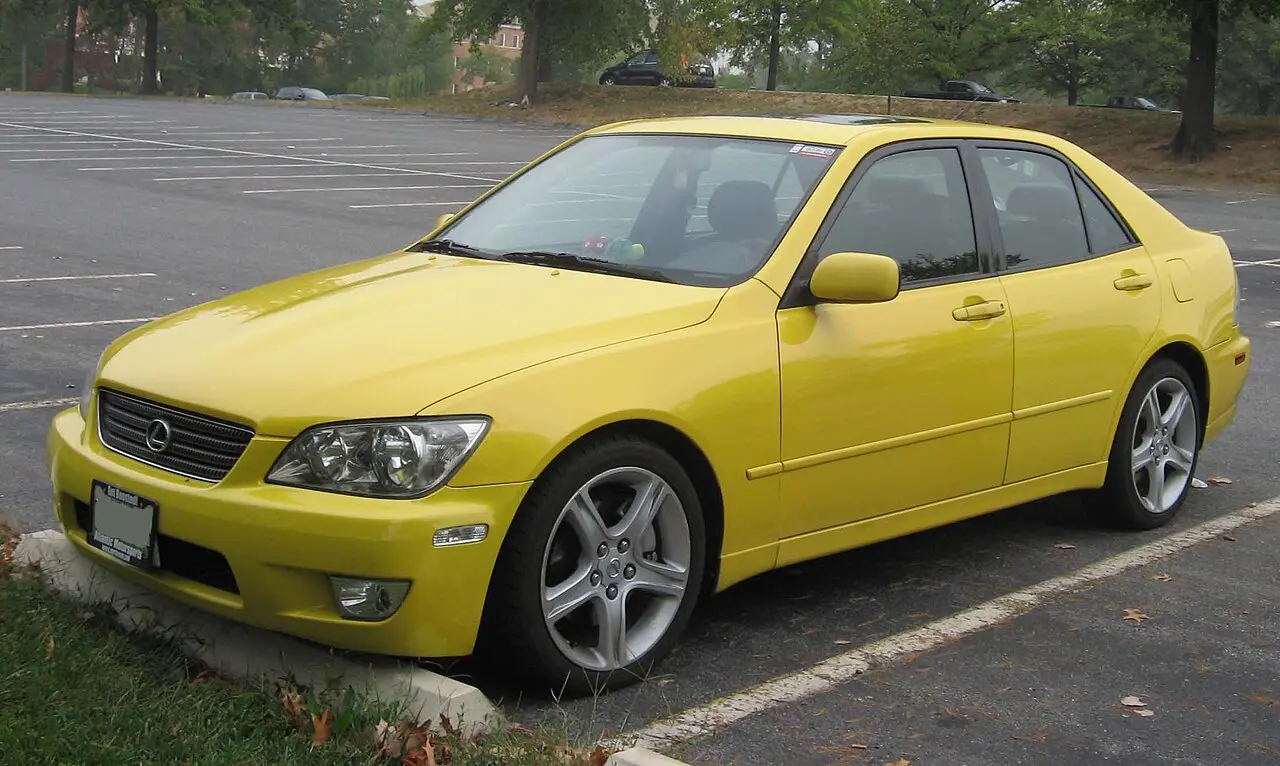
IS first generation (2001–2005)

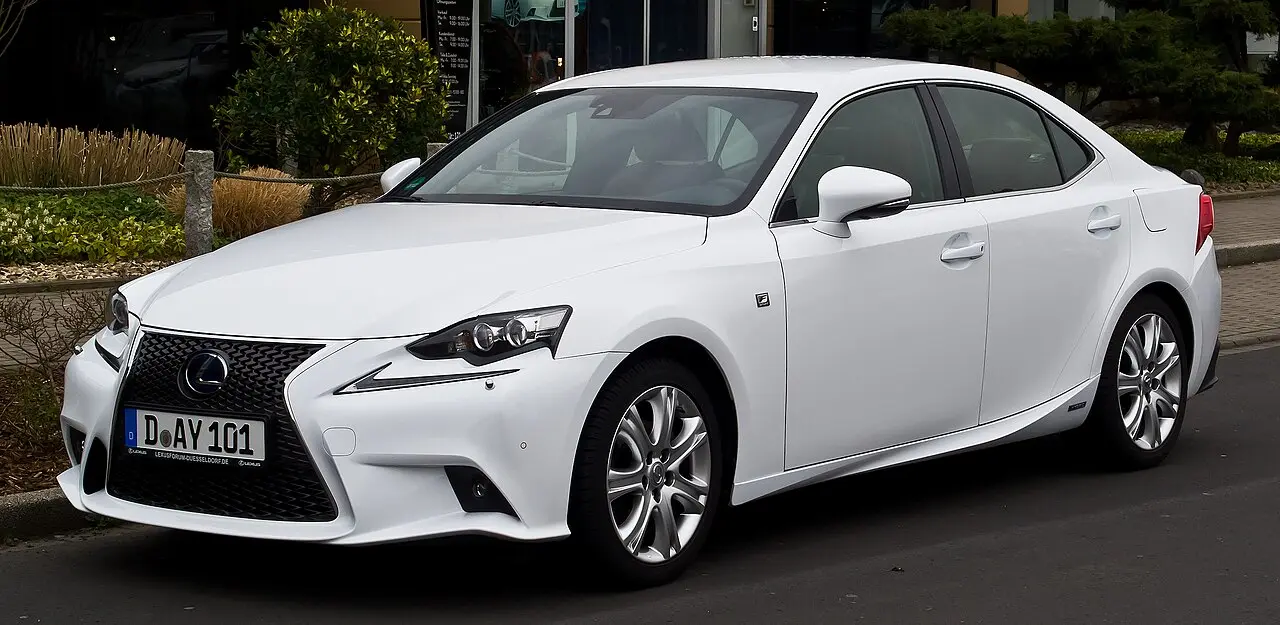
Lexus IS first generation
Photo: IFCAR / Wikimedia Commons · Public domain

Model codes: XE10 · References: clublexus.com

Show all 19 versions

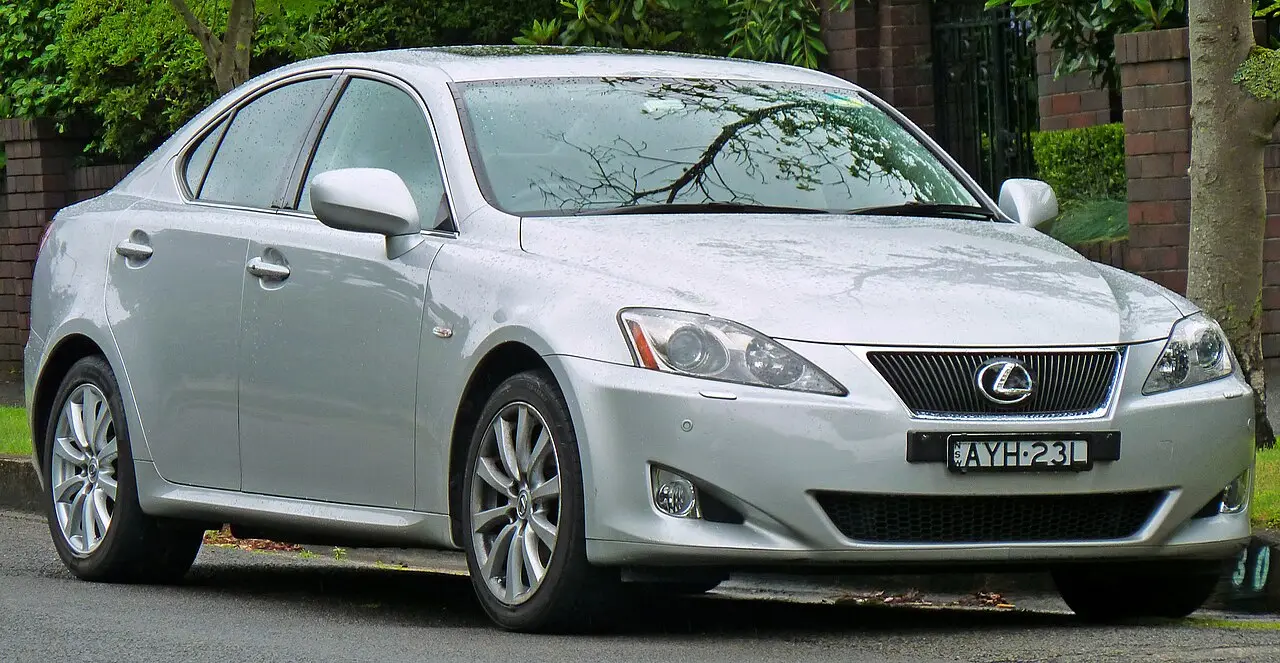
IS second generation (2006–2013)

Lexus IS second generation
Photo: OSX / Wikimedia Commons · Public domain

Model codes: XE20 · References: clublexus.com

Show all 96 versions

IS third generation (2014–2020)

Lexus IS third generation
Photo: M 93 / Wikimedia Commons · CC BY-SA 3.0 de

Model codes: XE30 · References: clublexus.com

Show all 118 versions

IS fourth generation (since 2021)

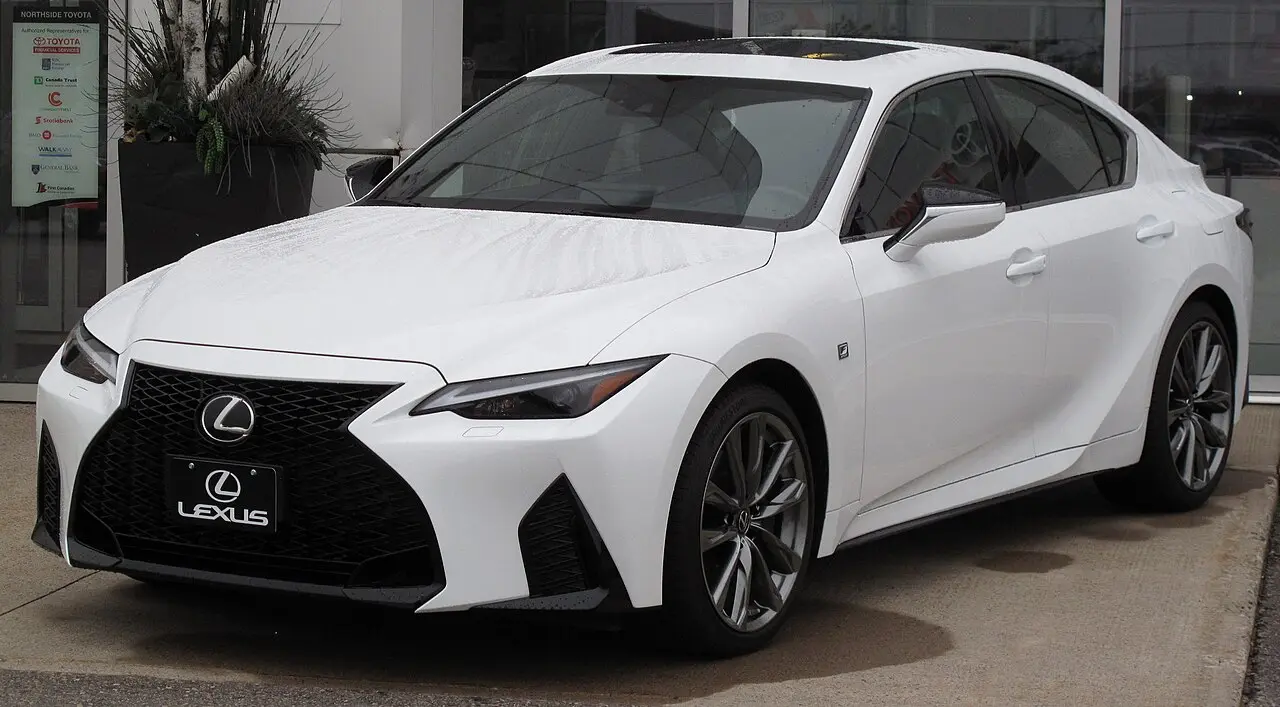
Lexus IS fourth generation
Photo: Elise240SX / Wikimedia Commons · CC BY-SA 4.0

Model codes: XE40 · Sold in: United States and Canada · References: auto.ria.com

United States 7 versions

Model years sold in the USA, from the EPA and the Department of Energy (fueleconomy.gov). MPG on the EPA test; litres per 100 km = 235.215 ÷ MPG.

Years and versionEngineFuelGearboxDriveConsumption (combined)CO₂
2026SIDI & PFI3.5 LPetrol6-speed automaticAll-wheel drive22 MPG (10.7 L/100 km) EPA254 g/km
2026SIDI & PFI3.5 LPetrol8-speed automaticRear-wheel drive22 MPG (10.7 L/100 km) EPA250 g/km
2022–2025SIDI & PFI2.0 LPetrol8-speed automaticRear-wheel drive25 MPG (9.4 L/100 km) EPA221 g/km
2021–2025SIDI & PFI3.5 LPetrol6-speed automaticAll-wheel drive22 MPG (10.7 L/100 km) EPA253 g/km
2021–2025SIDI & PFI3.5 LPetrol8-speed automaticRear-wheel drive23 MPG (10.2 L/100 km) EPA239 g/km
2022–2025SIDI & PFI5.0 LPetrol8-speed automaticRear-wheel drive20 MPG (11.8 L/100 km) EPA280 g/km
2021SIDI & PFI2.0 LPetrol8-speed automaticRear-wheel drive25 MPG (9.4 L/100 km) EPA222 g/km

Canada 6 versions

Model years sold in Canada, from Natural Resources Canada fuel consumption ratings (5-cycle test).

Years and versionEngineFuelGearboxConsumption (combined)CO₂
2026Compact3.5 LPetrol6-speed automatic10.8 L/100 km 5-cycle254 g/km
2021–2025Compact3.5 LPetrol6-speed automatic10.8 L/100 km 5-cycle253 g/km
2022–2025Compact5.0 LPetrol8-speed automatic11.9 L/100 km 5-cycle280 g/km
2023Compact2.0 LPetrol8-speed automatic9.5 L/100 km 5-cycle221 g/km
2022Compact2.0 LPetrol6-speed automatic9.5 L/100 km 5-cycle221 g/km
2021Compact2.0 LPetrol8-speed automatic9.5 L/100 km 5-cycle221 g/km

Versions outside these generations

European Union 2 versions

New cars registered in the EU (plus Norway and Iceland), from the European Environment Agency. Figures on the NEDC procedure until 2020 and on WLTP from 2021; versions are grouped by engine and power, with their number of registrations.

Years and versionEnginePowerFuelConsumption (combined)CO₂EU registrations
20212.5 L133 kW (181 PS)Hybrid6.0 L/100 km WLTP137 g/km698
20212.5 L133 kW (181 PS)Petrol5.3 L/100 km WLTP129 g/km341

Official figures are measured on standard test procedures and differ between markets. Your consumption depends on how, where and in what conditions you drive.