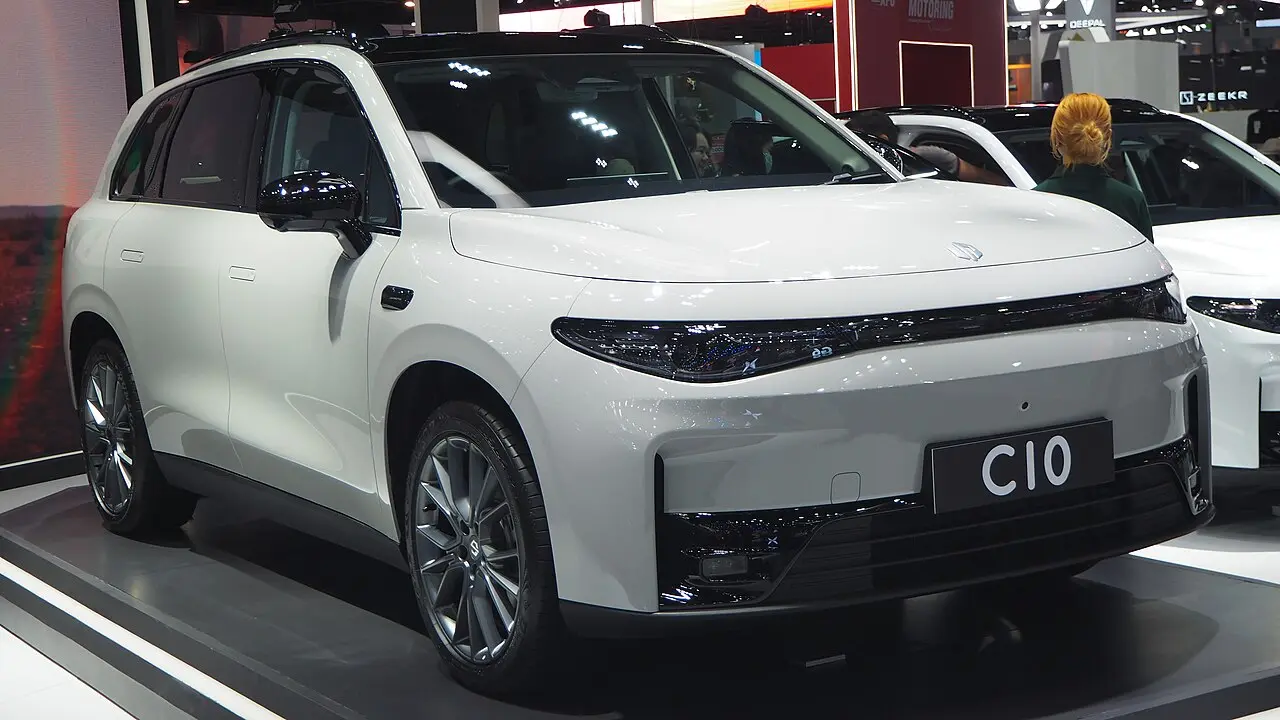
What is the Leapmotor C10?
The C10 is a family SUV and one of the larger models in Leapmotor’s range. The Chinese manufacturer was founded in 2015 and introduced its first vehicle in 2017. The C10 was among the first Leapmotor models launched in Europe through the company’s partnership with Stellantis. Its first generation runs from 2024 to today, and European registrations begin in 2024.
In Europe, the C10 is available as an electric, hybrid or plug-in hybrid. The electric version runs solely on battery power, while the hybrid options combine electric and petrol power.
Engines and power
The European line-up includes electric versions and versions with a 1.5 L engine. Listed power ranges from 65 kW (88 PS) to 160 kW (218 PS). The most widely registered versions include the 1.5 L plug-in hybrid at 65 kW (88 PS), the electric version at 160 kW (218 PS), and the 1.5 L hybrid at 65 kW (88 PS).
How economical is the Leapmotor C10?
The lowest listed consumption for petrol, diesel or hybrid versions is 6.4 L/100 km on the WLTP test. The plug-in hybrid’s lowest official weighted figure is 0.4 L/100 km WLTP. That figure assumes some driving is electric, so actual petrol use depends on how the car is driven and charged. The European figures give no fuel-consumption value for the fully electric version.
Test procedures differ between markets. Europe uses WLTP and, for some older vehicles, NEDC; the USA uses EPA procedures and Canada uses a 5-cycle test. Results are not directly comparable. European Union and EEA figures cover nine versions and 7,178 registrations from 2024 to 2025.
Where was the C10 sold?
European Union and EEA registration figures cover 2024 and 2025. The C10 was part of Leapmotor’s initial European launch with Stellantis.
Questions and answers
What kinds of C10 drivetrain are listed in Europe?
The line-up includes electric, hybrid and plug-in hybrid versions.
What is the C10’s lowest listed fuel consumption?
The lowest listed figure for petrol, diesel or hybrid versions is 6.4 L/100 km WLTP. The plug-in hybrid’s weighted figure is 0.4 L/100 km WLTP, assuming some driving is electric.
How powerful is the C10?
Listed power ranges from 65 kW (88 PS) to 160 kW (218 PS).