Lancia

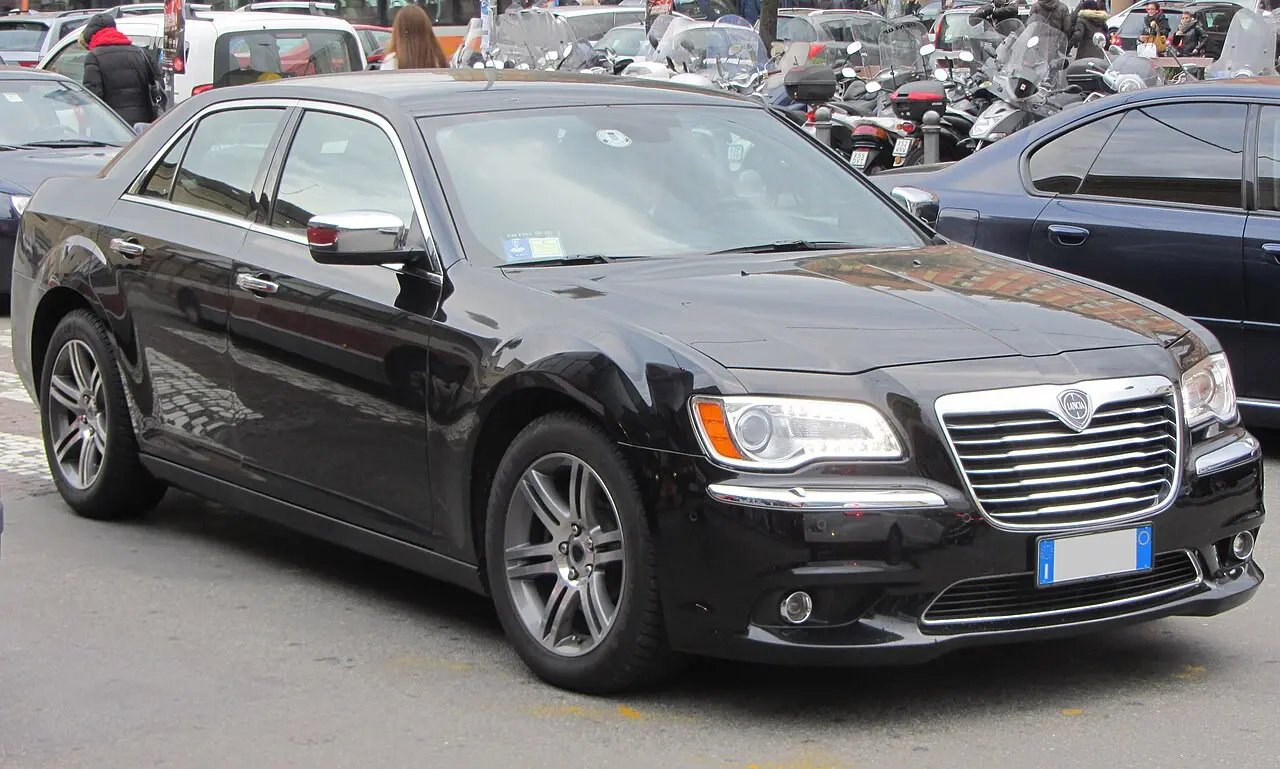
Lancia Thema

Lancia Thema
Photo: Pava / Wikimedia Commons · CC BY-SA 3.0 it

The official data lists 34 versions of the Lancia Thema (2011–2016), in the European Union and France. Each market publishes its own figures, measured on its own test procedure.

At a glance

Years in the data
2011–2016
Markets
European Union, France
Engines
3.0 L to 3.6 L
Power
140 kW (190 PS) to 210 kW (286 PS)
Fuels
Diesel, Petrol
Lowest consumption (France)
7.1 L/100 km (NEDC)
New registrations in the EU
8,985

What is the Lancia Thema?

The Lancia Thema II was a large saloon positioned as the marque’s flagship. Sold from 2011 to 2014, it was based on the Chrysler 300 and used Chrysler’s rear-wheel-drive LX platform, with Lancia details and an Italian-finished interior.

The name linked the car to the original Thema, introduced in 1984. This later model brought the nameplate back as a flagship developed during the Lancia–Chrysler partnership.

Engines and power

EU registration figures cover Thema versions from 2011 to 2016, with engines from 3.0 to 3.6 litres and power from 140 kW (190 PS) to 210 kW (286 PS). The range included petrol and diesel versions, as well as versions classified as other fuel. The 3.0-litre diesel at 176 kW (239 PS) was a leading choice in EU registrations across several years.

Fuel consumption and CO₂

In France, ADEME lists the Thema from 2012 to 2015. Its lowest listed consumption is 7.1 L/100 km on the NEDC test. European test figures can use NEDC or WLTP, and results from the two procedures are not directly comparable.

Where was the Thema sold?

The Thema appears in EU registration figures from 2011 to 2016 and French ADEME listings from 2012 to 2015. It brought Lancia a large saloon based on the Chrysler 300 during the partnership era.

Questions and answers

What kind of car is the Lancia Thema?

It is a large saloon that served as Lancia’s flagship.

Which generation does the 2011 Thema belong to?

It is the second generation, called Thema II, sold from 2011 to 2014.

What is the lowest listed fuel consumption in France?

ADEME lists 7.1 L/100 km on the NEDC test.

What power range appears in EU registration figures?

The figures cover 140 kW (190 PS) to 210 kW (286 PS).

Thema II (2011–2014)

Lancia Thema II
Photo: Pava / Wikimedia Commons · CC BY-SA 3.0 it

Model codes: LX · Sold in: European Union and France · References: en.wikipedia.org, media.stellantis.com

European Union 13 versions

New cars registered in the EU (plus Norway and Iceland), from the European Environment Agency. Figures on the NEDC procedure until 2020 and on WLTP from 2021; versions are grouped by engine and power, with their number of registrations.

Years and versionEnginePowerFuelCO₂EU registrations
20143.0 L176 kW (239 PS)Diesel188 g/km510
20143.6 L210 kW (286 PS)Petrol226 g/km92
20143.0 L140 kW (190 PS)Diesel185 g/km42
20133.0 L176 kW (239 PS)Diesel189 g/km2,873
20133.0 L140 kW (190 PS)Diesel186 g/km908
20133.6 L210 kW (286 PS)Petrol223 g/km182
20133.0 L–Other fuel188 g/km152
20123.0 L176 kW (239 PS)Diesel187 g/km2,199
20123.0 L140 kW (190 PS)Diesel186 g/km502
20123.6 L210 kW (286 PS)Petrol225 g/km229
20113.0 L176 kW (239 PS)Diesel188 g/km1,057
20113.0 L140 kW (190 PS)Diesel185 g/km126
20113.6 L210 kW (286 PS)Petrol225 g/km35

France 12 versions

New cars on sale in France, from ADEME Car Labelling. NEDC figures until 2015, WLTP figures in the current catalogue.

Years and versionEnginePowerFuelGearboxConsumption (combined)CO₂
2014Thema 3.0 Mulitjet II (190ch)–140 kW (190 PS)Diesel5-speed automatic7.1 L/100 km NEDC185 g/km
2014Thema 3.0 Mulitjet II (239ch)–176 kW (239 PS)Diesel5-speed automatic7.1 L/100 km NEDC185 g/km
2014Thema 3.0 Mulitjet II (239ch)–176 kW (239 PS)Diesel5-speed automatic7.2 L/100 km NEDC191 g/km
2014Thema 3.6 V6 (286ch)–210 kW (286 PS)Petrol8-speed automatic9.4 L/100 km NEDC219 g/km
2014Thema 3.6 V6 (286ch)–210 kW (286 PS)Petrol8-speed automatic9.7 L/100 km NEDC227 g/km
2014Thema 3.6 V6 AWD (286ch)–210 kW (286 PS)Petrol8-speed automatic9.8 L/100 km NEDC229 g/km
2012–2013Thema 3.0 Mulitjet II (190 ch) · Thema 3.0 Mulitjet II (190ch)–140 kW (190 PS)Diesel5-speed automatic7.1 L/100 km NEDC185 g/km
2012–2013Thema 3.0 Mulitjet II (239 ch) · Thema 3.0 Mulitjet II (239ch)–176 kW (239 PS)Diesel5-speed automatic7.1 L/100 km NEDC185 g/km
2012–2013Thema 3.0 Mulitjet II (239 ch) · Thema 3.0 Mulitjet II (239ch)–176 kW (239 PS)Diesel5-speed automatic7.2 L/100 km NEDC191 g/km
2012–2013Thema 3.6 V6 (286 ch) · Thema 3.6 V6 (286ch)–210 kW (286 PS)Petrol8-speed automatic9.4 L/100 km NEDC219 g/km
2012–2013Thema 3.6 V6 (286 ch) · Thema 3.6 V6 (286ch)–210 kW (286 PS)Petrol8-speed automatic9.7 L/100 km NEDC227 g/km
2013Thema 3.6 V6 AWD (286ch)–210 kW (286 PS)Petrol8-speed automatic9.8 L/100 km NEDC229 g/km

Versions outside these generations

European Union 3 versions

New cars registered in the EU (plus Norway and Iceland), from the European Environment Agency. Figures on the NEDC procedure until 2020 and on WLTP from 2021; versions are grouped by engine and power, with their number of registrations.

Years and versionEnginePowerFuelCO₂EU registrations
20163.6 L210 kW (286 PS)Petrol219 g/km38
20153.0 L176 kW (239 PS)Diesel188 g/km30
20153.6 L210 kW (286 PS)Petrol224 g/km10

France 6 versions

New cars on sale in France, from ADEME Car Labelling. NEDC figures until 2015, WLTP figures in the current catalogue.

Years and versionEnginePowerFuelGearboxConsumption (combined)CO₂
2015Thema 3.0 Mulitjet II (190ch)–140 kW (190 PS)Diesel5-speed automatic7.1 L/100 km NEDC185 g/km
2015Thema 3.0 Mulitjet II (239ch)–176 kW (239 PS)Diesel5-speed automatic7.1 L/100 km NEDC185 g/km
2015Thema 3.0 Mulitjet II (239ch)–176 kW (239 PS)Diesel5-speed automatic7.2 L/100 km NEDC191 g/km
2015Thema 3.6 V6 (286ch)–210 kW (286 PS)Petrol8-speed automatic9.4 L/100 km NEDC219 g/km
2015Thema 3.6 V6 (286ch)–210 kW (286 PS)Petrol8-speed automatic9.7 L/100 km NEDC227 g/km
2015Thema 3.6 V6 AWD (286ch)–210 kW (286 PS)Petrol8-speed automatic9.8 L/100 km NEDC229 g/km

Official figures are measured on standard test procedures and differ between markets. Your consumption depends on how, where and in what conditions you drive.