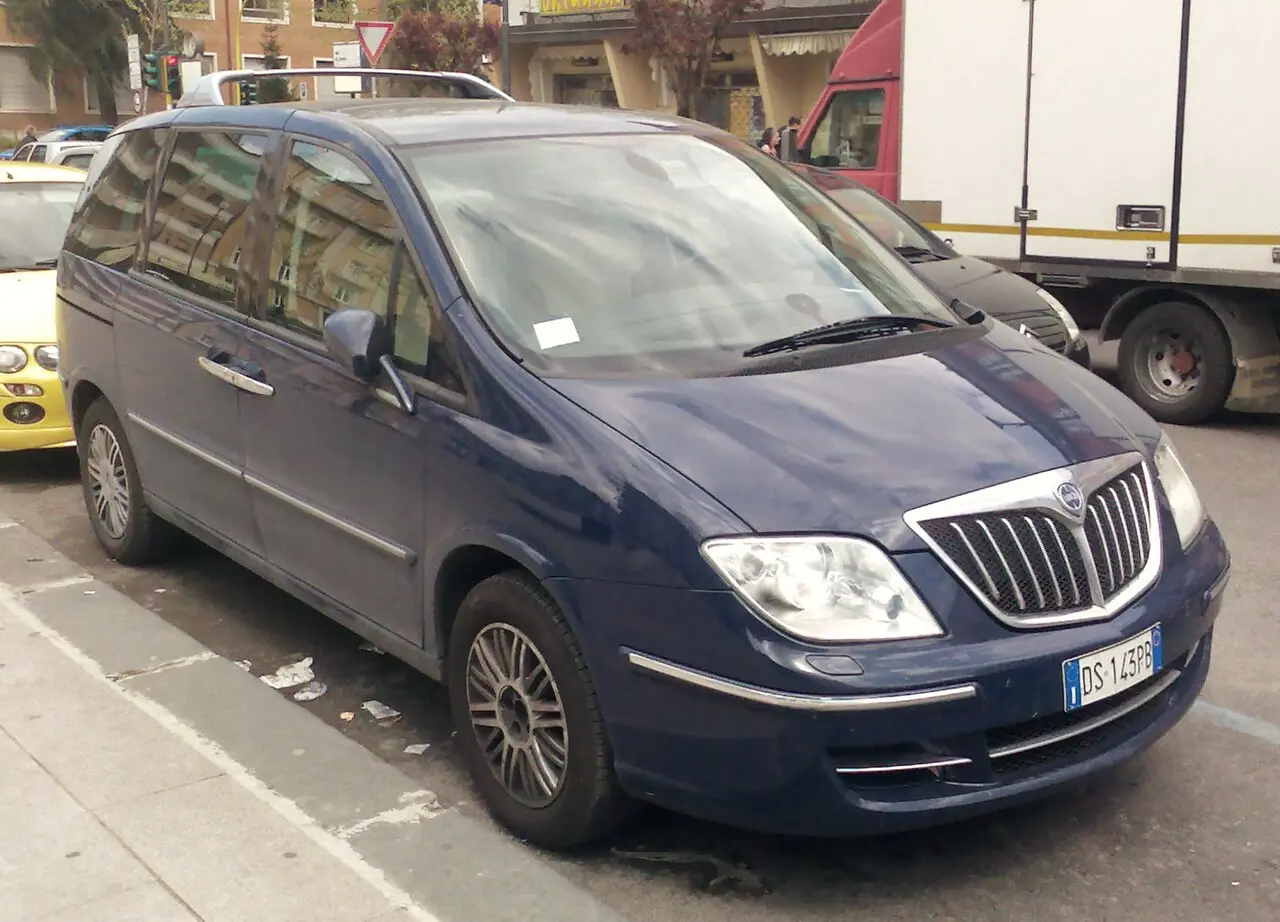
What is the Lancia Phedra?
The Phedra is a large MPV built for passenger travel, with a tall body and a roomy cabin. Lancia positioned it at the more refined end of the people-carrier range, with an upright grille and an emphasis on comfort.
The Phedra generation ran from 2002 to 2010, replacing the Lancia Zeta. It was part of a Fiat and PSA collaboration that also produced the Fiat Ulysse, Peugeot 807 and Citroën C8, each with its own styling.
Engines and power
EU registration figures cover four Phedra versions from 2010 to 2011. All are diesel, with engines from 2.0 to 2.2 litres and power from 100 kW (136 PS) to 125 kW (170 PS). In 2010 EU registrations, the 2.2-litre diesel led, followed by the 2.0-litre diesel.
Fuel consumption and CO₂
The Phedra versions shown in EU registrations are diesel. European test figures can use NEDC or WLTP, and results from the two procedures are not directly comparable.
Where was the Phedra sold?
The Phedra appears in EU registration figures for 2010 and 2011. Its generation ran from 2002 to 2010, as Lancia’s version of the shared European MPV project.
Questions and answers
What type of car is the Lancia Phedra?
It is a large MPV, with a spacious body intended for passenger travel.
When was the Phedra generation sold?
The Phedra generation ran from 2002 to 2010.
Which engines appear in EU registration figures?
The figures show diesel engines from 2.0 to 2.2 litres, with power from 100 kW (136 PS) to 125 kW (170 PS).
Which Phedra engine led EU registrations in 2010?
The 2.2-litre diesel led the 2010 EU registrations.