Lancia

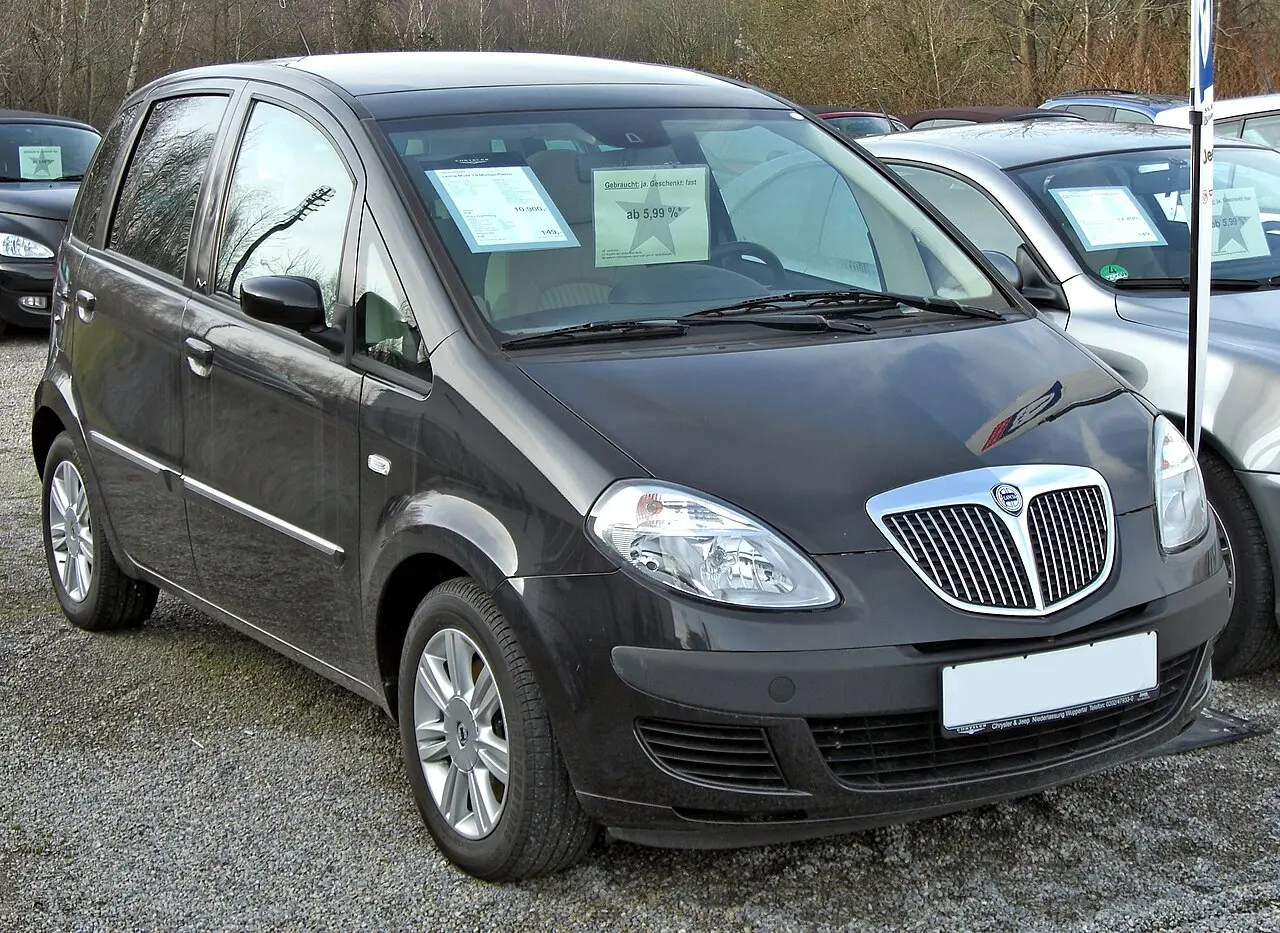
Lancia Musa

Lancia Musa
Photo: M 93 / Wikimedia Commons · Public domain

The official data lists 37 versions of the Lancia Musa (2010–2018), in the European Union and France. Each market publishes its own figures, measured on its own test procedure.

At a glance

Years in the data
2010–2018
Markets
European Union, France
Engines
1.2 L to 1.6 L
Power
51 kW (69 PS) to 88 kW (120 PS)
Fuels
Diesel, Petrol, LPG
Lowest consumption (France)
4.1 L/100 km (NEDC)
New registrations in the EU
114,058

What is the Lancia Musa?

The Musa is a compact five-door MPV, with a taller body and flexible cabin designed for everyday passenger and luggage needs. Lancia introduced it as a small people carrier that combined practical space with the marque’s distinctive Italian styling.

The Musa’s single generation ran from 2004 to 2012. Its upright shape and compact footprint gave it a different character from Lancia’s small hatchback, with a roomier-feeling cabin for daily family use.

Musa generation

The Musa (2004–2012), code 350, was the model’s only generation. Its compact MPV layout offered a taller cabin and flexible interior for passengers and everyday loads.

Engines and power

Across EU registration years 2010–2018, the Musa had 1.2 L to 1.6 L engines producing 51 kW (69 PS) to 88 kW (120 PS). The range included diesel, petrol and LPG versions. France’s ADEME figures for 2012–2015 show 70 kW (95 PS) versions using petrol or diesel.

How economical is the Lancia Musa?

The lowest listed French figure is 4.1 L/100 km on NEDC for petrol and diesel versions. Official EU registration figures total 114,058 across 2010–2018. NEDC is an older European test procedure; comparisons with WLTP in Europe, EPA ratings in the USA or 5-cycle results in Canada should account for the different methods.

Questions and answers

What type of vehicle is the Lancia Musa?

It is a compact five-door MPV with a taller, flexible cabin.

When was the Musa sold?

Its single generation ran from 2004 to 2012.

What is the lowest listed fuel consumption?

The French ADEME figure is 4.1 L/100 km on NEDC.

What fuels and outputs did the Musa offer?

The EU range included diesel, petrol and LPG, with power from 51 kW (69 PS) to 88 kW (120 PS).

Musa Musa (2004–2012)

Lancia Musa Musa
Photo: M 93 / Wikimedia Commons · Public domain

Model codes: 350 · Sold in: European Union and France · References: en.wikipedia.org

European Union 18 versions

New cars registered in the EU (plus Norway and Iceland), from the European Environment Agency. Figures on the NEDC procedure until 2020 and on WLTP from 2021; versions are grouped by engine and power, with their number of registrations.

Years and versionEnginePowerFuelCO₂EU registrations
20121.4 L57 kW (77 PS)LPG119 g/km14,442
20121.2 L70 kW (95 PS)Diesel113 g/km10,349
20121.4 L70 kW (95 PS)Petrol136 g/km5,656
20111.2 L70 kW (95 PS)Diesel112 g/km16,076
20111.4 L70 kW (95 PS)Petrol137 g/km10,916
20111.4 L57 kW (77 PS)LPG119 g/km2,137
20111.6 L88 kW (120 PS)Diesel119 g/km1,060
20111.2 L66 kW (90 PS)Diesel120 g/km799
20111.4 L57 kW (77 PS)Petrol145 g/km671
20111.2 L51 kW (69 PS)Diesel129 g/km203
2011––Petrol145 g/km15
20111.6 L85 kW (116 PS)Diesel118 g/km10
20101.2 L–Diesel116 g/km21,596
20101.4 L–LPG119 g/km13,884
20101.4 L–Petrol140 g/km12,144
20101.6 L–Diesel123 g/km1,386
2010––Petrol143 g/km132
20101.9 L–Diesel139 g/km36

France 4 versions

New cars on sale in France, from ADEME Car Labelling. NEDC figures until 2015, WLTP figures in the current catalogue.

Years and versionEnginePowerFuelGearboxConsumption (combined)CO₂
2012–2013Musa 1.3 MultiJet 16v (95ch) DPF Stop & Start D.F.S · Musa 1.3 MultiJet 16v (95ch) DPF Stop&Start D.F.S–70 kW (95 PS)Diesel5-speed manual4.1 L/100 km NEDC109 g/km
2012–2013Musa 1.3 MultiJet 16v (95ch) DPF Stop & Start · Musa 1.3 MultiJet 16v (95ch) DPF Stop&Start–70 kW (95 PS)Diesel5-speed manual4.3 L/100 km NEDC114 g/km
2012–2013Musa 1.4 16v (95ch) Stop & Start D.F.S · Musa 1.4 16v (95ch) Stop&Start D.F.S–70 kW (95 PS)Petrol5-speed manual5.6 L/100 km NEDC130 g/km
2012–2013Musa 1.4 16v (95ch) Stop & Start · Musa 1.4 16v (95ch) Stop&Start–70 kW (95 PS)Petrol6-speed manual6.0 L/100 km NEDC140 g/km

Versions outside these generations

European Union 7 versions

New cars registered in the EU (plus Norway and Iceland), from the European Environment Agency. Figures on the NEDC procedure until 2020 and on WLTP from 2021; versions are grouped by engine and power, with their number of registrations.

Years and versionEnginePowerFuelCO₂EU registrations
20181.2 L51 kW (69 PS)Diesel135 g/km10
20161.4 L57 kW (77 PS)LPG119 g/km10
20141.2 L51 kW (69 PS)Diesel131 g/km10
20141.4 L57 kW (77 PS)LPG119 g/km10
20131.4 L57 kW (77 PS)LPG131 g/km1,860
20131.2 L70 kW (95 PS)Diesel113 g/km384
20131.4 L70 kW (95 PS)Petrol138 g/km262

France 8 versions

New cars on sale in France, from ADEME Car Labelling. NEDC figures until 2015, WLTP figures in the current catalogue.

Years and versionEnginePowerFuelGearboxConsumption (combined)CO₂
2015Musa 1.3 MultiJet 16v (95ch) DPF Stop&Start D.F.S–70 kW (95 PS)Diesel5-speed manual4.1 L/100 km NEDC109 g/km
2015Musa 1.3 MultiJet 16v (95ch) DPF Stop&Start–70 kW (95 PS)Diesel5-speed manual4.3 L/100 km NEDC114 g/km
2015Musa 1.4 16v (95ch) Stop&Start D.F.S–70 kW (95 PS)Petrol5-speed manual5.6 L/100 km NEDC130 g/km
2015Musa 1.4 16v (95ch) Stop&Start–70 kW (95 PS)Petrol6-speed manual6.0 L/100 km NEDC140 g/km
2014Musa 1.3 MultiJet 16v (95ch) DPF Stop&Start–70 kW (95 PS)Diesel5-speed manual4.3 L/100 km NEDC114 g/km
2014Musa 1.3 MultiJet 16v (95ch) DPF Stop&Start D.F.S–70 kW (95 PS)Diesel5-speed manual4.1 L/100 km NEDC109 g/km
2014Musa 1.4 16v (95ch) Stop&Start–70 kW (95 PS)Petrol6-speed manual6.0 L/100 km NEDC140 g/km
2014Musa 1.4 16v (95ch) Stop&Start D.F.S–70 kW (95 PS)Petrol5-speed manual5.6 L/100 km NEDC130 g/km

Official figures are measured on standard test procedures and differ between markets. Your consumption depends on how, where and in what conditions you drive.