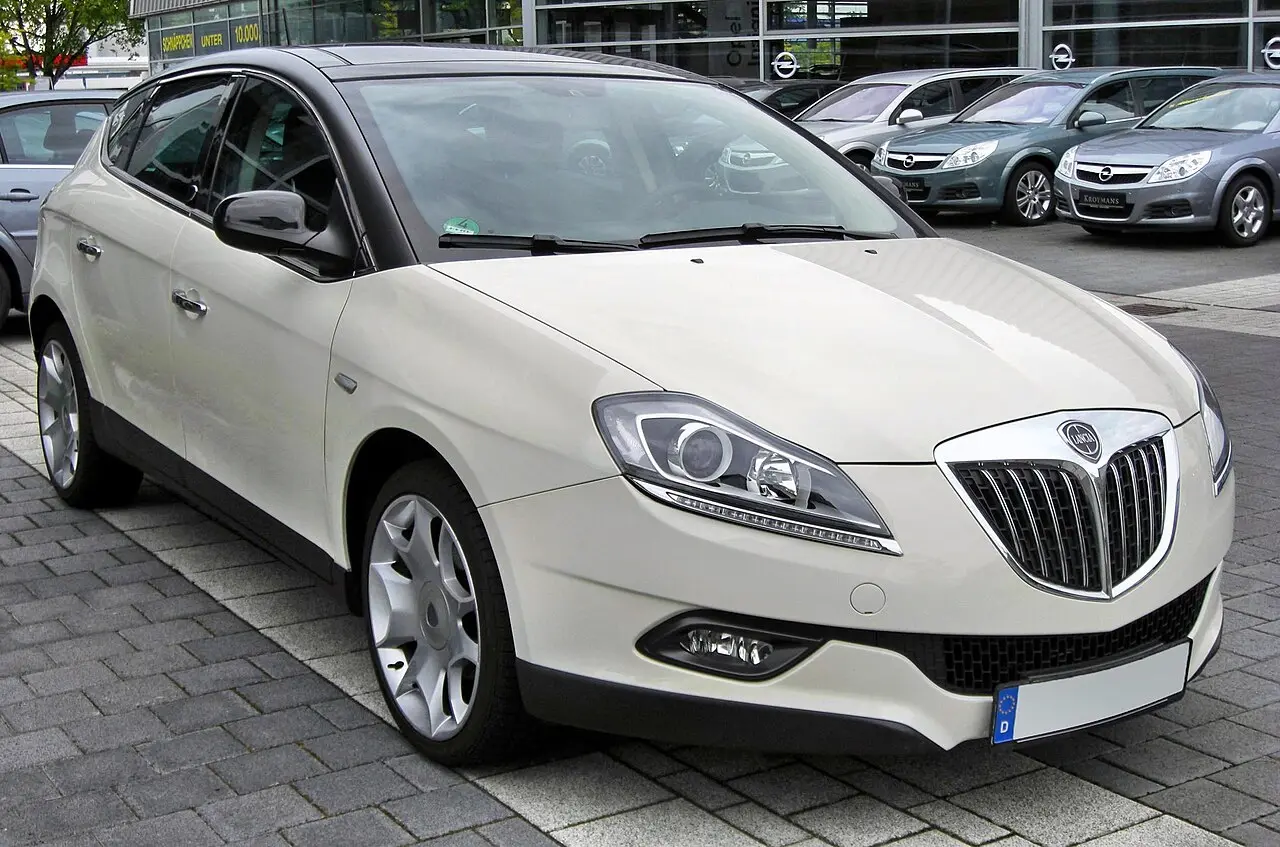
What is the Lancia Delta?
The Delta is a five-door family hatchback, offering a roomier cabin than Lancia’s small city cars. The third-generation model arrived in 2008 with a distinctive design and a choice of engines. Its practical layout made it suited to family journeys and everyday driving.
The Delta name is also part of Lancia’s rallying history. The third generation carried the name into a more comfort-focused hatchback, with space and technology at the heart of its character.
Delta generations
The third-generation Delta, code 844, ran from 2008 to 2014. It was the only generation represented in the EU and France figures here.
Engines and power
In EU registration years 2010–2016, the Delta range covered 1.4 L to 2.0 L engines, with outputs from 77 kW (105 PS) to 147 kW (200 PS). Buyers could choose diesel, petrol or LPG versions, alongside versions classified under other fuel. Diesel was prominent among the leading EU registrations, which were for 1.6 L versions.
How economical is the Lancia Delta?
France’s ADEME figures for 2012–2015 list a low of 4.4 L/100 km on the NEDC test for petrol and diesel versions. Official EU registration figures total 132,348 across 2010–2016. NEDC is an older European test procedure; comparisons with later WLTP results, US EPA ratings or Canadian 5-cycle results need to account for the different methods.
Questions and answers
What type of car is the Lancia Delta?
The third-generation Delta is a five-door family hatchback.
Which Delta generation is covered here?
The third generation, code 844, ran from 2008 to 2014.
What is the lowest listed Delta consumption?
France’s ADEME figure is 4.4 L/100 km on NEDC for petrol and diesel versions.
Which engines were available?
The EU range included 1.4 L to 2.0 L engines, with petrol, diesel, LPG and other-fuel classifications.