Kia

Kia Spectra

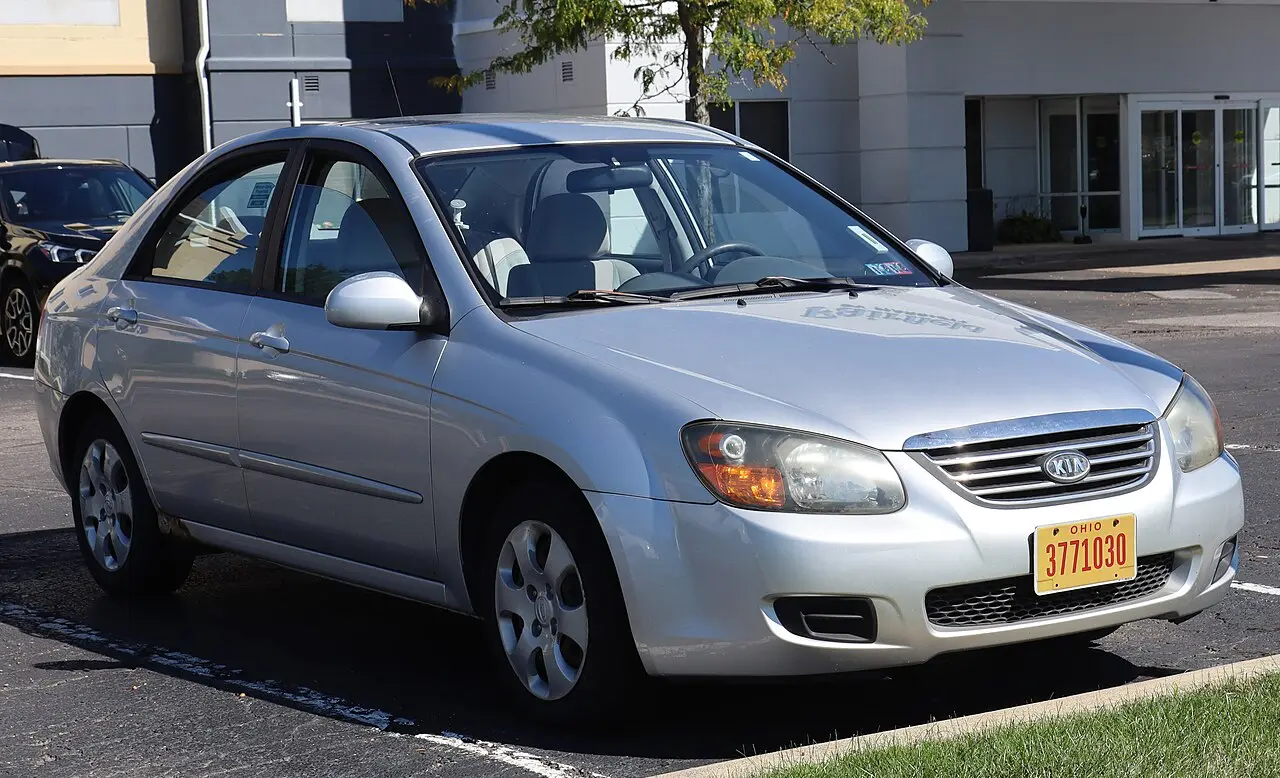
Kia Spectra
Photo: Cutlass / Wikimedia Commons · CC0

The official data lists 20 versions of the Kia Spectra (2002–2009), in the United States and Canada. Each market publishes its own figures, measured on its own test procedure.

At a glance

Years in the data
2002–2009
Markets
United States, Canada
Engines
1.8 L to 2.0 L
Fuels
Petrol
Lowest consumption (United States)
8.7 L/100 km (EPA)
Lowest consumption (Canada)
8.8 L/100 km (5-cycle)

What is the Kia Spectra?

The Spectra was a compact Kia for North American drivers, offered as a sedan and, in its second generation, as the five-door Spectra5 hatchback. The hatchback added a flexible load area to the car’s everyday practicality.

The model appears in US and Canadian figures from 2002 through 2009.

Kia Spectra generations

The first generation covered 2002–2003. The second generation, known by the code LD, followed for 2004–2009. It brought updated styling and added the Spectra5 hatchback to the range.

Engines and fuel consumption

The US and Canadian line-ups used petrol engines from 1.8 L to 2.0 L. The EPA’s best combined rating was 27 MPG, equivalent to 8.7 L/100 km. Canada’s NRCan 5-cycle figure was 8.8 L/100 km. The two countries use different test procedures; European figures use WLTP or, for older vehicles, NEDC.

The figures include nine US versions and eleven Canadian versions across their respective model years.

Where was the Kia Spectra sold?

The Spectra appears in figures for the United States and Canada, spanning 2002–2009 and both generations.

Questions and answers

Was the Kia Spectra a sedan or a hatchback?

It was sold as a compact sedan, and the second generation also included the five-door Spectra5 hatchback.

What engines did the Spectra have?

The listed North American versions used petrol engines between 1.8 L and 2.0 L.

What was the Spectra’s official fuel consumption?

The EPA best combined rating was 27 MPG, or 8.7 L/100 km. Canada’s NRCan 5-cycle figure was 8.8 L/100 km.
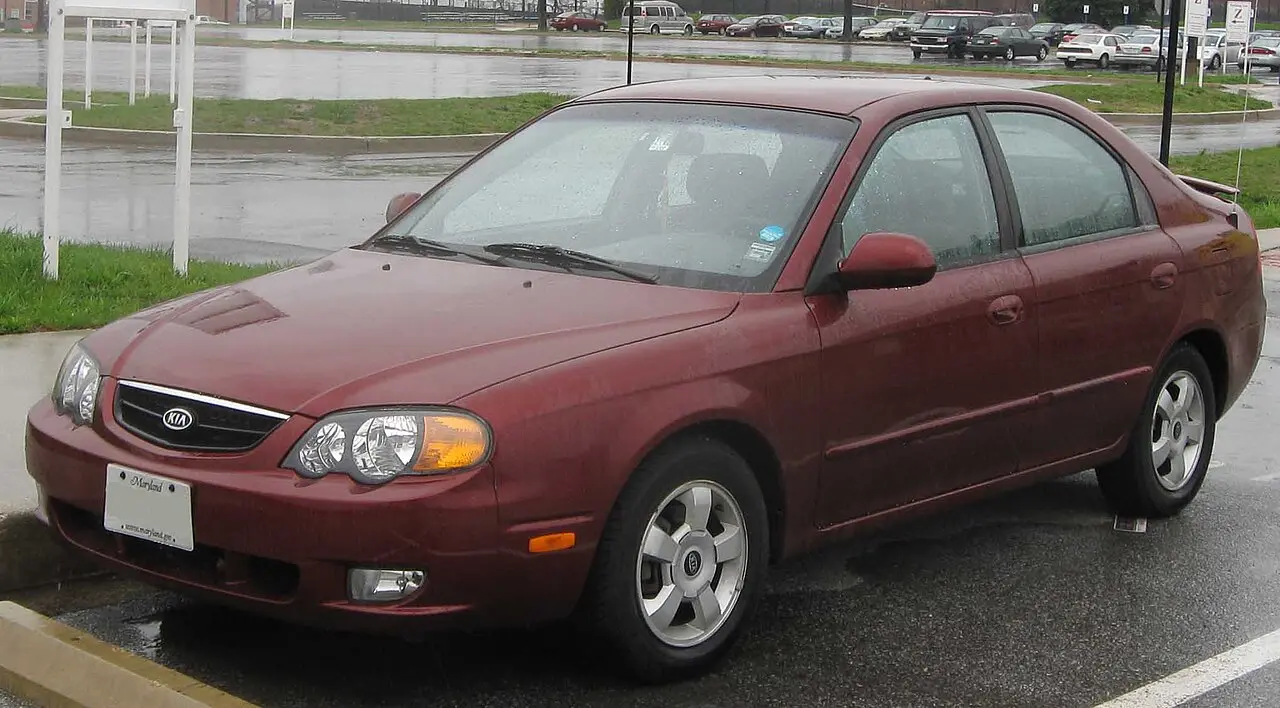
Spectra first generation (2002–2003)

Kia Spectra first generation
Photo: IFCAR / Wikimedia Commons · Public domain

Sold in: United States and Canada · References: en.wikipedia.org, jdpower.com

Show all 4 versions

Spectra second generation (2004–2009)

Kia Spectra second generation
Photo: Cutlass / Wikimedia Commons · CC0

Model codes: LD · Sold in: United States and Canada · References: en.wikipedia.org, cars.com

United States 7 versions

Model years sold in the USA, from the EPA and the Department of Energy (fueleconomy.gov). MPG on the EPA test; litres per 100 km = 235.215 ÷ MPG.

Years and versionEngineFuelGearboxDriveConsumption (combined)CO₂
2007–20092.0 LPetrol5-speed manualFront-wheel drive26 MPG (9.0 L/100 km) EPA212 g/km
2008–2009CLKUP2.0 LPetrol4-speed automaticFront-wheel drive27 MPG (8.7 L/100 km) EPA205 g/km
2007CLKUP2.0 LPetrol4-speed automaticFront-wheel drive26 MPG (9.0 L/100 km) EPA212 g/km
2005–20062.0 LPetrol5-speed manualFront-wheel drive25 MPG (9.4 L/100 km) EPA221 g/km
2006CLKUP2.0 LPetrol4-speed automaticFront-wheel drive25 MPG (9.4 L/100 km) EPA221 g/km
2004–2005CLKUP2.0 LPetrol4-speed automaticFront-wheel drive25 MPG (9.4 L/100 km) EPA221 g/km
20042.0 LPetrol5-speed manualFront-wheel drive25 MPG (9.4 L/100 km) EPA221 g/km

Canada 9 versions

Model years sold in Canada, from Natural Resources Canada fuel consumption ratings (5-cycle test).

Years and versionEngineFuelGearboxConsumption (combined)CO₂
2008–2009Mid-size2.0 LPetrol4-speed automatic8.8 L/100 km 5-cycle202 g/km
2009Mid-size2.0 LPetrol5-speed manual9.1 L/100 km 5-cycle209 g/km
2008Mid-size2.0 LPetrol5-speed manual9.1 L/100 km 5-cycle209 g/km
2007Mid-size2.0 LPetrol4-speed automatic8.8 L/100 km 5-cycle202 g/km
2007Mid-size2.0 LPetrol5-speed manual9.2 L/100 km 5-cycle212 g/km
2006Mid-size2.0 LPetrol4-speed automatic9.2 L/100 km 5-cycle212 g/km
2006Mid-size2.0 LPetrol5-speed manual9.5 L/100 km 5-cycle219 g/km
2005Mid-size2.0 LPetrol4-speed automatic9.3 L/100 km 5-cycle214 g/km
2005Mid-size2.0 LPetrol5-speed manual9.5 L/100 km 5-cycle219 g/km

Official figures are measured on standard test procedures and differ between markets. Your consumption depends on how, where and in what conditions you drive.