The official data lists 327 versions of the Kia Sorento (2003–2027), in the European Union, the United Kingdom, France, the United States, and Canada. Each market publishes its own figures, measured on its own test procedure.
At a glance
Years in the data
2003–2027
Markets
European Union, United Kingdom, France, United States, Canada
Engines
1.6 L to 3.5 L
Power
110 kW (150 PS) to 230 kW (313 PS)
Fuels
Plug-in hybrid, Hybrid, Diesel, Petrol, LPG
Lowest consumption (United Kingdom)
5.7 L/100 km (NEDC)
Lowest consumption (France)
5.9 L/100 km (NEDC)
Lowest consumption (European Union)
5.9 L/100 km (WLTP)
Plug-in hybrid, weighted (European Union)
1.6 L/100 km (WLTP)
Plug-in hybrid, weighted (United States)
6.9 L/100 km (EPA)
New registrations in the EU
312,960
What is the Kia Sorento?
The Kia Sorento is a family SUV that evolved from a traditional, frame-based design into a more road-focused model. It sits toward the larger end of Kia’s SUV range, with space and versatility for family trips and everyday driving. The first generation arrived in 2003, and the model has had four generations.
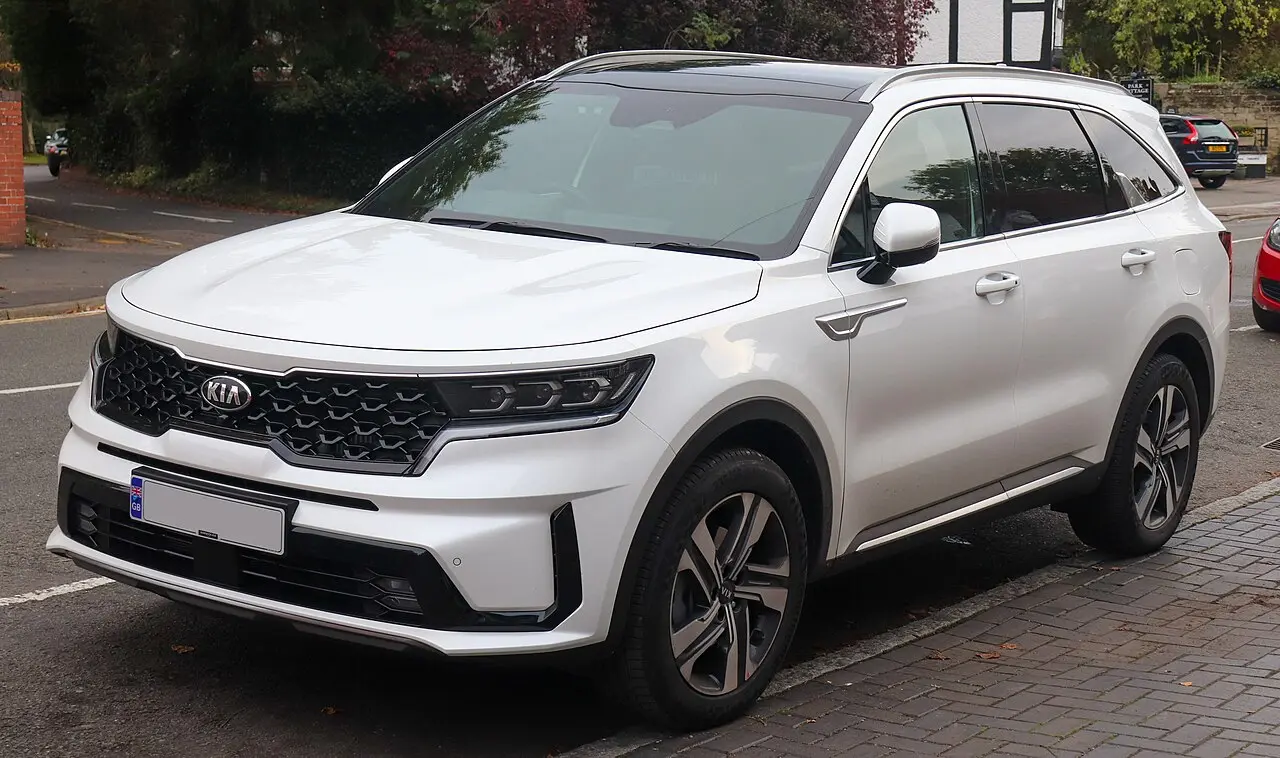
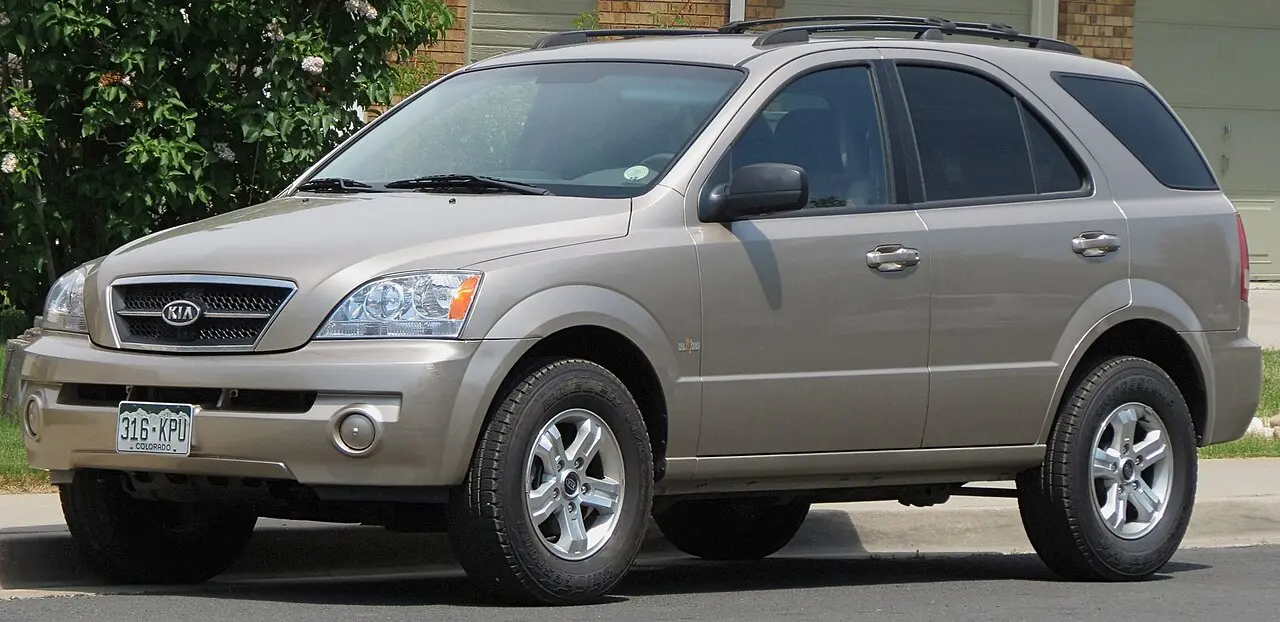
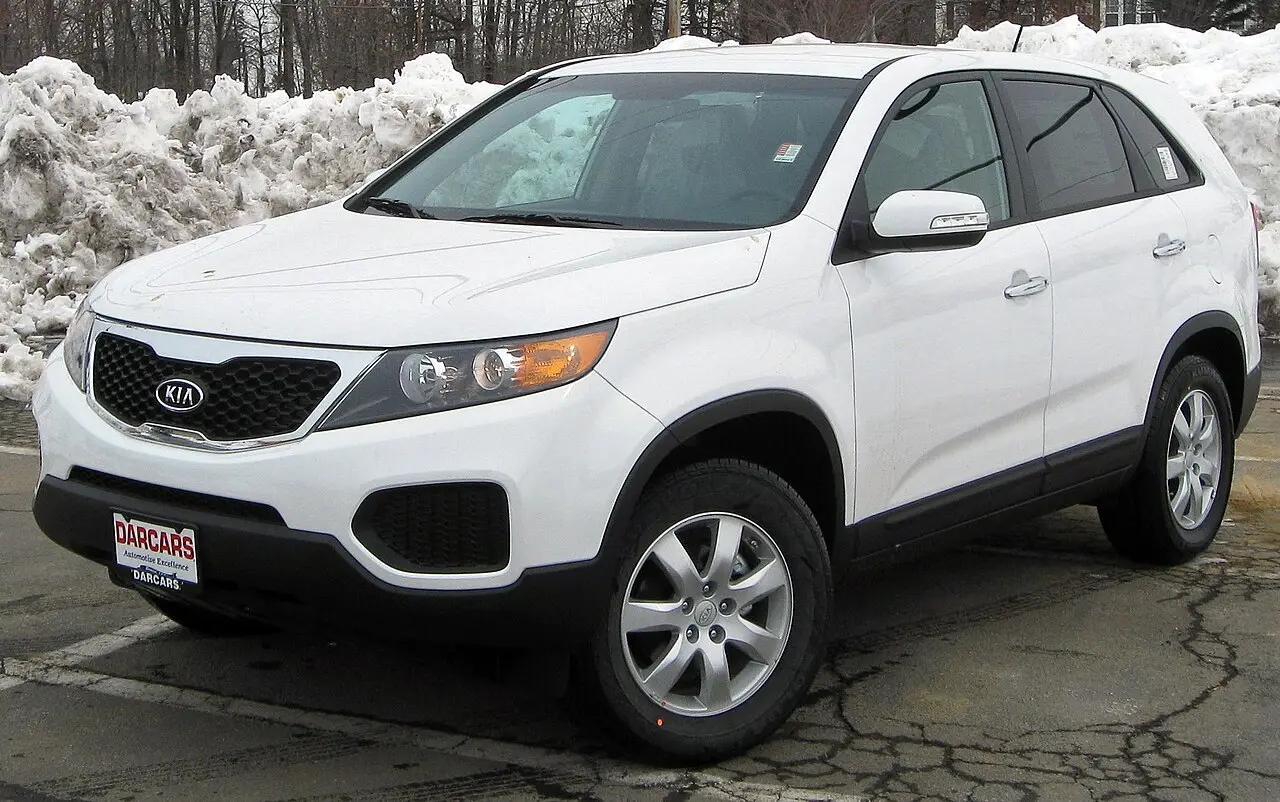
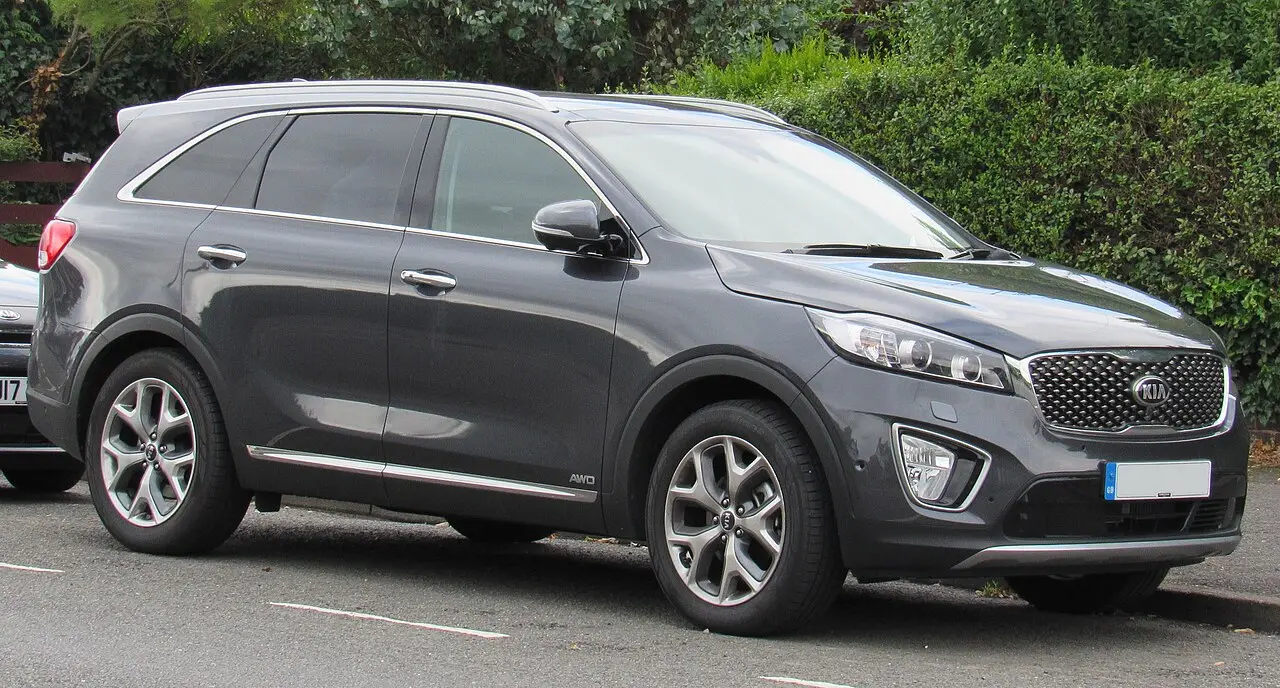
The first generation (BL, 2003–2009) used a separate frame. The second (XM, 2010–2015) adopted a unitary body, a significant change in the Sorento’s design. The third generation was the UM (2016–2020), followed by the MQ4 (2021–today). Hybrid and plug-in hybrid versions joined the range in the fourth generation.
Engines and power
The range varies by market and generation. EU registrations cover engines from 1.6 to 2.5 litres and power from 110 kW (150 PS) to 204 kW (277 PS), with diesel, petrol, hybrid, plug-in hybrid, LPG and other fuel entries. In the UK, engines range from 1.6 to 3.3 litres, with outputs from 118 kW (160 PS) to 230 kW (313 PS).
The French listing covers 1.6-litre engines producing 132 kW (180 PS) to 147 kW (200 PS), across hybrid, plug-in hybrid and diesel entries. US and Canadian listings include engines from 1.6 to 3.8 litres. The leading EU registration specification was a 2.2-litre diesel producing 147 kW (200 PS), with high registration totals in 2015, 2016 and 2017.
Fuel consumption and markets
The lowest listed non-plug-in consumption is 5.9 L/100 km in the EU on WLTP, 5.7 L/100 km in the UK on NEDC, 5.9 L/100 km in France on NEDC, 6.4 L/100 km in the USA on EPA, and 6.6 L/100 km in Canada on the 5-cycle test. The lowest listed plug-in hybrid figures are 1.6 L/100 km in the EU on WLTP, 6.9 L/100 km in the USA on EPA, and 6.9 L/100 km in Canada on the 5-cycle test. Plug-in hybrid weighted figures assume that part of the driving is electric. WLTP and NEDC in Europe, EPA in the USA, and the 5-cycle procedure in Canada differ, so these results are not directly comparable.
Official EU registration figures run from 2010 to 2025 and total 312,960 registrations. UK, US and Canadian listings begin in 2003, while France’s begin in 2012.
Questions and answers
How many generations of Kia Sorento are there?
There are four: BL (2003–2009), XM (2010–2015), UM (2016–2020) and MQ4 (2021–today).
What is the lowest listed Sorento consumption in the EU?
The lowest listed non-plug-in figure is 5.9 L/100 km on WLTP; the plug-in hybrid weighted figure is 1.6 L/100 km on WLTP.
Did the Sorento become more road-focused over time?
The second generation changed from a separate frame to a unitary body, a notable shift in its design.
Where has the Sorento been listed?
Listings cover the EU, UK, France, the USA and Canada.
New cars registered in the EU (plus Norway and Iceland), from the European Environment Agency. Figures on the NEDC procedure until 2020 and on WLTP from 2021; versions are grouped by engine and power, with their number of registrations.
Years and version
Engine
Power
Fuel
Consumption (combined)
CO₂
Electric range
EU registrations
2025
2.2 L
142 kW (193 PS)
Diesel
6.5 L/100 km WLTP
170 g/km
–
3,318
2025
1.6 L
118 kW (160 PS)
Plug-in hybrid
1.6 L/100 km WLTP18.2 kWh/100 km WLTP
39 g/km
55 km
3,118
2025
1.6 L
118 kW (160 PS)
Hybrid
6.9 L/100 km WLTP
156 g/km
–
926
2025
1.6 L
117 kW (159 PS)
Hybrid
6.7 L/100 km WLTP
153 g/km
–
727
2025
1.6 L
117 kW (159 PS)
Plug-in hybrid
1.6 L/100 km WLTP18.2 kWh/100 km WLTP
37 g/km
55 km
572
2025
1.6 L
117 kW (159 PS)
Petrol
6.8 L/100 km WLTP
154 g/km
–
87
2025
1.6 L
132 kW (179 PS)
Hybrid
7.3 L/100 km WLTP
166 g/km
–
72
2025
1.6 L
132 kW (179 PS)
Plug-in hybrid
1.6 L/100 km WLTP16.9 kWh/100 km WLTP
42 g/km
72 km
26
2024
2.2 L
142 kW (193 PS)
Diesel
6.5 L/100 km WLTP
171 g/km
–
4,770
2024
1.6 L
132 kW (179 PS)
Hybrid
7.2 L/100 km WLTP
163 g/km
–
2,480
2024
1.6 L
118 kW (160 PS)
Plug-in hybrid
1.6 L/100 km WLTP18.2 kWh/100 km WLTP
37 g/km
55 km
2,253
2024
1.6 L
132 kW (179 PS)
Plug-in hybrid
1.6 L/100 km WLTP18.4 kWh/100 km WLTP
38 g/km
57 km
1,431
2024
1.6 L
118 kW (160 PS)
Hybrid
6.8 L/100 km WLTP
155 g/km
–
864
2023
1.6 L
132 kW (179 PS)
Plug-in hybrid
1.6 L/100 km WLTP18.4 kWh/100 km WLTP
38 g/km
57 km
5,655
2023
2.2 L
142 kW (193 PS)
Diesel
6.5 L/100 km WLTP
171 g/km
–
5,547
2023
1.6 L
132 kW (179 PS)
Hybrid
6.9 L/100 km WLTP
157 g/km
–
3,690
2023
2.2 L
148 kW (201 PS)
Diesel
6.6 L/100 km WLTP
172 g/km
–
30
2022
1.6 L
132 kW (179 PS)
Plug-in hybrid
1.6 L/100 km WLTP18.4 kWh/100 km WLTP
38 g/km
57 km
3,850
2022
1.6 L
132 kW (179 PS)
Hybrid
6.4 L/100 km WLTP
156 g/km
–
2,355
2022
2.2 L
142 kW (193 PS)
Diesel
6.5 L/100 km WLTP
171 g/km
–
1,247
2022
2.2 L
148 kW (201 PS)
Diesel
6.5 L/100 km WLTP
173 g/km
–
1,154
2022
2.2 L
206 kW (280 PS)
Diesel
–
176 g/km
–
10
2021
1.6 L
132 kW (179 PS)
Plug-in hybrid
2.3 L/100 km WLTP17.6 kWh/100 km WLTP
43 g/km
58 km
17,026
2021
2.2 L
148 kW (201 PS)
Diesel
6.4 L/100 km WLTP
174 g/km
–
7,160
2021
1.6 L
132 kW (179 PS)
Hybrid
5.9 L/100 km WLTP3.4 kWh/100 km WLTP
151 g/km
57 km
4,322
2021
1.6 L
132 kW (179 PS)
Petrol
6.7 L/100 km WLTP
156 g/km
–
612
2021
2.2 L
147 kW (200 PS)
Diesel
6.8 L/100 km WLTP
191 g/km
–
152
2021
2.2 L
148 kW (201 PS)
Petrol
–
176 g/km
–
28
United Kingdom 44 versions
New cars on sale in the UK, from the Vehicle Certification Agency. NEDC figures until 2018 and WLTP figures after; years are the editions a version appeared in.
Years and version
Engine
Power
Fuel
Gearbox
Consumption (combined)
CO₂
Electric range
2025–2026'2' HEV 1.6 T-GDi 6-speed auto AWD
1.6 L
118 kW (160 PS)
Hybrid
6-speed automatic
6.7 L/100 km WLTP
153 g/km
–
2025–2026'3' HEV 1.6 T-GDi 6-speed auto AWD
1.6 L
118 kW (160 PS)
Hybrid
6-speed automatic
7.0 L/100 km WLTP
158 g/km
–
2025–2026'4' HEV 1.6 T-GDi 6-speed auto AWD
1.6 L
118 kW (160 PS)
Hybrid
6-speed automatic
7.1 L/100 km WLTP
160 g/km
–
2025–20262' PHEV 1.6 T-GDi 6-speed auto AWD · 3' PHEV 1.6 T-GDi 6-speed auto AWD · 4' PHEV 1.6 T-GDi 6-speed auto AWD and 3 more trims
1.6 L
118 kW (160 PS)
Plug-in hybrid
6-speed automatic
18.2 kWh/100 km WLTP
–
60 km
2026Pure 1.6 T-GDi 235bhp 6-speed Auto
1.6 L
176 kW (239 PS)
Hybrid
6-speed automatic
6.6 L/100 km WLTP
150 g/km
–
2026Evolve 1.6 T-GDi 235bhp 6-speed Auto
1.6 L
176 kW (239 PS)
Hybrid
6-speed automatic
6.8 L/100 km WLTP
155 g/km
–
2026Aspire 1.6 T-GDi 235bhp 6-speed Auto
1.6 L
176 kW (239 PS)
Hybrid
6-speed automatic
6.9 L/100 km WLTP
157 g/km
–
2026Pure' 1.6 T-GDi 283bhp 6-speed Auto · Evolve' 1.6 T-GDi 283bhp 6-speed Auto · Aspire' 1.6 T-GDi 283bhp 6-speed Auto
Model years sold in the USA, from the EPA and the Department of Energy (fueleconomy.gov). MPG on the EPA test; litres per 100 km = 235.215 ÷ MPG.
Years and version
Engine
Fuel
Gearbox
Drive
Consumption (combined)
CO₂
2026–2027SIDI; Hybrid
1.6 L
Hybrid
6-speed automated manual
Front-wheel drive
37 MPG (6.4 L/100 km) EPA
149 g/km
2026–2027SIDI; Hybrid
1.6 L
Hybrid
6-speed automated manual
All-wheel drive
34 MPG (6.9 L/100 km) EPA
164 g/km
2024–2027SIDI & PFI
2.5 L
Petrol
8-speed automated manual
Front-wheel drive
23 MPG (10.2 L/100 km) EPA
237 g/km
2027SIDI & PFI
2.5 L
Petrol
8-speed automated manual
All-wheel drive
23 MPG (10.2 L/100 km) EPA
242 g/km
2027SIDI & PFI
2.5 L
Petrol
8-speed automatic
Front-wheel drive
26 MPG (9.0 L/100 km) EPA
213 g/km
2027SIDI & PFI
2.5 L
Petrol
8-speed automatic
All-wheel drive
25 MPG (9.4 L/100 km) EPA
223 g/km
2026SIDI; PHEV
1.6 L
Plug-in hybrid
6-speed automated manual
All-wheel drive
33 MPG (7.1 L/100 km) EPA
68 g/km
2024–2026SIDI & PFI
2.5 L
Petrol
8-speed automatic
Front-wheel drive
26 MPG (9.0 L/100 km) EPA
211 g/km
2024–2026SIDI & PFI
2.5 L
Petrol
8-speed automatic
All-wheel drive
25 MPG (9.4 L/100 km) EPA
222 g/km
2026SIDI & PFI
2.5 L
Petrol
8-speed automated manual
All-wheel drive
23 MPG (10.2 L/100 km) EPA
241 g/km
2025SIDI; Hybrid
1.6 L
Hybrid
6-speed automated manual
Front-wheel drive
36 MPG (6.5 L/100 km) EPA
153 g/km
2025SIDI; Hybrid
1.6 L
Hybrid
6-speed automated manual
All-wheel drive
34 MPG (6.9 L/100 km) EPA
163 g/km
2025SIDI; PHEV
1.6 L
Plug-in hybrid
6-speed automated manual
All-wheel drive
33 MPG (7.1 L/100 km) EPA
69 g/km
2024–2025SIDI & PFI
2.5 L
Petrol
8-speed automated manual
All-wheel drive
23 MPG (10.2 L/100 km) EPA
242 g/km
2021–2024SIDI; Hybrid
1.6 L
Hybrid
6-speed automated manual
Front-wheel drive
37 MPG (6.4 L/100 km) EPA
150 g/km
2022–2024SIDI; PHEV
1.6 L
Plug-in hybrid
6-speed automated manual
All-wheel drive
34 MPG (6.9 L/100 km) EPA
65 g/km
2023–2024SIDI; Hybrid
1.6 L
Hybrid
6-speed automated manual
All-wheel drive
34 MPG (6.9 L/100 km) EPA
163 g/km
2021–2023SIDI & PFI
2.5 L
Petrol
8-speed automatic
Front-wheel drive
26 MPG (9.0 L/100 km) EPA
213 g/km
2021–2023SIDI & PFI
2.5 L
Petrol
8-speed automated manual
Front-wheel drive
25 MPG (9.4 L/100 km) EPA
224 g/km
2021–2023SIDI & PFI
2.5 L
Petrol
8-speed automatic
All-wheel drive
24 MPG (9.8 L/100 km) EPA
227 g/km
2022–2023SIDI & PFI
2.5 L
Petrol
8-speed automated manual
All-wheel drive
24 MPG (9.8 L/100 km) EPA
234 g/km
2022SIDI; Hybrid
1.6 L
Hybrid
6-speed automated manual
All-wheel drive
35 MPG (6.7 L/100 km) EPA
160 g/km
2021SIDI & PFI
2.5 L
Petrol
8-speed automated manual
All-wheel drive
24 MPG (9.8 L/100 km) EPA
233 g/km
Canada 12 versions
Model years sold in Canada, from Natural Resources Canada fuel consumption ratings (5-cycle test).
Years and version
Engine
Fuel
Gearbox
Consumption (combined)
CO₂
Electric range
2026Sport utility vehicle: Small
1.6 L
Plug-in hybrid
6-speed automated manual
6.9 L/100 km 5-cycle
62 g/km
55 km
2026Sport utility vehicle: Small
1.6 L
Petrol
6-speed automated manual
7.0 L/100 km 5-cycle
164 g/km
–
2024–2026Sport utility vehicle: Small
2.5 L
Petrol
8-speed automated manual
10.3 L/100 km 5-cycle
241 g/km
–
2024–2026Sport utility vehicle: Small
2.5 L
Petrol
8-speed automatic
9.4 L/100 km 5-cycle
222 g/km
–
2025Sport utility vehicle: Small
1.6 L
Plug-in hybrid
6-speed automated manual
7.0 L/100 km 5-cycle
69 g/km
48 km
2025Sport utility vehicle: Small
1.6 L
Petrol
6-speed automatic
7.0 L/100 km 5-cycle
163 g/km
–
2022–2024Sport utility vehicle: Small
1.6 L
Plug-in hybrid
6-speed automated manual
6.9 L/100 km 5-cycle
65 g/km
51 km
2024Sport utility vehicle: Small
1.6 L
Petrol
6-speed automated manual
6.8 L/100 km 5-cycle
160 g/km
–
2022–2023Sport utility vehicle: Small
1.6 L
Petrol
6-speed automated manual
6.6 L/100 km 5-cycle
157 g/km
–
2021–2023Sport utility vehicle: Small
2.5 L
Petrol
8-speed automatic
9.7 L/100 km 5-cycle
227 g/km
–
2022–2023Sport utility vehicle: Small
2.5 L
Petrol
8-speed automated manual
9.9 L/100 km 5-cycle
234 g/km
–
2021Sport utility vehicle: Small
2.5 L
Petrol
8-speed automated manual
9.9 L/100 km 5-cycle
233 g/km
–
Official figures are measured on standard test procedures and differ between markets. Your consumption depends on how, where and in what conditions you drive.