The official data lists 194 versions of the Kia Optima (2001–2021), in the European Union, the United Kingdom, France, the United States, and Canada. Each market publishes its own figures, measured on its own test procedure.
At a glance
Years in the data
2001–2021
Markets
European Union, United Kingdom, France, United States, Canada
Engines
1.6 L to 2.7 L
Power
99 kW (135 PS) to 180 kW (245 PS)
Fuels
Hybrid, Diesel, Plug-in hybrid, Petrol, LPG
Lowest consumption (United Kingdom)
4.2 L/100 km (NEDC)
Lowest consumption (France)
5.1 L/100 km (NEDC)
Lowest consumption (United States)
5.6 L/100 km (EPA)
Plug-in hybrid, weighted (United Kingdom)
1.4 L/100 km (NEDC)
Plug-in hybrid, weighted (United States)
5.7 L/100 km (EPA)
New registrations in the EU
141,299
What is the Kia Optima?
The Optima is a family-sized four-door saloon, called a sedan in North America. In Kia’s European line-up, it sat in the D-segment, where its spacious cabin and practical layout made it well suited to family and business travel.
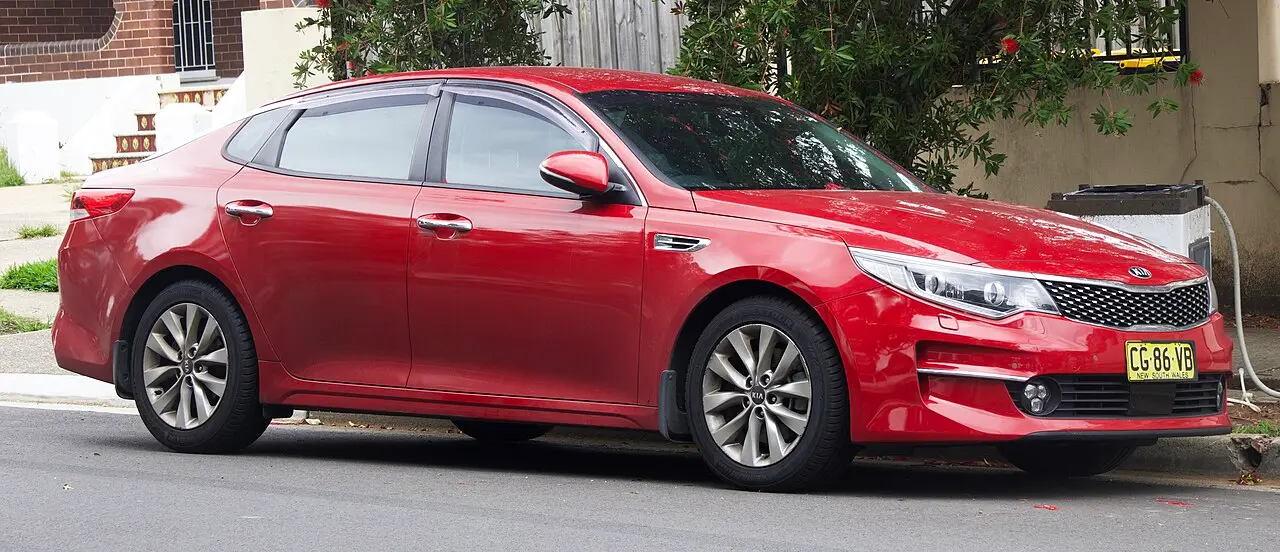
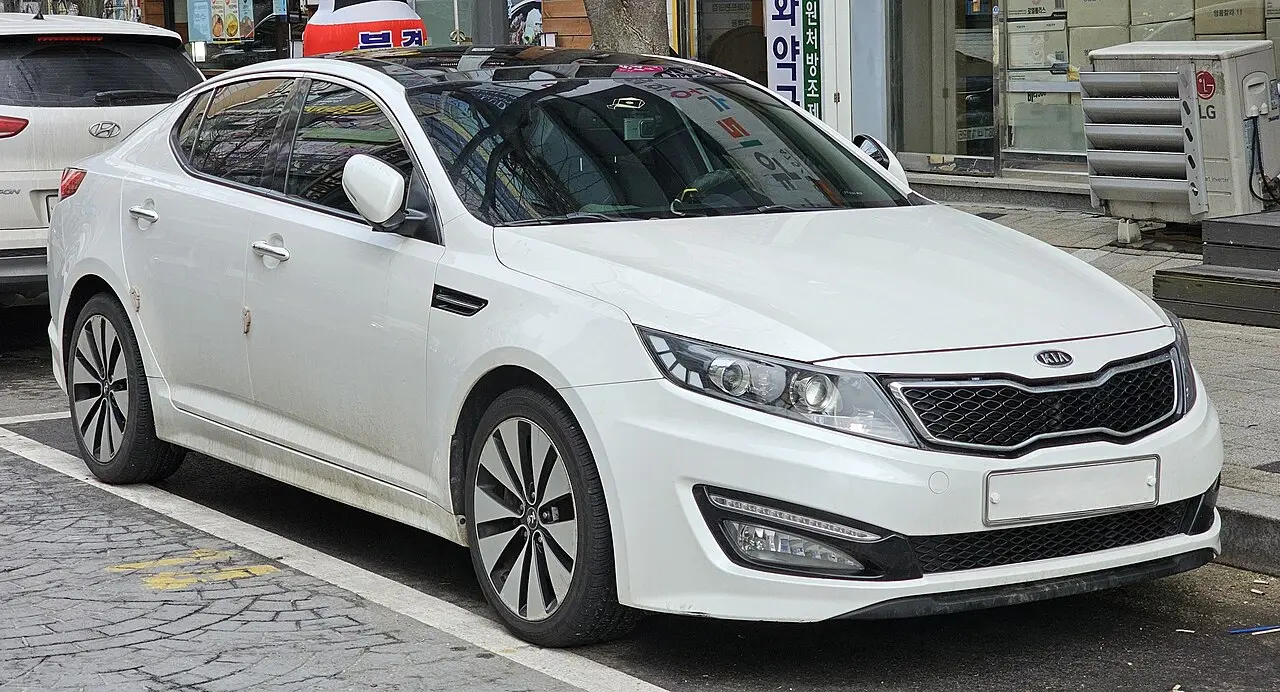
The third-generation Optima brought a distinctive new design to the model, with Peter Schreyer helping shape Kia’s design direction. Later versions added hybrid and plug-in hybrid options alongside petrol and diesel engines.
Optima generations
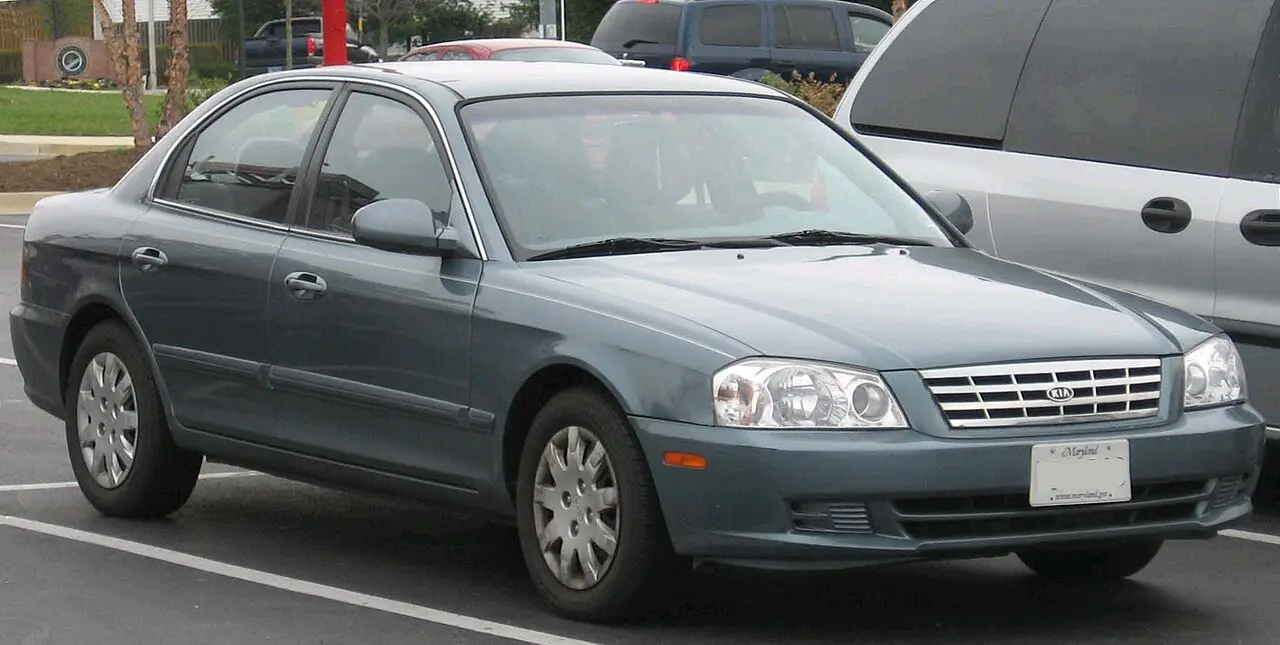
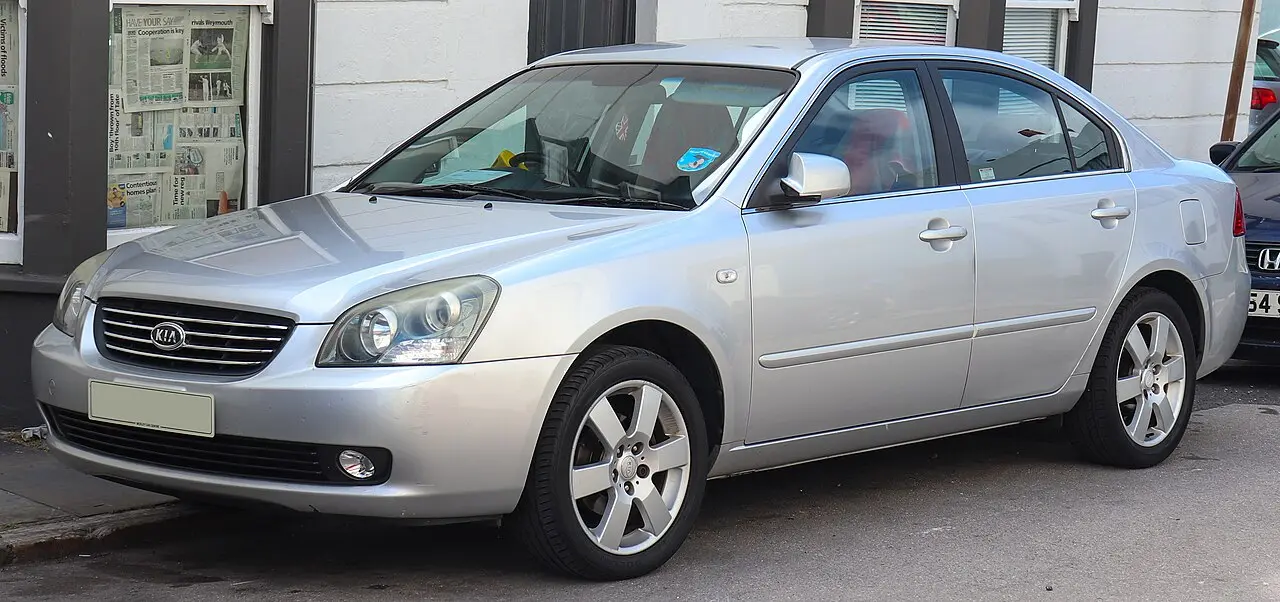
The first generation ran from 2001 to 2006, followed by the second from 2006 to 2010; both were listed for the US market. The third generation, sold from 2011 to 2015, reached more markets, including Europe, the UK, France and Canada. The fourth generation followed from 2016 to 2020 in the US, Canada, the EU and UK.
The Optima later carried on in European and UK figures through 2021, and in US and Canadian figures through 2020. Kia also used the K5 name for the model in some markets.
Engines, power and economy
Across EU versions, engines ranged from 1.6 to 2.0 litres, with power from 99 kW (135 PS) to 180 kW (245 PS). The UK range covered 1.6 to 2.0 litres and 100–180 kW (136–244 PS). US versions included engines from 1.6 to 2.7 litres, while Canada’s ranged from 1.6 to 2.4 litres. Depending on the market and year, the Optima was offered with petrol, diesel, hybrid, plug-in hybrid or LPG power.
Official consumption figures use different test procedures. The lowest listed non-plug-in figure in the UK is 4.2 L/100 km on NEDC; France’s is 5.1 L/100 km on NEDC. The UK plug-in hybrid’s 1.4 L/100 km NEDC figure is weighted to account for some electric driving. In the US, the lowest listed figure is 5.6 L/100 km under EPA testing, with a best combined rating of 42 MPG; the weighted plug-in hybrid figure is 5.7 L/100 km. Canada lists 5.6 L/100 km under its 5-cycle procedure, or 5.7 L/100 km for the weighted plug-in hybrid figure. WLTP and NEDC in Europe, EPA in the US and the 5-cycle test in Canada use different procedures, so their figures are not directly interchangeable.
Where was the Optima sold?
The Optima appears in official figures for the EU, UK, France, US and Canada. European registrations span 2010–2021; UK figures cover 2012–2021 and French figures cover 2012–2015. The US span is 2001–2020 and Canada’s is 2011–2020. In EU registrations, the 1.7-litre diesel rated at 104 kW (141 PS) was among the leading versions in multiple years.
Questions and answers
What type of car is the Kia Optima?
It is a family-sized four-door saloon, or sedan, in Kia’s D-segment range.
What engines did the Optima have?
Depending on market, it came with petrol, diesel, hybrid, plug-in hybrid or LPG power. EU engines ranged from 1.6 to 2.0 litres.
What is the Optima’s lowest official consumption figure?
The lowest listed figure is 1.4 L/100 km for the UK plug-in hybrid on NEDC. It is a weighted figure that assumes some driving is electric.
When was the Optima sold in Europe?
EU registration figures cover 2010–2021; UK figures cover 2012–2021 and French figures 2012–2015.
Model codes: JF · Sold in: United States, Canada, European Union, and United Kingdom · References: en.wikipedia.org, go-parts.com
European Union 46 versions
New cars registered in the EU (plus Norway and Iceland), from the European Environment Agency. Figures on the NEDC procedure until 2020 and on WLTP from 2021; versions are grouped by engine and power, with their number of registrations.
Years and version
Engine
Power
Fuel
Consumption (combined)
CO₂
Electric range
EU registrations
2020
2.0 L
113 kW (154 PS)
Plug-in hybrid
14.9 kWh/100 km NEDC
33 g/km
53 km
9,445
2020
1.6 L
132 kW (179 PS)
Petrol
–
146 g/km
–
1,269
2020
1.6 L
100 kW (136 PS)
Diesel
–
119 g/km
–
865
2020
2.0 L
120 kW (163 PS)
Petrol
–
176 g/km
–
122
2020
2.0 L
113 kW (154 PS)
Petrol
–
146 g/km
–
44
2020
2.0 L
175 kW (238 PS)
Petrol
–
209 g/km
–
40
2019
2.0 L
113 kW (154 PS)
Plug-in hybrid
14.5 kWh/100 km NEDC
33 g/km
–
10,110
2019
1.6 L
100 kW (136 PS)
Diesel
–
120 g/km
–
6,556
2019
1.6 L
132 kW (179 PS)
Petrol
15.7 kWh/100 km NEDC
148 g/km
–
4,918
2019
2.0 L
120 kW (163 PS)
Petrol
–
178 g/km
–
1,120
2019
2.0 L
115 kW (156 PS)
Plug-in hybrid
12.3 kWh/100 km NEDC
33 g/km
–
770
2019
1.7 L
104 kW (141 PS)
Diesel
–
117 g/km
–
616
2019
2.0 L
180 kW (245 PS)
Petrol
–
210 g/km
–
334
2019
2.0 L
175 kW (238 PS)
Petrol
–
209 g/km
–
242
2019
2.0 L
113 kW (154 PS)
Hybrid
–
155 g/km
–
110
2019
1.7 L
99 kW (135 PS)
Diesel
–
119 g/km
–
100
2019
2.0 L
10 kW (14 PS)
Plug-in hybrid
–
33 g/km
–
36
2018
1.7 L
104 kW (141 PS)
Diesel
–
117 g/km
–
13,700
2018
2.0 L
115 kW (156 PS)
Hybrid
12.3 kWh/100 km NEDC
33 g/km
–
8,106
2018
1.6 L
100 kW (136 PS)
Diesel
–
120 g/km
–
1,844
2018
1.6 L
132 kW (179 PS)
Petrol
–
147 g/km
–
1,296
2018
2.0 L
120 kW (163 PS)
Petrol
–
174 g/km
–
1,212
2018
2.0 L
180 kW (245 PS)
Petrol
–
195 g/km
–
805
2018
1.7 L
99 kW (135 PS)
Diesel
–
117 g/km
–
282
2018
2.0 L
113 kW (154 PS)
Hybrid
13.6 kWh/100 km NEDC
37 g/km
–
44
2018
2.0 L
115 kW (156 PS)
Hybrid
–
37 g/km
–
29
2018
2.0 L
175 kW (238 PS)
Petrol
–
212 g/km
–
28
2018
2.0 L
10 kW (14 PS)
Hybrid
12.3 kWh/100 km NEDC
34 g/km
–
20
2017
1.7 L
156 kW (212 PS)
Diesel
–
120 g/km
–
12,260
2017
1.7 L
104 kW (141 PS)
Other fuel
–
117 g/km
–
10,042
2017
2.0 L
115 kW (156 PS)
Hybrid
12.3 kWh/100 km NEDC
36 g/km
–
4,826
2017
2.0 L
180 kW (245 PS)
Petrol
–
191 g/km
–
1,266
2017
2.0 L
120 kW (163 PS)
Petrol
–
173 g/km
–
954
2017
2.0 L
180 kW (245 PS)
Petrol
–
173 g/km
–
546
2017
1.7 L
104 kW (141 PS)
Diesel
–
117 g/km
–
422
2017
1.7 L
99 kW (135 PS)
Diesel
–
116 g/km
–
390
2017
2.0 L
270 kW (367 PS)
Petrol
–
191 g/km
–
244
2016–2017
2.0 L
10 kW (14 PS)
Hybrid
12.2 kWh/100 km NEDC
37 g/km
–
244
2016
1.7 L
104 kW (141 PS)
Diesel
–
117 g/km
–
15,116
2016
2.0 L
115 kW (156 PS)
Hybrid
12.2 kWh/100 km NEDC
42 g/km
–
1,176
2016
2.0 L
180 kW (245 PS)
Petrol
–
191 g/km
–
606
2016
2.0 L
120 kW (163 PS)
Petrol
–
174 g/km
–
282
2016
2.0 L
120 kW (163 PS)
LPG
–
173 g/km
–
272
2016
1.7 L
100 kW (136 PS)
Diesel
–
147 g/km
–
162
2016
2.0 L
121 kW (165 PS)
Petrol
–
167 g/km
–
36
2016
2.0 L
110 kW (150 PS)
Petrol
–
119 g/km
–
14
United Kingdom 28 versions
New cars on sale in the UK, from the Vehicle Certification Agency. NEDC figures until 2018 and WLTP figures after; years are the editions a version appeared in.
Years and version
Engine
Power
Fuel
Gearbox
Consumption (combined)
CO₂
Electric range
2020–20212 1.6 CRDi 134bhp 6-speed manual ISG
1.6 L
100 kW (136 PS)
Diesel
6-speed manual
5.2 L/100 km WLTP
137 g/km
–
2020–20213 1.6 CRDi 134bhp 6-speed manual ISG
1.6 L
100 kW (136 PS)
Diesel
6-speed manual
5.3 L/100 km WLTP
139 g/km
–
2020–20213 1.6 CRDi 134bhp 7-speed auto DCT ISG
1.6 L
100 kW (136 PS)
Diesel
7-speed automatic
5.3 L/100 km WLTP
138 g/km
–
2020–20212 1.6 CRDi 134bhp 6-speed manual ISG
1.6 L
100 kW (136 PS)
Diesel
6-speed manual
5.4 L/100 km WLTP
142 g/km
–
2020–20213 1.6 CRDi 134bhp 6-speed manual ISG
1.6 L
100 kW (136 PS)
Diesel
6-speed manual
5.5 L/100 km WLTP
143 g/km
–
2020–20213 1.6 CRDi 134bhp 7-speed auto DCT ISG
1.6 L
100 kW (136 PS)
Diesel
7-speed automatic
5.4 L/100 km WLTP
140 g/km
–
2020–2021GT-Line S 1.6 CRDi 134bhp 7-speed auto DCT ISG
1.6 L
100 kW (136 PS)
Diesel
7-speed automatic
5.4 L/100 km WLTP
142 g/km
–
2020–2021GT 2.0 T-GDi 235bhp 6-speed auto
2.0 L
175 kW (238 PS)
Petrol
6-speed automatic
9.3 L/100 km WLTP
211 g/km
–
20192 1.6 CRDi 134bhp 6-speed manual ISG
1.6 L
100 kW (136 PS)
Diesel
6-speed manual
5.2 L/100 km WLTP
–
–
20193 1.6 CRDi 134bhp 6-speed manual ISG
1.6 L
100 kW (136 PS)
Diesel
6-speed manual
5.3 L/100 km WLTP
–
–
20193 1.6 CRDi 134bhp 7-speed auto DCT ISG
1.6 L
100 kW (136 PS)
Diesel
7-speed automatic
5.3 L/100 km WLTP
–
–
20192 1.6 CRDi 134bhp 6-speed manual ISG
1.6 L
100 kW (136 PS)
Diesel
6-speed manual
5.4 L/100 km WLTP
–
–
20193 1.6 CRDi 134bhp 6-speed manual ISG
1.6 L
100 kW (136 PS)
Diesel
6-speed manual
5.5 L/100 km WLTP
–
–
20193 1.6 CRDi 134bhp 7-speed auto DCT ISG · GT-Line S 1.6 CRDi 134bhp 7-speed auto DCT ISG
Model years sold in the USA, from the EPA and the Department of Energy (fueleconomy.gov). MPG on the EPA test; litres per 100 km = 235.215 ÷ MPG.
Years and version
Engine
Fuel
Gearbox
Drive
Consumption (combined)
CO₂
2019–2020SIDI
1.6 L
Petrol
7-speed automated manual
Front-wheel drive
31 MPG (7.6 L/100 km) EPA
181 g/km
2019–2020SIDI
2.0 L
Petrol
6-speed automatic
Front-wheel drive
24 MPG (9.8 L/100 km) EPA
231 g/km
2020SIDI; Hybrid
2.0 L
Hybrid
6-speed automated manual
Front-wheel drive
42 MPG (5.6 L/100 km) EPA
132 g/km
2020SIDI; PHEV
2.0 L
Plug-in hybrid
6-speed automated manual
Front-wheel drive
41 MPG (5.7 L/100 km) EPA
60 g/km
2020SIDI
2.4 L
Petrol
6-speed automatic
Front-wheel drive
27 MPG (8.7 L/100 km) EPA
205 g/km
2020SIDI
2.4 L
Petrol
6-speed automatic
Front-wheel drive
29 MPG (8.1 L/100 km) EPA
193 g/km
2017–2019SIDI; PHEV
2.0 L
Plug-in hybrid
6-speed automated manual
Front-wheel drive
40 MPG (5.9 L/100 km) EPA
60 g/km
2019SIDI; Hybrid
2.0 L
Hybrid
6-speed automated manual
Front-wheel drive
41 MPG (5.7 L/100 km) EPA
134 g/km
2019SIDI
2.4 L
Petrol
6-speed automatic
Front-wheel drive
27 MPG (8.7 L/100 km) EPA
203 g/km
2019SIDI
2.4 L
Petrol
6-speed automatic
Front-wheel drive
29 MPG (8.1 L/100 km) EPA
202 g/km
2016–2018SIDI
1.6 L
Petrol
7-speed automated manual
Front-wheel drive
31 MPG (7.6 L/100 km) EPA
178 g/km
2016–2018SIDI
2.0 L
Petrol
6-speed automatic
Front-wheel drive
25 MPG (9.4 L/100 km) EPA
224 g/km
2017–2018SIDI
2.0 L
Hybrid
6-speed automated manual
Front-wheel drive
42 MPG (5.6 L/100 km) EPA
132 g/km
2016–2018SIDI
2.4 L
Petrol
6-speed automatic
Front-wheel drive
28 MPG (8.4 L/100 km) EPA
199 g/km
2017–2018SIDI
2.4 L
Petrol
6-speed automatic
Front-wheel drive
29 MPG (8.1 L/100 km) EPA
193 g/km
2018SIDI
2.4 L
Petrol
6-speed automatic
Front-wheel drive
26 MPG (9.0 L/100 km) EPA
211 g/km
2016SIDI
2.0 L
Petrol
6-speed automatic
Front-wheel drive
25 MPG (9.4 L/100 km) EPA
221 g/km
2016SIDI
2.4 L
Petrol
6-speed automatic
Front-wheel drive
29 MPG (8.1 L/100 km) EPA
191 g/km
Canada 16 versions
Model years sold in Canada, from Natural Resources Canada fuel consumption ratings (5-cycle test).
Years and version
Engine
Fuel
Gearbox
Consumption (combined)
CO₂
Electric range
2020Mid-size
2.0 L
Plug-in hybrid
6-speed automated manual
5.7 L/100 km 5-cycle
60 g/km
45 km
2020Mid-size
2.0 L
Petrol
6-speed automated manual
5.6 L/100 km 5-cycle
132 g/km
–
2019–2020Full-size
2.4 L
Petrol
6-speed automatic
8.4 L/100 km 5-cycle
199 g/km
–
2017–2019Mid-size
2.0 L
Plug-in hybrid
6-speed automated manual
5.9 L/100 km 5-cycle
60 g/km
47 km
2019Full-size
2.0 L
Petrol
6-speed automatic
9.7 L/100 km 5-cycle
230 g/km
–
2019Mid-size
2.0 L
Petrol
6-speed automated manual
5.7 L/100 km 5-cycle
133 g/km
–
2017–2018Full-size
2.0 L
Petrol
6-speed automatic
9.4 L/100 km 5-cycle
224 g/km
–
2018Mid-size
2.0 L
Petrol
6-speed automated manual
5.6 L/100 km 5-cycle
132 g/km
–
2017–2018Full-size
2.4 L
Petrol
6-speed automatic
8.4 L/100 km 5-cycle
198 g/km
–
2017–2018Full-size
2.4 L
Petrol
6-speed automatic
8.0 L/100 km 5-cycle
190 g/km
–
2017Mid-size
2.0 L
Petrol
6-speed automatic
5.6 L/100 km 5-cycle
132 g/km
–
2016Full-size
1.6 L
Petrol
7-speed automated manual
7.4 L/100 km 5-cycle
175 g/km
–
2016Full-size
2.0 L
Petrol
6-speed automatic
9.3 L/100 km 5-cycle
222 g/km
–
2016Full-size
2.4 L
Petrol
6-speed automatic
8.1 L/100 km 5-cycle
193 g/km
–
2016Mid-size
2.4 L
Petrol
6-speed automated manual
6.3 L/100 km 5-cycle
147 g/km
–
2016Mid-size
2.4 L
Petrol
6-speed automated manual
6.4 L/100 km 5-cycle
150 g/km
–
Versions outside these generations
European Union 5 versions
New cars registered in the EU (plus Norway and Iceland), from the European Environment Agency. Figures on the NEDC procedure until 2020 and on WLTP from 2021; versions are grouped by engine and power, with their number of registrations.
Years and version
Engine
Power
Fuel
Consumption (combined)
CO₂
Electric range
EU registrations
2021
2.0 L
113 kW (154 PS)
Plug-in hybrid
14.9 kWh/100 km WLTP
34 g/km
53 km
595
2021
1.6 L
100 kW (136 PS)
Diesel
5.0 L/100 km WLTP
140 g/km
–
16
2010
2.0 L
–
Petrol
–
183 g/km
–
164
2010
2.0 L
–
Diesel
–
172 g/km
–
68
2010
2.7 L
–
Petrol
–
215 g/km
–
22
Official figures are measured on standard test procedures and differ between markets. Your consumption depends on how, where and in what conditions you drive.